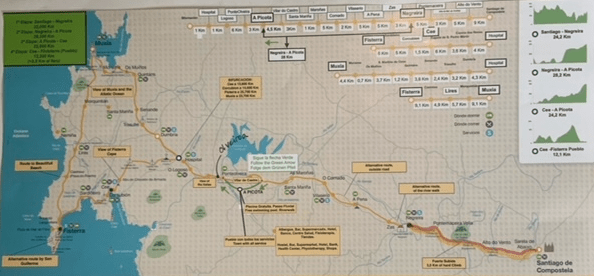
Rick and I are walking to Fisterra (Galician spelling) or Finisterre (Spanish). The end of the earth. A Camino website writes this: Until the end of the Middle Ages, the Costa da Morte was the last outpost in the known world. The place from where pre-Roman peoples believed that souls ascended to heaven. A mythical, symbolic place which would leave the Roman conquerors open-mouthed when they saw the sun disappear behind the immense ocean. From then, the farthest point of Cape Fisterra magnetised all its visitors.
The Fisterra and Muxía Way, is the most faithful realisation of the historical cry of the pilgrim exclaiming Ultreia! (“Let us go farther beyond!”), while another responds with Et suseia! (“And higher!”). In effect, it is beyond the goal in Compostela and, after prostrating themselves before the remains of the Apostle Santiago, many pilgrims decide to get to know this end of the world, and they do not hesitate to overcome the sacrifices of the hard days they have just endured in order to walk, at least, four or five days more. Fisterra is 89 kilometres away and Muxía 87.
We’re going to Fisterra, but Muxia is the place to go if you’re saying a final farewell to someone. After watching The Way, Rick turned to me months ago and said, “you’re going to the ocean, right?” I hadn’t planned on it, but I’m so glad he said we should add it on.
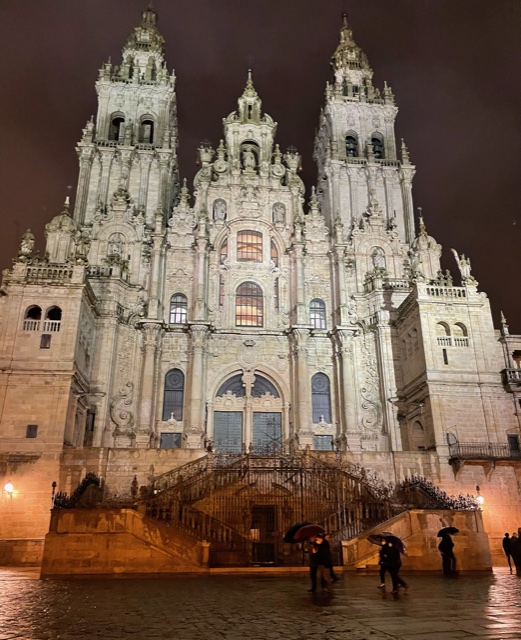
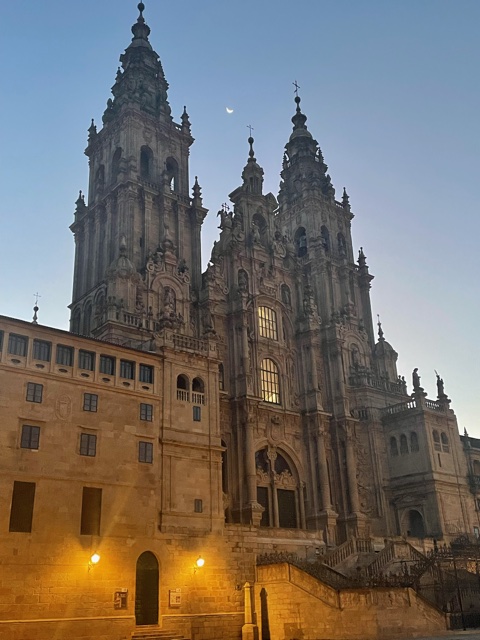
I don’t know why, but I assumed that the old beautiful villages would be done when we left Santiago, but no. I’ve included a video of one we walked through about an hour outside of Santiago. But first – night time, early morning with the moon and then distant view of the cathedral at sunrise. Just a magical edifice.
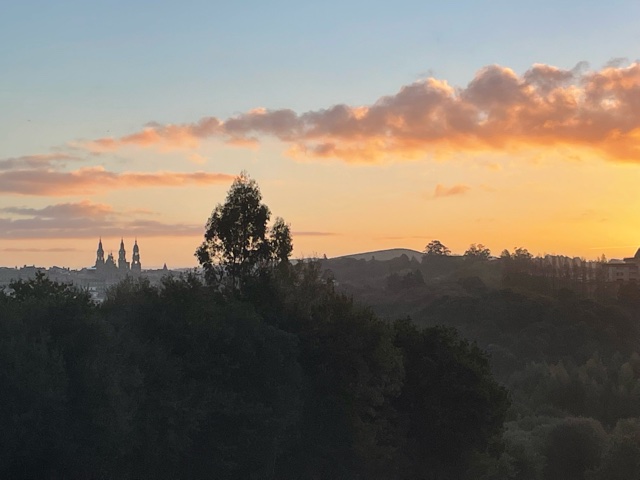
The walk was beautiful today. I realized, though, as we went through more ancient areas that I had lost my constant companion – The Pilgrimage Road to Santiago. For 6 weeks, I’ve carried pages every day giving me stories, architectural, historical and religious relevance for just about every town I came across. Rick told me he’d read that I’d gone through 350 towns in those weeks – a stat related to the Camino Frances. And – the book is done. Stopped in Santiago. I kept reaching for my pocket when I saw a small ancient church or something like this – so beautiful! But what’s the story?
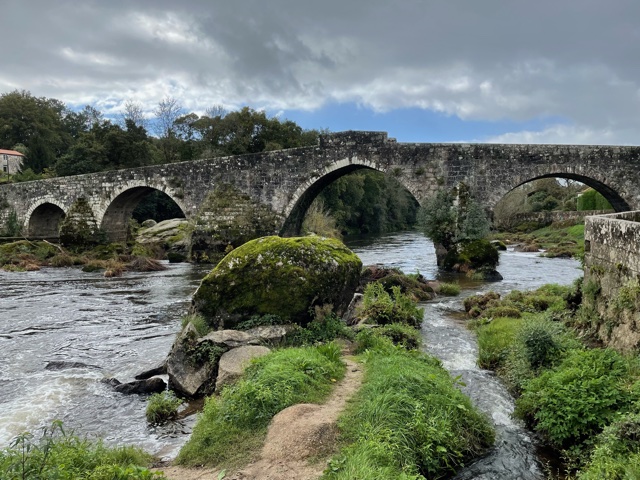
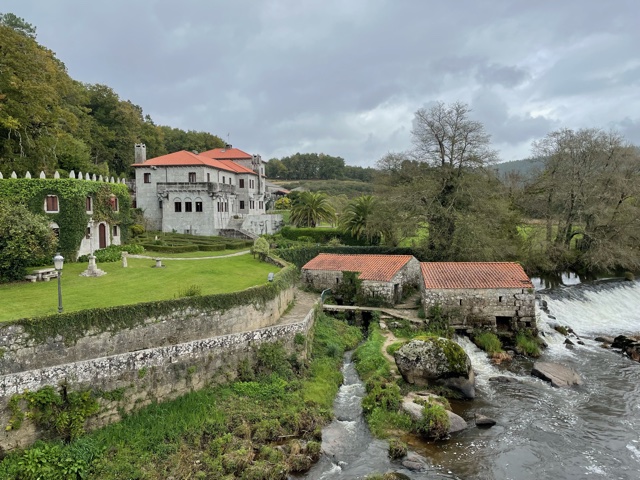
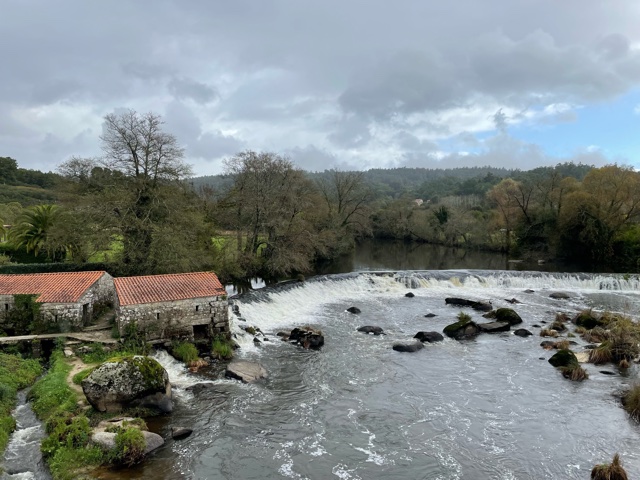
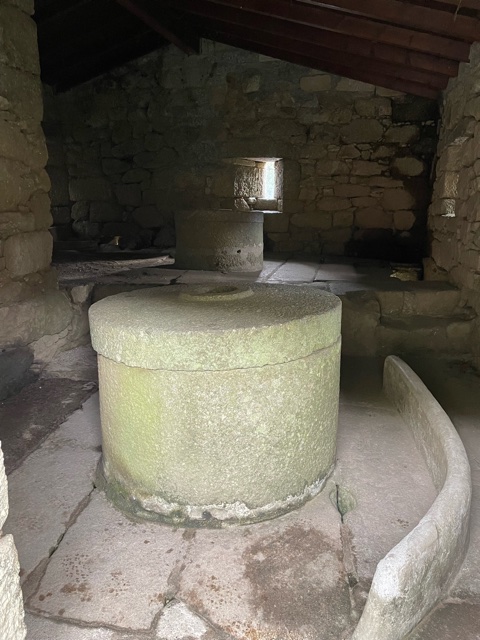
Obviously a dam and some kind of water mill – still had the stones inside, but what about that beautiful little ivy covered building nearby? And the bridge? The town is called Ponte Maceira. Luckily there was a little plaque with English near by.
“Ponte Maceira, the small big paradise of the Way to Fisterra-Muxia, is one of the most unique historical sites in Galicia and all the Ways to Santiago.” On a side note – I have seen an awful lot of signs with the words “most unique” “biggest” “most important”. But – this was a beautiful little town.
“The Ponte Vella (Old Bridge) was built in the 13th and 14th c and reconstructed in the 18th c.”
“Crucial battles also took place here, like the one that faced bishop Xelmirez and Count of Traba, 12c. Also, the St. James tradition tells that on the riverside of Negreira, the divine intervention would pull down a bridge saving the disciples of the Apostle St. James from the Roman soldiers.”
So – there’s a little bit. But I still miss the authority of my book. Here’s the inside of the mill:
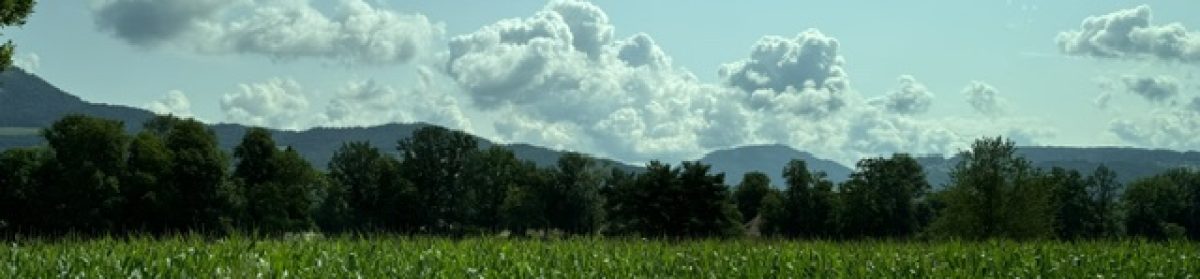
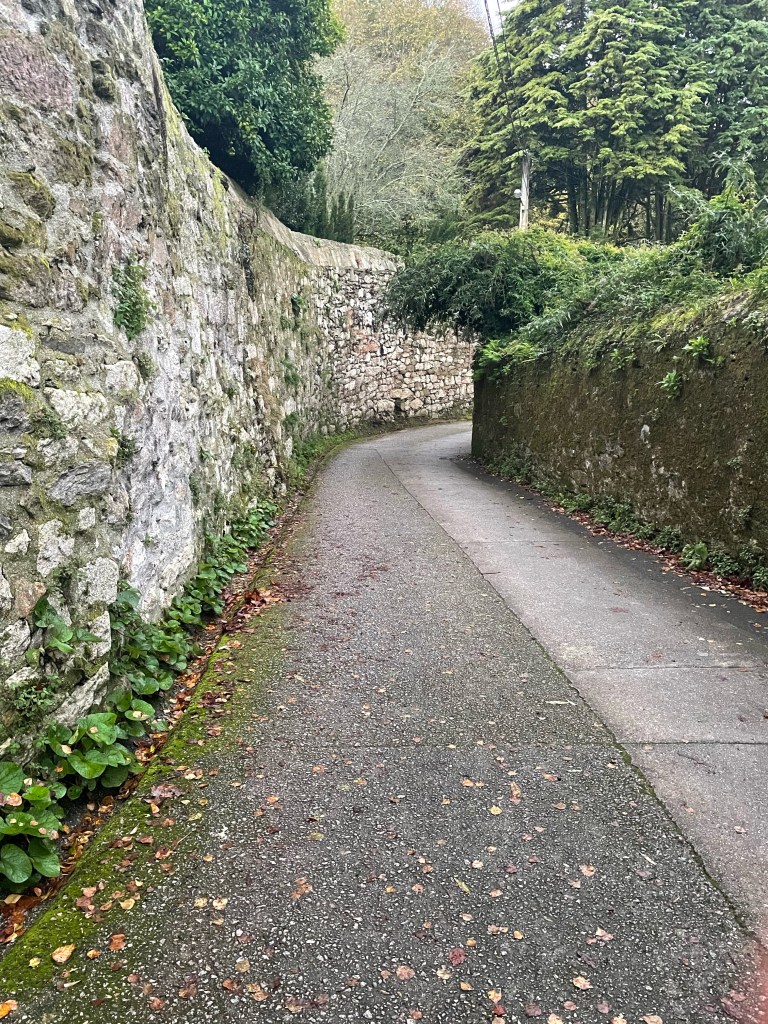
And the walk with forests and ancient walls was great.

3 more days to go, can’t believe it. Then – done. Here’s the video of the little town:
 Reb's Walks!
An unanticipated village in beautiful light! Thanks for sharing your journey ❣️
LikeLike