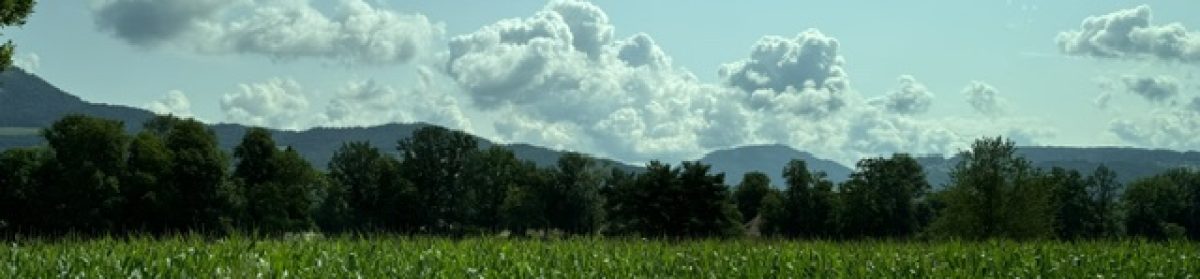
Another great day, though did get tired in the last miles. Happily, had David Sedaris’ latest book on Audio and that was completely distracting. Laugh out loud and you forget about hot and hungry and tired 🙂
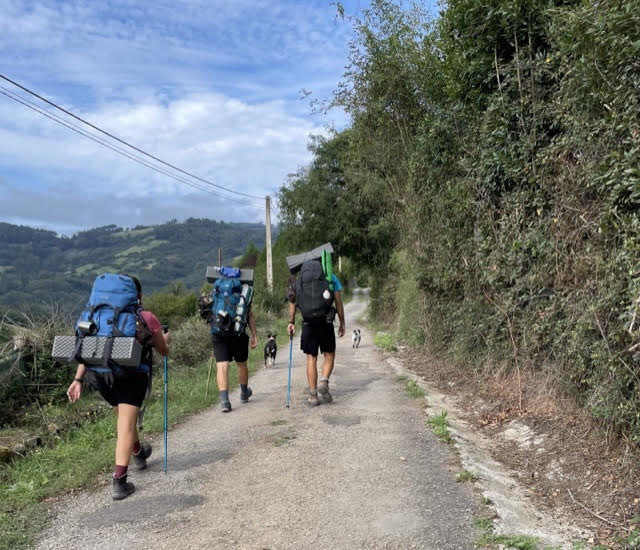
This is definitely going to be a different Camino. I’ve heard 2 Americans, and 3 British in passing, but that’s it. No one speaks English and so there are no casual pick up conversations. I’m starting to settle in to it!
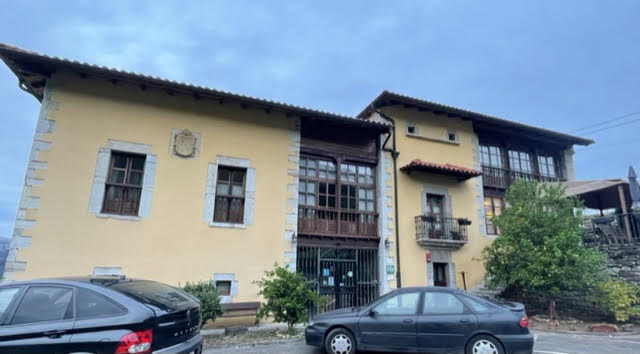
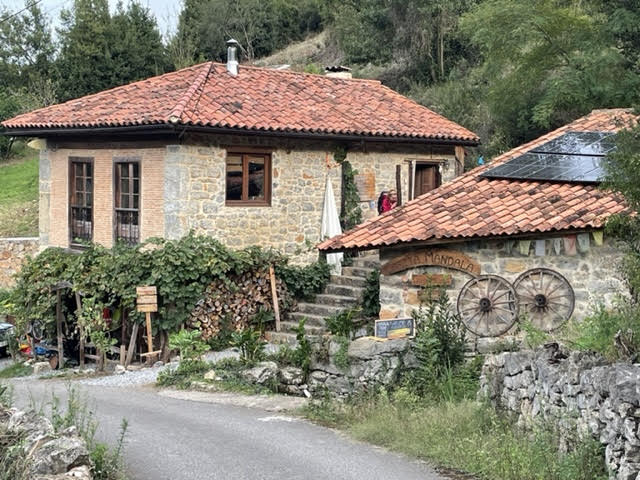
This is Marta’s home that she converted to an Air B&B. She said it has 14 rooms and she converted 8 to guest rooms. She does everything, it allowed her to keep her house and she judges how much she can handle. All wood is the original chestnut and she showed me the stones on the side that were dug from the nearby hills with shells and fossils in them.
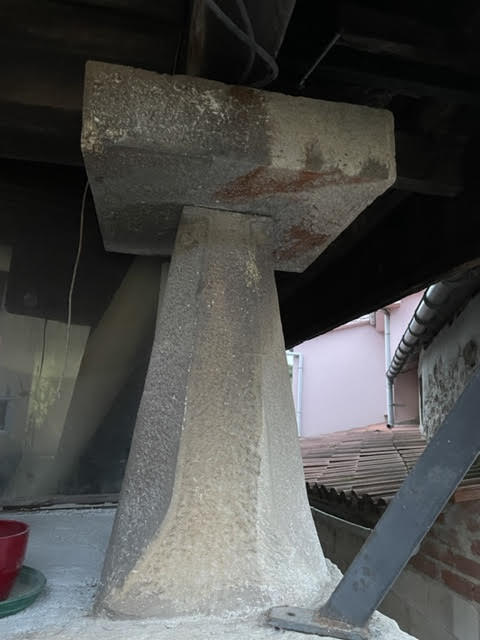
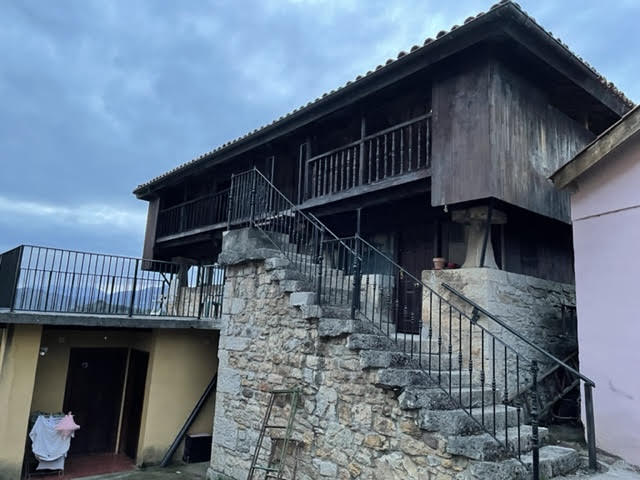
These stone pieces are what hold up the granary and the square at the top is designed to keep mice out. These granaries aren’t legal as houses because they’re designed to move where the farmer needed them to store grains and other produce.
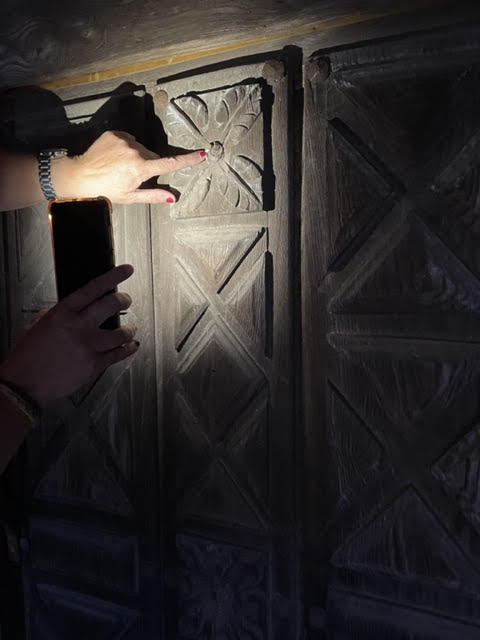
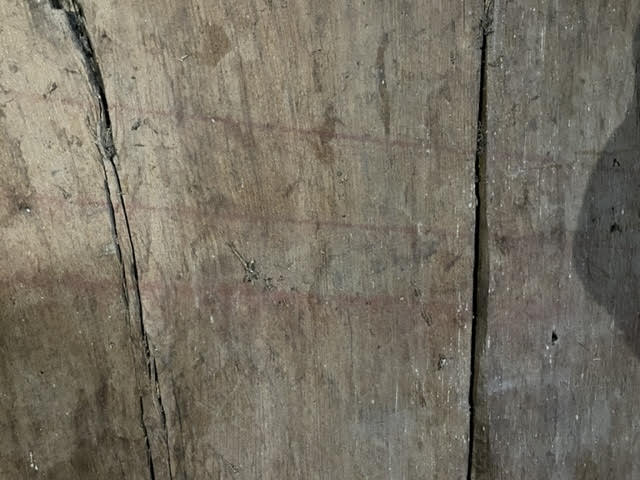
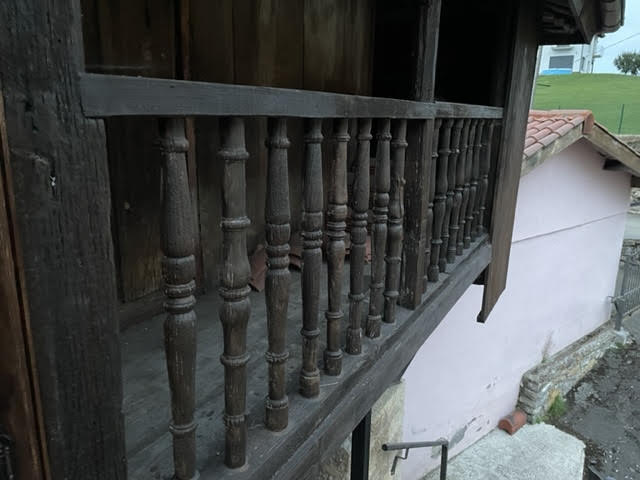
Whole thing is made out of chestnut, huge beams going the length of the building. Rectangle buildings are female, square male. Rectangle indicated a wealthier family.
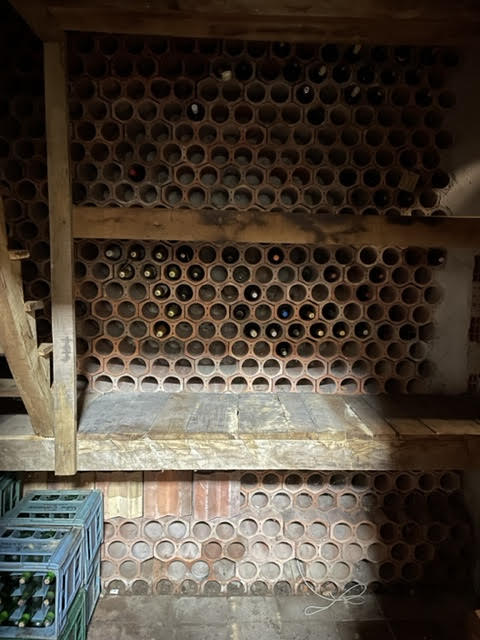
In addition to running the B&B, gathering vegetables, taking care of chickens, goats, dog, cat, Marta also runs her family’s cider press. These are where they store the cider, all used up now, sadly. Just another month and they’ll collect the apples and start up again.
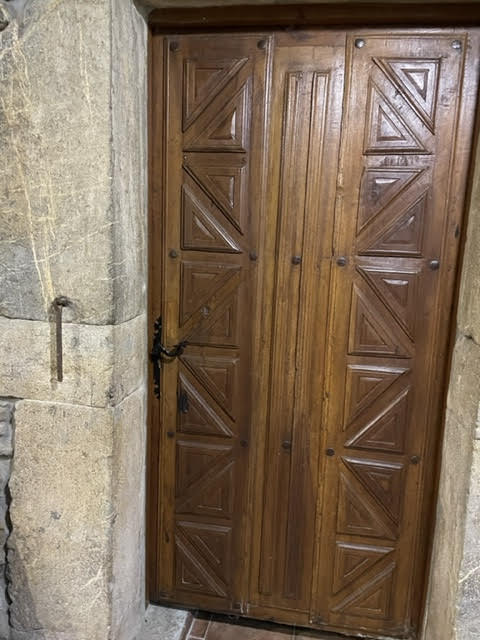
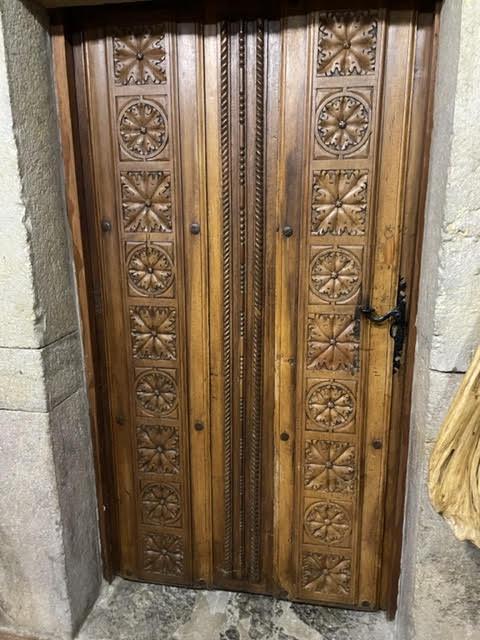
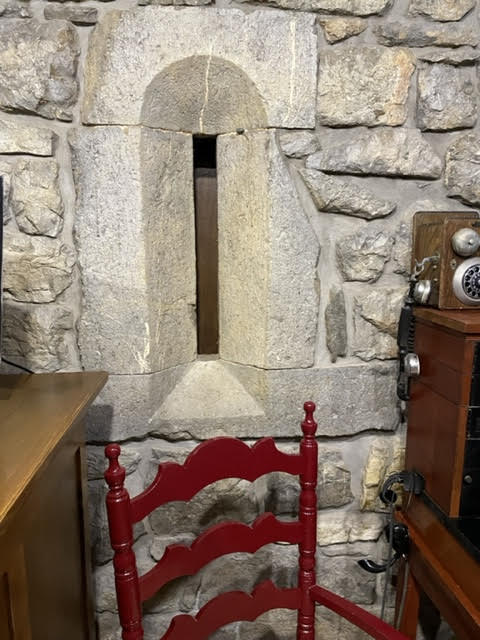
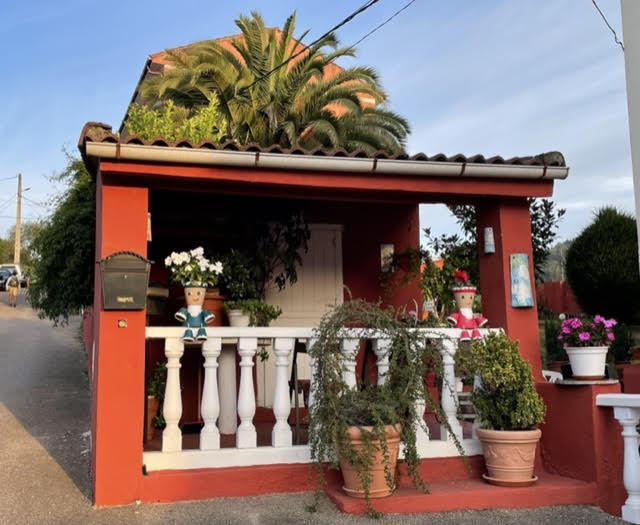
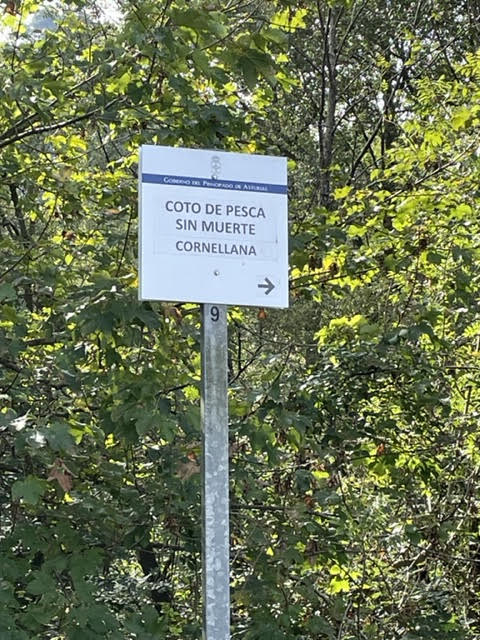
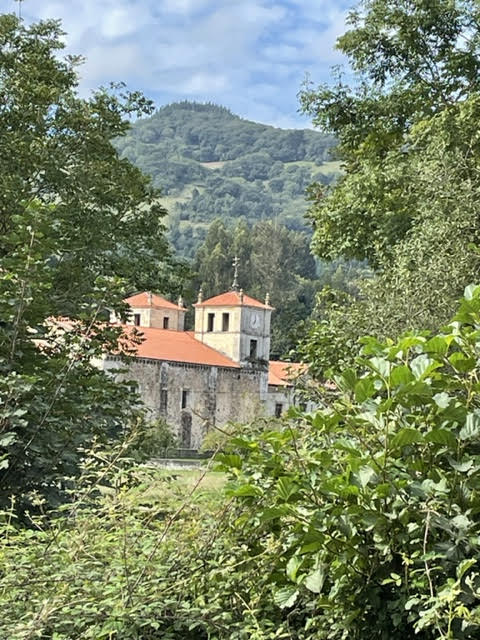
This is the Monasterio San Salvador de Cornellana. It’s a 1000 years old, continuously running, now Benedictine and much smaller. Cornellana has a population of 796 and the small, but beautiful chapel was pretty well populated for the Sunday service. They didn’t seem to mind peregrinos walking into the chapel, but no one took photos and I didn’t either. Right next to the chapel was a window looking into the very large cloister and it was a shambles. Man, keeping these things up – maybe just enough so it doesn’t fall down.
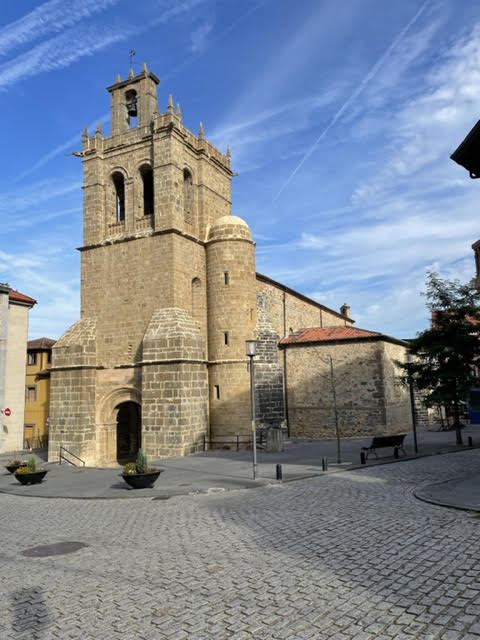
And this is the town where I’m staying, Salas. This church was built in the mid 1500’s by the guy who lived in the castle below. And I’m staying in the castle below! Kind of – I’m in the building attached to it, has an open courtyard in the center with balconies running around it on the 2nd and 3rd floor. I like my simple room, upper floor, looks out over the courtyard. This is the description: The Castle of Valdés Salas is a sober building from the 16th century, which is linked to the 15th century Torre de los Valdés and with which it forms a whole, by means of a lowered semicircular arch bridge where the family coats of arms are displayed. Valdes-Salas. The construction is made of masonry and stonework, a sample of the civil architecture of its time. It was the home of the noble family of the Valdés Salas, whose best known member is Fernando Valdés Salas, religious, inquisitor, politician and founder of the University of Oviedo, buried in the collegiate church of Santa María La Mayor and who was born in this palace.
Inquisitor does NOT sound nice, but at least he started a university. I also found this note about the town on the Wise Pilgrim site: Salas is the setting for the dramatic capture in the year 1586 of Bartholomeus Cassandra, an Italian pilgrim and habitual thief. Having successfully stolen from a Church in Zaragoza he tried to repeat the effort in Salas. Unfortunately for him he was caught with the loot in hand and sent before the judge. No leniency was granted to Bartholomeus. He was first hanged, then quartered, and finally displayed along the camino.
When I was talking to Marta this morning during breakfast, she said Spaniards aren’t so upset if you lie to them, but steal? Oh no, definitely don’t do that and rarely will it happen. You can leave your phone and wallet on the table and you’ll be fine. Usually.
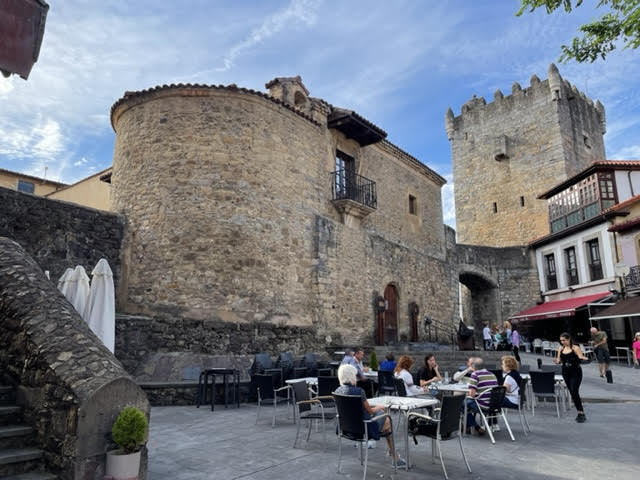
The nice thing is that since the window looks out into the open over the courtyard, I can hear everything in the town, including the guys who are all cheering for the soccer game going on. I don’t know what it is about the Spanish, but they sure do seem to enjoy each other. Walking with family and friends, chatting, laughing, a lot.
There’s another open space on the other side of that arch where the rest of the castle is – where I’m staying and that’s most of the town.
 Reb's Walks!