
Such a smart decision to take a cab today instead of walking. To say it poured would be putting it mildly – all day. But we got to take our time in the morning which was a treat. I got out early and was able to see the town in the rain and empty of the floods of tourists that came off the buses starting around 10. I felt so lucky to be able to spend the night in San Gimignano and to have those moments in the morning.
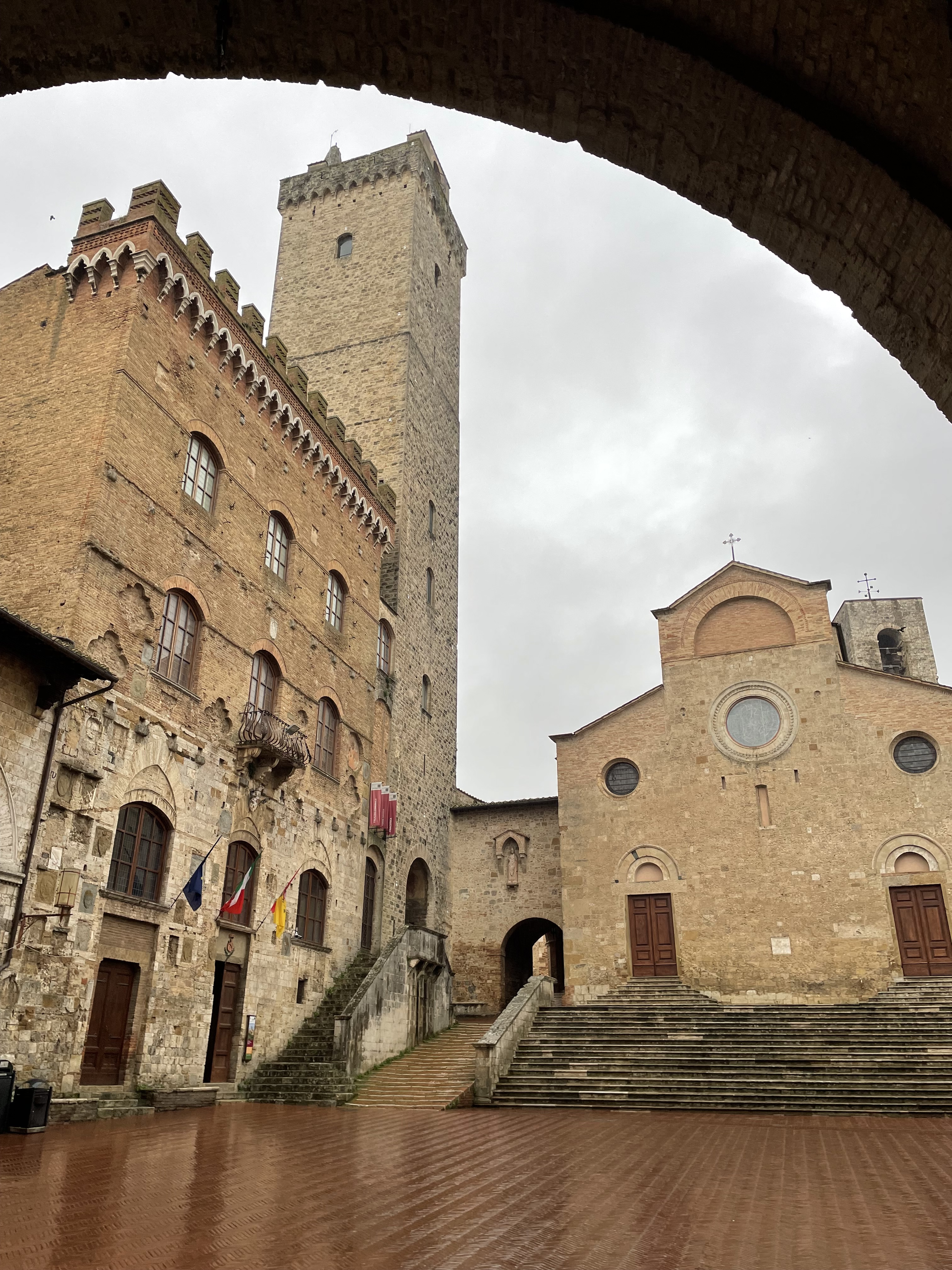
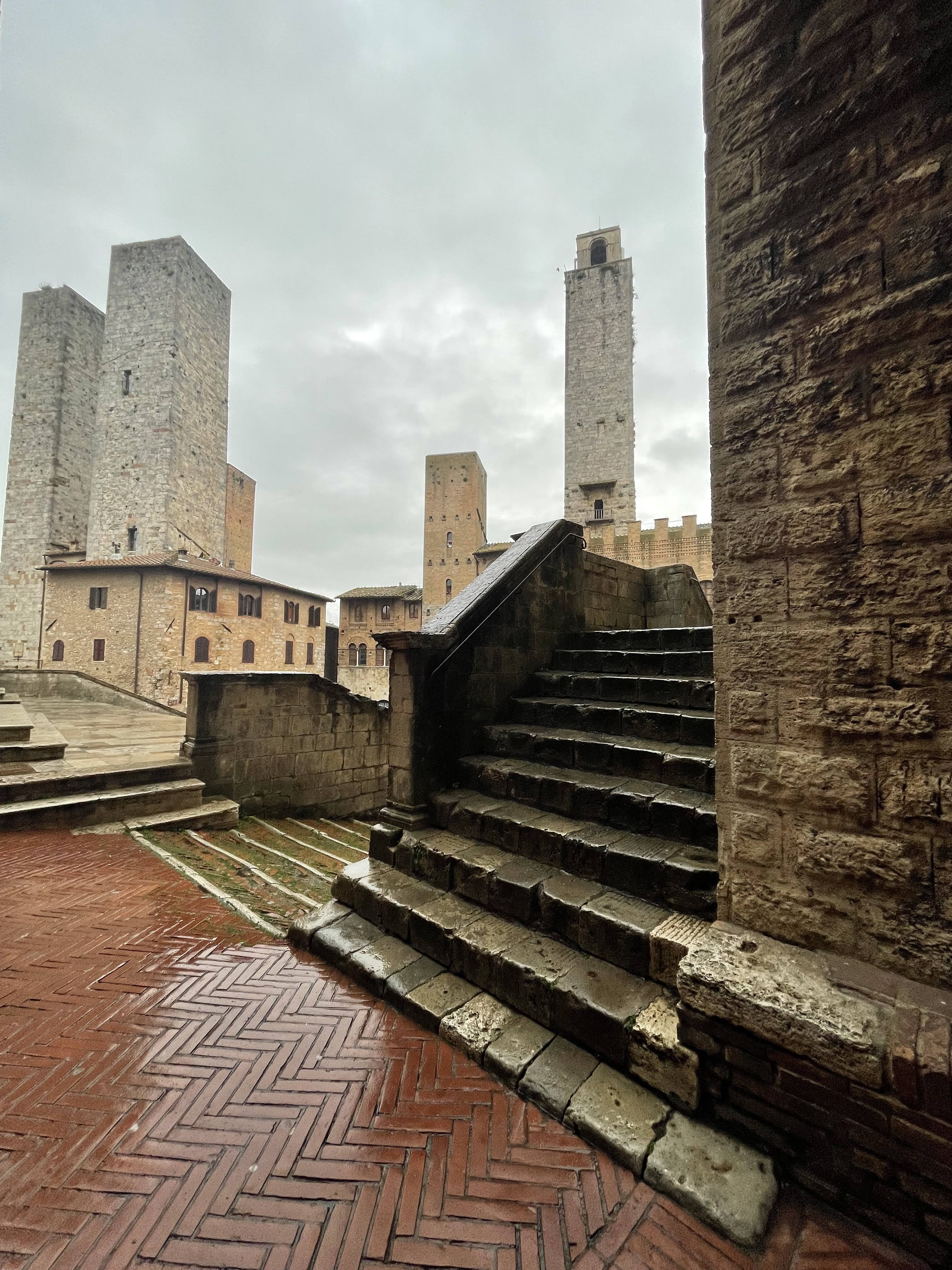
We then went to the castle/mansion? Not sure what they called it in the day, Musei Civici now. We thought it told the history of the town, but it was actually an art museum in the home of the “podesta” or rulers of the town from the Middle Ages. It had the meeting room where Dante was a delegate from Florence. There’re a lot of Dante things here, though he was only here a few months (per the woman at the desk at our hotel). But in the main room is art and a bust of him from when he was negotiating in the war between Florence and Sienna.
This is the room with a mural on the right from 1317, don’t when the others were painted. Dante was there in May of 1300, so just missed the painting…


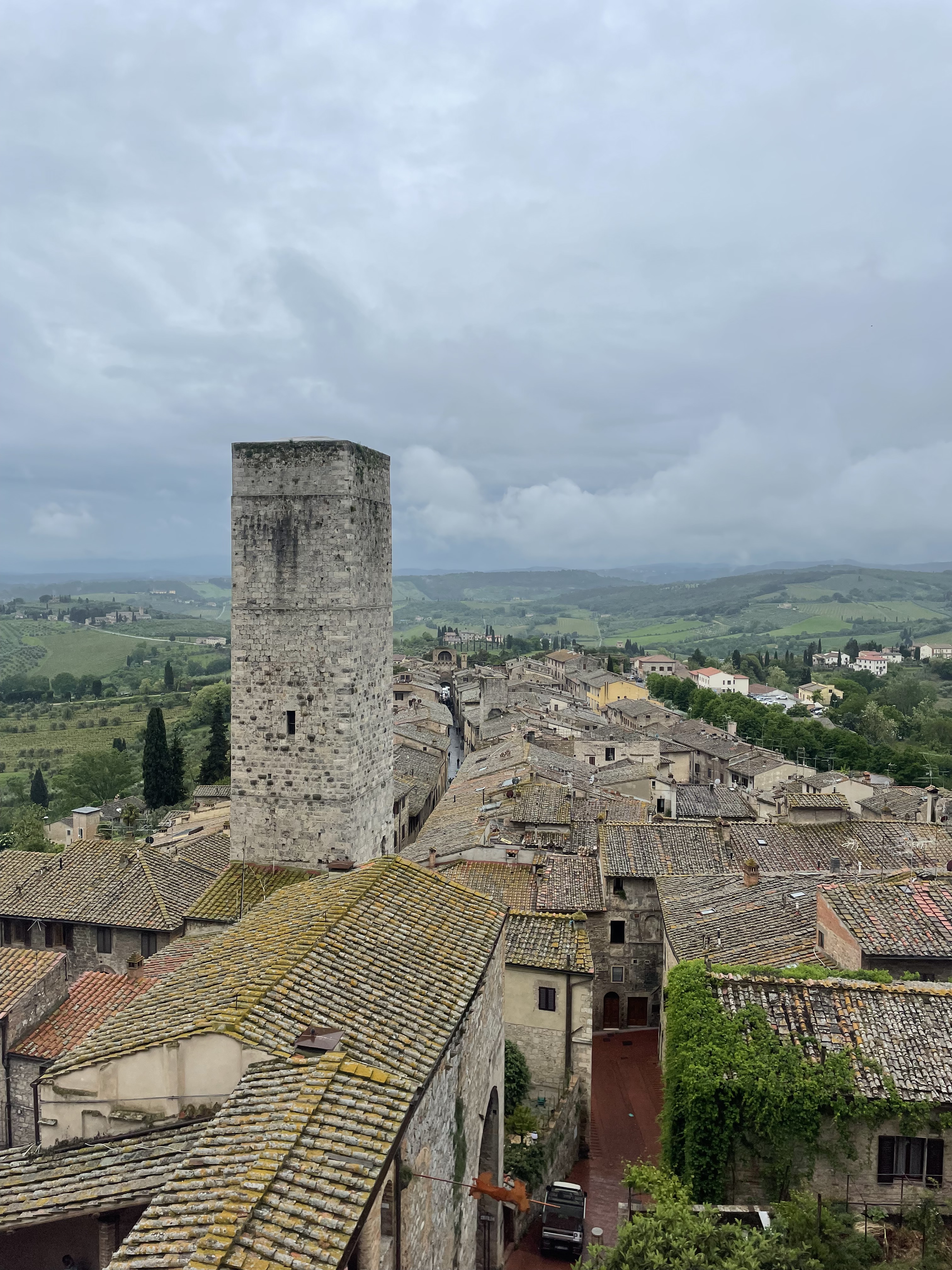
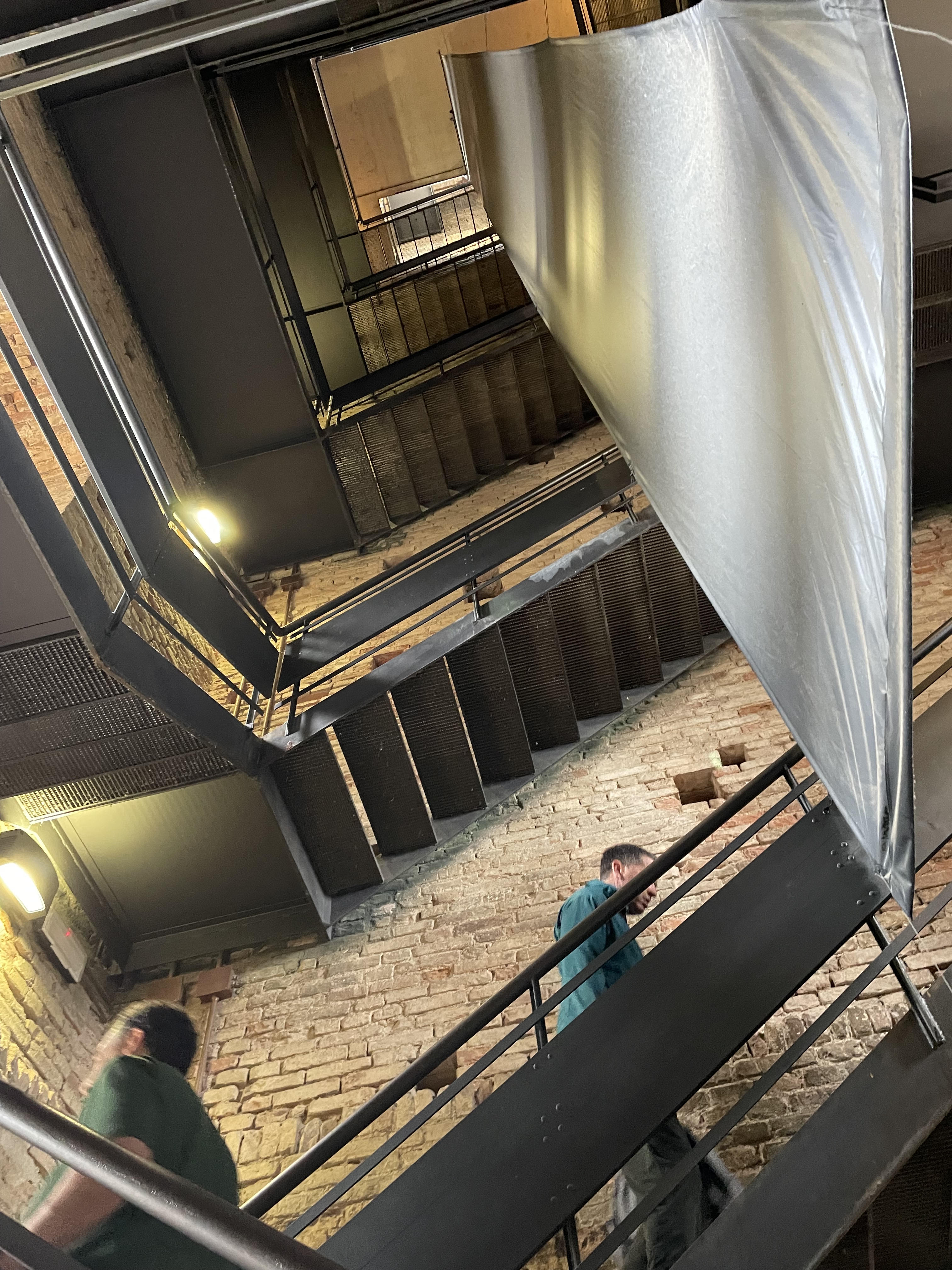
There was a tower that was an active tower since it was connected to the seat of power. I got part way up and could see so much of the countryside, then I came down when everyone else climbed up and up…
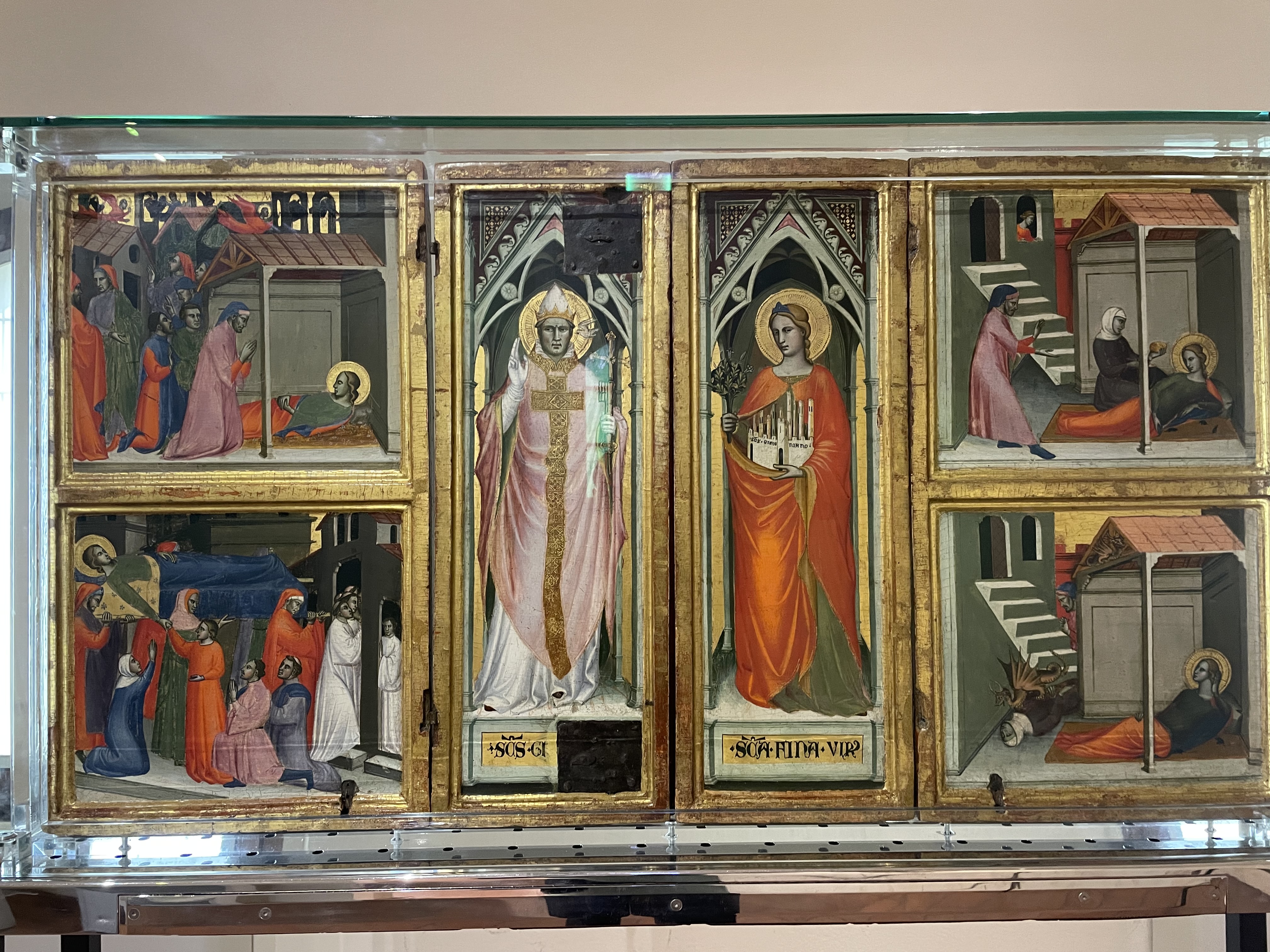
I enjoyed some of the medieval art focusing on Mary and the female saints. The most famous of whom, in San Gimignano, is Saint Fina. Again, the woman at the desk was lovely telling us about Saint Fina. She is adored in the town and every year on March 12 flowers bloom and there’s a celebration for Saint Fina. I started reading about her in Wikipedia and seriously wished I’d seen the chapel and scenes in the Cathedral that Rick, Sue and Bob were asking about – the chapel for Saint Fina.
Here’s the link in Wikipedia: https://en.wikipedia.org/wiki/Saint_Fina
But in synopsis, in 1248 at the age of 10, Fina, a sweet and joyful girl from a poor family, contracted a paralyzing illness and for five years chose to lay on a wooden pallet instead of a bed and to pray, particularly to St. Gregory the Great, who predicted several things to her when she saw him, including her death date, March 12, 1253. When she died white violets appeared on the walls of San Gimignano. When the woman at the desk was telling us about this, she said they appear to this day on March 12, blooming all over the walls and tower and there’s a grand festival.
Loved this piece from her wikipedia story: “The most important thing “produced” in the memory of Saint Fina is the hospital, which took her name and was built in 1255 thanks to donations given at her tomb. The hospital gave hospitality to old and poor people and pilgrims too. It became in the following century one of the best in Tuscany. The building changed its name in 1816 and remained in function until the end of the 20th century. In the hospital’s chapel, the original oak wood table (Rick would roll his eyes; I’m happy to believe) where Saint Fina lay down for five years is preserved.” Wish I could have gone to see this!
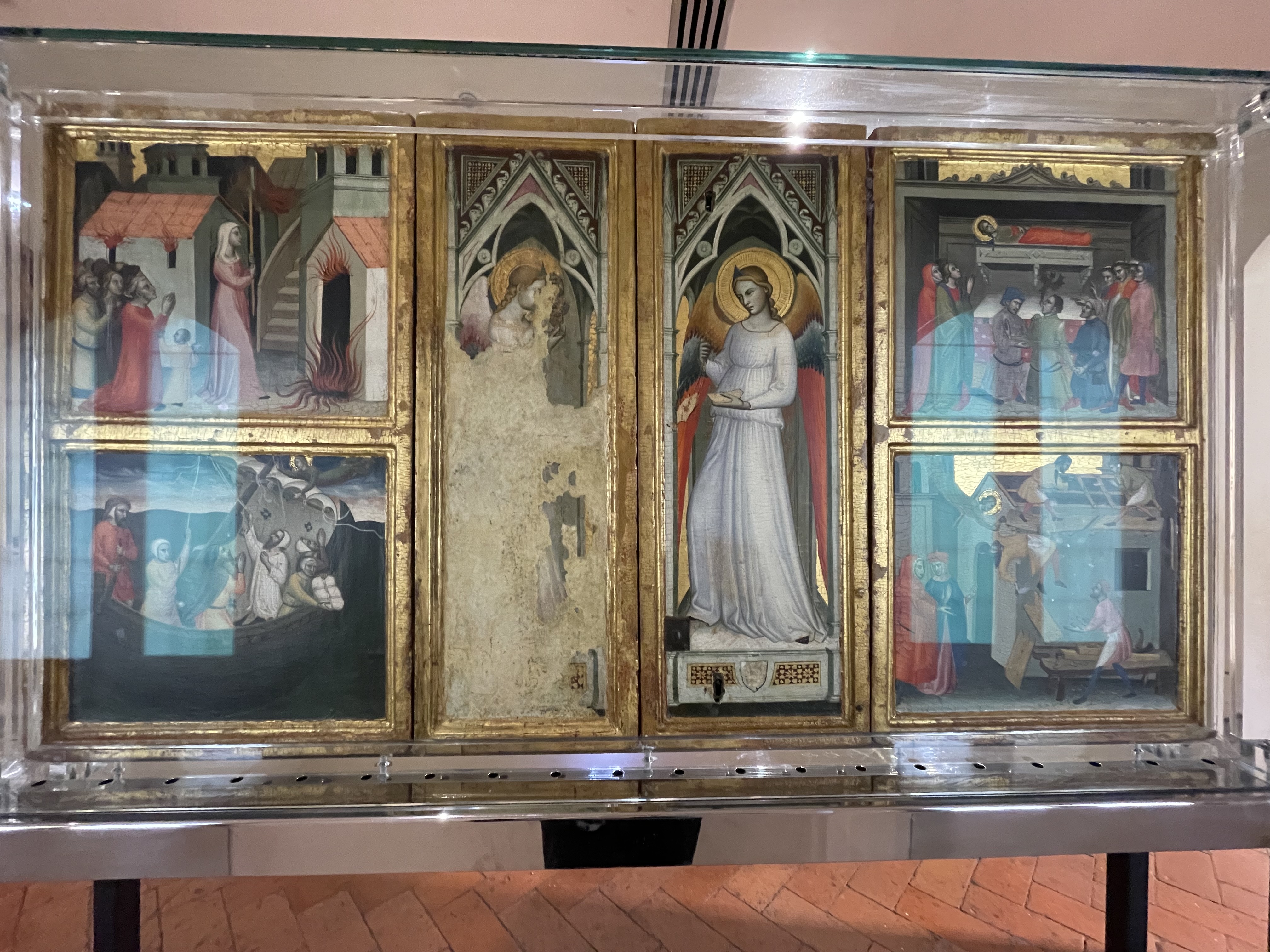
I first learned about Saint Fina when I saw a wood tabernacle painted by Lorenzo di Niccolò in 1402 depicting Saint Fina holding a model of San Gimignano along with eight scenes of her life and miracles.
The last thing I enjoyed in the Civic Museum was the Camera del Podesta. This room had a series of frescoes from the 1500’s celebrating love.
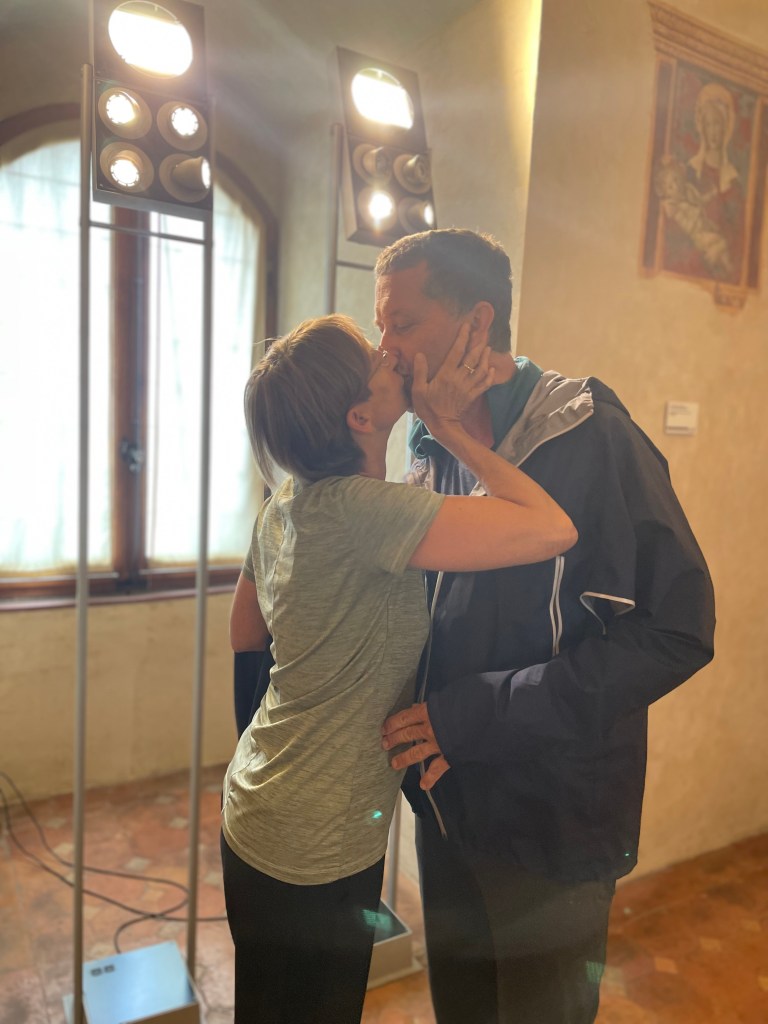
I don’t know if this mural video will send, but I hope so. The pictures came through so clearly! Incredible that they’re so well preserved from the early 1300’s.
From Visitworldheritage.com:
Camera del Podestà—or the chamber of the highest office of the village—had frescoes of a love story painted by Memmo Di Filippuccio, San Gimignano’s civic painter. The room is also a famous location for marriage proposals. Here, love is the pillar of life. It is also possible to see what happens when love is not respected.
On the left side of the room, there is the amoral couple that could never get together because the young groom was lured by two deceitful women who steal his goods, beat him, and leave him aching. In this case, love is dangerous. Nearby, there is another tragic love: “Paolo e Francesca,” the famous lovers from Divina Commedia by Dante Alighieri—their faces rubbed out in a sort of “damnatio memoriae.”
On the right wall, there are scenes of marital love. The bride and groom are meeting their relatives surrounded by symbols of loyalty. The real masterpieces are the last two scenes: the young couple, now married, enjoys the intimacy of a warm bath. Finally, the nuptial bed embraces the couple, giving love the opportunity to fulfill one of its highest tasks: create life.
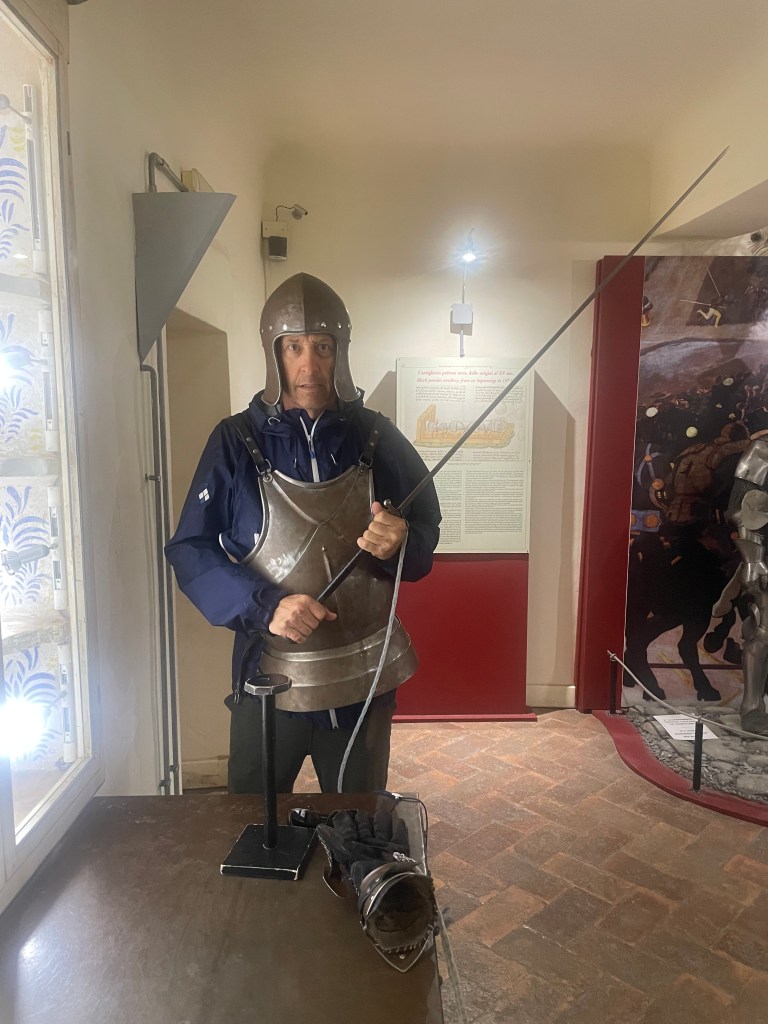
Then time to leave this wonderful town and to go to another one! Our taxi was right on time and while it poured down, we moved dryly from San Gimignano to Monteriggioni. Oh my lord, another totally cool town. This is much smaller, completely encircled by the medieval walls with room between outer wall for a garden before the first row of houses, a wee street, then another row of houses, finally the plaza with the church, a museum of medieval warfare and siege and our hotel, just 2 doors down from the museum, right in the center of town!.
Picture of the town from the museum, pretty much still looks the same, but has modern plumbing and some great food:
The church is tiny and I thought would invite some sitting, but honestly, it was dark and the imagery didn’t call, but still a sweet church for a tiny town and the bells ringing at noon were great!
The museum was our last visit after walking the walls a bit on a new supported structure, then the town and getting sandwiches for tomorrow’s hike (bread, cheese, ham – same every day).
 Reb's Walks!
Hello.
What a lovely adventure! It’s always a treat to discover new places and learn about their history and culture. Saint Fina sounds like an inspiring figure and the artwork and frescoes in the Civic Museum are truly remarkable. The town of Monteriggioni also sounds fascinating, with its medieval walls and charming church. Thank you for sharing your experience.
Thanks for sharing.
LikeLike