Verona/Vicenza
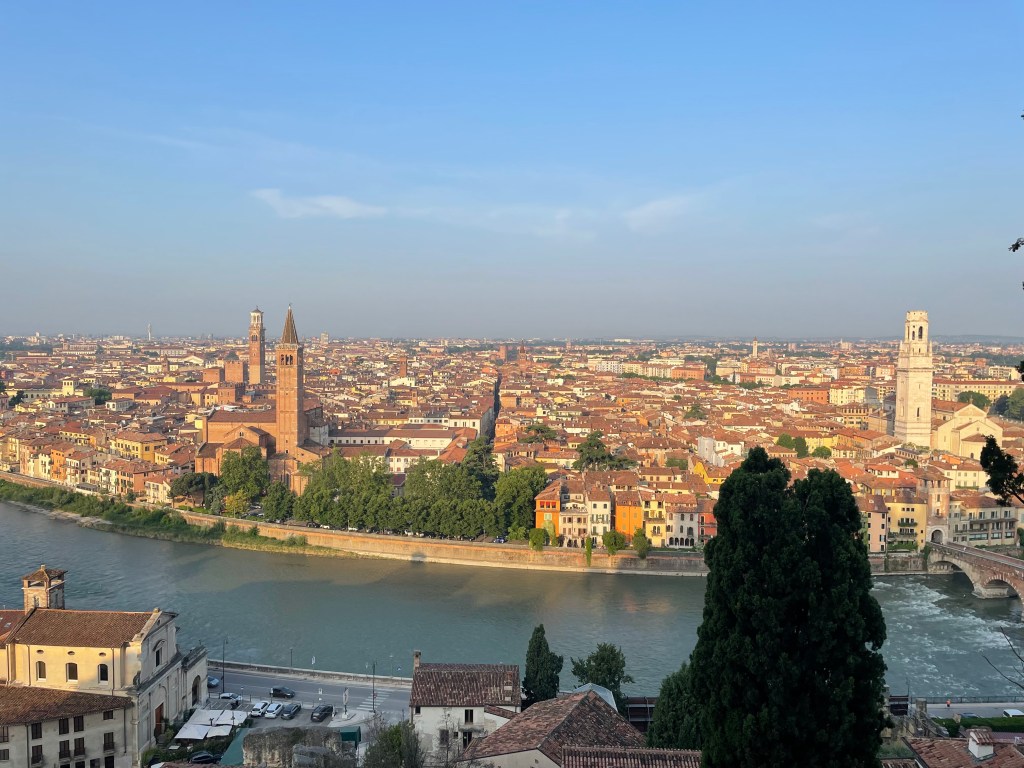
I took an early morning walk around Verona today, up the hill to see the view and back through town. It’s taken long enough to start to get a clear sense of how to move once in the streets where you can’t really see landmarks outside to orient. In this photo, the Duomo’s white tower looks the tallest, but the family of Della Scalia who built the medieval Castel on the distant left, made sure their tower was higher than the churches – thus the lack of the steeple. Government over church.
A few things came back from Krystal’s walk.
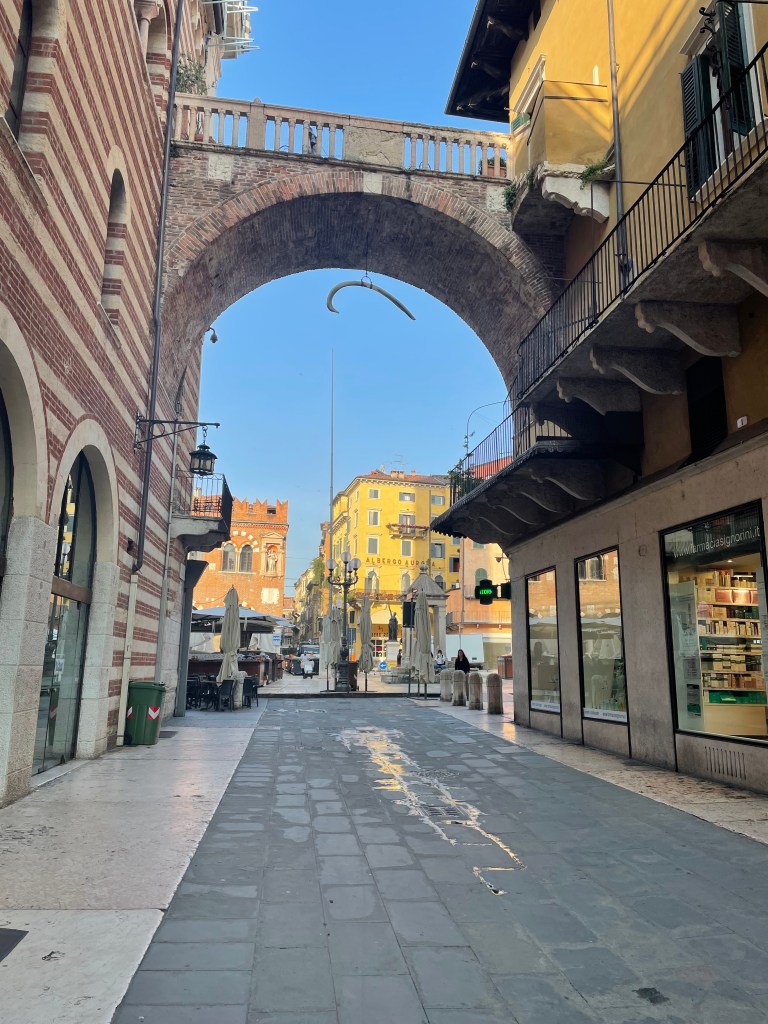
Whale bone hanging, noted in Atlas Obscura: A whale rib was used to advertise the store by the arch that offered exotic goods from far away.
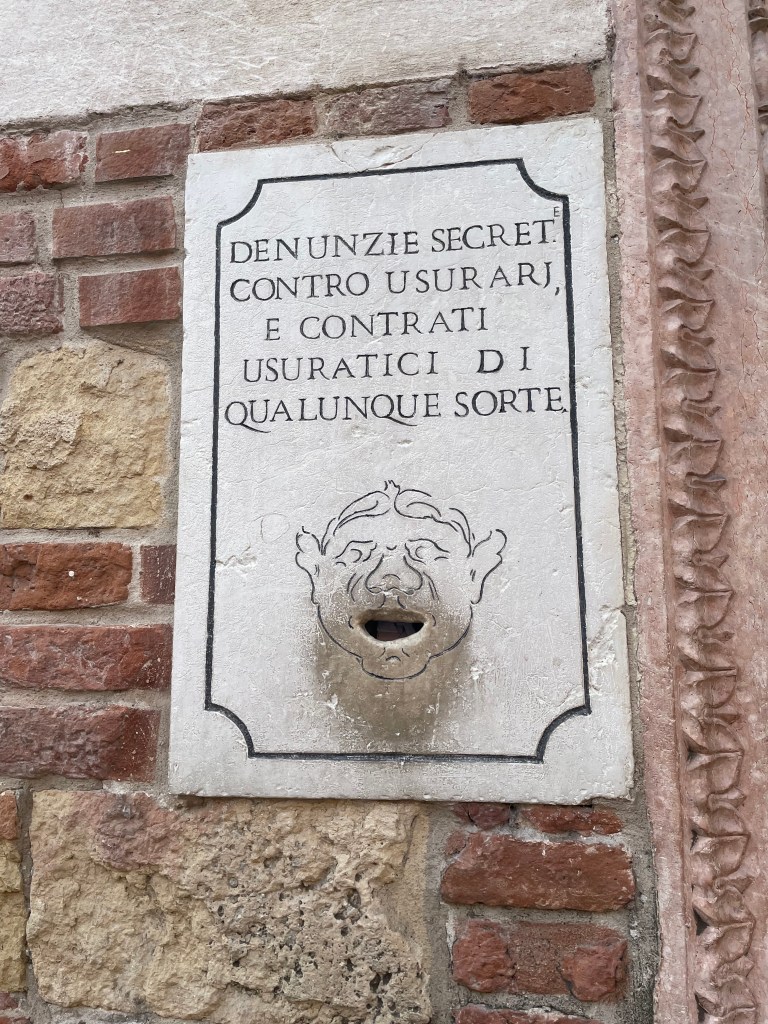
Citizens could voice their concerns anonymously by placing hand-written notes into designated boxes. In turn, the government would address each complaint individually. These boxes, or bocche di leone (lions’ mouths), were scattered throughout the city. Each stone receptacle resembled an intricately carved face, often that of a lion—the winged lion of St. Mark is the symbol of Venice —with a slot at the mouth into which letters could be inserted.
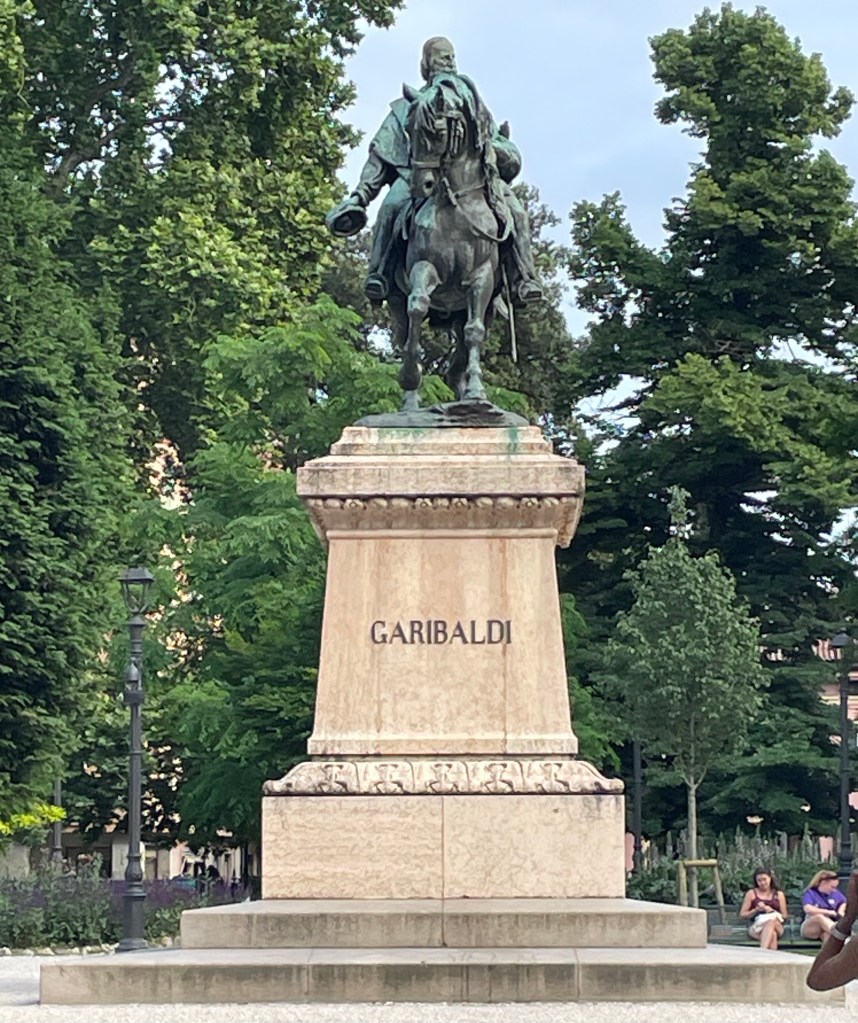
Garibaldi is the man who united Italy, starting in 1848.
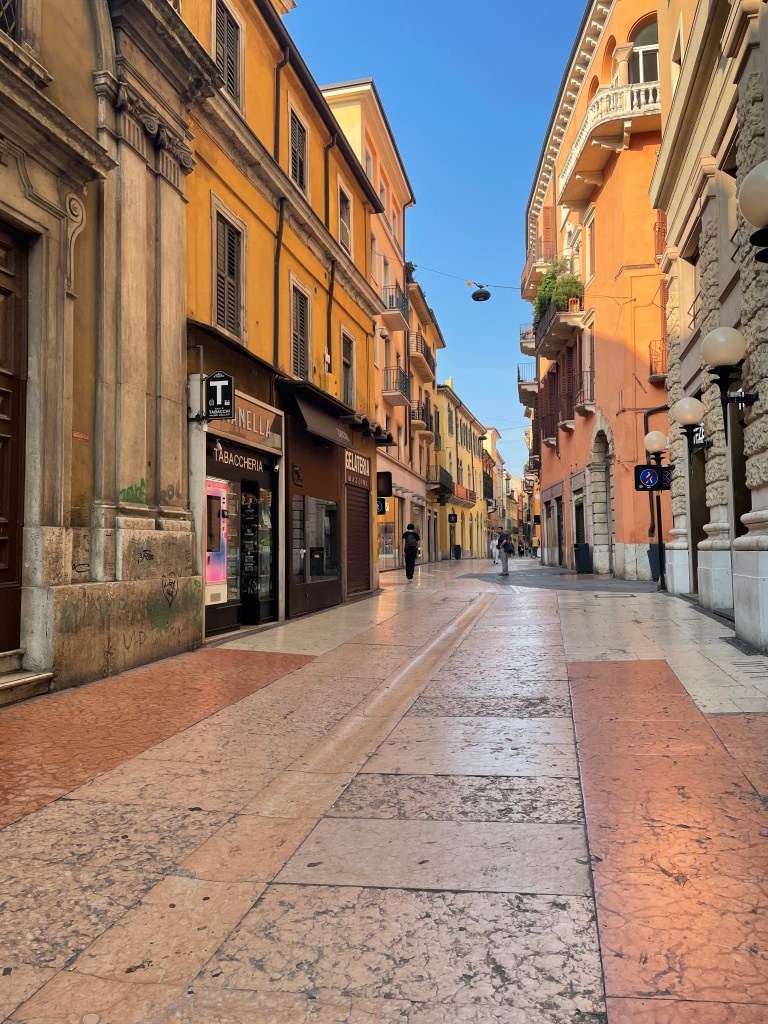
Main shopping and pedestrian street paved with marble.
And then back to the apartment to get ready to go to Vicenza. Cathy had wanted to see this city, which is famous for Palladian architecture. Leaf stayed home to work, but the rest of us jaunted off for the day. It took about an hour and went mostly on the Autostras, filled with semis and then through the industrial outskirts until we arrived in the old city. The buildings were just astonishing and so many!
From Brittanica.com – Andrea Palladio, original name Andrea di Pietro della Gondola, (born Nov. 30, 1508, Padua, Republic of Venice—died August 1580, Vicenza), Italian architect, regarded as the greatest architect of 16th-century northern Italy. His designs for palaces (palazzi) and villas, notably the Villa Rotonda (1550–51) near Vicenza, and his treatisce I quattro libri dell’architettura (1570; The Four Books of Architecture) made him one of the most influential figures in Western architecture.
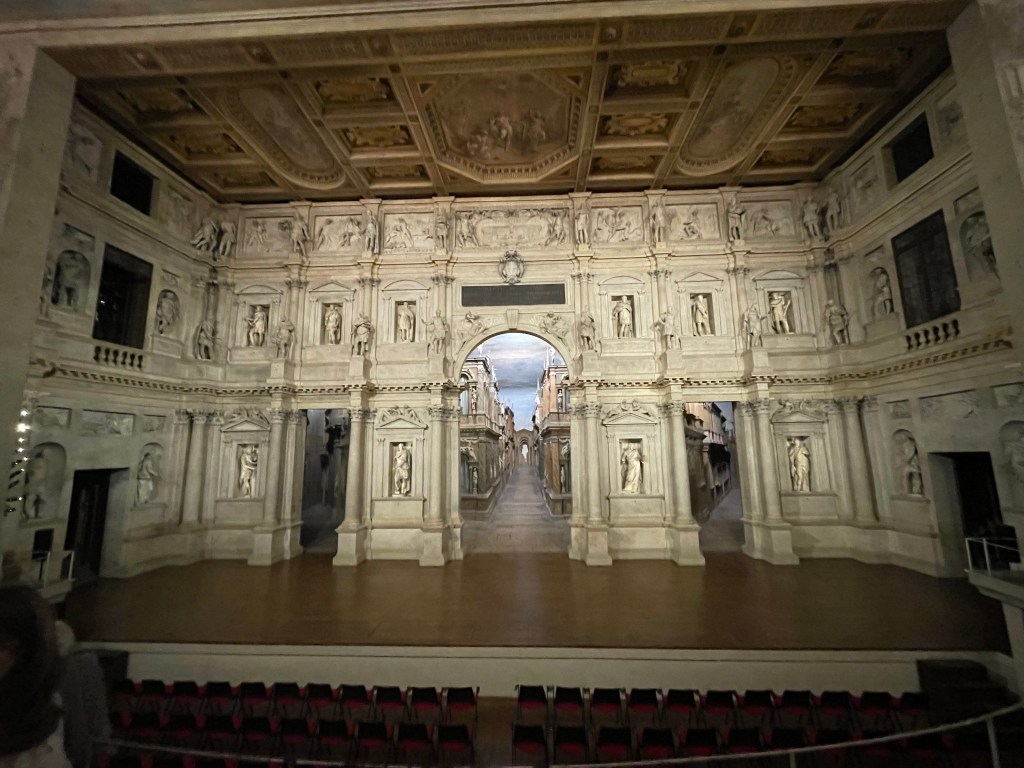
Happily, they had an audio guide that actually downloaded to our phones (almost never works) and we were able to wander the old city of Vicenza discovering some of Palladio’s buildings. We started with the Olympic Theatre built in 1585. The theatre is the same today as when it was built, the stage set a remarkable design with 7 streets (only able to see all 7 if you move about the theatre) which was the city of Thebes since they were putting on Greek plays. It was the first covered theatre ever and the set design was only dismantled once, during WWII, to protect it, putting it in the basement of the basilica.
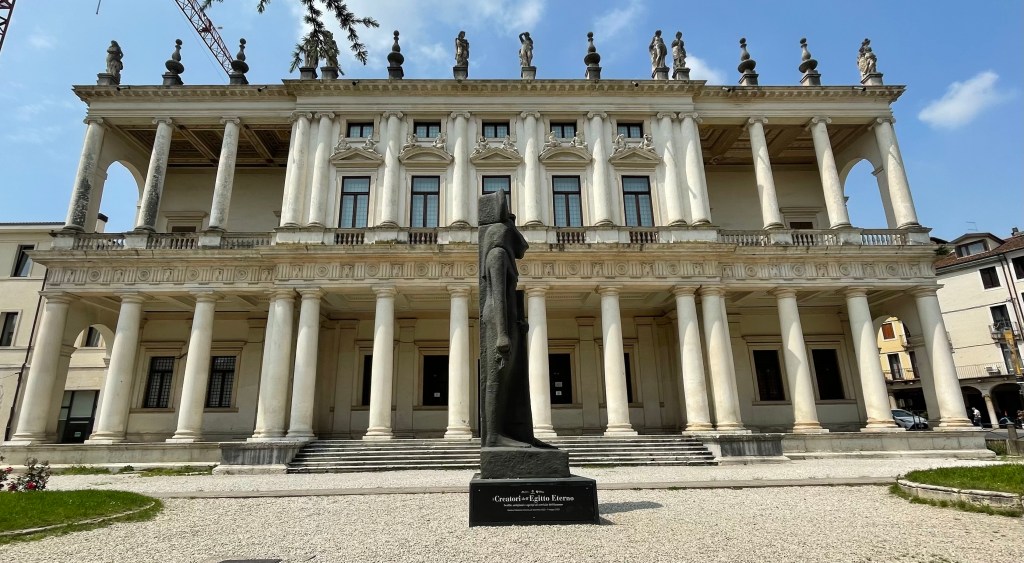
Palazzo Chiericati – designed to welcome guests who arrived on the two rivers that intersected in front of the building. The arcade under was a place to protect guests from the rain and weather.
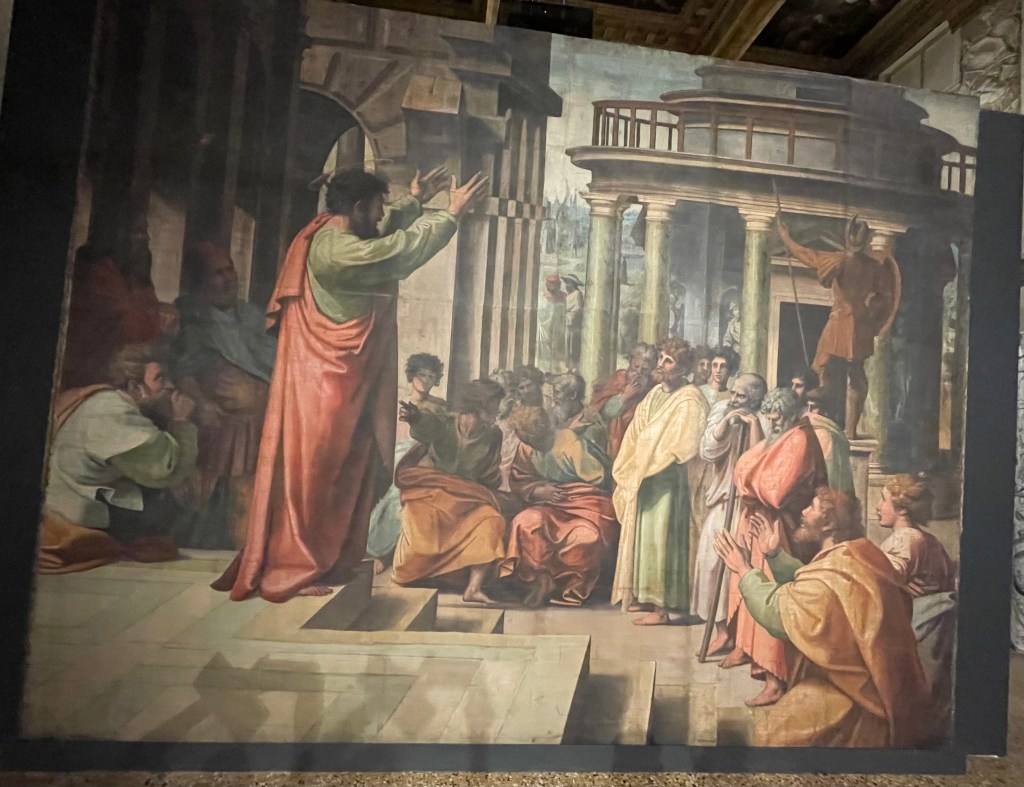
Palazzo Barbarano, the Palladio Museum was wonderful. There was a current exhibit of Rafael as architect – and yes, the same Rafael that we think of as a painter. Total reframe looking at one of his famous paintings and focusing on all the architectural elements.

Here’s the painting that was examined with the focus on the columns, angles, etc.
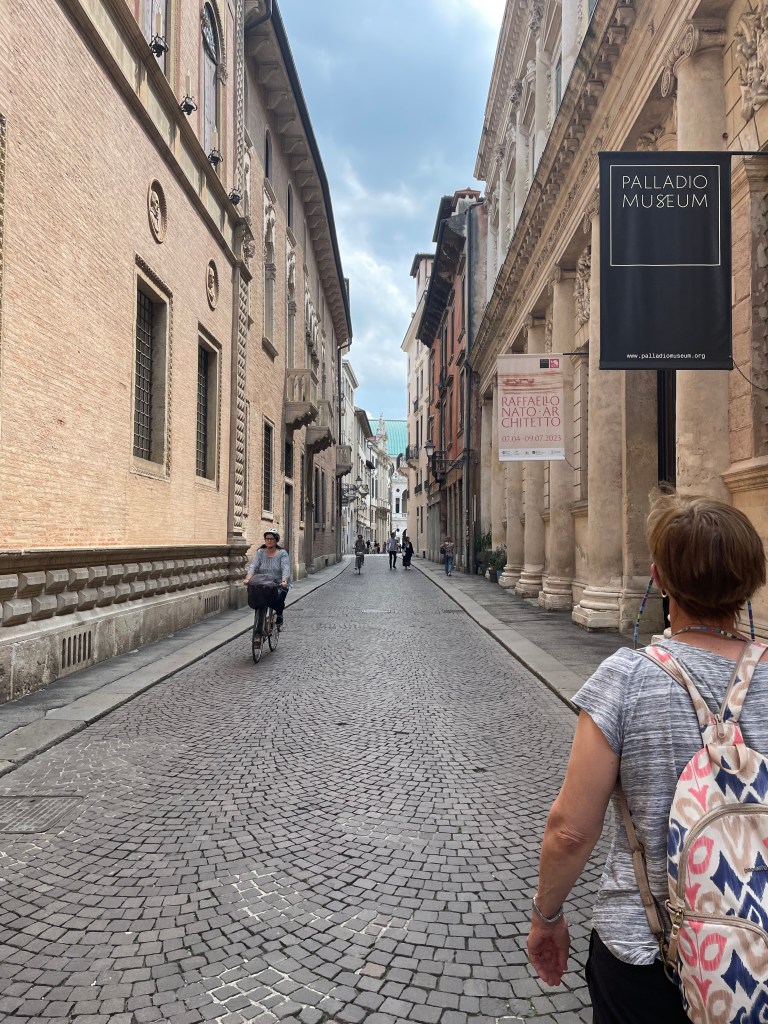
We had lunch, a great lunch with interesting flavors, on a side street that we found near the museum. This entire street was filled with gorgeous buildings, one after the other. They must have all been palazzos and people walked down the street like it was normal!
This sign did a good job explaining Palladio’s vision and purpose for the basilica.

Ach – really couldn’t get the whole thing in the photo
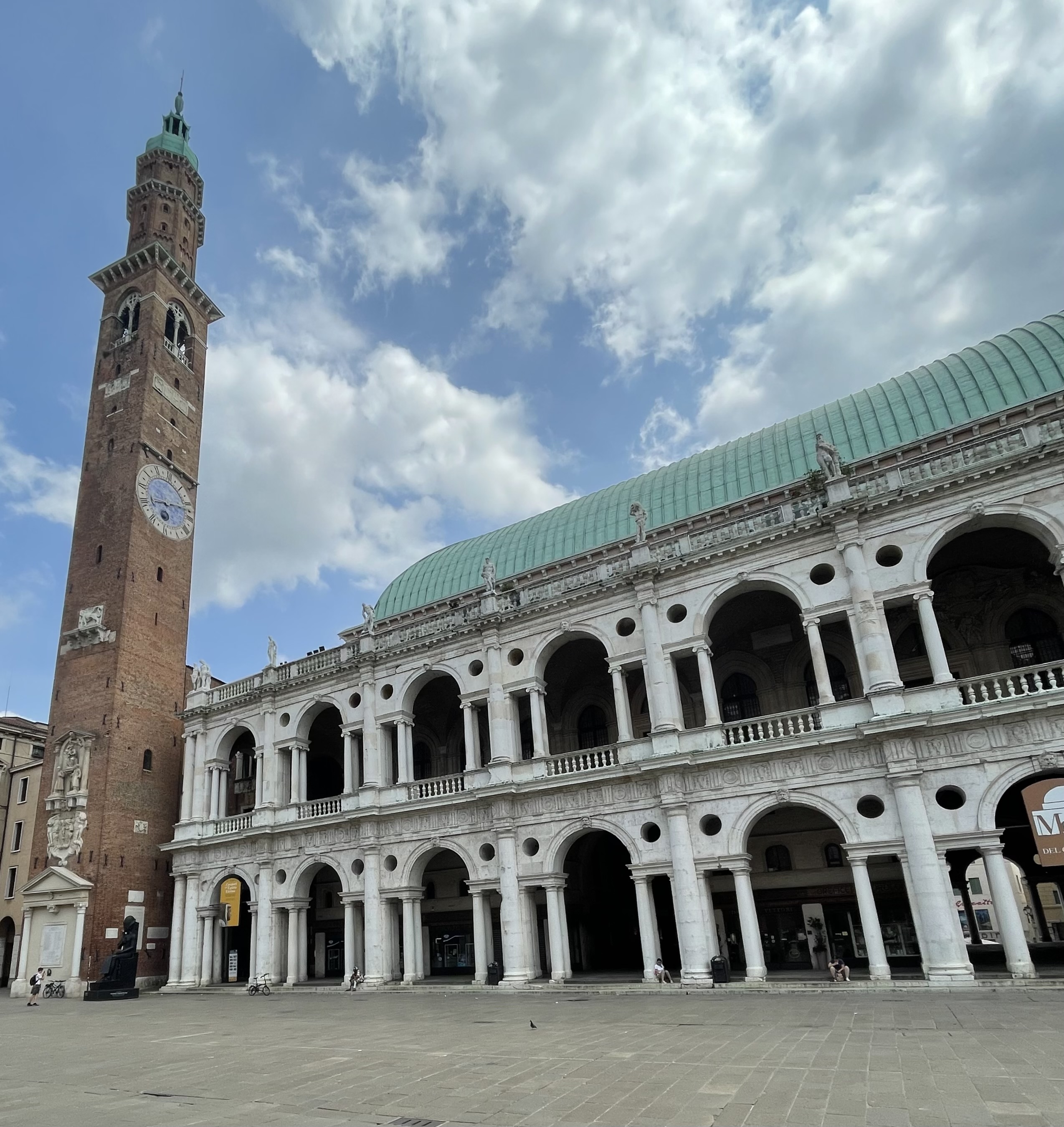
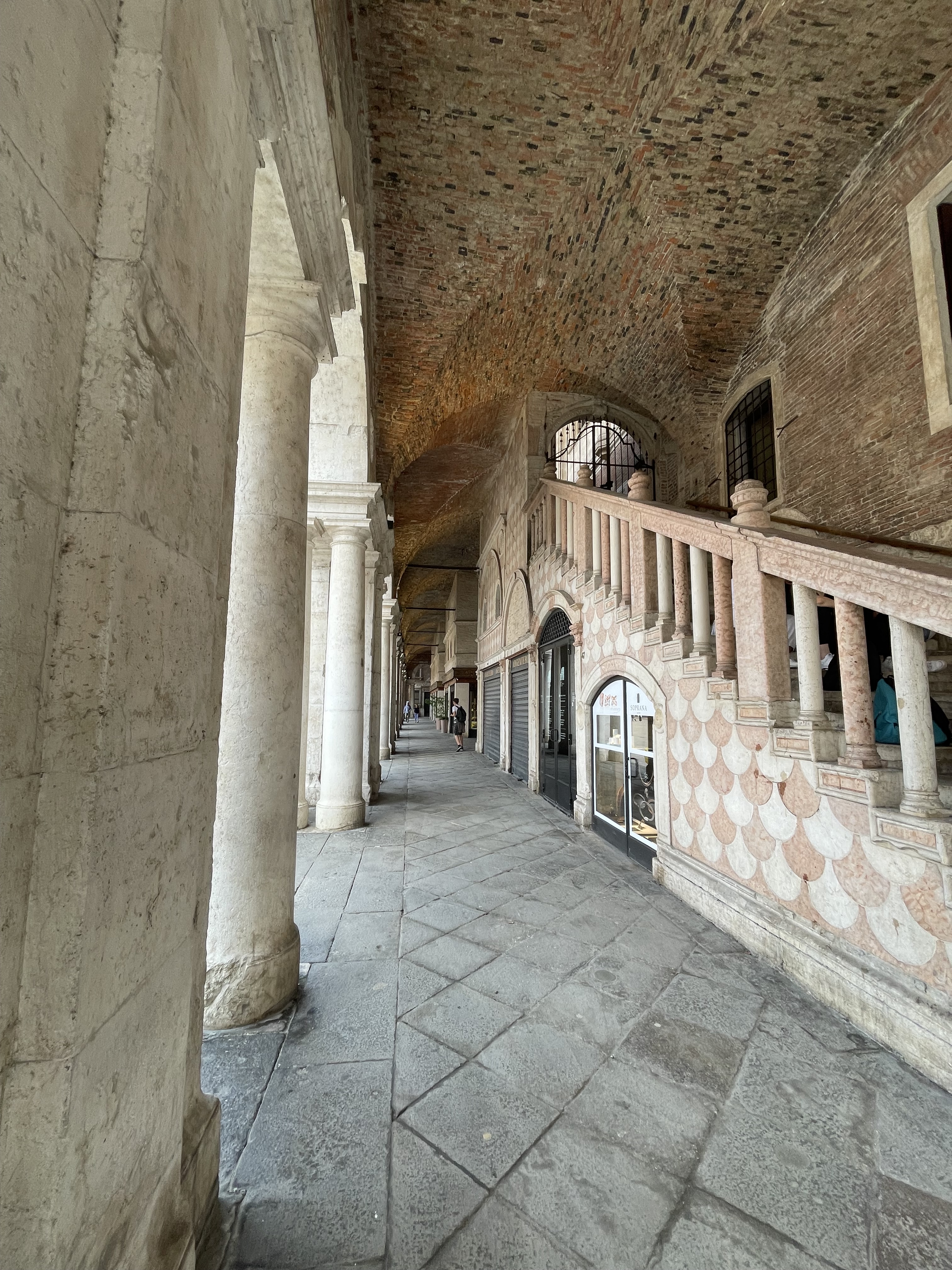
And Palladio:
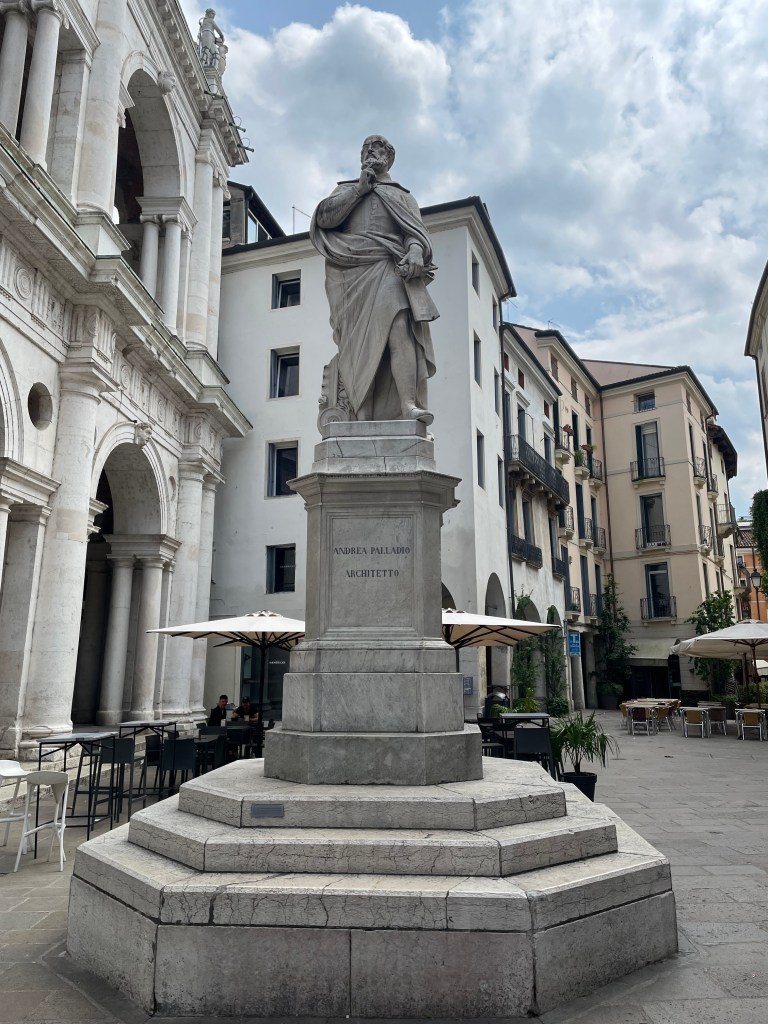
We could have continued for hours if not another day with buildings inside and outside the main town center of Palladio’s design.
We then drove home (after 5 days, it does feel like coming home), did a final wander on our own and then made dinner trying to clean out the frig and cupboards since tomorrow’s travel is car to boat and will be harder to carry multiple bags.
 Reb's Walks!