Padua/Venice
Today was our travel day from Verona to Venice, but we stopped in Padua to see a colleague of Leaf’s, Enrico, and one of his post-doc co-teachers, Marta. The traffic getting into Padua was crazy busy and it did not look like any kind of interesting inner city was going to unfold. Leaf, bless him, was driving. At one point the GPS guide told him, “make a u-turn when you can”; she’d given up. The next thing was take a right or a left with arrows pointing both ways. Needless to say, Rick in the front passenger seat, had his phone open to another map option and between the two, we finally got into the old city. Then parking – nope, none, anywhere. We’re looking and looking and getting more into the old city and then Leaf said, “I think left”, all other voices said, “looks right”, so he went left.
This was the result.
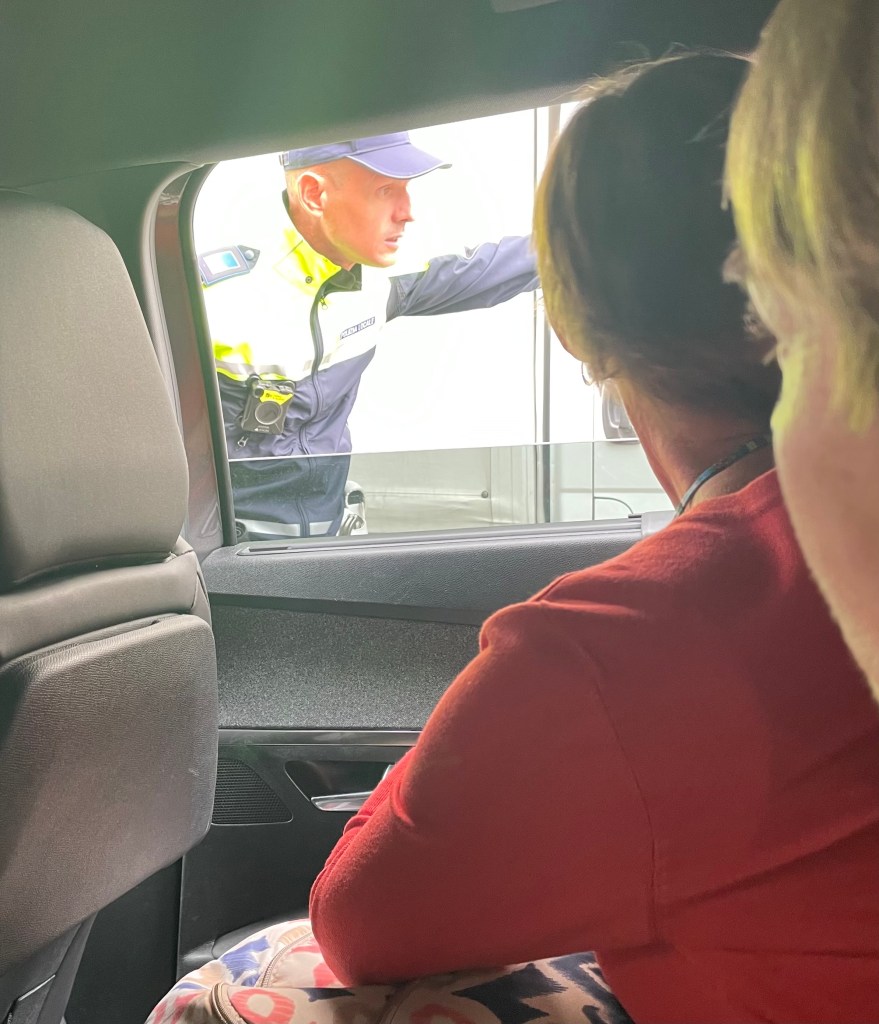
Aaaoouuut! Aaaoouut! Only pedestrians! Yep, repeat of Sienna. Needless to say, hilarity was reining inside the car. The first person we saw as Leaf drove into what turned out to be the MAIN pedestrian area between the town hall buildings and the university, both from the 1200’s, was a woman who ran toward us, but also was laughing. She stopped us and then ran to get a policeman who could speak a bit of English. Sharon was quick to grab my phone and get photos. I was laughing too hard to think about it. Those words above were the policeman’s. But he too, was smiling and directing. Leaf had to do a u-turn in the same area in the drive of shame back to the street that would lead us out.
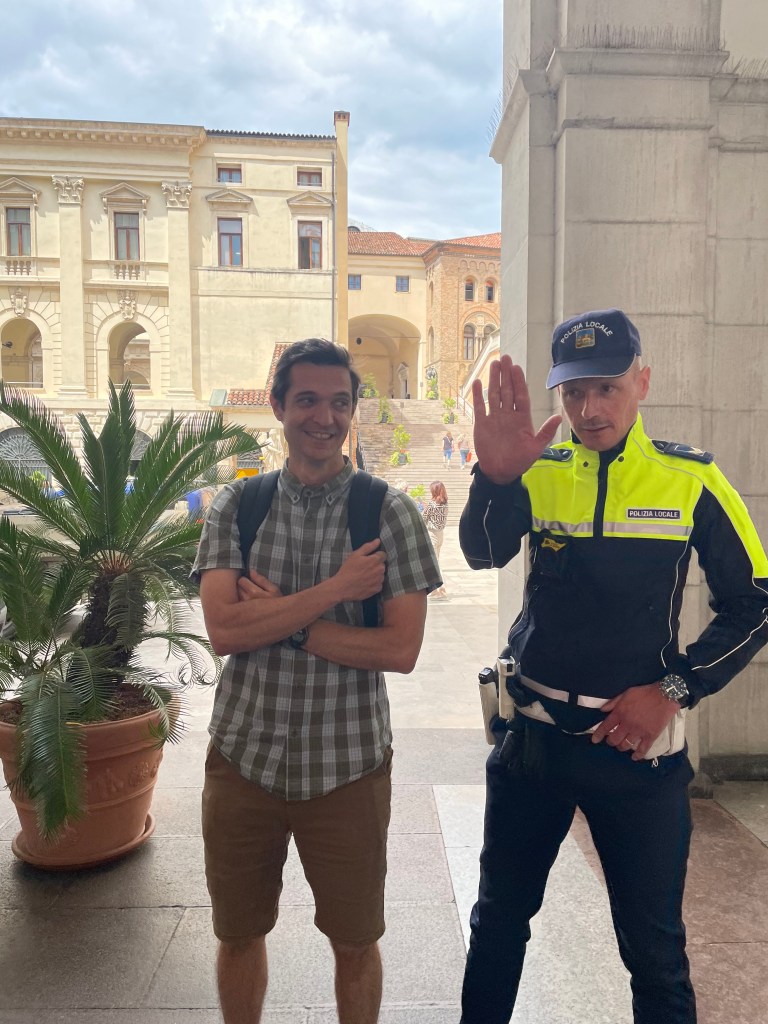
The rest of the drive until we finally found parking way outside the center area was filled with repeating the aaaooouuut directive. When we walked back into the plaza to explore, the first person we saw sitting in the guard booth was the policeman who’d directed us. I waved at him, laughing and he promptly came out to greet us. When we asked if we could get a photo, he immediately joined into the fun of it, telling us to wait while he adjusted his swagger and belt of gear. So fun. Great intro to Padua.
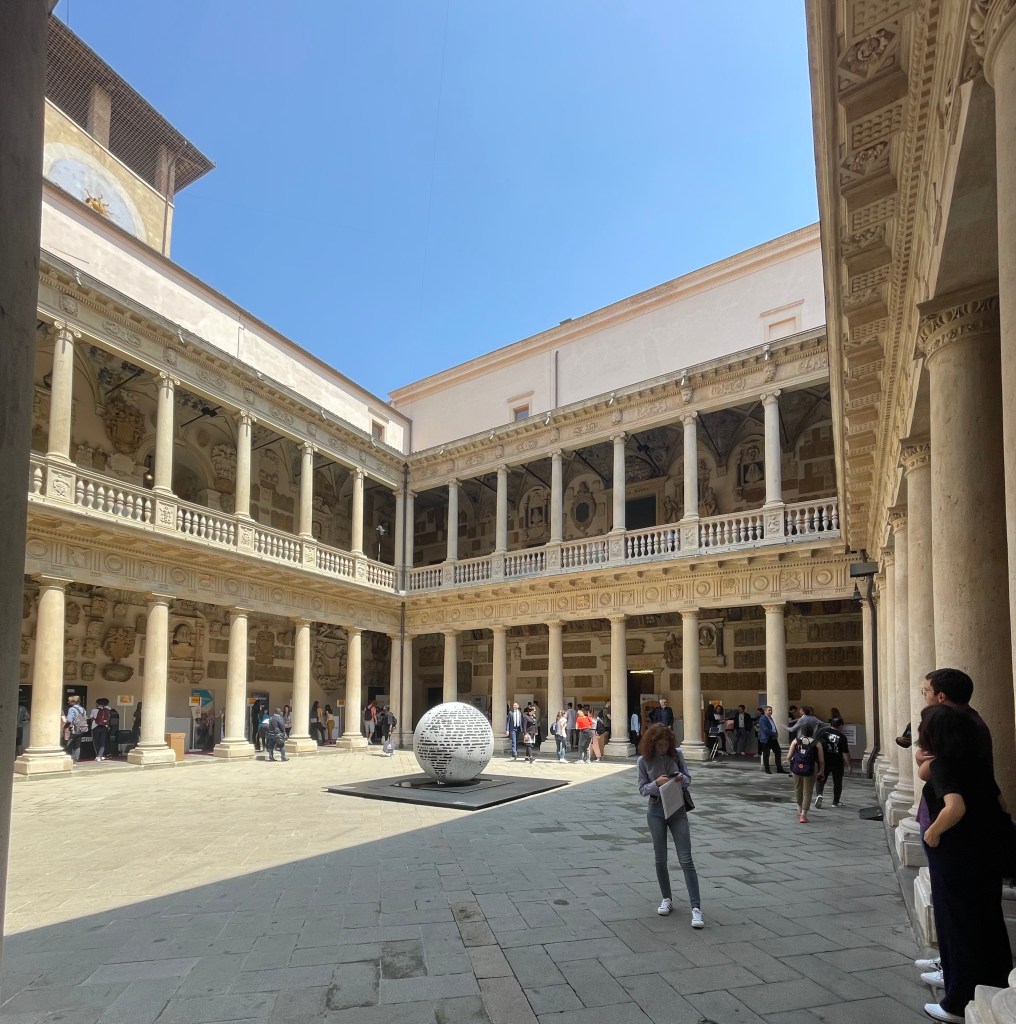
The buildings, per usual once you’re in the center, were beautiful. First town hall, hard to capture because of the multitude of layered buildings:
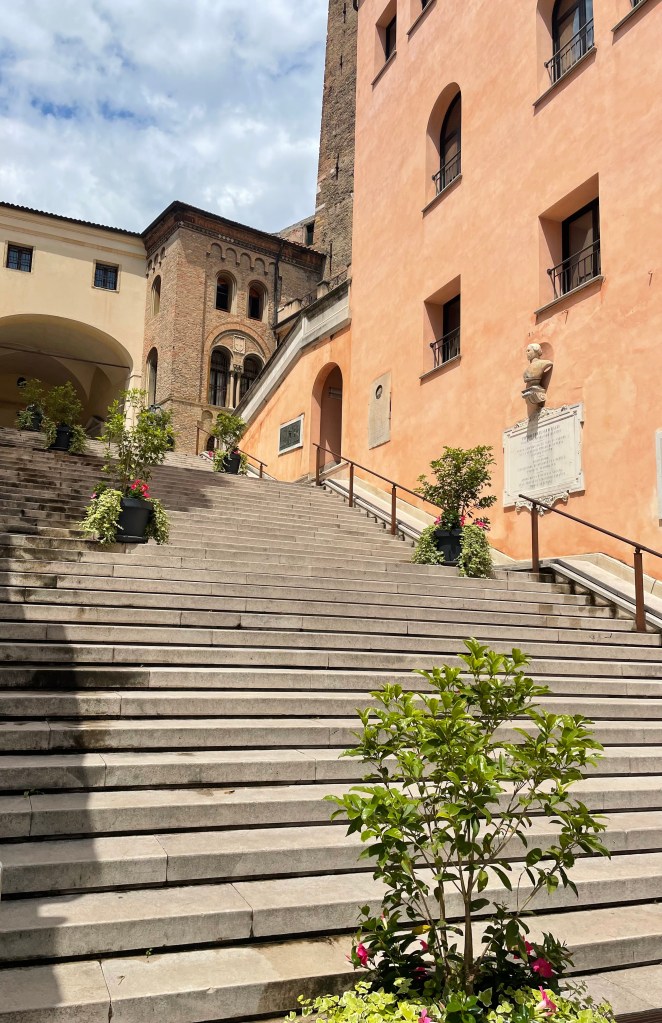
Then the university. The university is the 2nd oldest in Italy and the 5th oldest continuously operating in the world. So cool. And Enrico had offices in the old buildings and brought in us for a brief view. It was career day for new/potential students so a very active scene.
We had a lovely coffee and treat at one of the oldest coffee shops that was in the area, creating part of the communal culture between town hall and the university. Looks modern now…

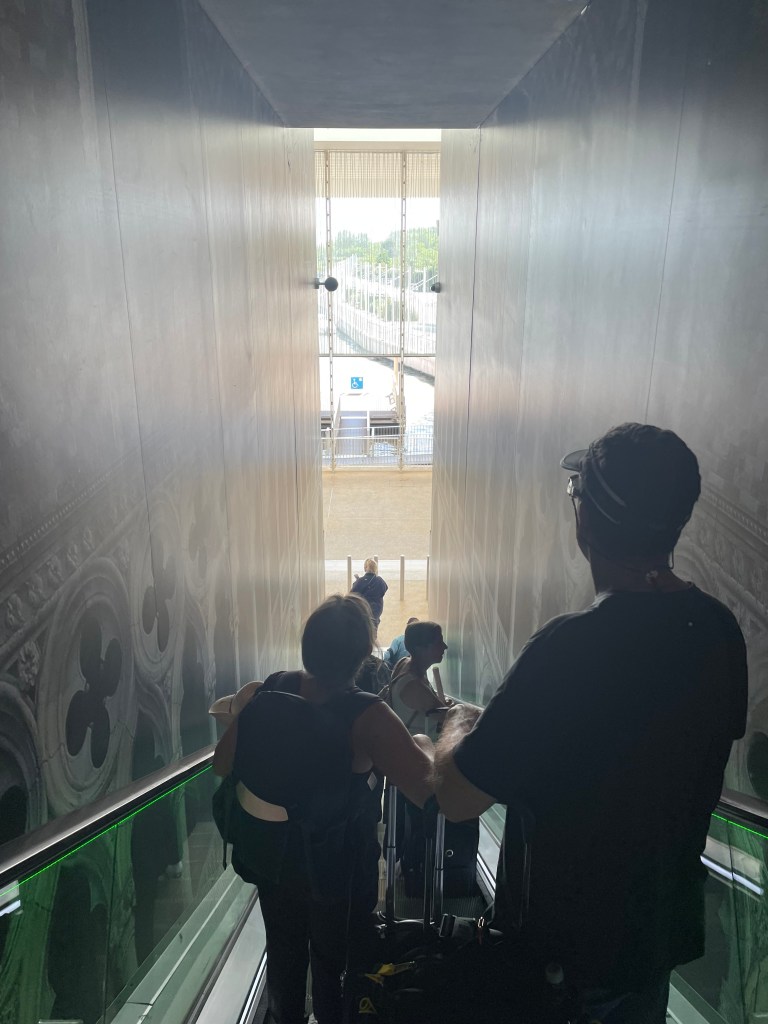
We then drove to the Marco Polo airport to drop our car, with a bit of a sigh of relief, and then walked our things through the airport and suddenly come out on a dock! I knew we were getting a boat taxi, but was still surprised. Sleek elevator and then there’s the water with a dock:
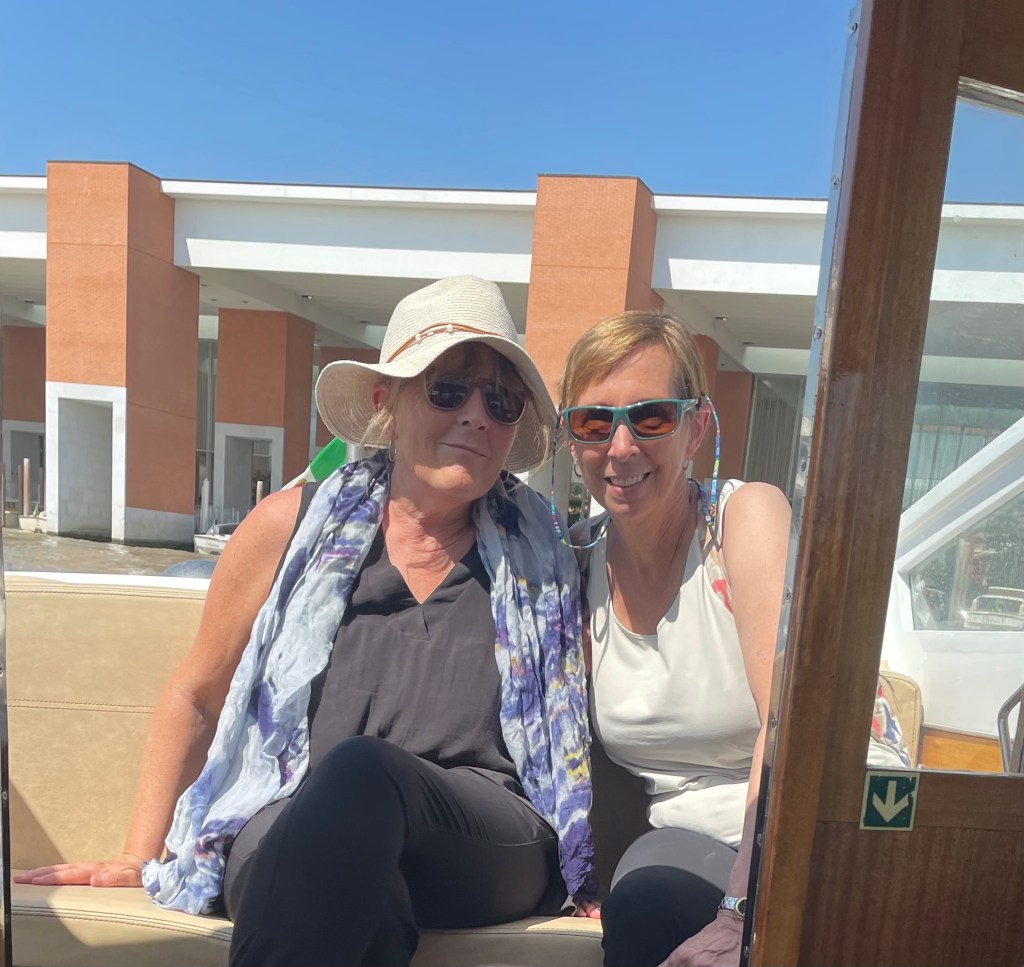
Coming into Venice, passing islands:

And then – Venice. Oh, how lucky am I to get to finally see this magical water city with Rick and such great friends. And we had 3 nights! Our water taxi (I’d call it a boat) brought us to the campo San Giacomo dell’ Orio. We got out on the dock area, walked over the little bridge – our first of many – and our apartment was in the first building on the right. The gentleman who was meeting with us to get keys was right there, so easy! Our apartment is neat and clean, on the 2nd floor with windows onto a little courtyard complete with well and other windows overlooking the canal. Low timbered roofs and a bit of up and down to create 3 bedrooms. Just enough to stumble on 🙂 I’m guessing it’s VERY hard to have modern conveniences in many of these apartments, so felt lucky when we saw ours. Plus the host has been beyond helpful in setting things up.
We had an hour to settle, then I looked out our windows to the parch below and there was Andrea – the guide I’d arranged. The tour was titled “Venice from a Venetian perspective” and Andrea was fantastic. Born and lived here all of his life and loved his city. He led us through a series of little “streets”, over bridges, telling us history, and his perspective as a Venetian: “I leave in August because of the crowds or I might get socially inappropriate.” He told us there are now 50,000 residents; it’s a dying city. There were 150,000 in the 1950’s. And 5,500,000 visitors who came through in 2019. Yikes.
But we got unbelievably lucky. A bit prior to high season and the weather – Andrea said this weather is truly miraculous. Mid 70’s, breezy, dry. It will forever leave us with a misperception of how wonderful the weather is in Venice. That works for me!
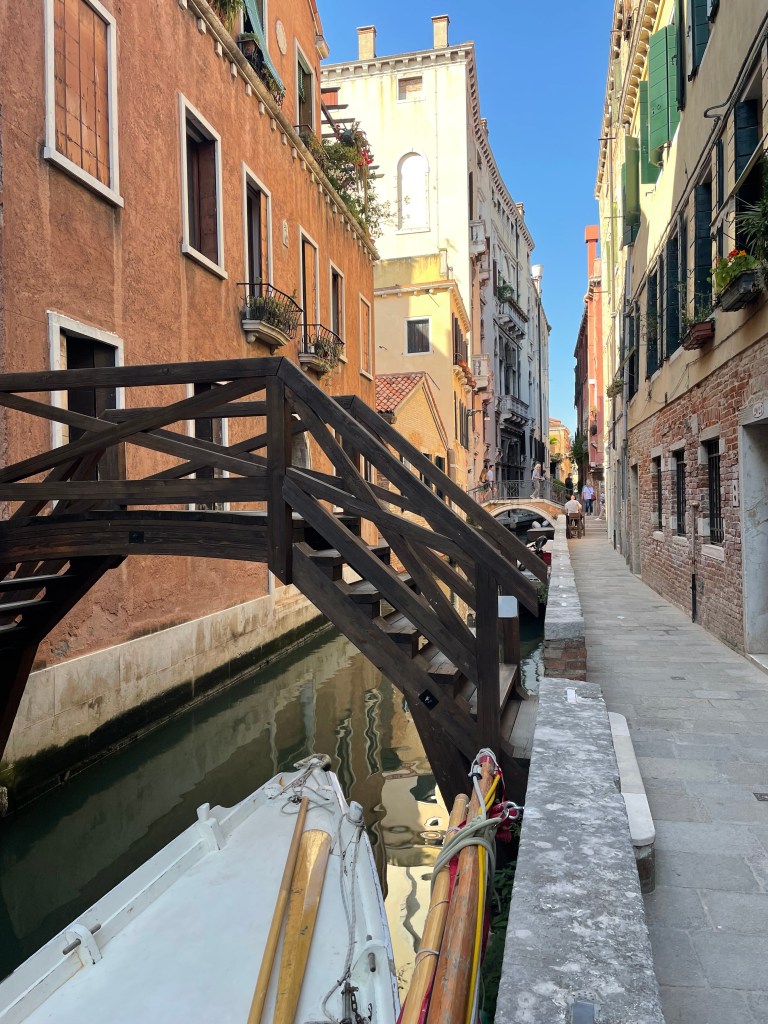
Andrea said that it’s a small town, you can easily walk everywhere. And maybe he’s right, but we walked a ton each day and still didn’t see everything. It’s kind of a mix of every section looks the same with multiple bridges over multiple canals and yet looks different. There are 180 islands, 170 canals, most natural, only manmade ones were the larger straight ones. Otherwise, they wind in often tight curves. Our last walk back to our hotel we found yet another huge plaza we hadn’t seen.
It’s a mix of worn out beautiful city, gorgeous buildings and bridges, and some parts that looked well fixed up. It radiates history, my favorite kind of place. Hardly any trash or graffiti – most of the books I’d read about it were set in the 1800’s and articles for more recent times and I expected a much dirtier city. It was beautiful. I loved, loved it, and couldn’t believe I was in Venice.
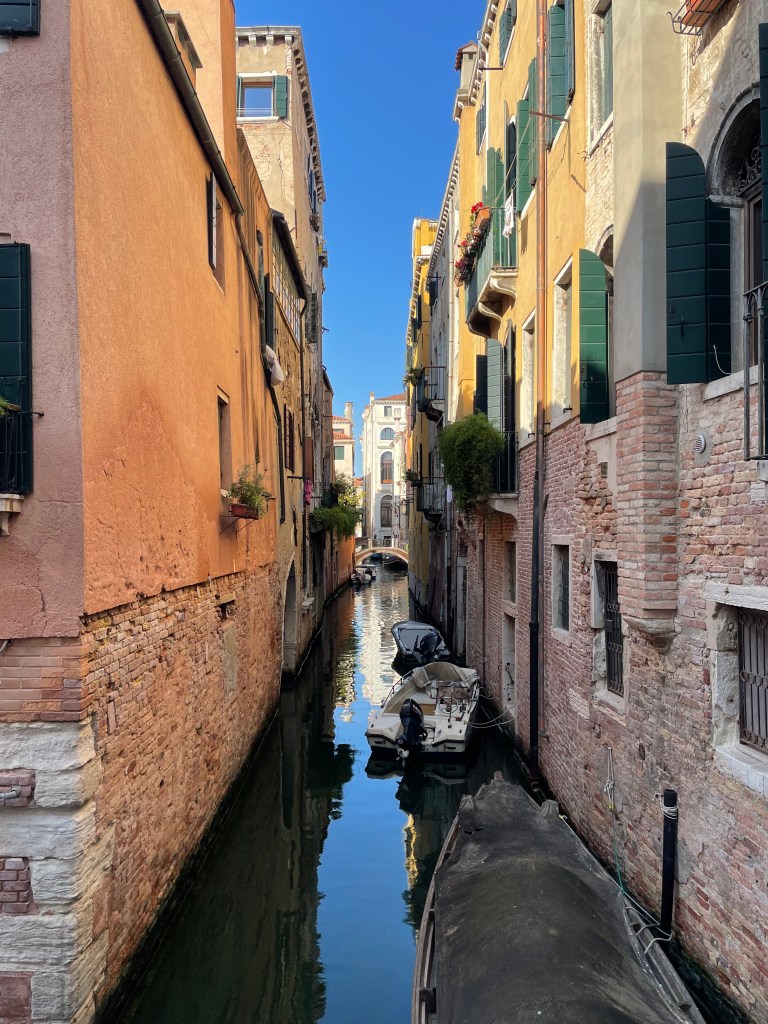
Few scenes:
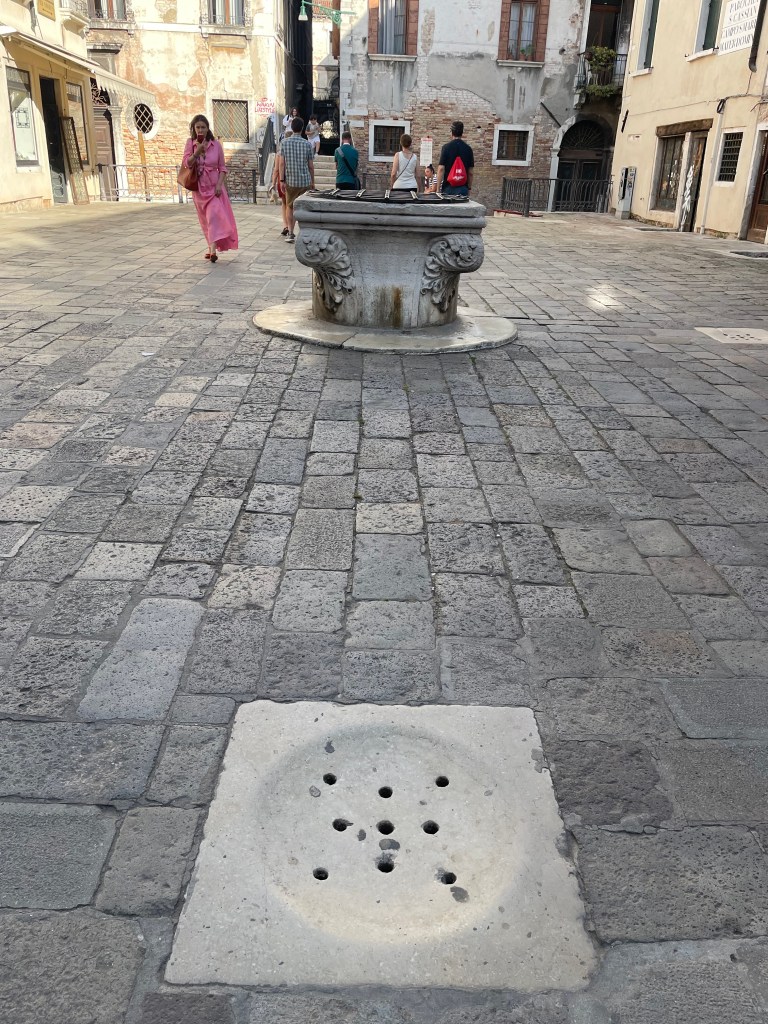
The well below is typical of almost all the plazas. They built big cisterns below with the water filtering through the sand so that when it reached the well, it was clean and good for drinking. The number of drains depended on the size of the plaza. This one had 4, the closest one to us the white square with holes.
Interesting facts from Andrea:
History: Venice was a naval power from the 5th century. Began its power when people fled the mainland when Rome fell. She was independent for 11 centuries – until Napoleon 1797. During this whole time it was a trading city with aristocratic merchants (a contradictory state anywhere else) ruling. Ottomans were here since 11th century, and even during the Ottoman wars, there was still trading between powers.
How it was built: The marshland still determines byways, there are sand bars everywhere and you could actually walk across the lagoon at low tide with your head above water. Given the possible sewage issue, can’t imagine wanting to – but still. So all boats have to follow wooden pillars indicating safe pathways. Because of the high water table, when they started building, they had to pound large timbers as far down as they could until they hit solid packed clay. Then – since the timbers were covered and protected in the muck, they gradually turned into petrified rock. 12,000,000 wooden poles/petrified hold many of the buildings. Andrea showed us a picture of a big guy pounding down a timber with a giant mallet. Oh, ouch.
Re sewage. First – in the early industrial centuries, it was actually considered one of the cleanest of European cities because it’s a marshland, islands surrounded by water with tidal shifts that clean it out twice a day. In the 50’s 60’s, they installed septic tanks for all, oy, can’t imagine that project. So now – a system, but a system that can be and is overwhelmed by floods. Andrea talked about the locals watching visitors when water covers St. Mark’s square – lowest point – taking off their shoes and splashing around taking photos of themselves. Ach.
Population: Breaks his heart. Down to 55,000 and more than a 1,000 leave every year. It’s a gorgeous old folks home. 20,000 commute in from the mainland every day to work there. But it’s just too hard/expensive to live there. The usual of outsiders buying up for second homes and raising the prices.
I have to say walking around, there are SO many young people. On the weekend there were many large groups of young people – lot of bachelor and bachelorette parties. Plus there’s a large university in town with 30,000. And the tourists were a wonderful mix of peoples, ages, backgrounds, languages. So the lack of population is not obvious. Our apartment was in the wonderful neighborhood of San Giacomo, quiet, enough off the beaten path that in the evenings and weekend it felt local, there were all kinds of families. Kids with bikes, soccer balls, running around while parents ate at restaurants on the plaza. In our building, it seemed like we were in the only rental. Others were off to work, hanging laundry, etc.
So – a lot more, there always is, but those were the highlights that Andrea gave us.
We then had a dinner at a place that Marta’s (met her in Padua) boyfriend’s cousin owned near the Rialto Bridge and walked home with the gift of GPS who was not quite as confused here. A great first day in Venice.
 Reb's Walks!