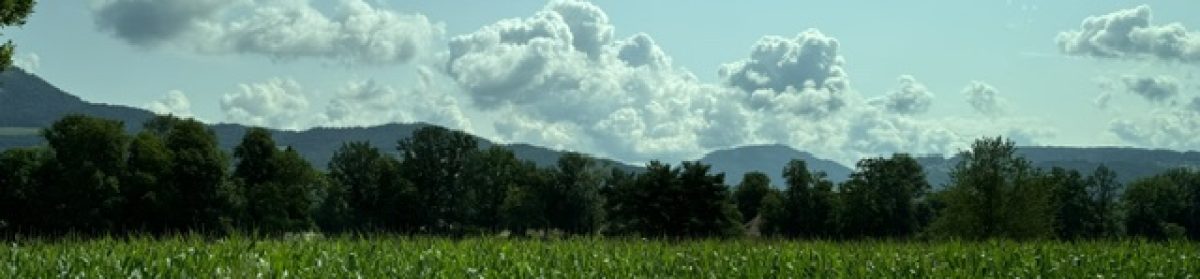
Llanes to Ribadesella, 23 miles
First a note from yesterday walking the town. We actually were able to go into the cathedral and sit for a bit. And we could sit because it was the first church that didn’t smell overwhelmingly of mold. Of note were the two giant shells at the top of the rentable. This was clearly a camino church. And, unlike most others, it held regular masses. I would have gone just to see, but too long a day and it was very monitored. Tourists were not invited during that time except for the mass and I didn’t want to sit for a full hour.


Today:
We made it! And we walked the whole thing, it just unfolded that way. We got to the point, the only point really, where we could easily get a taxi – and saw one waiting for a fare – but it was way too early. We both agreed we were having a great day, it was pretty and we kept going. Incredible, given that Rick broke 4 vertebrae, one shattered, only 4 months before we started the walk.
Here’s a photo from last night, I got Rick to walk up despite the 97 stairs because it was such a pretty view, plus I wanted him to see the green path I hoped to walk to start our last day.

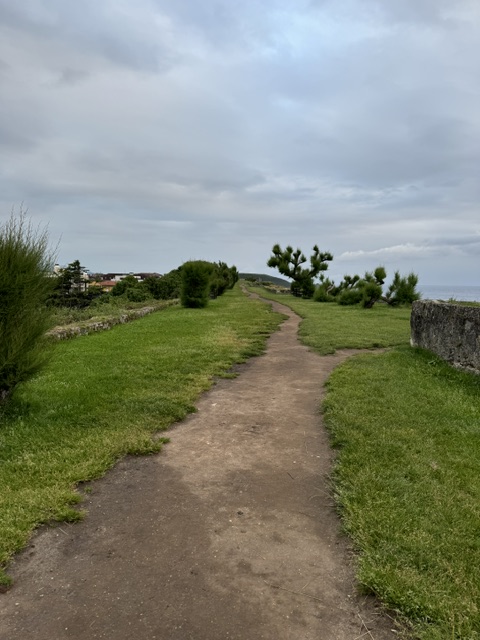
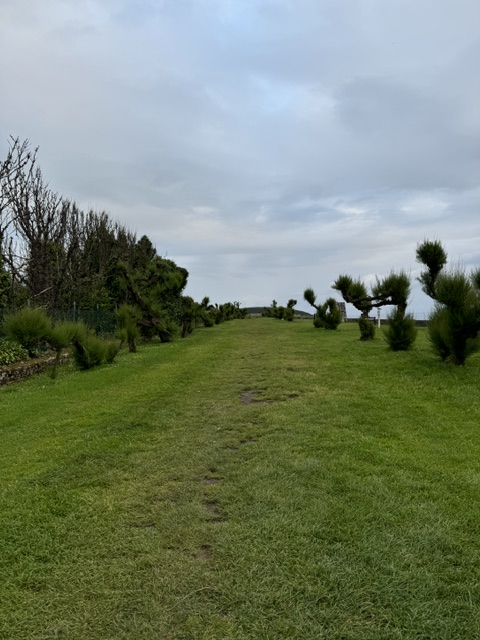
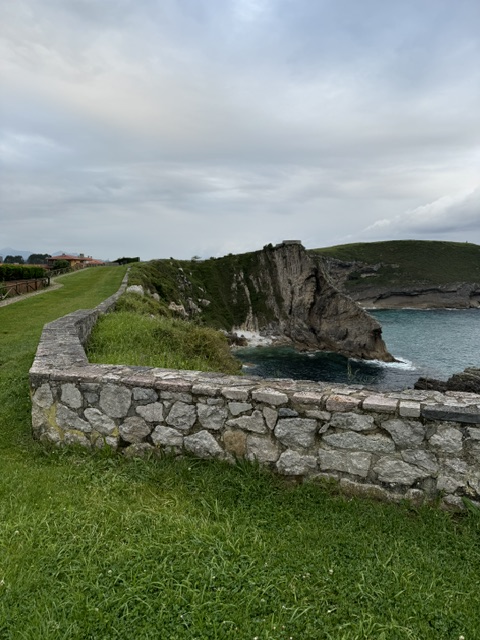
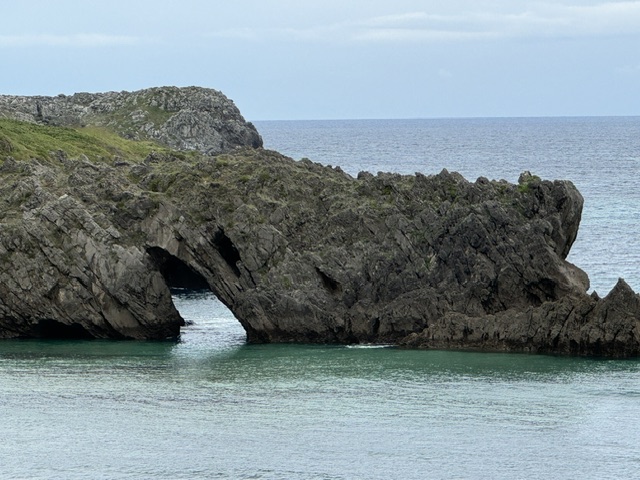
This morning, the first part of the walk right along the coast was such a gift. It was the green path from the top of the hill that we’d been on last night. Rick had agreed to do the extra 1.6k (on top of expected 20 miles) by going the coastal route which I really wanted to do. A wonderful way to start our hike. I mean, look at these photos – this is was what we walked. The one photo with the rocks down low looks like a man’s head, pointed out by a Spanish birder out for the early day’s walk. The other with the rocks sticking out from the side, he also pointed out – nature’s gargoyle.
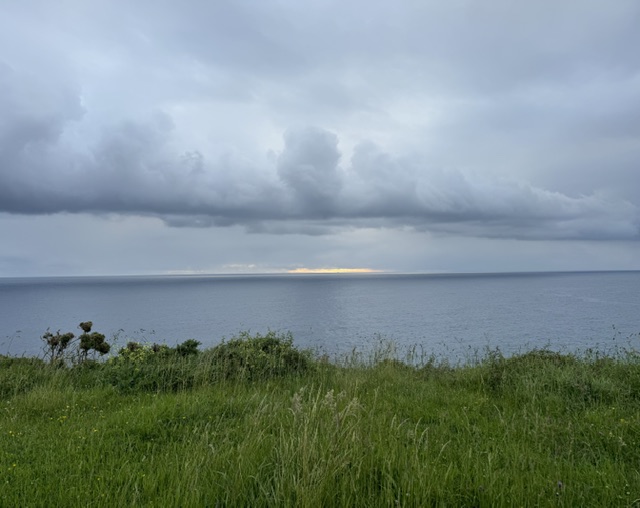
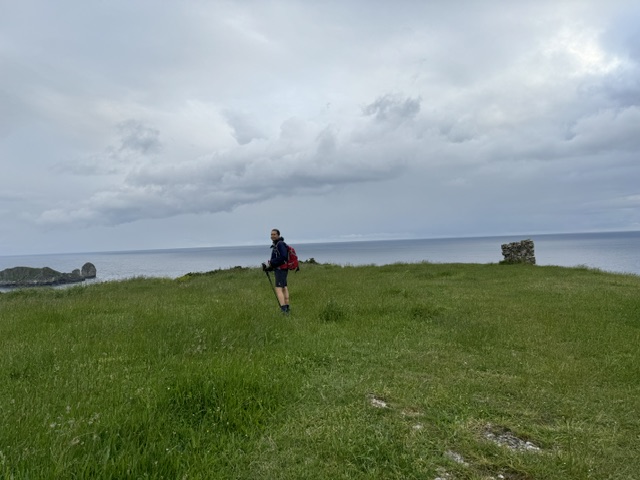
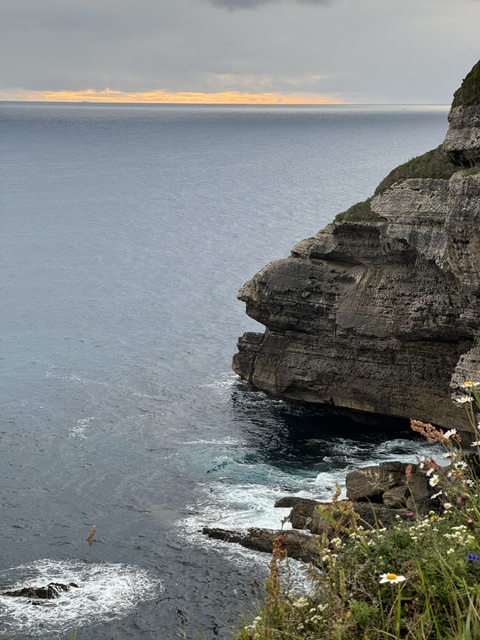
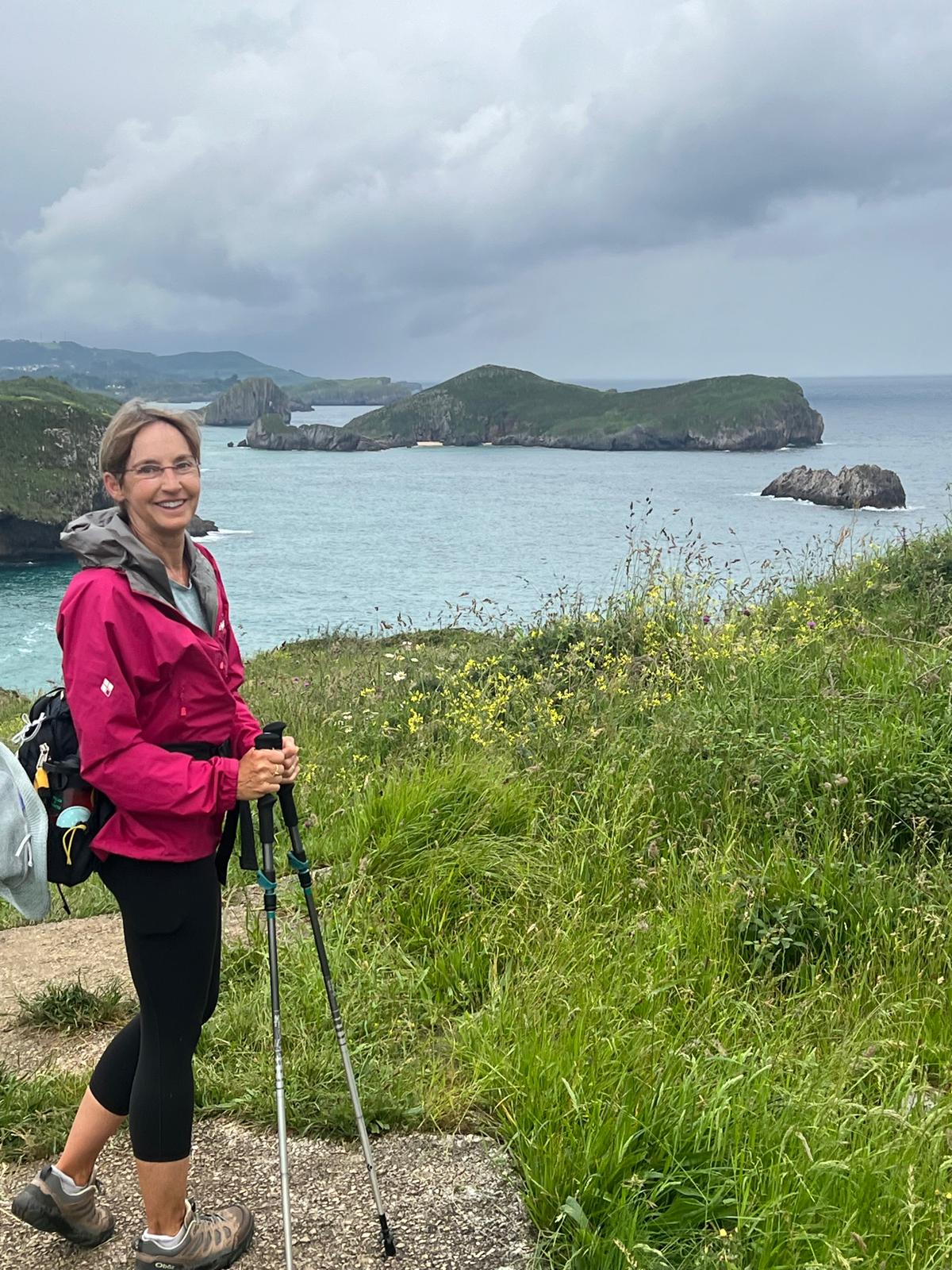
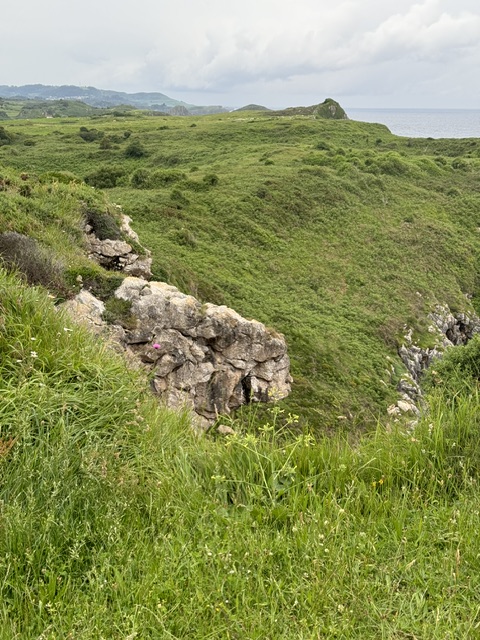
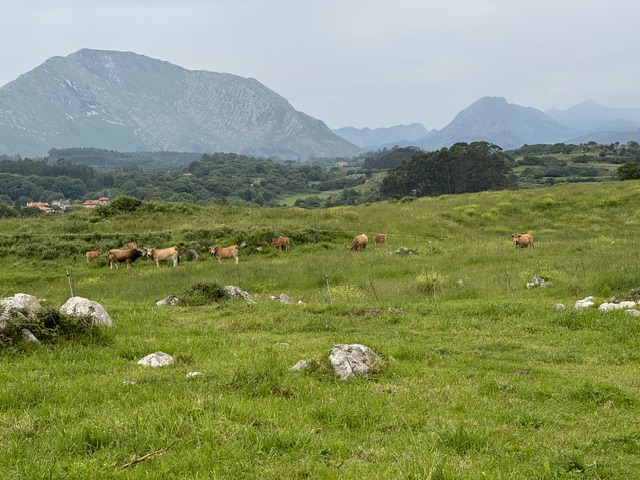
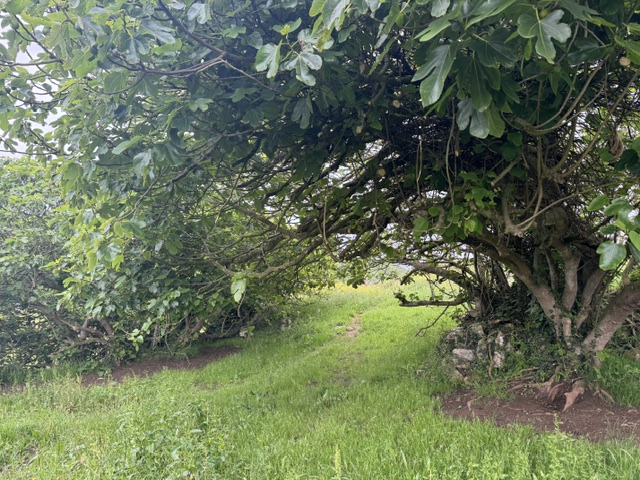
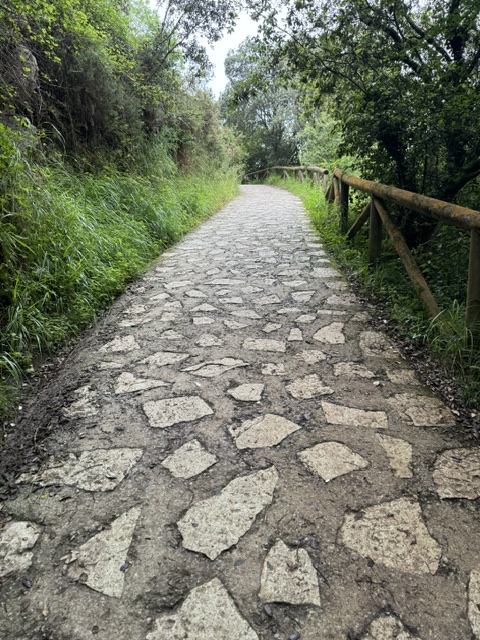
Rick and I’ve both developed a system that works for us with water/electrolytes/food to keep us going on pace. I used fountains all along the way since I only carry a one-liter bottle. I have come to love the LMNT packets for electrolytes. I’ve also learned I need to eat every 2 hours or less – at 6 drank my wee protein shake before we left, morning snack at a bar on a beach, then my meat/cheese and roll, the “picnic” the hotel gave us for breakfast, then my Whole Foods protein balls, then my almond M&Ms, then my honey sting gummies – and I still had a pumpkin seed back up that I didn’t open.
Here’s our last camino breakfast! Looking over the cove with the monastery on the right.

The guide book had said that we would pass some monasteries on the way and that these early monasteries had it down, prime real estate alongside the town with the best views and access to the water. No kidding.
The first monastery we passed, the Monasterio de San Salvador de Celorio, a Benedictine monastery. Sign says 17th century, but online it looks like this building started in the 11th century, but info was pretty sketchy. It first presented as a pretty, well-kept small church on the path. Then we had our breakfast and continued up a little path on the other side of the beach to the promontory just to see the side view and it was huge! Plus a castle up on the hill. The monastery looked like it was in surprisingly good shape, couldn’t really discern the details for either this or the castle from this distance.
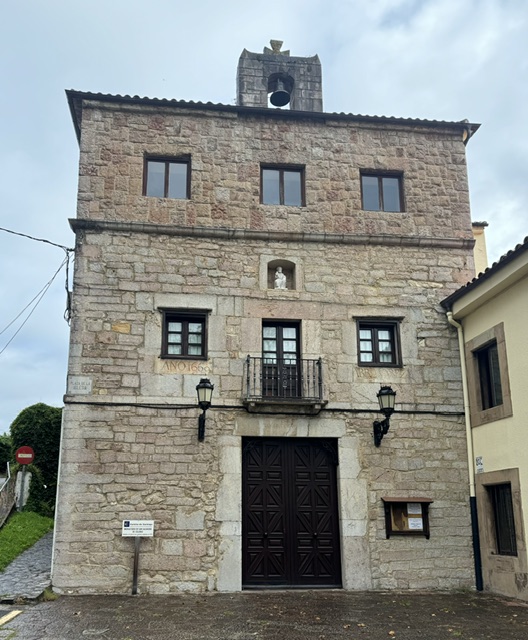
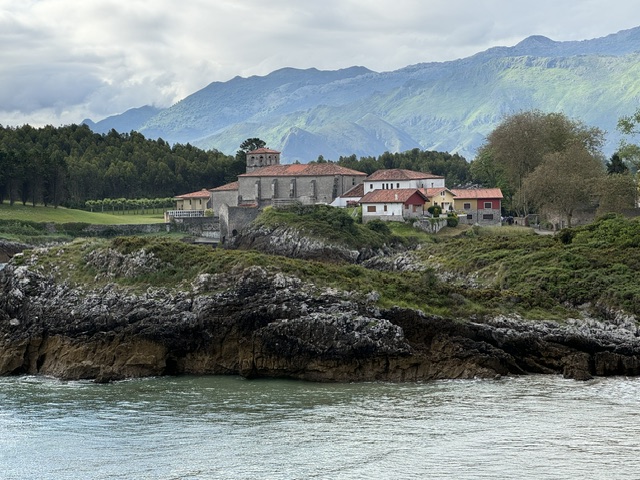
And the castle/fort/place for bad monks? up the hill to the left:

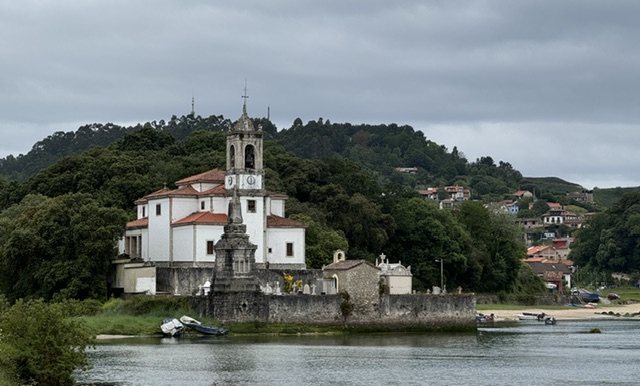
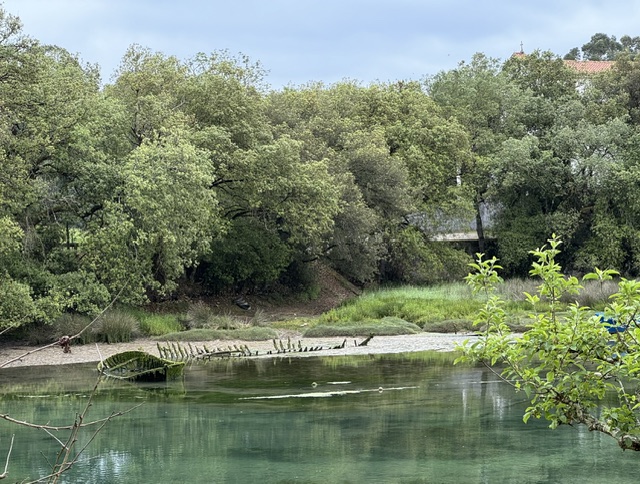
The Iglesia de Nuestra Señora de los Dolores. I wondered about this one since “dolor” means pain or to hurt. Ok, “Our Lady of Sorrows.” Well, I guess she did have a rough life. Built in 1794, a youngster. And next to the Iglesia was a marine graveyard. Rick said it looked like an Andrew Wyeth painting. I think the boats are older than the church.
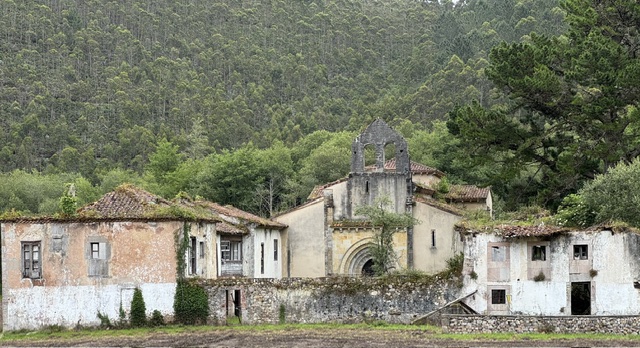
The Monasterio de San Salvador, also Benedictine, had a pilgrim refuge in the 13th century. For me, the visual just leads the imagination to think what it would have been like to come upon it after so many miles of walking in the 1300’s, 1400’s, 1500’s, how long? And then the changes that led to today’s condition. It’s been declared an asset of cultural interest. So enough money for a plaque, but sadly for the building’s sake, no more. But it is zoned for agriculture and heritage, so no condos coming in.
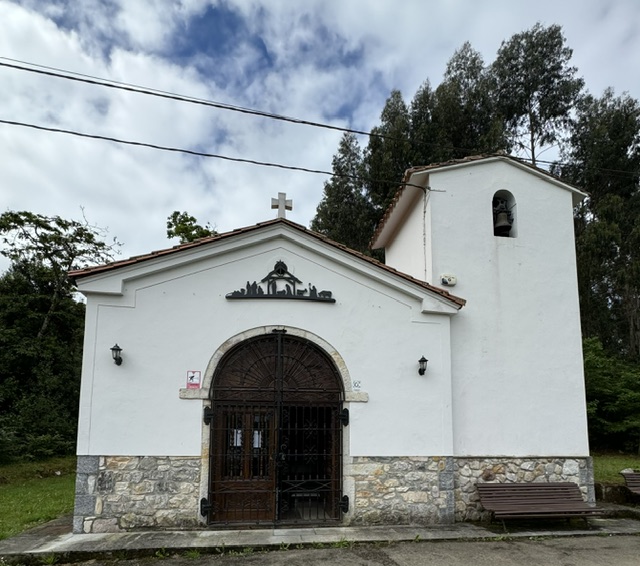
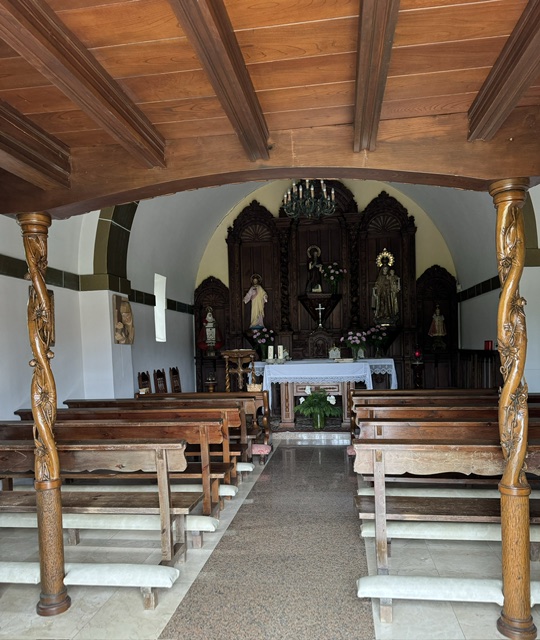
A chapel that was finally open, so calm and sweet, hearing the cow bells behind us. If we had had more time we would have sat for a bit.
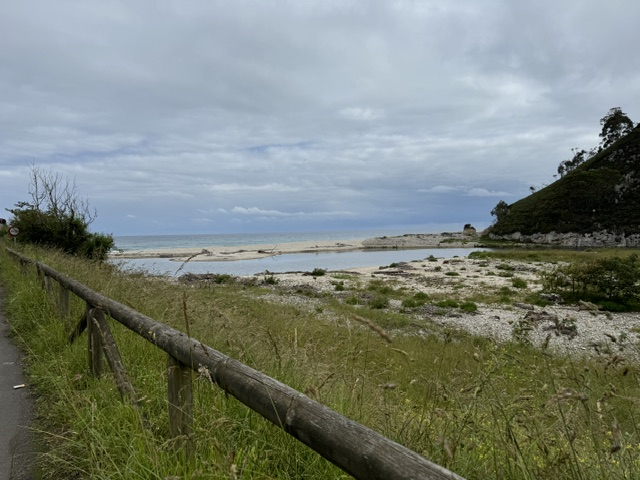
Walked in the meadows and hills, then get sightings of beaches or coves.
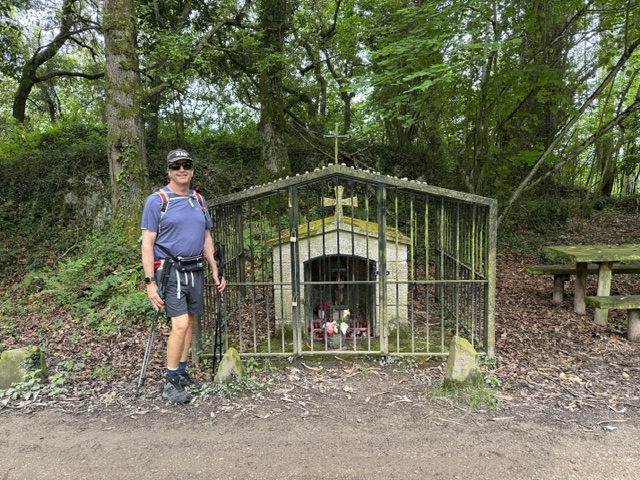
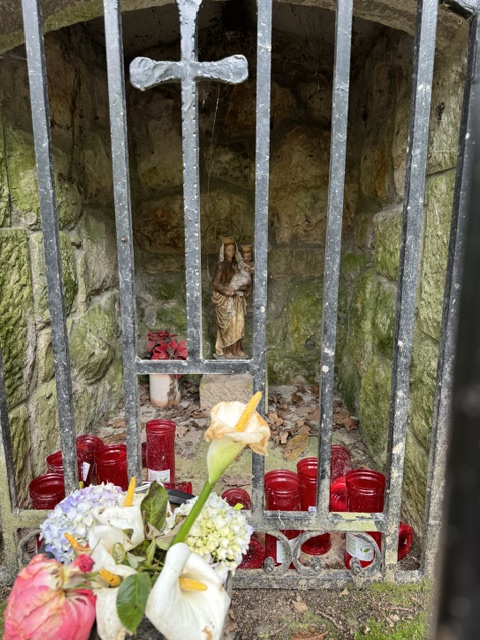
And a dog’s chapel? We really didn’t know, but clearly cared for with many candles.
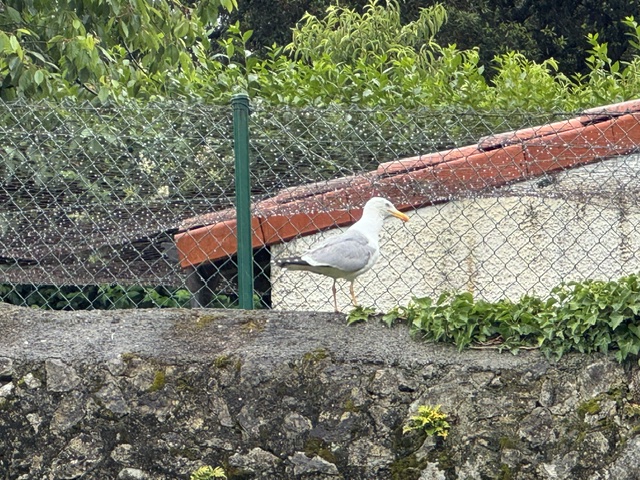
This seagull got us both laughing. It was walking up and down, stopping, looking longingly through and talking to the chickens in the other side for the fence who all had something to say. Clearly confused why it wasn’t in there with its fellow chickens being handed food for no work!
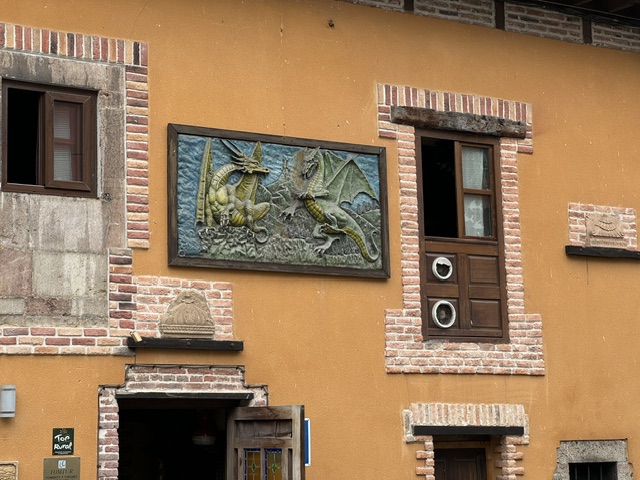
This was the town, Nueva, that we thought might be a stopping point. A pretty and very active small town, but what intrigued us was the theme of St. George and the Dragon.

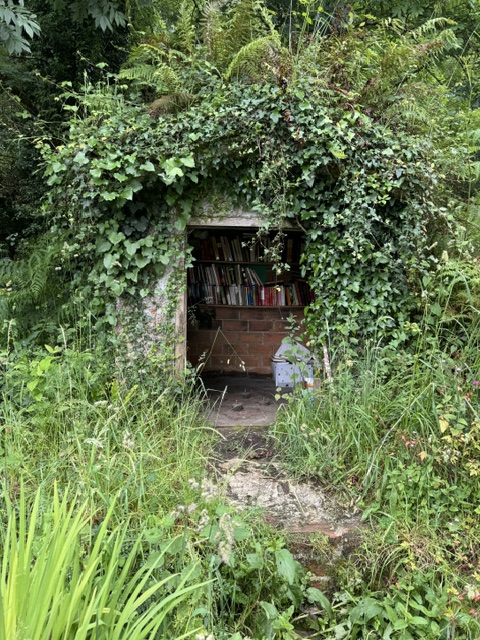
And our kind of chapel, for sure, just missing a few chairs.
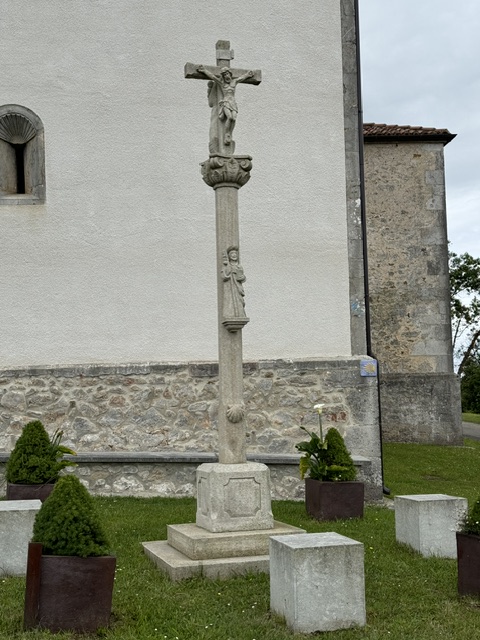
One of our stopping points, a church with a step to sit on, a cross that is the marker all along the Frances, but first one we’ve seen here and a fountain on the side of the cemetery. A group of Spanish women asked me if the water was potable, I said yes since it was actually marked on our map.
Really glad we’re on this side of those mountains and we don’t have to cross them, but they’re beautiful to see in the different light changes we keep having.

And we finally walked into town, but it didn’t feel like we were dragging the last few miles, a nice change. The town, Ribadesella, is known, like Santillaña del Mar’s Altamira, for its caves. The Altamira caves have had to be closed for protection reasons and a museum has been opened up with a full replication – can’t imagine. In Ribadesella, you can see the real thing. You have to reserve long in advance for both. Someday – maybe we can return.
The town, Ribadesella, was conquered by the Romans during Augustus’ rule, then founded in 1270 by Aflsono X and like some of the other towns, developed around whaling. Then the wars totally impacted, from Napoleon, the Carlist Wars, and the Spanish Civil War. We didn’t se anything medieval, it seemed more Victorian on the harbor, if anything. But really pretty and inviting. Except since seen from tired feet, we just kept moving toward the hotel.


When we finally got to the hotel too late for eating and too early for eating, a feeling remembered all too well from my early days on the Camino Frances, we were both heading towards hangry. We got showers, stretched with the roller to get time used up and still – when we had to walk back into town (ach) for food, there was none. Seriously, not a single plate of ANYTHING on people’s tables in the restaurants, just coffee, maybe a drink, not even tapas. When I asked at a restaurant if it was possible to find food anywhere, he said not until 8. Oh yeah, that was going to be a problem.
The only thing open was an ice cream shop, so we got an ice cream, then saw a panadería that had empanadas and got enough to manage the evening. Really, we didn’t need much, just something.
Then back to the hotel, walking the promenade a little just to see, and then Clarkson’s Farm and bed. I listened to the bells at 10, one last time for my Spanish bells. And I slept! It was a beautiful thing.
Hotel Verdemar, clean, outside of town, half block from promenade that goes around the bay. Good to ask for high room, no restaurant though it had the illusion. And no one else in the hotel, except maybe one person.
 Reb's Walks!