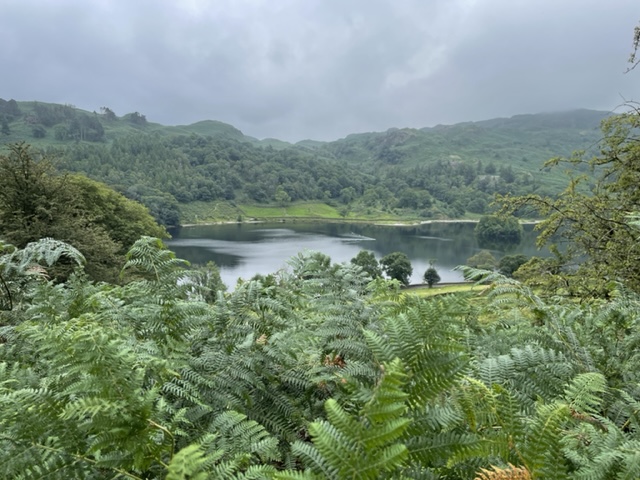
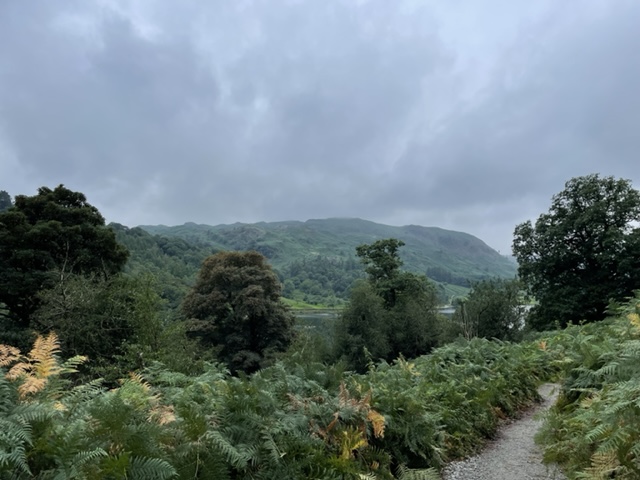
Gorgeous. There were scenes on both sides of the path that were so green and beautiful that it didn’t feel real. I’d stand on the path and take photos of both sides because it was just amazing.
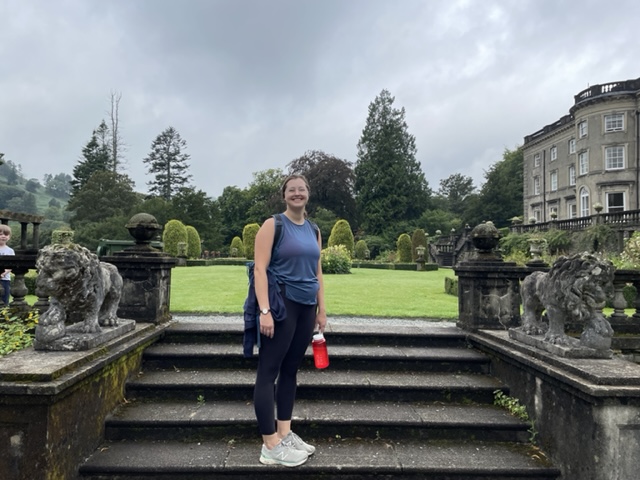
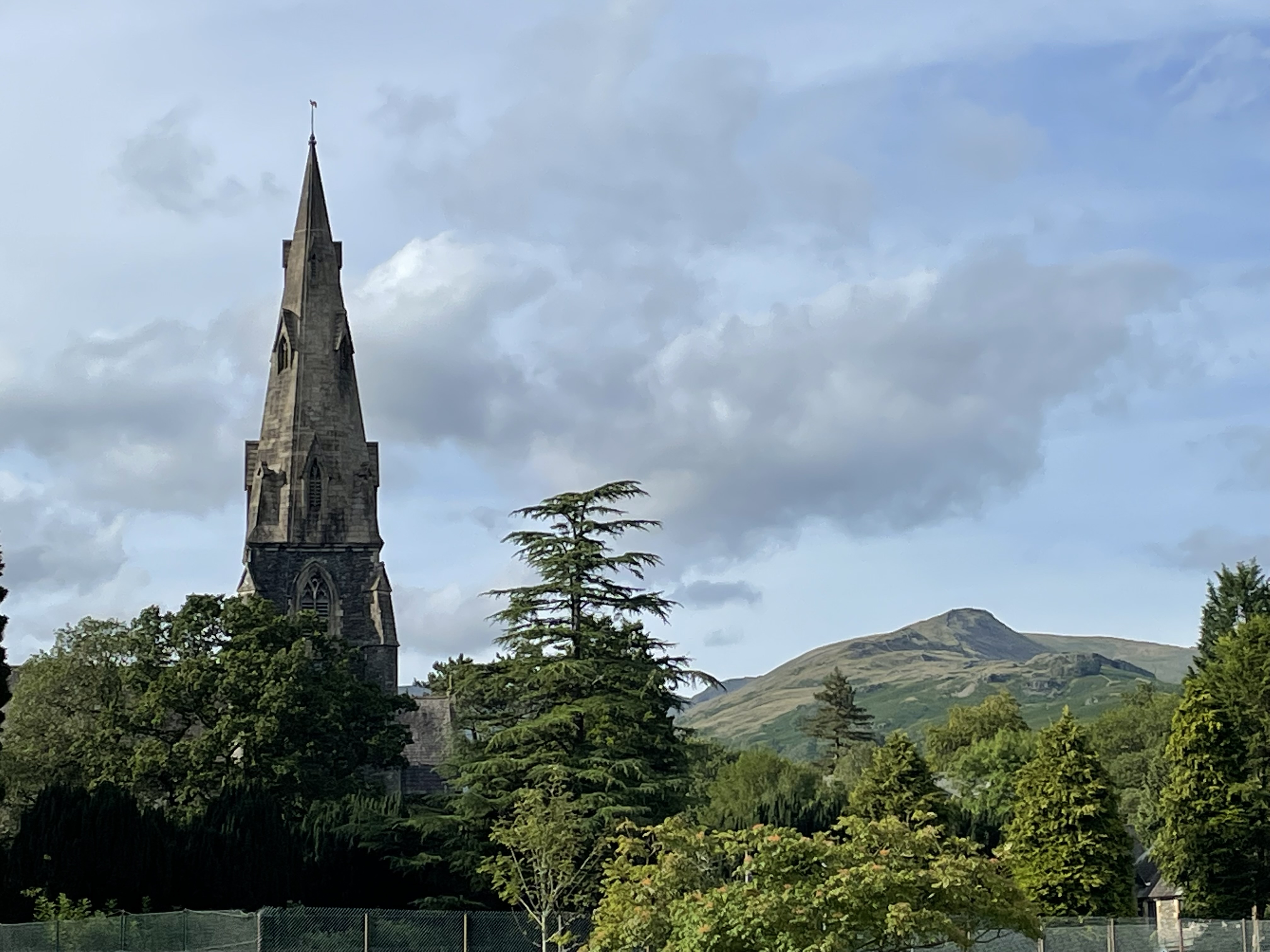
We walked out of Lancet House, up the road, then onto the path and we were on our way to Grasmere. We’d hardly gotten a head of steam going when we came up to Rydal Hall. A bit of history: The Fleming family can be traced back to 864AD and were related to Baldwin, Earl of Flanders. When William Duke of Normandy (William the Conqueror) mustered his troops to invade England and claim the throne in 1066, the then Earl of Flanders joined him and brought with him his kinsmen in armour. One of these was Sir Michael le Fleming who was also a kinsman of Matilda wife of William the Conqueror. Amazing. This manor house was the adaptation from the first building, built in 1409. Amazingly, the family lived and owned it continuously until 1973. The main reference people make to it though, is that Rydal Mount was the house Wordsworth rented from Fleming until Wordsworth’s great granddaughter bought it in 1969.
Rydal Hall
Rydal Manor
Wordsworth
So then, we went to see Rydal Mount, a modest house where Wordsworth, Mary, his wife, and Dorothy, his sister, lived with Mary and William’s children. For someone who loves personal history and house museums (me) this was a wonderful house to explore. William, Mary and Dorothy all lived, studied, and died there. And the best – because it’s still in the Wordsworth family – most of the furnishings are the same. Things that had left or been given away are still coming back, there were notes of art or books or furniture that were found at auction as recently as 2020. So cool.
Kaziah was very patient and let me explore and read to my heart’s content.
Then we kept walking on into Grasmere, another dream of a Lake District village. Not a long walk and we’re looking forward to climbing up to the crags tomorrow, but it was a wonderful walk. We found our hotel, Inn at Grasmere, bags already dropped off, and left our little backpacks and went out for lunch/tea. Went to a great place just down the way and had a wonderful lunch with tea and Victoria sponge for me and Bakewell for Kaziah. Both of which we’ve seen made on the Great British Baking show. Both of which Kaziah remembered and I did not. For me, really more about the personalities than the food watching that show.
After lunch we went to a really well curated small book store, left with 3 more books. So – walk, tea, books. And we’re not done yet!
We then went to Dove Cottage where the Wordsworths lived, first Dorothy and William, then Mary joined, and then the first 3 of their children. Again, well preserved, wonderful to see and more stories. Pretty cool to sit in their garden on benches in the same place where they would sit and listen (via QR code) to a wonderful English voice quoting Wordsworth’s poems written that exactly described what we were seeing. I do love history made intimate – seeing what he saw, listening to what he wrote, and wondering how hard was it for Mary that William and Dorothy were nonstop best friends, both intense, both writing. The guide said one of their good friends said that William and Dorothy were the two most selfish people he knew. At the same time, they had friends that lasted all their lives. Amazing family.
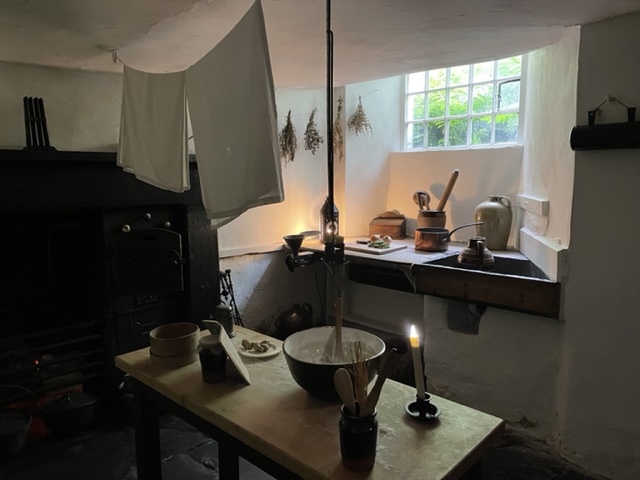
Dove Cottage kitchen
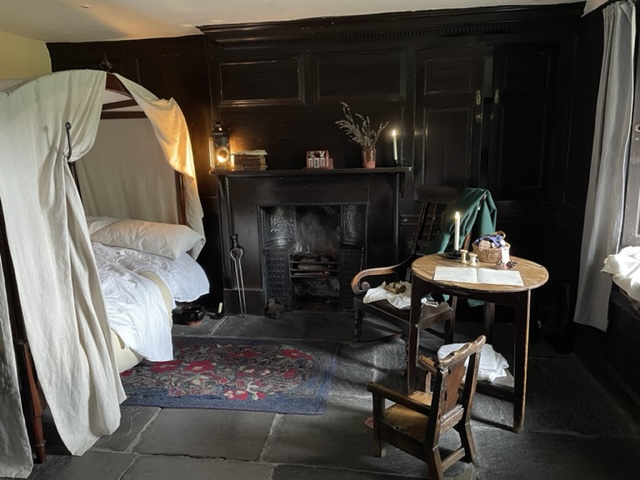
Wordsworth and Mary’s bedroom
Kaziah and I have a great little room, on the corner so two windows, looking out over the hills one way, trees the other and old stone buildings both ways. On the road again, but that’s probably just how it is since we walk to our hotel and it’s easier if it’s on the road. We had some time to read, then dinner at the pub in the hotel and then relaxing. A perfect day.
Kaziah and I are off for our Lake District walking trip, 3 summers after first planning – COVID delay.
Day 1 – We landed in London and both of us had slept enough on the plane to keep us going and we just started walking. 6 miles our first day and we hadn’t started our walking tour!
Our first stop – no surprise to anyone who knows Kaziah – Daunt Bookstore in Marylebone. A wonderful store. Our carry on luggage was crammed and we still came home with 5 books between us and that was only because we made ourselves stop knowing packing limitations.
Then – I remembered that I had cleverly included a very thin, but decent sized bag that I’d brought in my bag. When Rick bought it, I couldn’t understand its value. Now I do! Kaziah and I immediately realized that meant we could check our main carryons going home and have that bag for overflow. Oh boy! We’ll dive into more bookstores on our journey.
After the bookstore we walked back through Hyde Park and went to an art exhibit centering around the climate and renewable resources. It was MUCH more interesting than I’d thought it would be. We ended up taking our time, reading, experiencing the different modalities expressed by the artists.
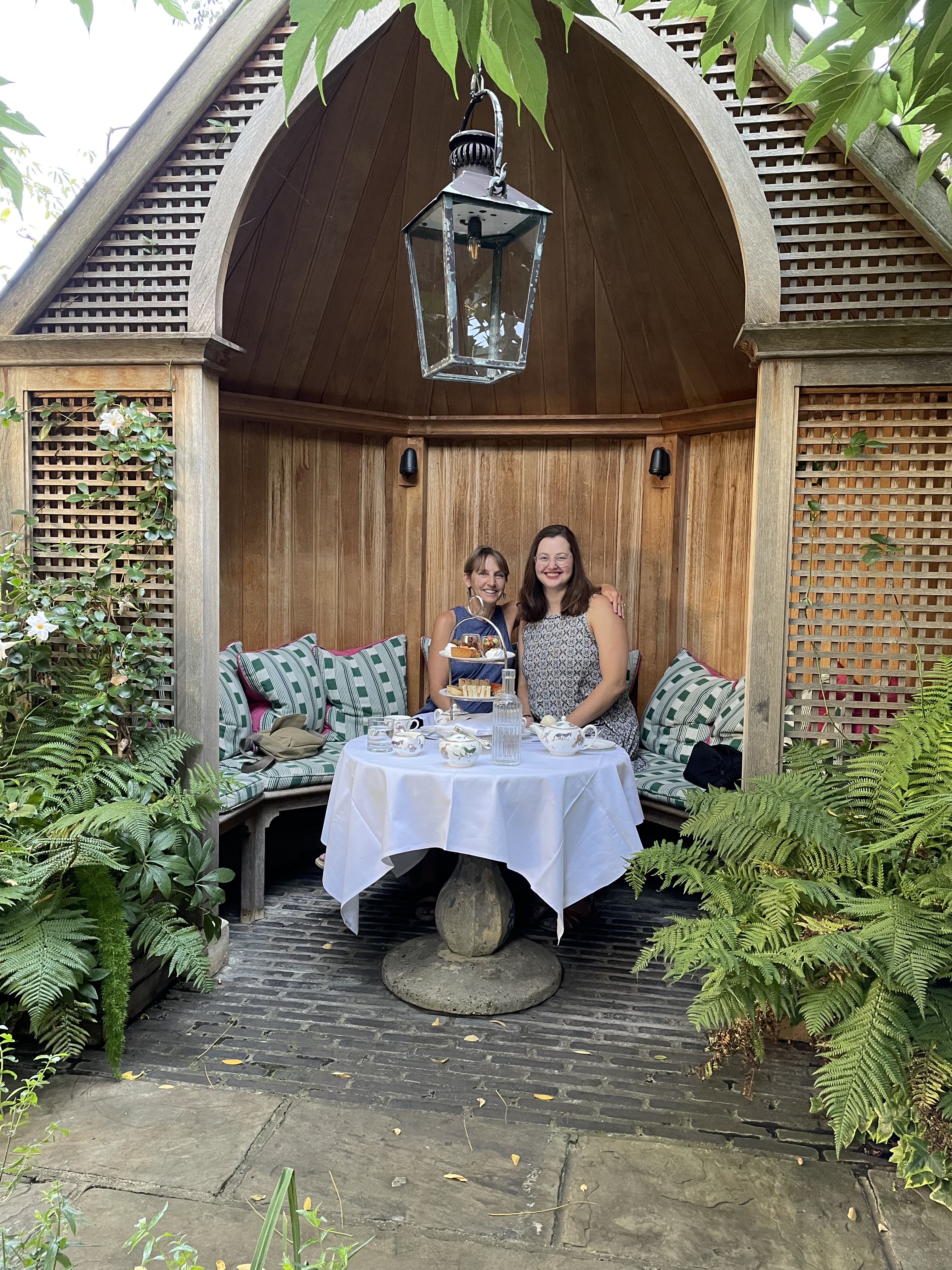
Then home to Number Sixteen, a repeat hotel that I love, for tea in the garden. Doesn’t that sound wonderful? The garden was great, the weather perfect and the tea was fine, not a repeater, but still a treat. Made me long for Brown’s hotel’s tea, actually. Next trip.
We then went walking again for a bit, but quickly wore out and came back to the hotel to read. I picked up something little to eat in and then we both actually slept – jet lag going east is just much easier to deal with – at least for me.
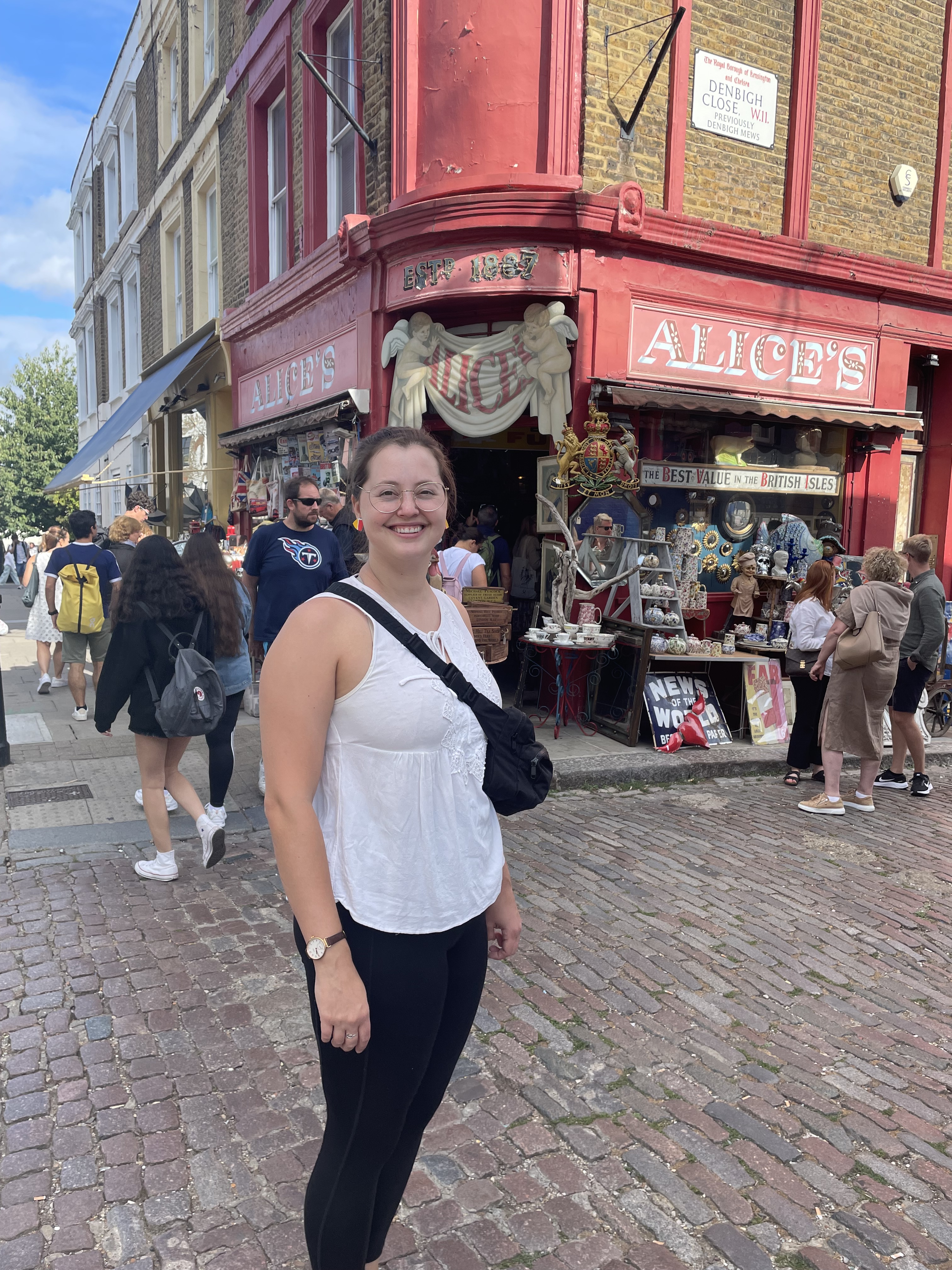
Day 2 – a full day in London – how cool is that?! And we…walked. 10 miles today, definitely getting in my training for my next Camino walk. We started off with the Portobello Road market. Fun to see, got a coffee and then kept walking through back neighborhoods around Notting Hill. Gorgeous. We took the Tube, happily running – they’d been on strike yesterday – over to Black Friars bridge, walked over to the Tate and thought we’d see an exhibit that looked totally cool, a Japanese artist and mirrored rooms. Sold out for a LONG time. So used the bathroom and kept walking .
We went to Southborough Market – Kaziah knows food and had already lined up a few things to do in that arena. I’d never seen this market, though I’d actually walked around it several times, within a block! Good grief. And it was a fantastic market, all kinds of food booths and a ton of people enjoying the weather and the day. I had a Vietnamese dish and Kaziah had Indian and they were both great. And the people watching – fantastic.
Then walked back by St. Paul’s, to Twinings because Kaziah had wanted to go to a great tea shop. She decided nope, that was too common in the states (I argued saying it’s been in this spot for over 300 years! Started here in 1706!) Nope, she wanted something different, so kept walking through Covent Garden – I want to go there every time I’m in London because of My Fair Lady. Then our feet were very tired.
We took the Tube home and rested a bit, cleaned up, and then off to find the kind of tea shop Kaziah had looked for. And she was right, totally cool place. Postcard Tea. I wish I could drink more caffeinated tea.
Then to one of Otto Lenghi’s restaurants in Fitzrovia – Rovi. So fun. Small plates, all vegetarian for us, and each one had a distinct flavor. I should travel with Kaziah more often. We then walked back through Mayfair and to the Tube at Green Station and home again to the hotel.
Day 3 – Whew, the trains were running. They’d been on strike Thursday and Saturday, but were back on Sunday. And it was very full. We got there fairly early and I wondered why people were running since we had assigned seats. Turned out that because of the strikes, they’d double booked a lot of seats. We were lucky and got ours set and no one had ours doubled up.
Easy trip, transfer at Lancaster – 5 minute wait – then to Windermere and about a 2 minute wait before the bus showed up. How easy can this be? The bus dropped us off at Ambleside about 200 feet from our B and B. Amazing. Then – we walked. Of course.
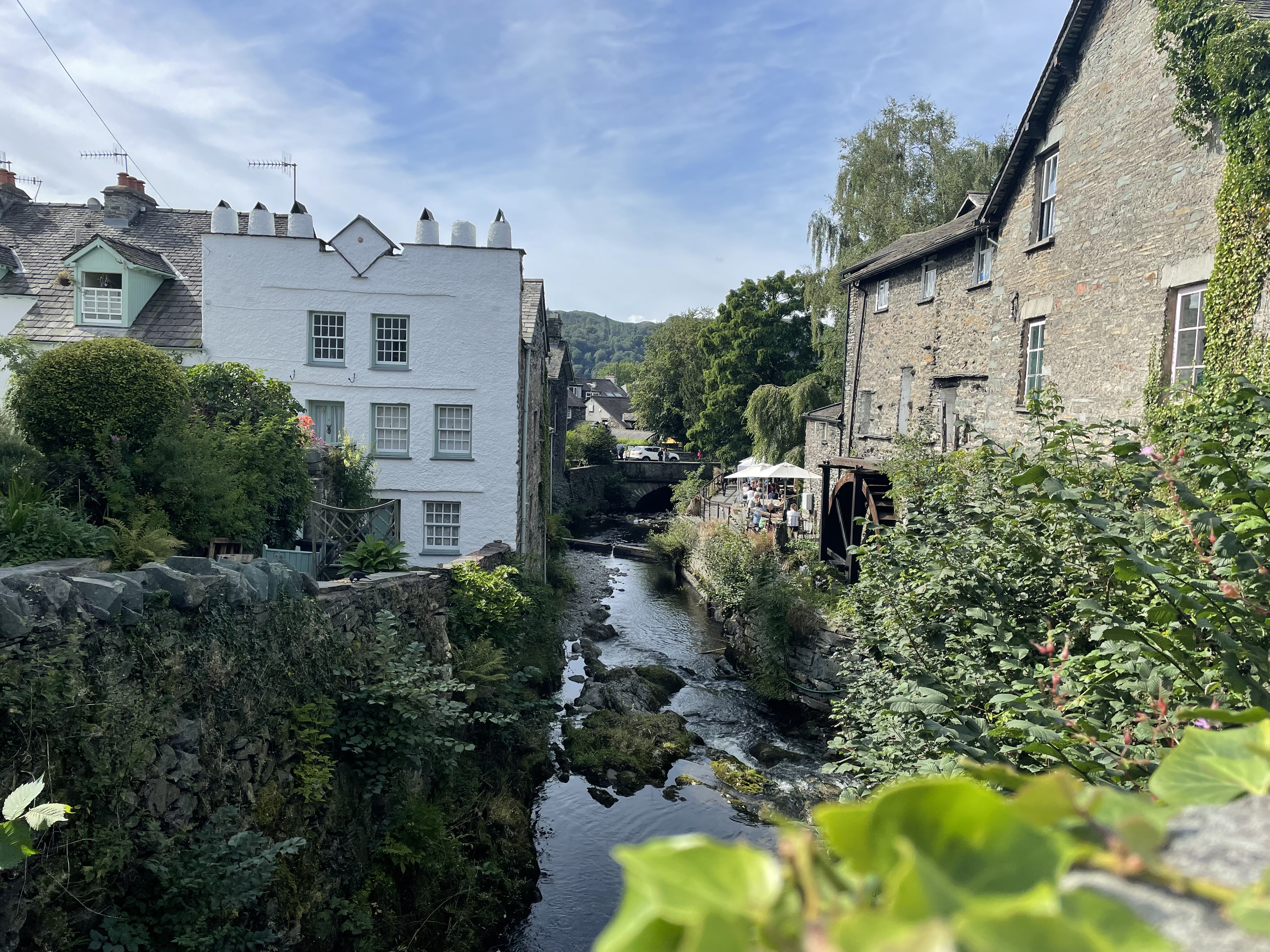
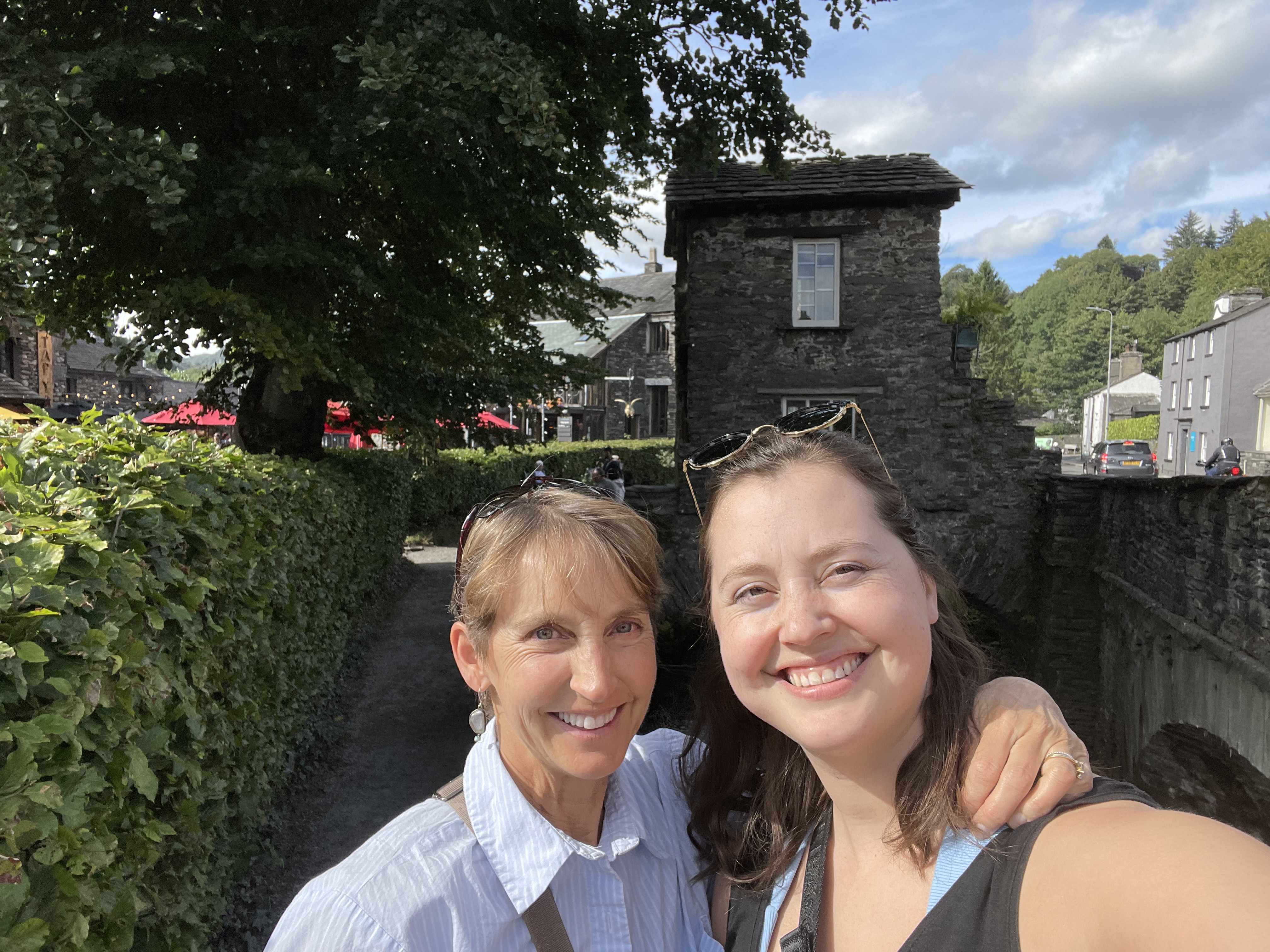
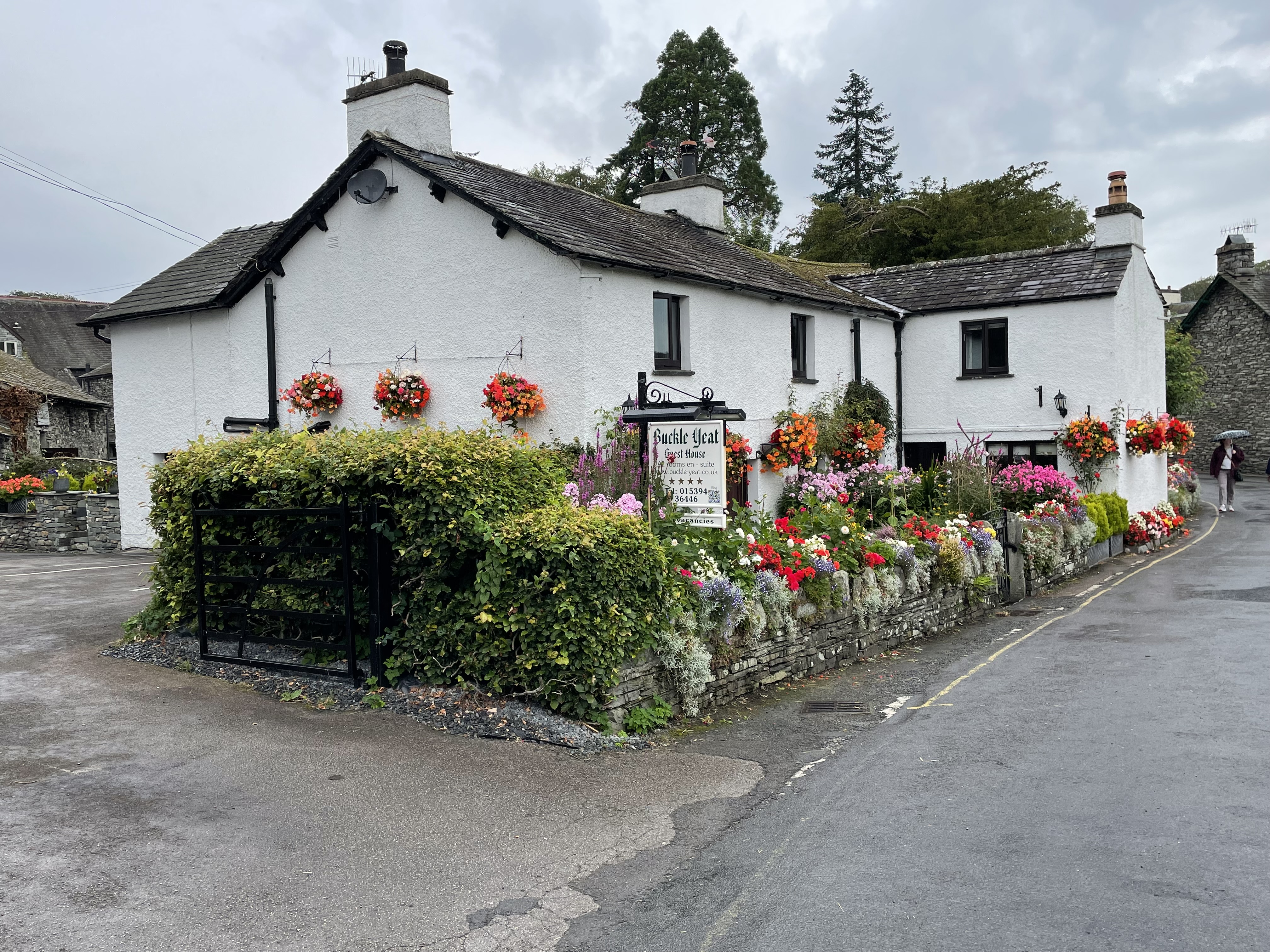
Ambleside is a beautiful little town with a lot of restaurants and every house seemed to be a cottage for rent or B and B or Inn. One sign said there are 20,000 residents around Windermere (largest freshwater lake in England) with an additional 20,000 coming in the summer.
We got SO lucky because it was supposed to be raining all day and it stayed nice all day. We first got lunch at the Copper Pot – really fresh wonderful food, and of course, ended with a scone with clotted cream and jam. We then checked out the ferry where we were going the next day, walked more finding the bookstore, another cake and tea place we might go to and just explored. Finally, we went to an Italian place for dinner, but were really tired, couldn’t eat much and were happy to come back to our room at Lacet House.
Kaziah got to hear my river noise machine all night because we needed the windows open for air and coolness, but we’re right on the road for traffic and the random pedestrian railing at midnight about her girlfriend stealing her guy. She was VERY upset and we ALL got to hear about it. Hope she feels better this morning.
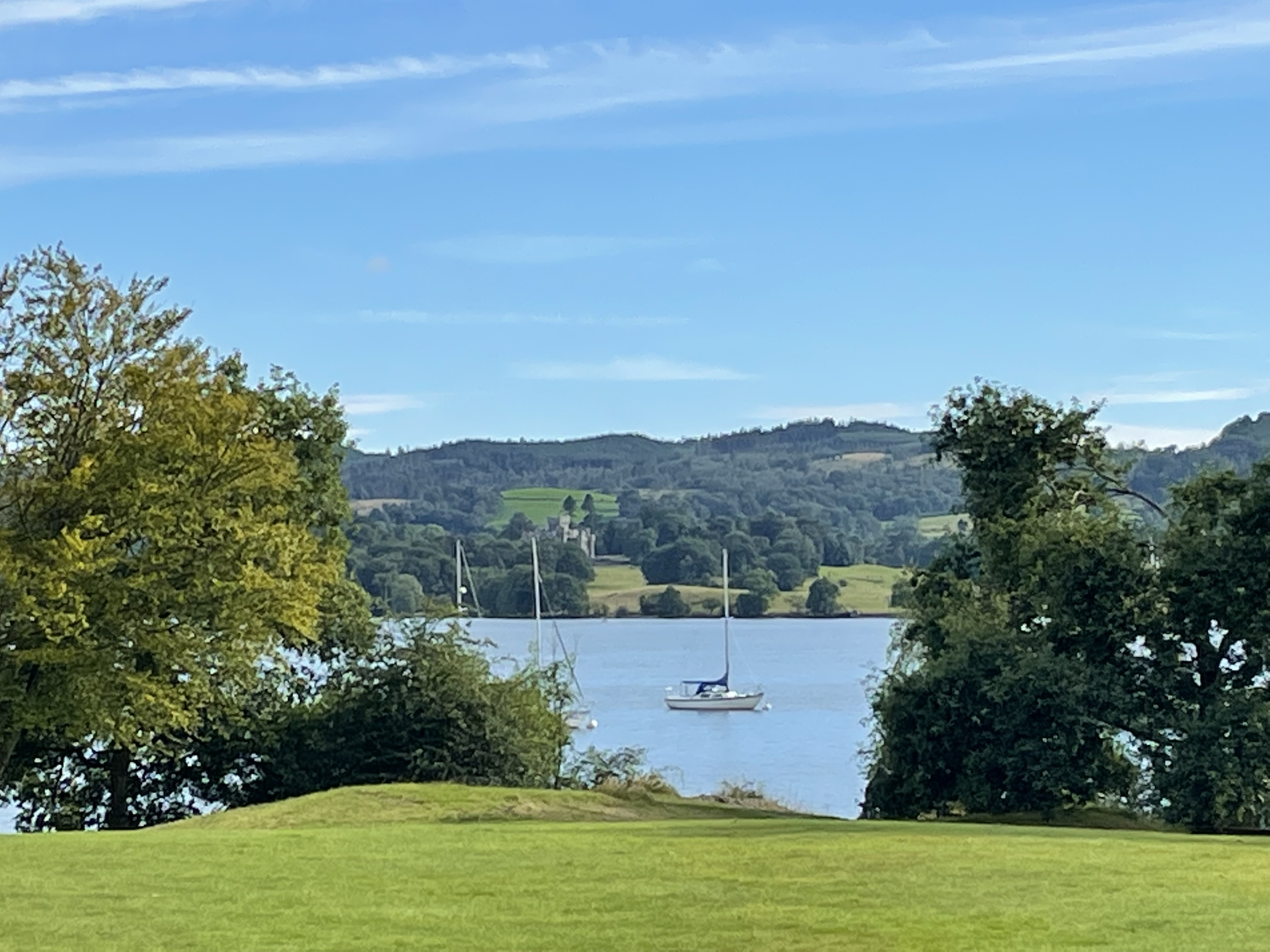
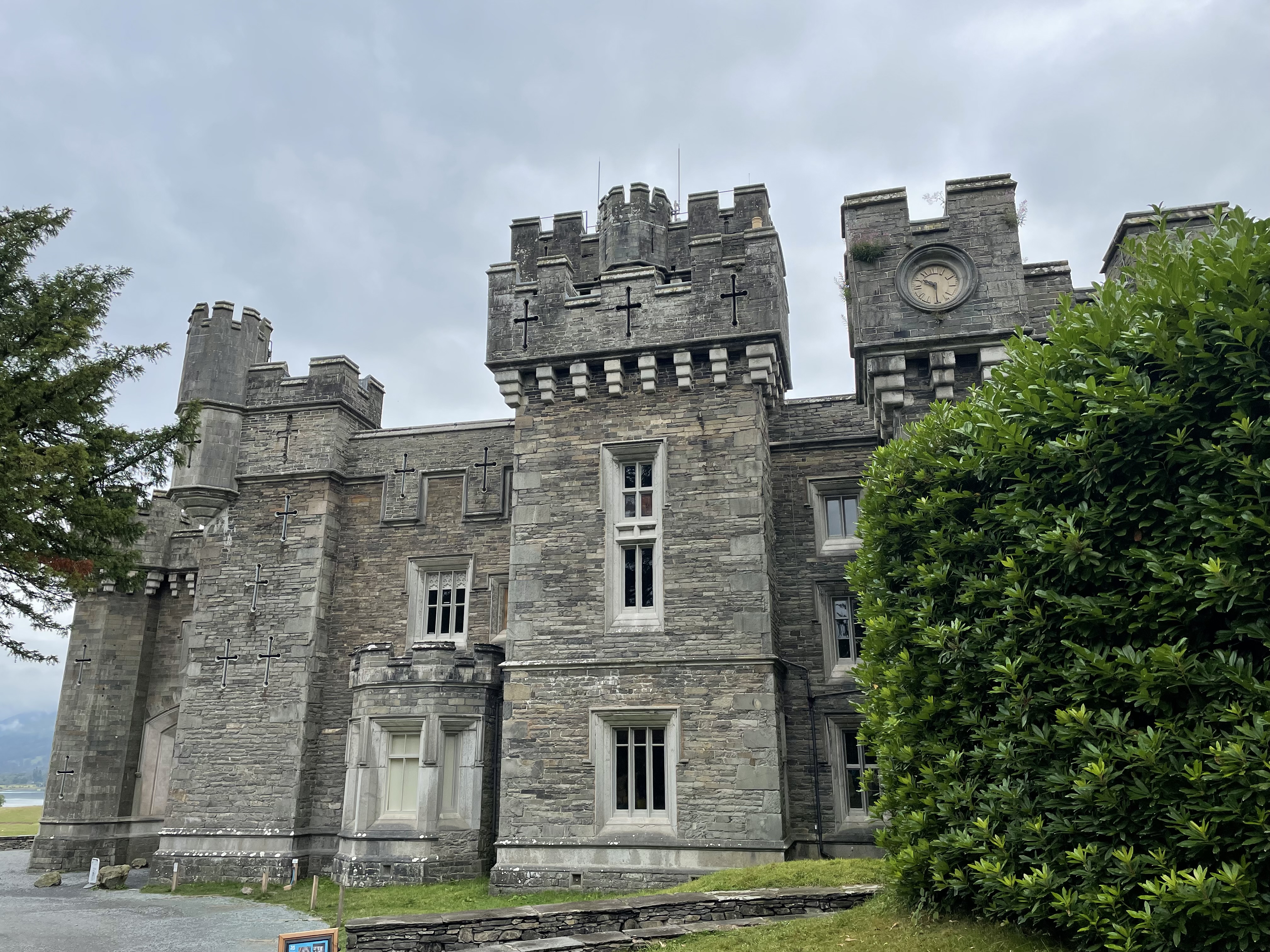
Day 4 – We’re off! Our first day of walking and it was wonderful. We got so so lucky because the rain didn’t start until 2:30 so we had hours of dry exploring. We took a ferry across Windermere – how cool is that to start a walk? Got dropped off at the foot of Wray Castle. A Victorian folly built by Jame Dawson, a wealthy surgeon from Liverpool and his wife Margaret in 1840. Amazing.
It was actually quite beautiful and they’re in the midst of restoring what they can with limited funds. They had to start with the roofs which will cost millions of pounds, the guide told us. So – the main thing to see was the photos taken by Beatrix Potter’s father, Rupert Potter in the empty drawing room. And they were really good – set the scene for us. Plus young and teenage Beatrice looked wonderfully happy and mischievous.
Then we started walking. On a totally groomed path, easy walking, didn’t bring my poles. We walked down the side of the lake for 4 miles and then up to the partially restored Claire Viewing station. Amazing – it was a late 18th century banqueting house with dancing and yes, views.
This area has been a retreat for people from England’s cities since the late 1700’s. I can see why, so pretty.
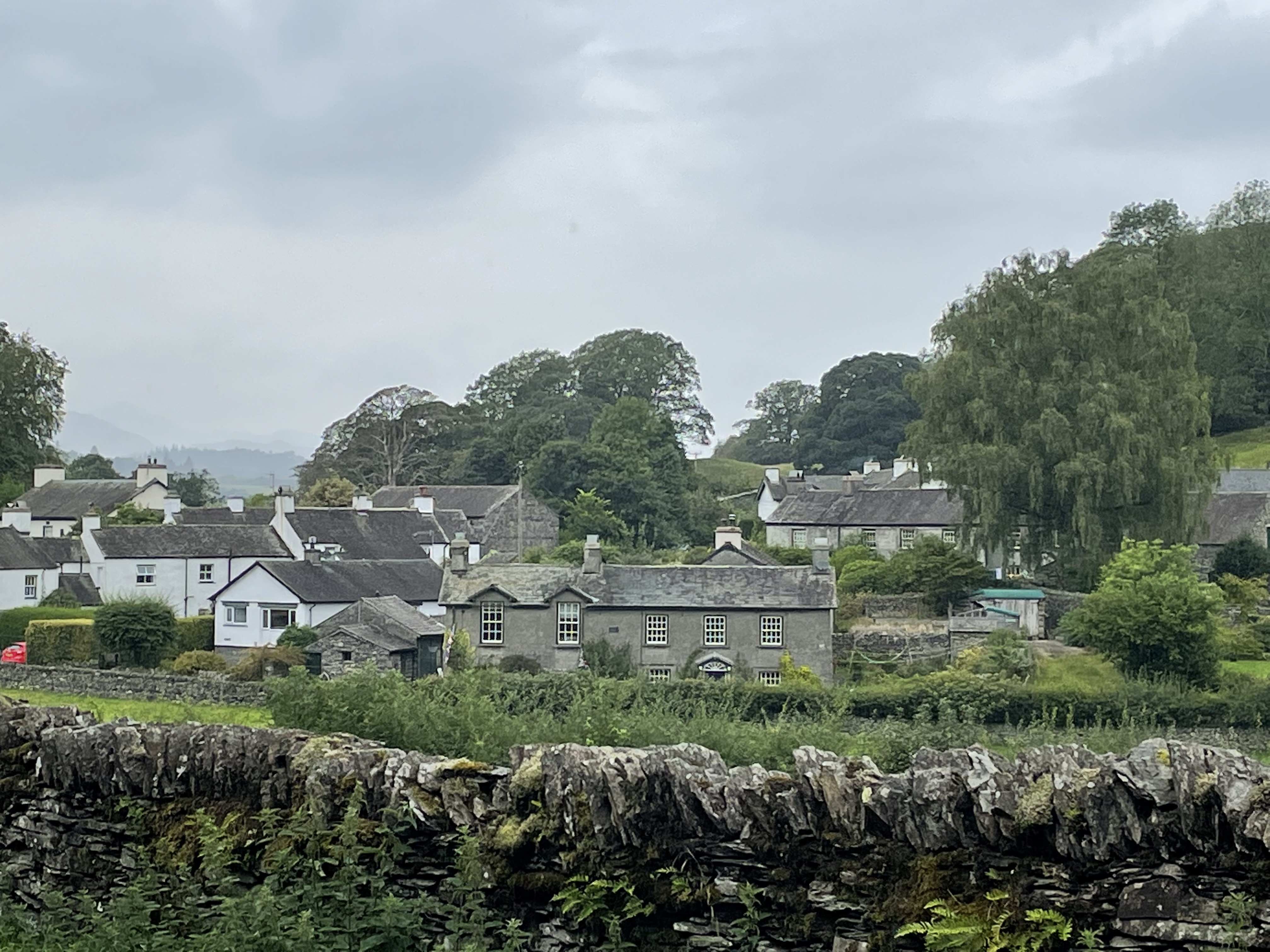
Village
Then we kept walking to Beatrix Potter’s house, Hill Top. I was NOT prepared and we had to have reservations in order to go in, so missed on that front. Plus we were getting tired, it had been raining for a bit, and we were ready to go back. But – it’s kind of like going to Prince Edward Island and missing Ann of Green Gable’s house. Rick and I will just have to come back and stay in the town and then visit Hill Top. It was a completely wonderful small town, we did get a few photos…
House of a friend that Beatrix used frequently in her illustrations
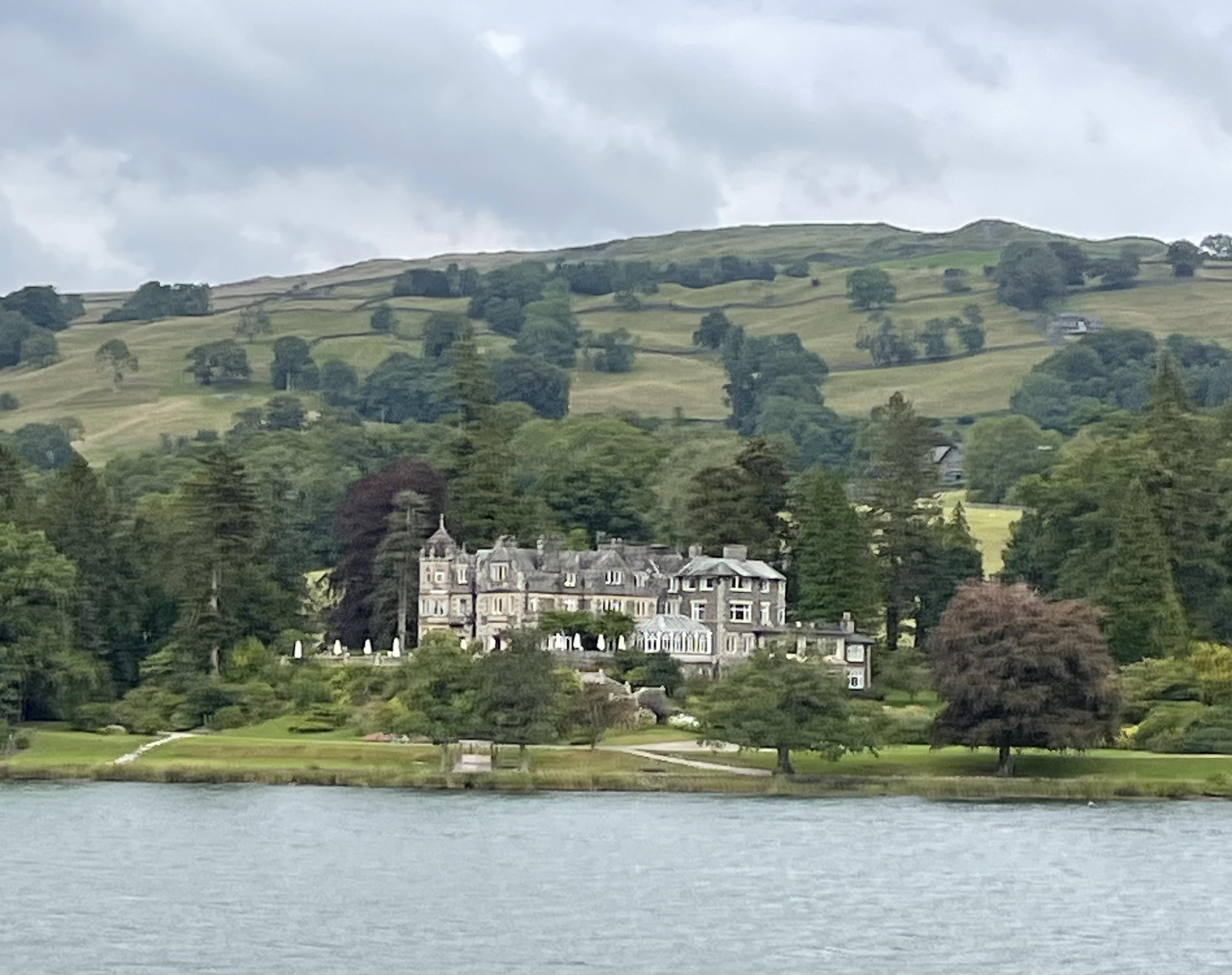
Back to a second ferry that was a car ferry and actually used a pulley system and pulled the ferry back and forth with cables. Walked another 15 minutes to a third ferry which was the best yet. Nice wooden benches on top, the rain had stopped for a bit and we came all the way back up Windermere seeing amazing old stone mansions on the shore and in the hills. Most of which are now hotels and inns.
One of the amazing mansions turned hotels (VERY different from where we stayed) on the lake as we took the last ferry back.
Back to Ambleside and went straight to a bookstore that we’d seen earlier, but didn’t find anything this time, got a pastry to hold us until dinner. Back to room, quick shower, and out to Thai dinner that was really good!
Tomorrow – we’re walking to Grasmere – Wordsworth’s home. I’ve learned my lesson. We have tickets to both his first home and his second where he died. Oh boy!
(supposed to be 10, but we just kept walking to the end and back…) My Last Day.
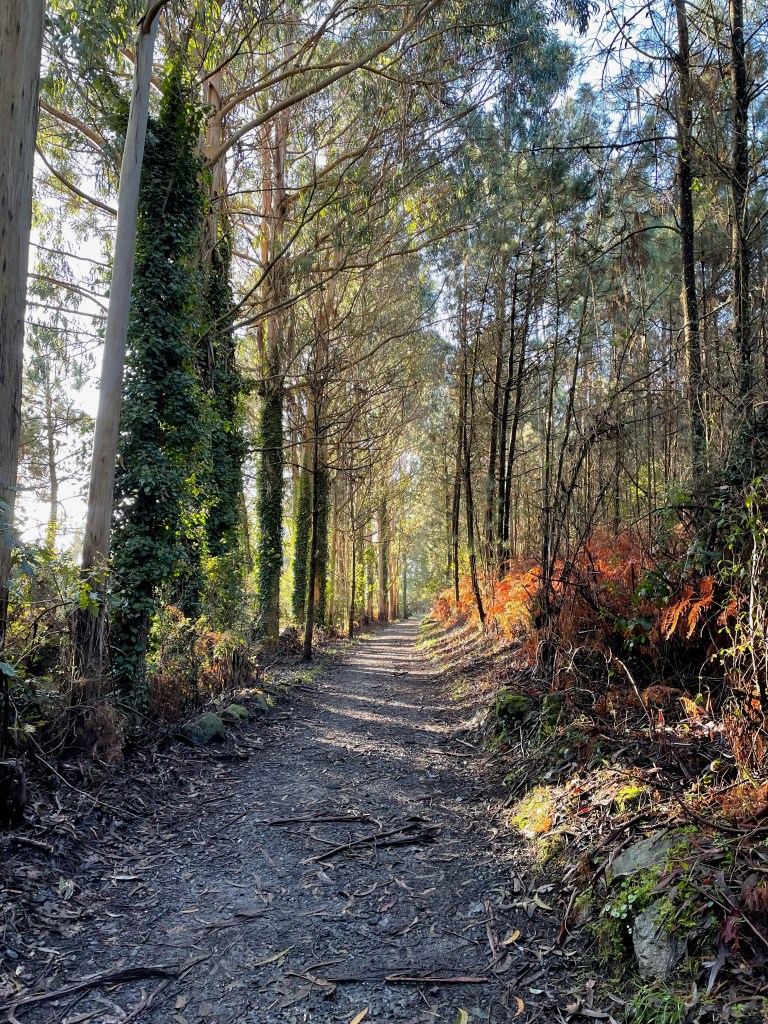
Today was a wonderful day. No rain until late at night, so walked in the cool with the sun and a bit of breeze. Through forests and towards the ocean.
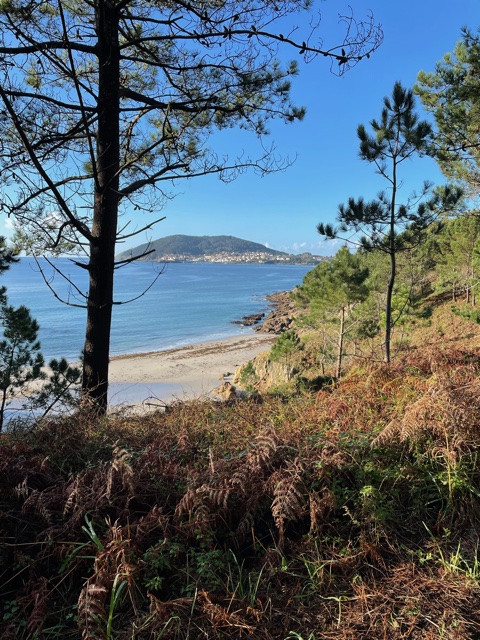
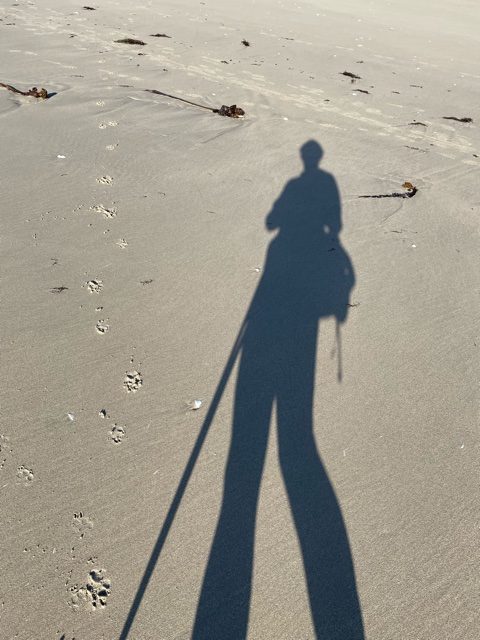
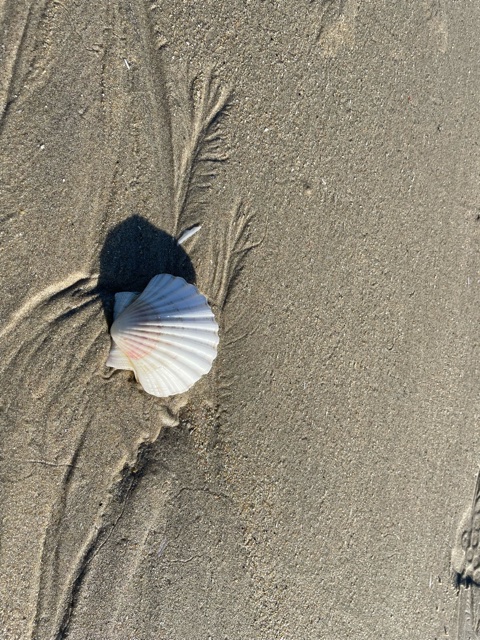
I walked onto the beach – what a wonderful way to finish the Camino. I talked with a Swedish woman (Rick had stayed on the real path to save his ankle), she and I had both started in St. Jean. She felt the same as I did, we had completely loved the journey and there were more Caminos in our future. She was collecting scallops to bring home. I hadn’t thought of that, but had already taken this photo of front and back of a scallop. It still had it’s animal, so didn’t collect. I collected after. All these scallop shells! Maybe St. James really did fall into the water and come out covered with scallop shells.
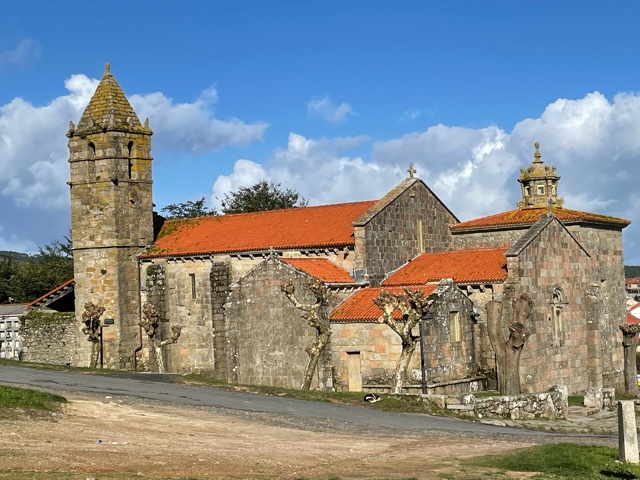
Rick and I had a hot chocolate with this view and saw one more church:
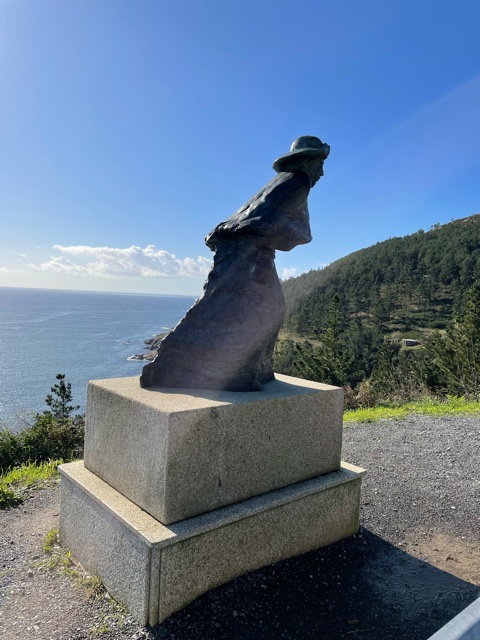
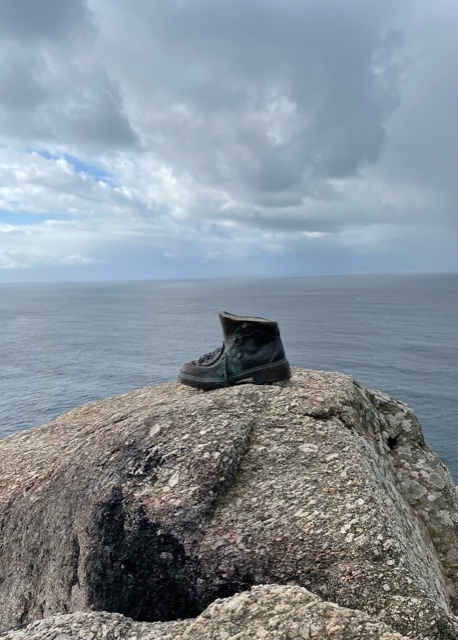
One more pilgrim statue:
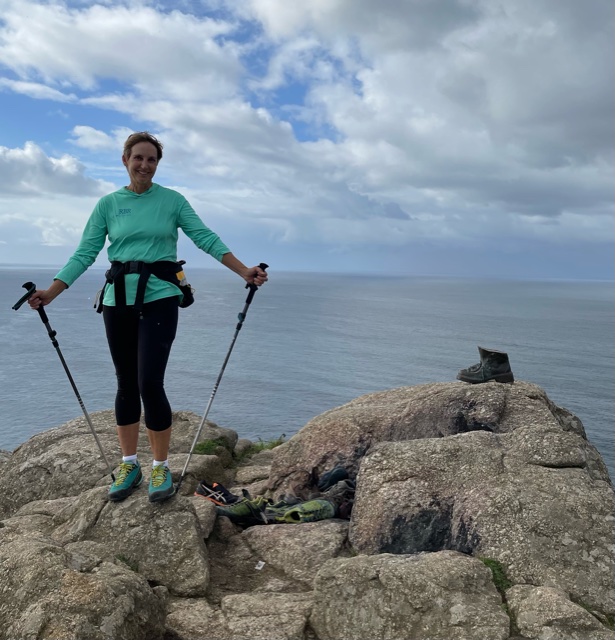
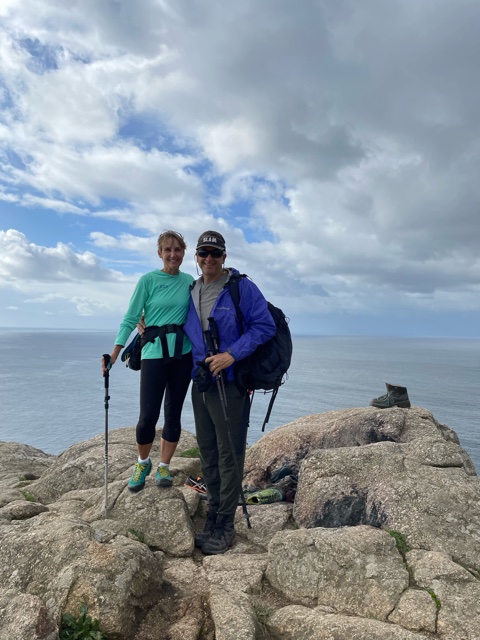
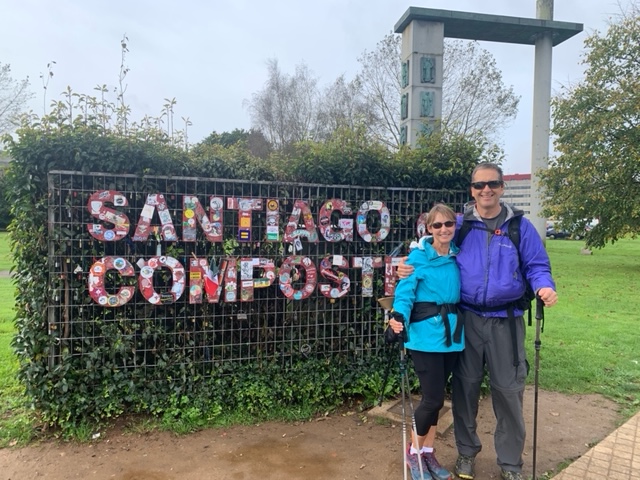
Then we were there!
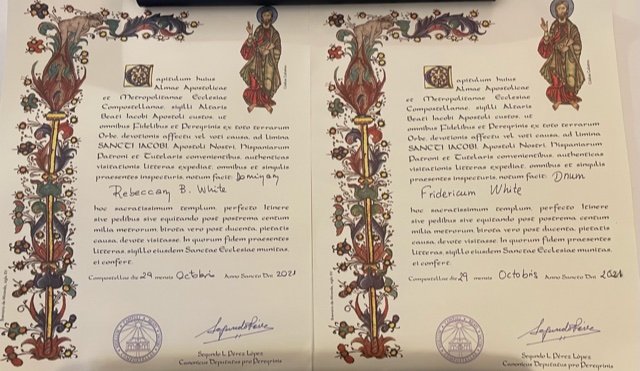
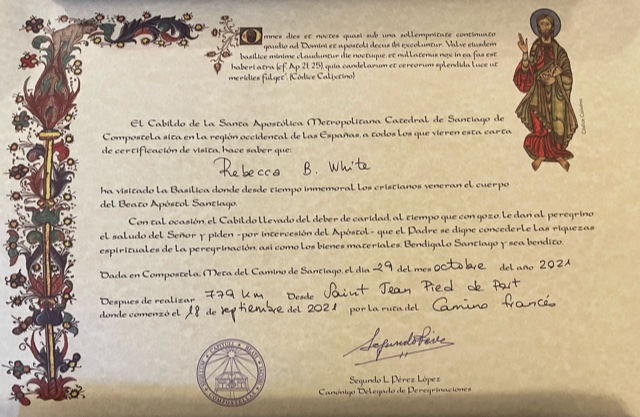
Camino Frances to Santiago per my certificate, 779k. Santiago to Fisterra, 83k. Extra walking in towns 30k. Total 892k, 554 miles.
And when I finished, it actually didn’t feeling like an ending, it felt like a beginning. Rick asked how I felt with such an accomplishment, but that didn’t feel like the right word. Truly, felt like I’d just gotten started and I’m going to keep going. Guess the Camino worked its magic and it hasn’t stopped. I have loved this journey.
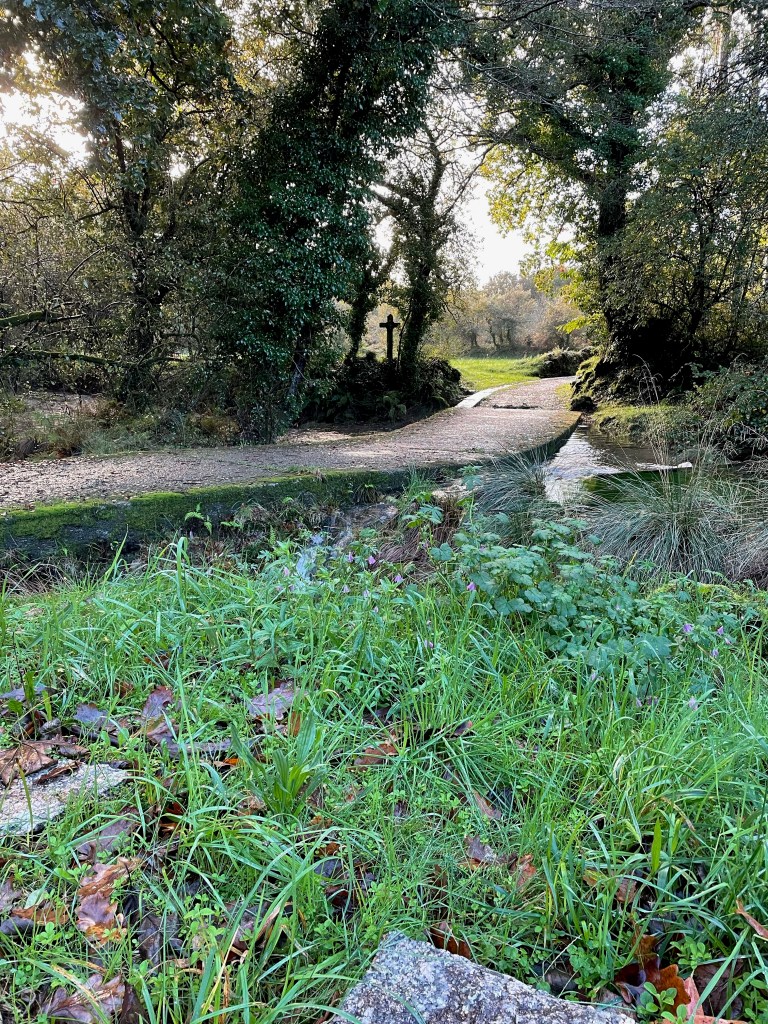
We turned out to be very lucky. We assumed full rain and dressed accordingly. Here’s the bridge onto the trail.
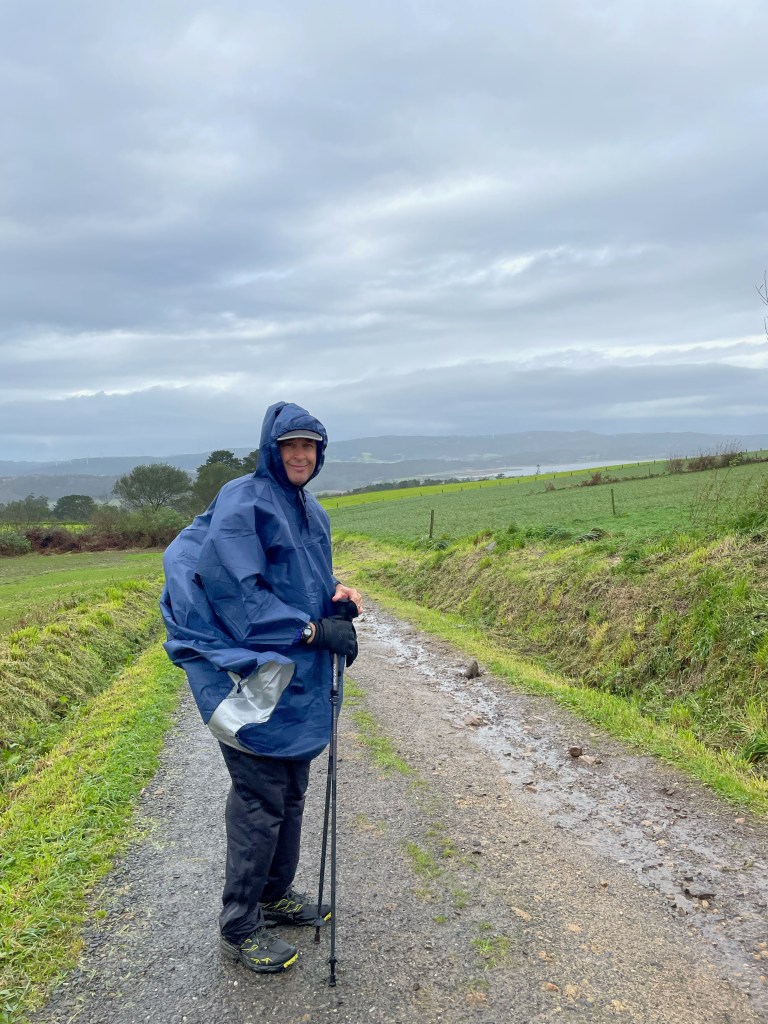
Here’s me walking in the rain:
I thought Rick was just taking a photo. That floppy hat under my raincoat hood is Rick’s. Thank goodness he threw it into his pack. Sadly, yesterday I discovered that I’d lost my best hat ever that protected me from sun and rain throughout the trip. Well, hopefully someone else is really happy with their new hat!
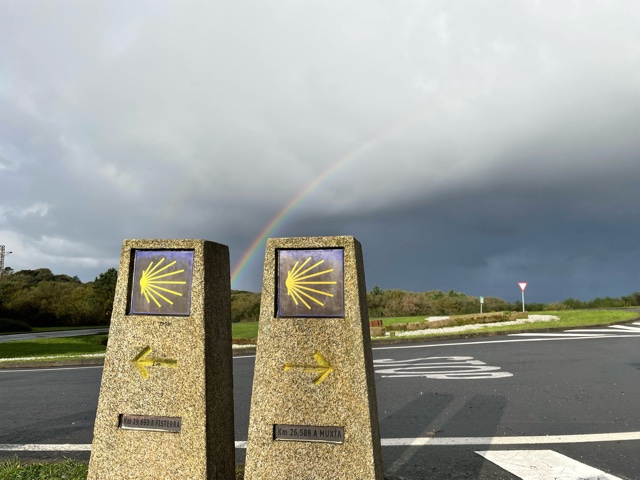
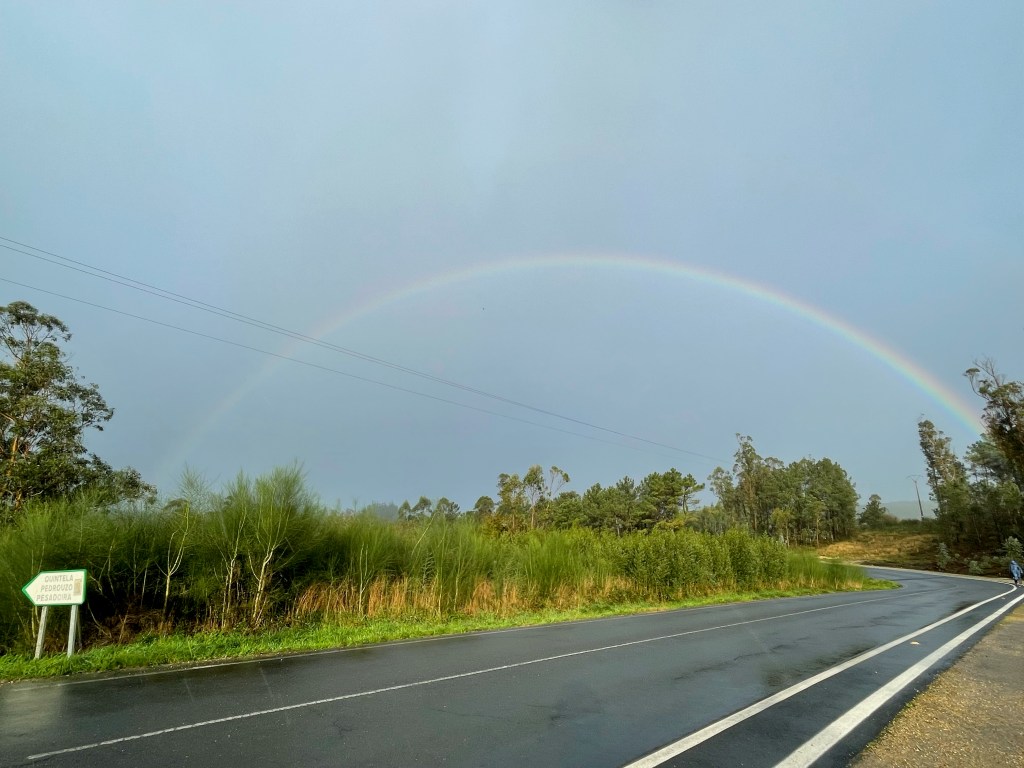
Then the rain lightened up and rainbows started showing up. There was a double rainbow, but didn’t show up in the photo.
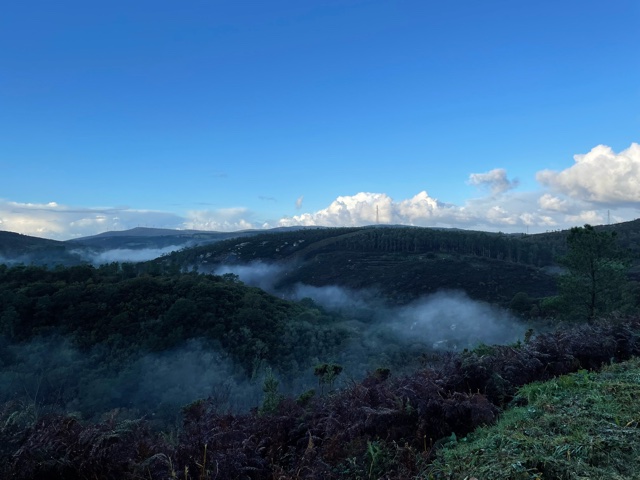
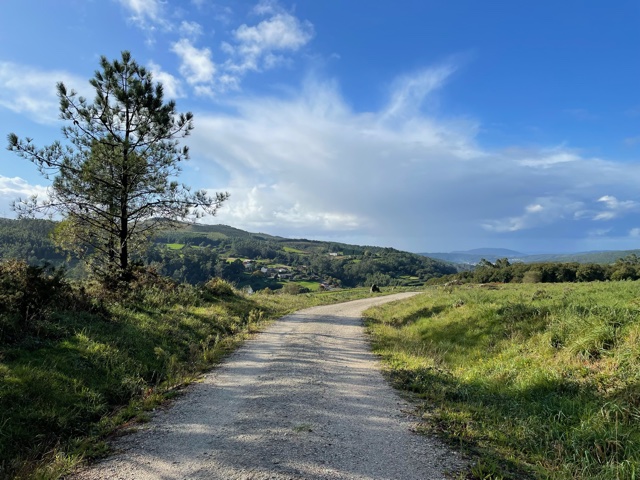
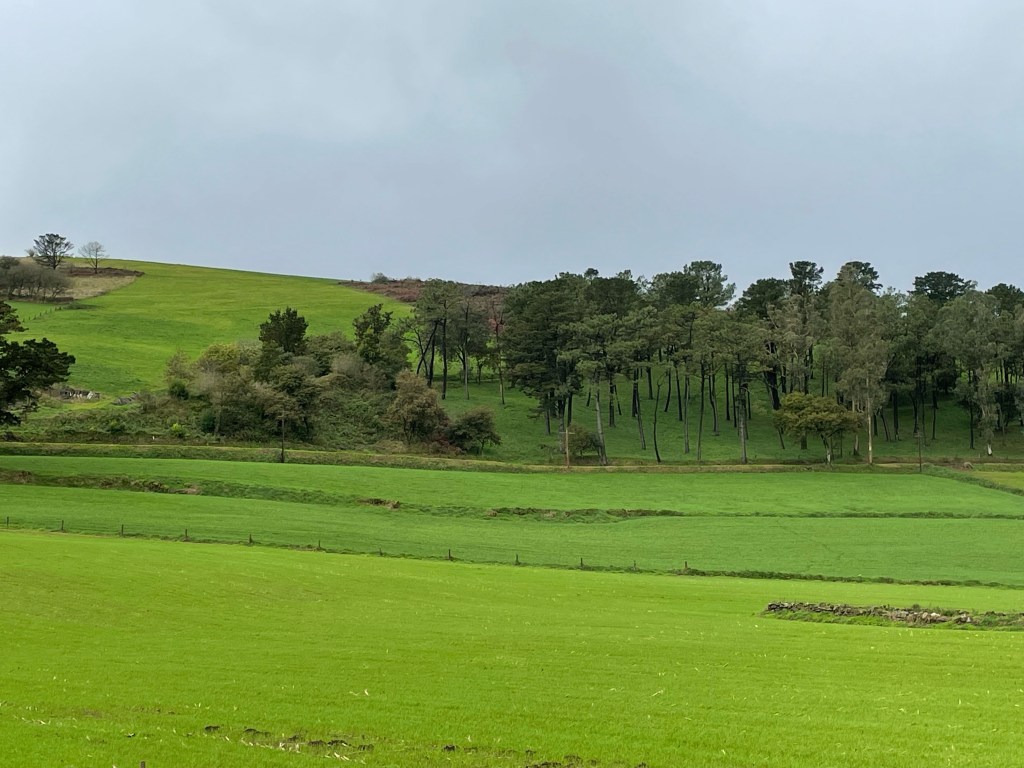
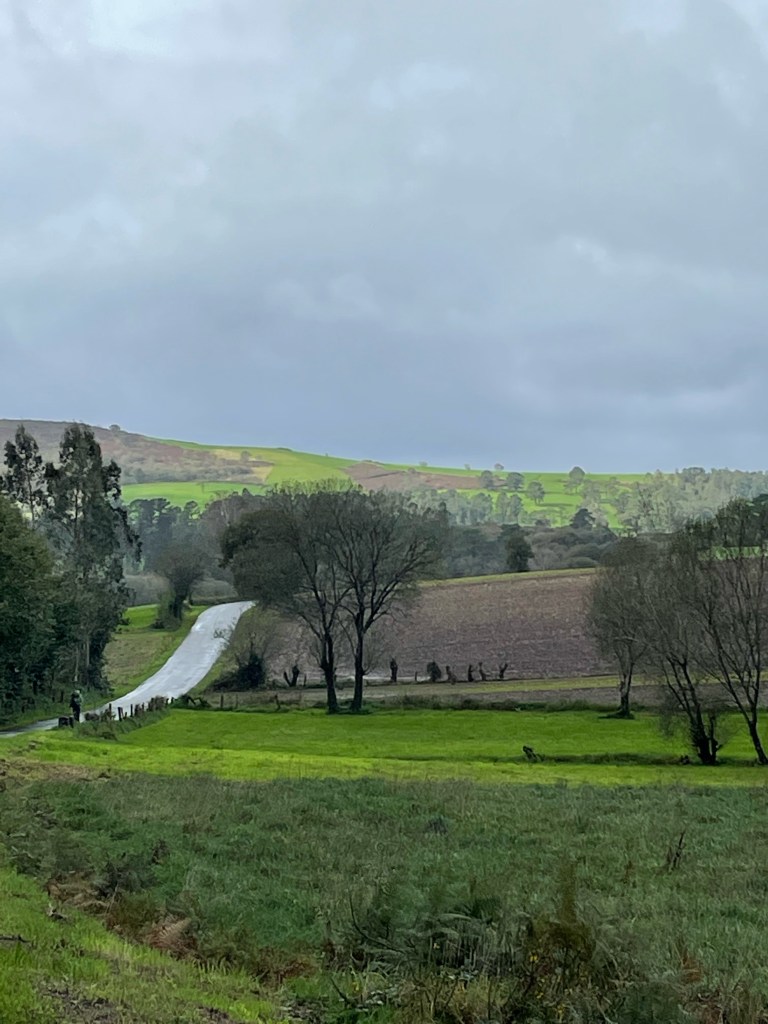
But mostly – it wasn’t raining! Instead it was serene, green and beautiful. We both had a wonderful walk. I was dawdling again with photos, rocks, etc. so we mostly walked separately and dreamed our way through the day. Here are a few shots over the day:
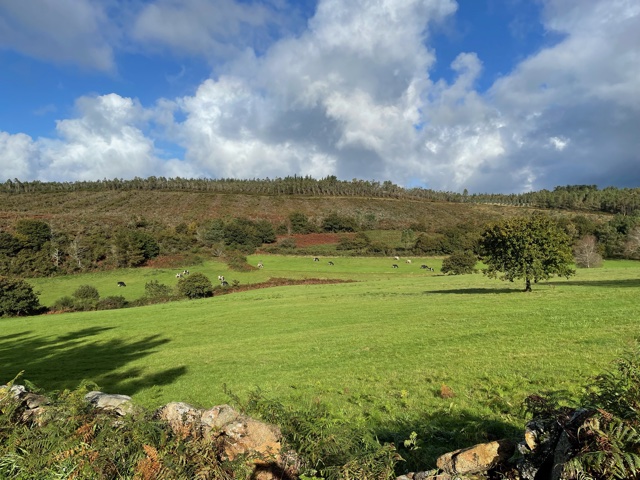
The cows are faint, but they were so relaxed. I ended up taking a video for myself to remember what it’s like to have a quiet mind on a perfect day. They were very very slowly moving to the right, eating grass, moseying along.
This is us when we saw the ocean. We actually weren’t sure, another cloud bank? Hills? Then Rick saw a very large boat – yep the ocean. I can’t even imagine what it would have been like for a pilgrim who’d never seen the ocean and had walked for so many miles.
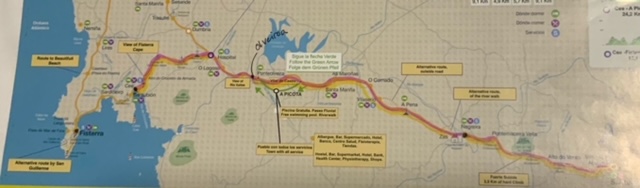
Well, we debated a bit about whether to do the full 21 miles, but decided to stay with the arrangements I’d made back when I booked. I was told many do the transfer and it worked out great. We took a taxi to our start point and it started to really rain. Maybe 3 moments of sun, 1 rainbow, and the rest was rain, pouring rain, rain with wind, wind, back to just rain and it was great. Truly.
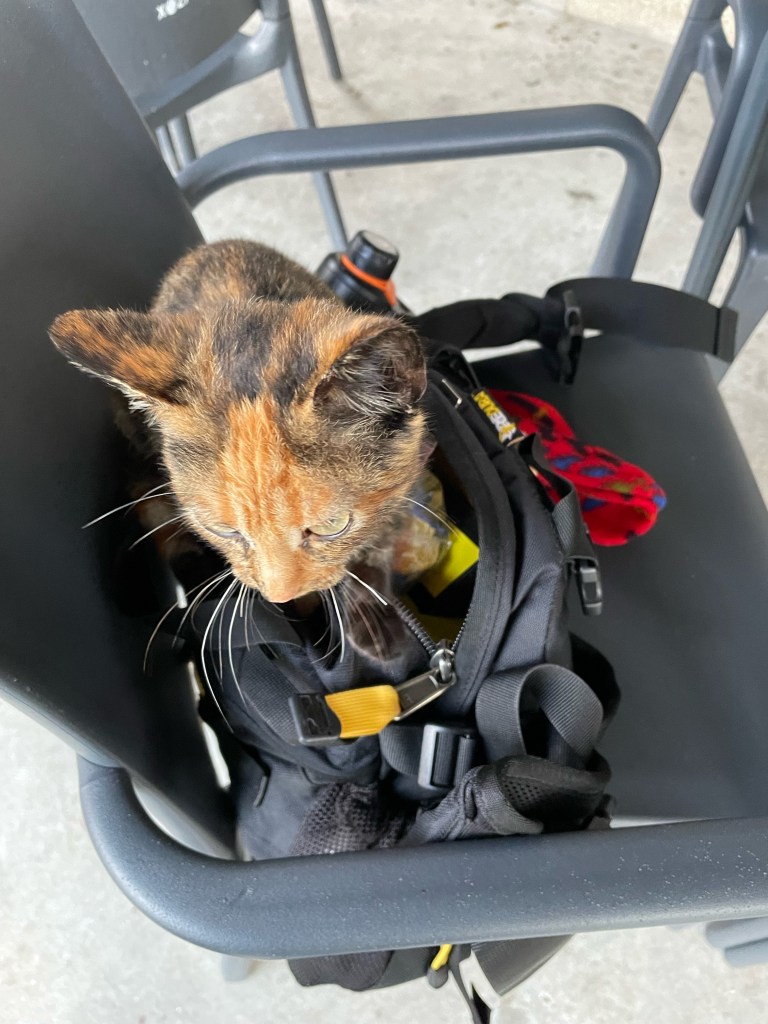
We had just the right clothes, stayed dry enough and warm enough and it was a day dreamy kind of day. At the end, I started getting pretty tired and Kylie saved me with her “mom’s playlist.” Rick wondered why I was suddenly walking so much more quickly and it was fun! Singing aloud – no one could hear – and dancing a little with great bluegrass moments, just fun. Many dairies of different sizes and styles. So here’s the green, the cows, and a small cat that jumped into my pack as I was getting into my rain pants.
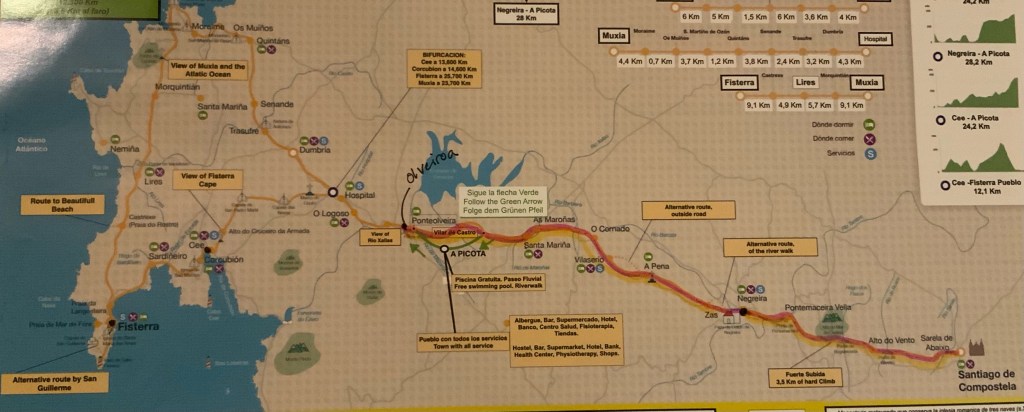
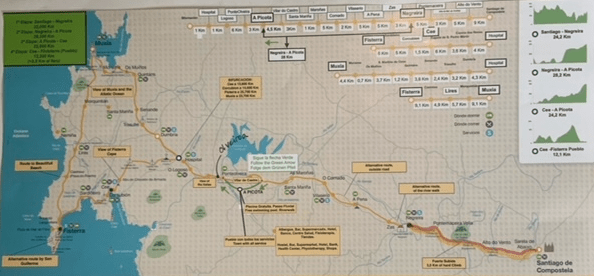
Rick and I are walking to Fisterra (Galician spelling) or Finisterre (Spanish). The end of the earth. A Camino website writes this: Until the end of the Middle Ages, the Costa da Morte was the last outpost in the known world. The place from where pre-Roman peoples believed that souls ascended to heaven. A mythical, symbolic place which would leave the Roman conquerors open-mouthed when they saw the sun disappear behind the immense ocean. From then, the farthest point of Cape Fisterra magnetised all its visitors.
The Fisterra and Muxía Way, is the most faithful realisation of the historical cry of the pilgrim exclaiming Ultreia! (“Let us go farther beyond!”), while another responds with Et suseia! (“And higher!”). In effect, it is beyond the goal in Compostela and, after prostrating themselves before the remains of the Apostle Santiago, many pilgrims decide to get to know this end of the world, and they do not hesitate to overcome the sacrifices of the hard days they have just endured in order to walk, at least, four or five days more. Fisterra is 89 kilometres away and Muxía 87.
We’re going to Fisterra, but Muxia is the place to go if you’re saying a final farewell to someone. After watching The Way, Rick turned to me months ago and said, “you’re going to the ocean, right?” I hadn’t planned on it, but I’m so glad he said we should add it on.
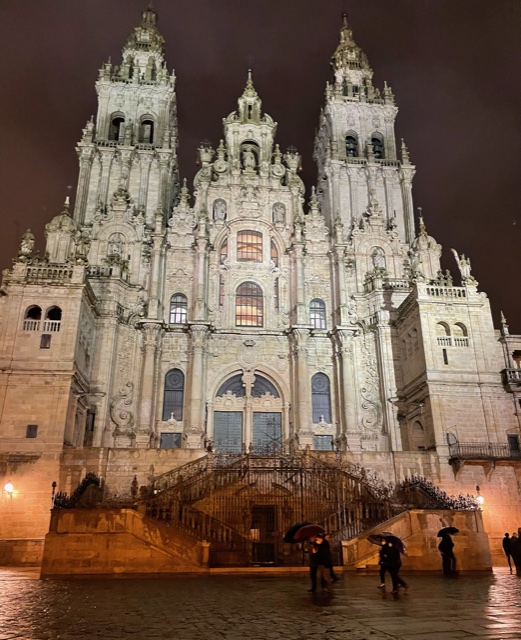
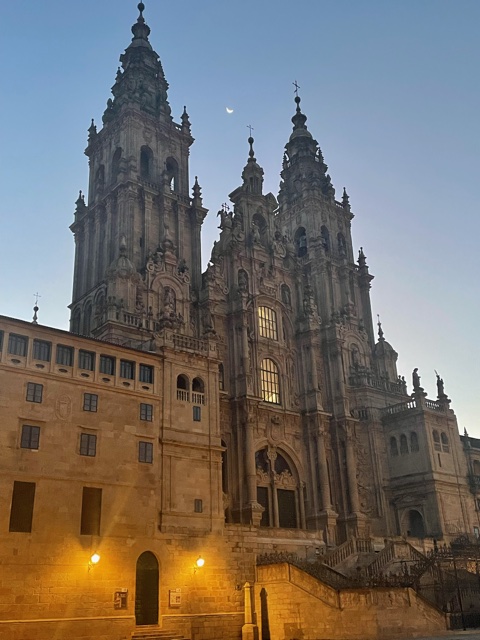
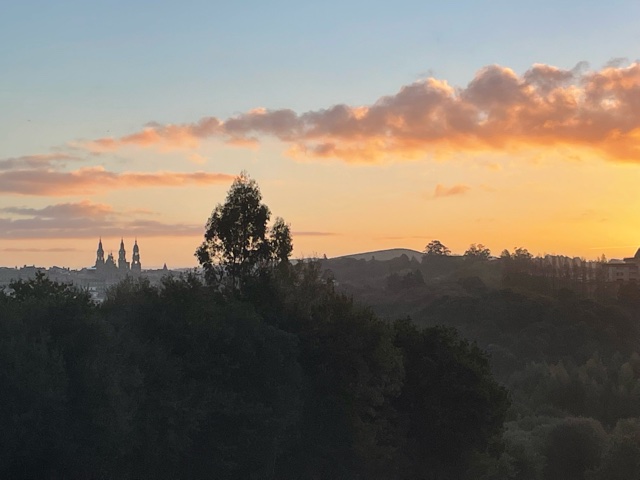
I don’t know why, but I assumed that the old beautiful villages would be done when we left Santiago, but no. I’ve included a video of one we walked through about an hour outside of Santiago. But first – night time, early morning with the moon and then distant view of the cathedral at sunrise. Just a magical edifice.
The walk was beautiful today. I realized, though, as we went through more ancient areas that I had lost my constant companion – The Pilgrimage Road to Santiago. For 6 weeks, I’ve carried pages every day giving me stories, architectural, historical and religious relevance for just about every town I came across. Rick told me he’d read that I’d gone through 350 towns in those weeks – a stat related to the Camino Frances. And – the book is done. Stopped in Santiago. I kept reaching for my pocket when I saw a small ancient church or something like this – so beautiful! But what’s the story?
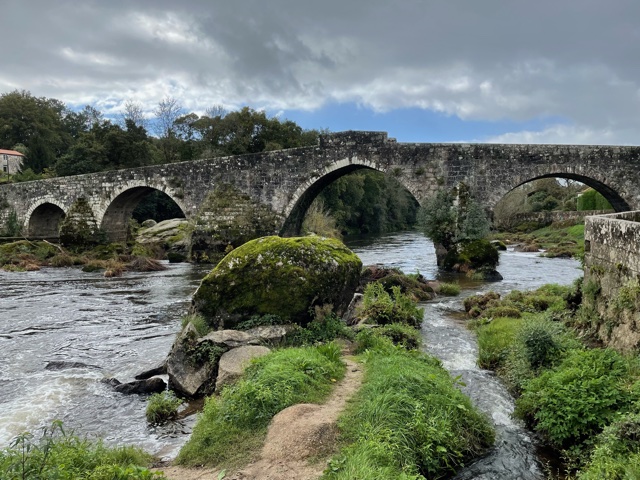
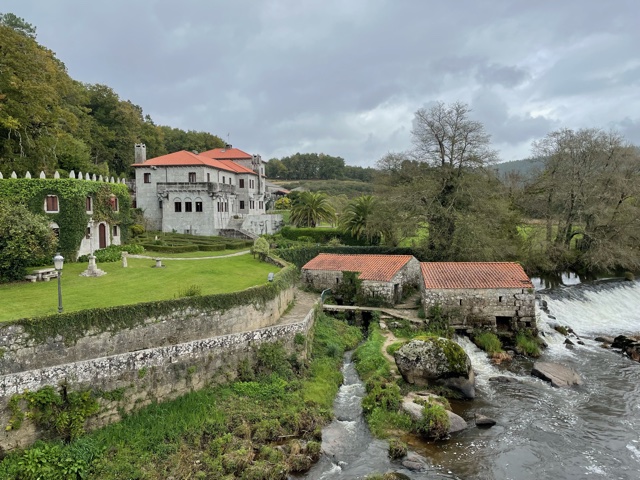
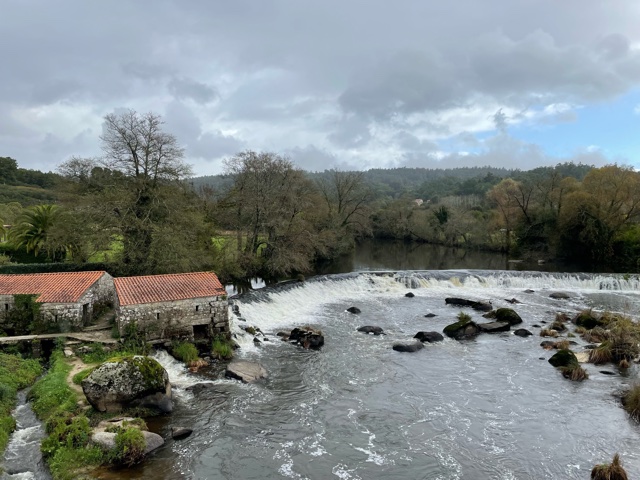
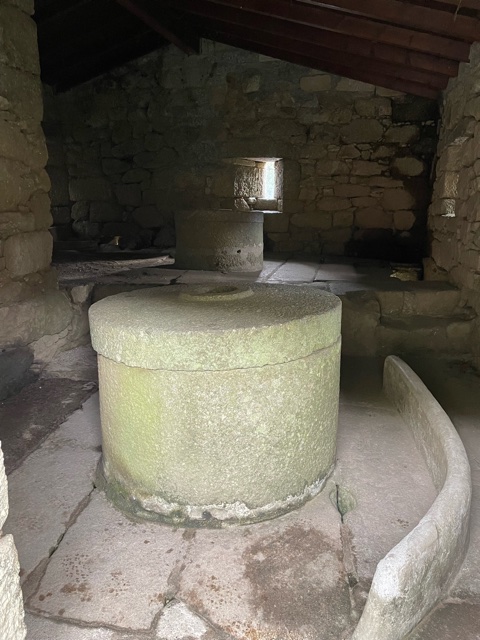
Obviously a dam and some kind of water mill – still had the stones inside, but what about that beautiful little ivy covered building nearby? And the bridge? The town is called Ponte Maceira. Luckily there was a little plaque with English near by.
“Ponte Maceira, the small big paradise of the Way to Fisterra-Muxia, is one of the most unique historical sites in Galicia and all the Ways to Santiago.” On a side note – I have seen an awful lot of signs with the words “most unique” “biggest” “most important”. But – this was a beautiful little town.
“The Ponte Vella (Old Bridge) was built in the 13th and 14th c and reconstructed in the 18th c.”
“Crucial battles also took place here, like the one that faced bishop Xelmirez and Count of Traba, 12c. Also, the St. James tradition tells that on the riverside of Negreira, the divine intervention would pull down a bridge saving the disciples of the Apostle St. James from the Roman soldiers.”
So – there’s a little bit. But I still miss the authority of my book. Here’s the inside of the mill:
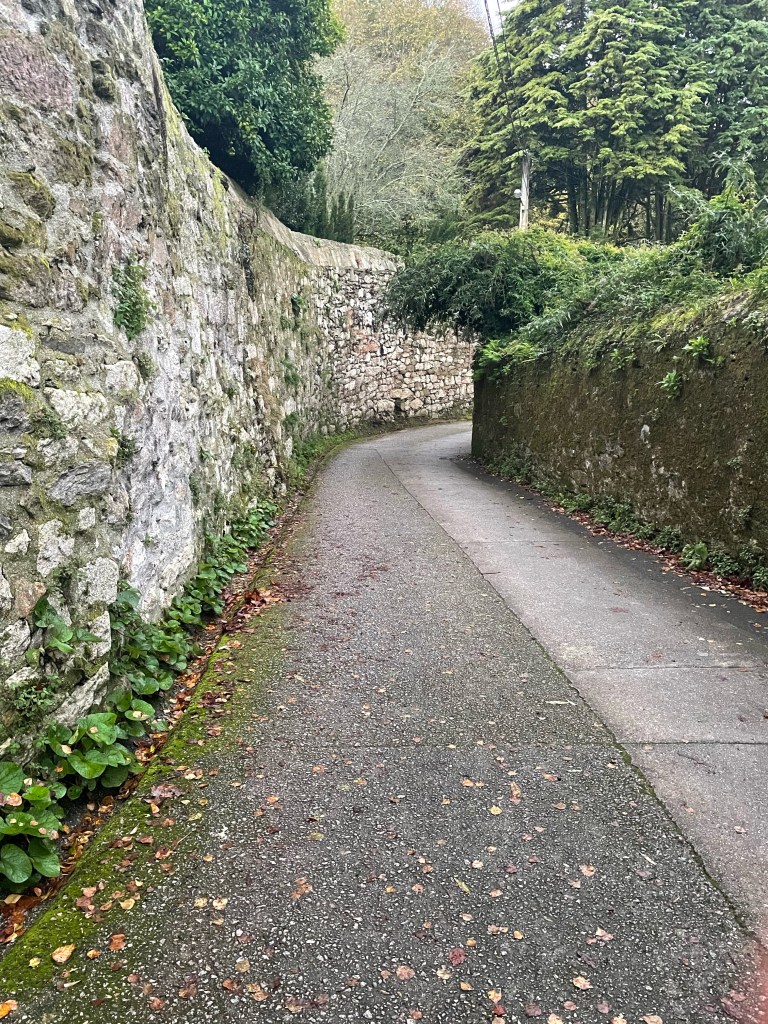
And the walk with forests and ancient walls was great.
3 more days to go, can’t believe it. Then – done. Here’s the video of the little town:
Our hotel is named thus because the building was directed by Ferdinand and Isabella. They did the pilgrimage, with their entourage, and arrived in Santiago. I’m sure THEY had room at the inn somewhere, but they saw that most pilgrims didn’t.
They ordered it (named Royal Hospital) to be built in 1499 and it’s now considered one of the world’s oldest hotels. The directive from the royals: “Insofar as we have been informed and confirmed that in said city of Santiago, where many pilgrims and the poor of many nations converge to visit the blessed St. James Apostle and Patron of our Spains, there is a great need for a hospital to take in the poor pilgrims and the sick who make a pilgrimage there, and for lack of this building, many of the poor sick and pilgrims have perished and do perish on the floor of said church and in other areas, as they have no place to stay and no one to receive them and lodge them…we therefore order a hospital to be built at our expense, which we will provide for from our own income.”
There are about 80 well-written plaques around the hotel describing its history and that of the city around the hospital. In my enthusiasm with history, I was ready to read all of them. Ran out of steam, but I did get glean a few key facts.
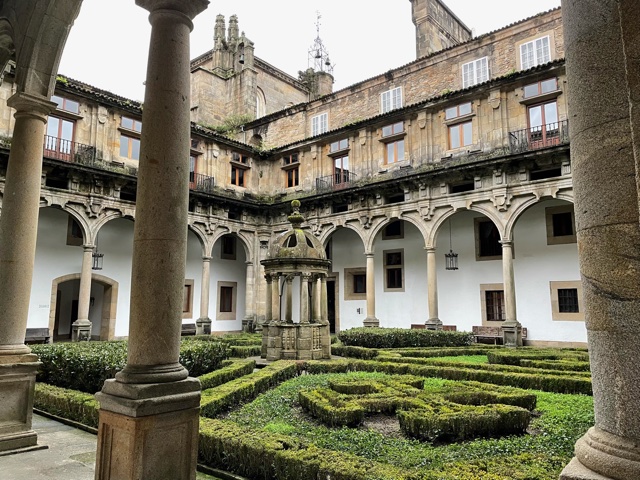
I started this morning after sitting in one of the squares of the cloister for quite a long time. With the time change, the light changed around 8am so took this video of the four courtyards.
There was always a hotel function, but it was also a hospital for the poor, housed an orphanage for foundlings, grew extensive gardens with medical plants and made/provided medicines for the poor and pilgrims.
The building was a city in miniature, with its own corps of priests, health workers, apothecaries, accountants and servants. Physicians trained here. We had dinner in one place that used to be the stables and then the autopsy room. Very flexible thinkers about space…Rick noticed this placard –
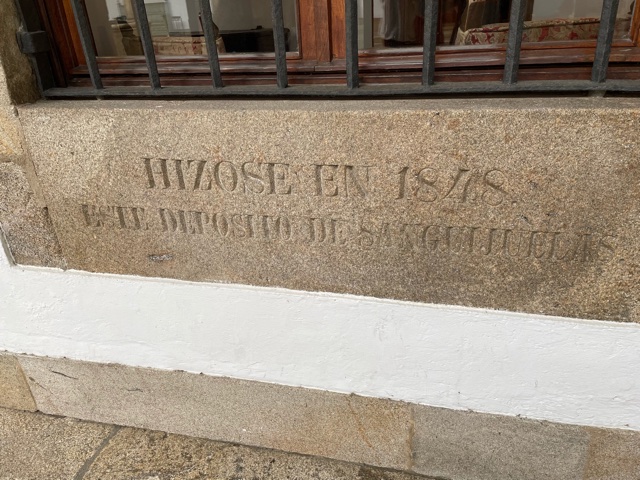
The leech tank. This area was also the hot water room and brazier, giving heat and comfort to patients.
The king and queen gave sole authority to the hospital administrator. This made for challenges because even the archbishop and church authorities couldn’t intervene. If a captive made it past the barrier outside, they were protected if the hospital agreed to house them (except for murderers, highwaymen and other criminals – they weren’t accepted).
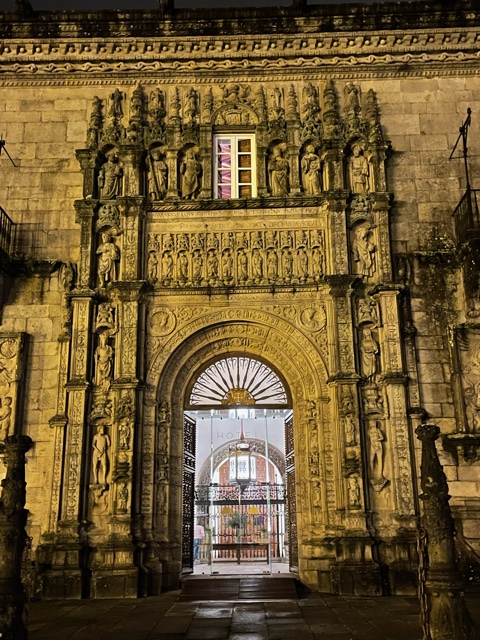
Early authors noted that just crossing the through the hospital’s facade must have been a mystical experience because of the welcome and care that greeted them and the message of salvation carved into the doorway.
Early morning shot.
The Catholic Monarchs actually “sent a request which specified which facades would be stonework or dry stone, the decoration of the facades, the royal and religious symbols that would adorn the courtyards, the types of wood for floors and roofs, and even the setting up of animal pens, a garden, a cemetery, fountains, and fireplaces.” Amazing.
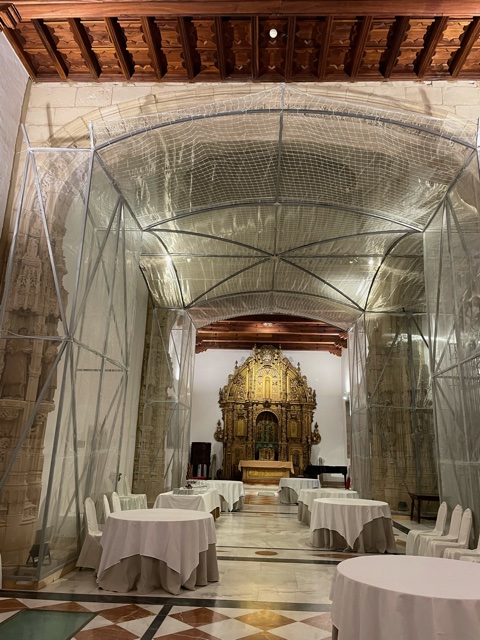
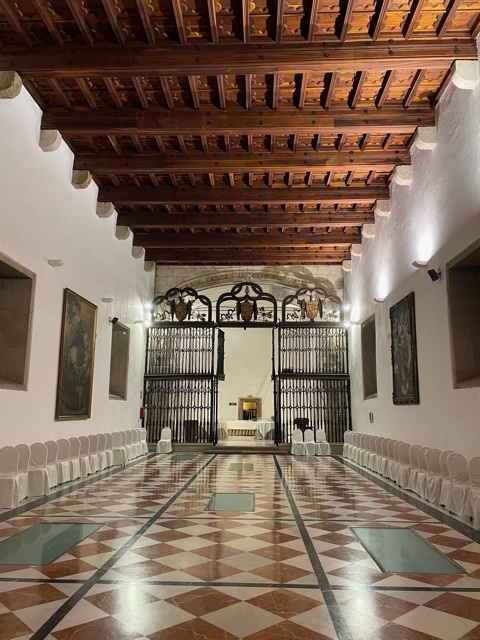
Here are the meeting rooms at this hotel, seriously flexible with how space is used now…
As Rick said, imagine the wedding you could have! These rooms were part of the original, of course, as this is the the church for the Royal Hospital. I mean, you couldn’t just go next door. We do marvel at this fact. We did tours of the Cathedral and of the giant monastery in the next building over. So 3 huge churches on one block. Well, the 3 that we saw, probably more that we didn’t see on this square since one building is the seminary and the other the governmental palace.
I digressed. At first the Royal Hospital had just two courtyards, but in the mid-1700’s they realized they needed more space and medical facilities, so expanded to the large square it is now, including the two new garden courtyards. After this expansion, the foundling orphanage was housed here. This note about the orphanage is worth repeating:
“From it’s founding through 1846, every year the Royal Hospital took in hundreds of children abandoned by their parents. On San Francisco Street, there was a window with a bell and a revolving compartment like those in cloistered convents. A person would ring, wait to hear “Ave Maria, gratis plena” and then leave the newborn.
“Overseeing the orphanage was the headmistress, who also ran the female pilgrims’ quarters. The babies were given to the parish churches, which forcibly distributed them among breastfeeding peasant women. The hospital provided a few changes of underwear and a stipend. Only one out of every five children reached the age of two, although the survivors were sheltered until they were six. After this, the males learned a trade and the girls were handed over to convents.
“In later years, care noticeably improved. The Orphanage Method from 1821, describes what the person on duty should do with an abandoned baby: ‘You will pick it up, caress it, undress it immediately, noting the number, color and quality of its clothing, garments, marks and any papers it might have. You will wash it in warm water with a bit of wine and soap and then wrap it up. In this room there will be a fire and two or more dry beds, a few ounces of chicory syrup with rhubarb, which is the best baby food for the first hours, and a little cream of rice with sugar to distract those who may be older.”
Even with this updated care, it’s amazing any survived.
In 1953 a new hospital opened up and all of the patients and medical staff moved to the new facility. As soon as they moved, the National Institute of Industry (under Franco) got started. In 9 months, working 24 hours a day, they pulled down and rebuilt 22,000 square meters of roofs, 12,000 m2 of stone walls erected, 12 hectares of walls painted, and 20,000 m2 underground prepared, and more. A lot more. They worked “even on Sundays.” The hotel opened on July 24, 1954, on the eve of St. James Day.
I can’t imagine the pressure. Because July 25 falling on a Sunday is what determines the Jacobean holy year. That’s this year too.
Here are the garden courtyards in the daylight:
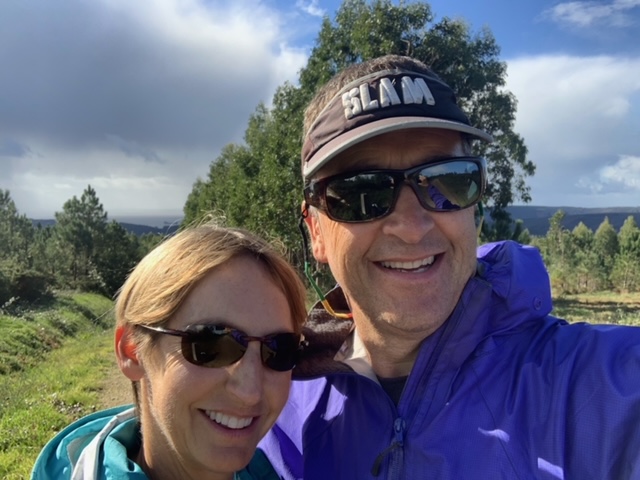
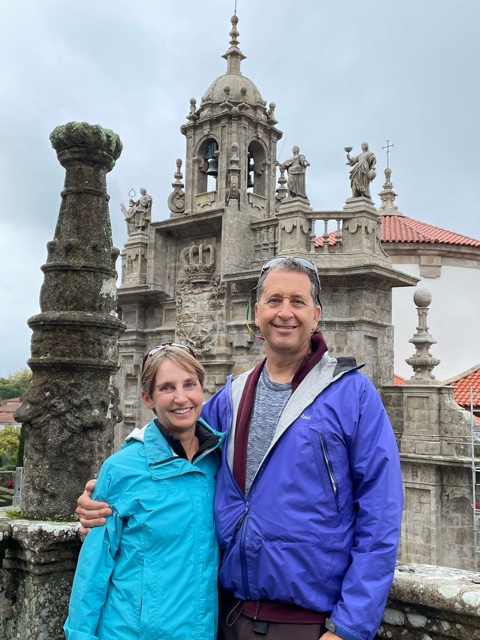
And here’s a photo of Rick and me – with our backs facing our direction tomorrow when we start walking again towards the ocean and Finisterre.
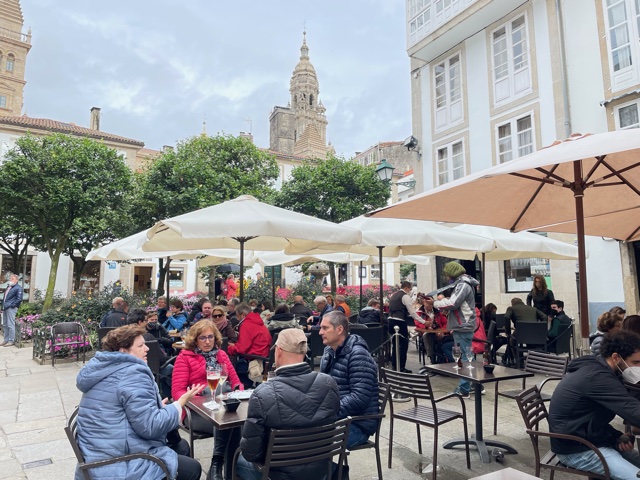
And here’s an afternoon shot before the rain of everyone out enjoying a festival day before tomorrow’s holiday for All Saints Day.
Santiago is so beautiful. I really haven’t been great about capturing it. I’ll try tomorrow.
We came in yesterday, last post showed the map and photo, but I had a period of needing to remember it was the journey not the destination – to slip into platitudes. A bit of a let down, since I couldn’t go into the cathedral – it had closed for siesta, etc. But I’ve more than rallied since.
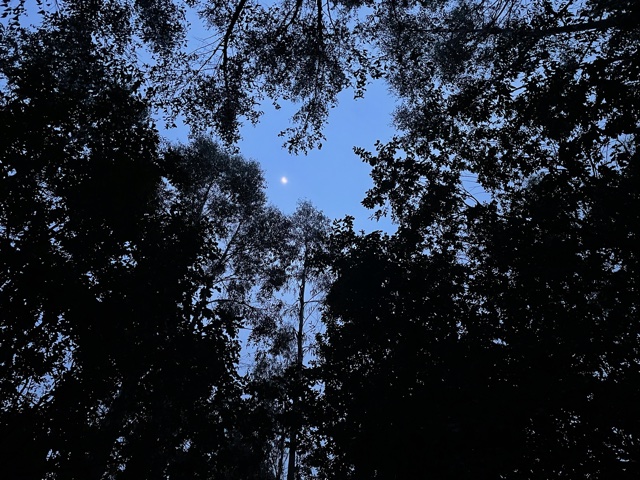
Here’s a series on our way on the last day. Bit of light starting as I look up through the trees at the moon:
Behind groups (young girls group singing)
Pilgrims starting to gather in more numbers, though nothing like what would be typical at this point:
Woods outside Santiago – this was the best entry into a large city that I’ve had so far:
Don’t fret, after very early start 7 am with 1.5 hours in solid dark:
The bridge over the river at the town where pilgrims had their ritual cleaning before arrival. Most for the very first time since starting – ach.
Really, that’s a smile, we were just getting a bit tired.
On Mt. Gozo – the final hill and the first sighting of the Iglesia de Santiago – though just a bit through the mists:
Walking through the city of Santiago – pretty even here though not yet into medieval part:
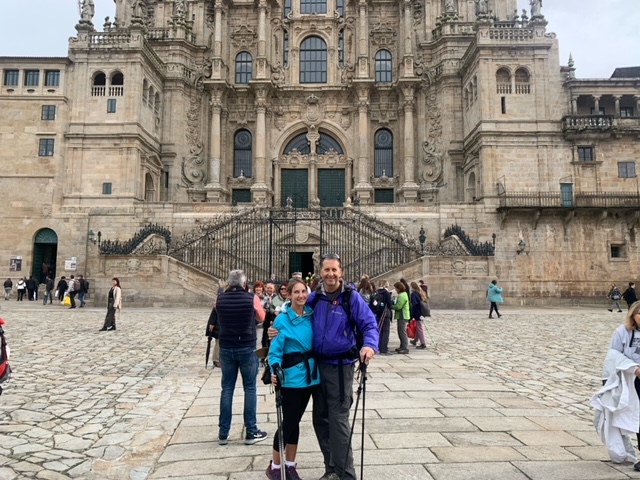
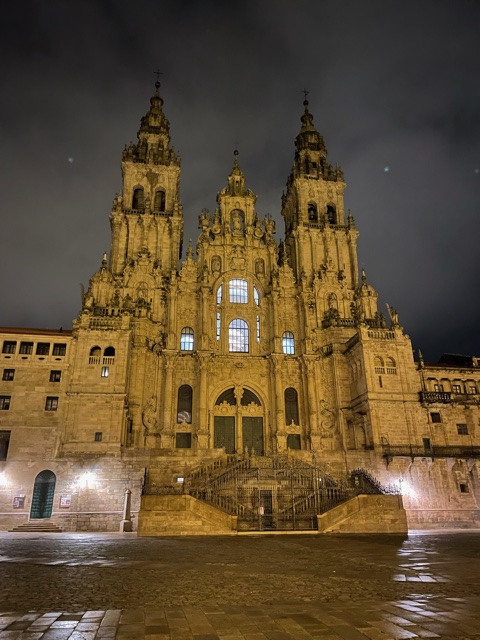
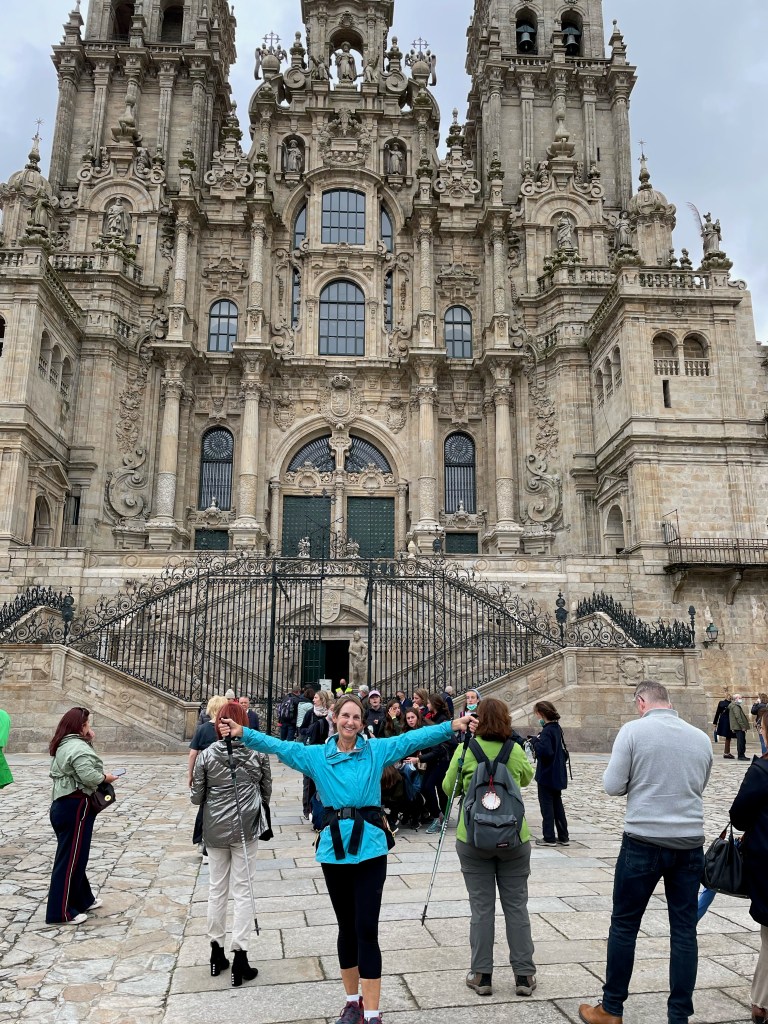
And Santiago and the cathedral. Hard to capture, but the video shows the square, our hotel is the first building after the cathedral. I’ll come back to that too, because it’s completely wonderful.
Rick had a meeting so we went into our hotel, marveled at it, showered and had lunch. The cathedral had to wait until the 7:30 mass. Rick has done more masses with me than he has since he stopped going in Brooklyn Heights after not missing a Sunday in his 22 years.
But we did get our certificates and I got an extra one that showed how far I walked:
THEN TODAY
Up early, went to the 7:30 mass because I wanted to see the cathedral without the masses. I do love the quiet mornings, Rick took quiet time with room service coffee – we were both very happy.
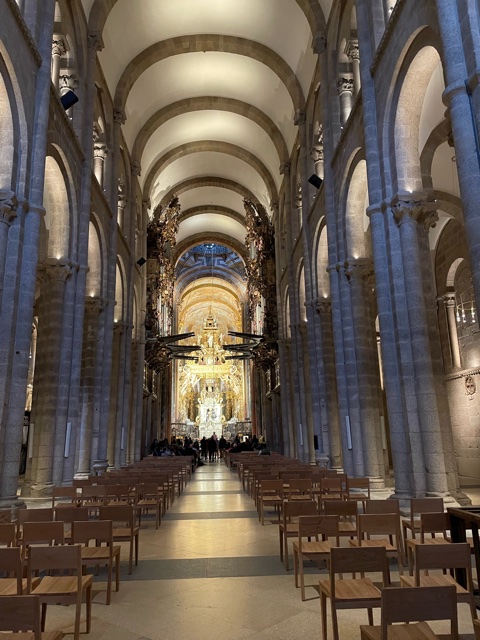
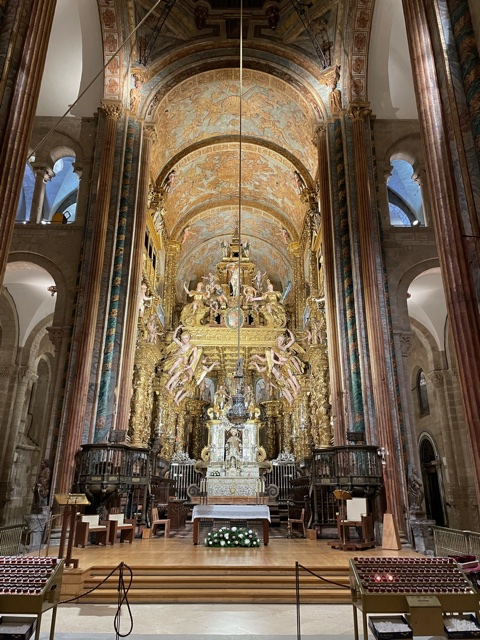
And here’s the inside of the church. Startlingly different, love the history and the adoration that is linked to the church, but will stick with the Cathedral of Leon for pure magic. This is from the 7:30 pm mass last night, the place was completely full by the time the service started, including the wings where we sat.
This morning, clear altar:
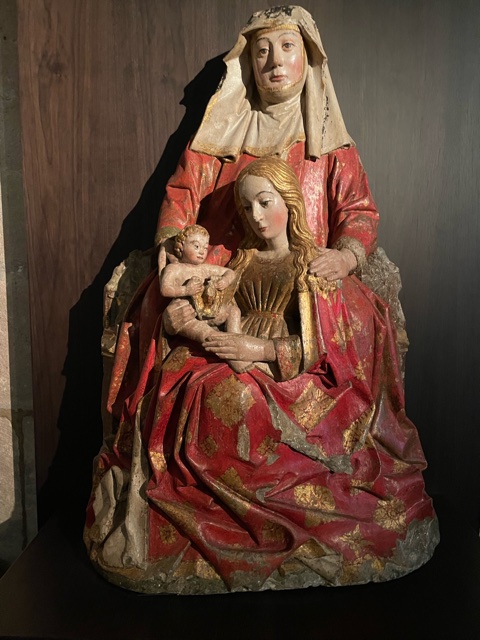
I’m going to write tomorrow about the cathedral and a bit of its history and St. James’ relics. Then, very fun, Scott and Cecilia Kuhn came in from Switzerland to join us for the weekend. Our details as we walked around suddenly became much richer since Cecilia is Chilean and Scott is also fluent in Spanish. We did a tour of the back of the cathedral, the library, treasury, outside walk upstairs, art that had been collected as things shifted or needed to be preserved. I particularly liked this piece. Now immediately recognized St. Ann with Mary and child, and then looked at the sign and I was right!
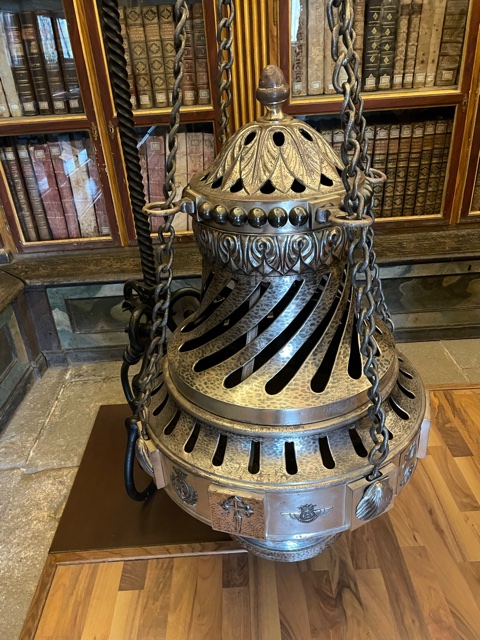
And here’s the last Botafumeiro, also called the great censer, in the library now to keep it safe, 60k of silver plated brass, from mid 1800’s. The current one is an exact replica, but not real silver. The Botafumeiro was used in the Middle Ages to purify the relics venerated during the service, but it also evidently helped with the profound smell of 100’s of unwashed pilgrims post walking for 100’s of miles. It holds a large amount of incense and as it swings, the incense puffs out in giant clouds of fragrant smoke.
I had so wanted to see it in action. I knew that if someone paid $300/$400 (numbers change) it would be used in a service. But this is also a holiday, All Saints. It was definitely going to be used on Monday at 11:40 in conjunction with the festival mass. I could do this if I could get in to the service, but Rick would be walking alone and I’d be walking late. Then Cecilia, bless her, got into conversation with the man keeping watch over the library as they talked about the old Botafumeiro. He told her they were going to do this at the 12N service. Oh boy!! So psyched.
It was a serious mass. After the last two masses, many more priests and one of them was a Cardinal? Archbishop? Bishop? We think it was a cardinal. Wonderful face, red cap, mitre hat, fancy robes, serious group. Oh boy, it might really happen. Sue had told me to sit on the wing – the cross – of the pews because of how the Botafumeiro swung. The Cardinal gave a homily, this was more than the standard Peregrino mass. I caught some and then Cecilia told us a brief summary. About humility, being kind and generous to others. Don’t put God on airplane mode. She said he really was wonderful and I loved his presence as he gave the talk. The communion happened, which they have down given that there must have been 1000+ People there, standing room only.
And then, was it happening? Two more priests came out of the door next to us carrying chunks of smoking incense, oh boy…
We’d been told repeatedly “no phones during mass” and then as it became clear that the Botafumeiro was going to swing, we were also told to stay seated – serious injury could happen. People stayed seated, but boy the phones came out. I righteously didn’t bring mine out, though it was close, but truly when the organ boomed into song, the Botafumeiro was lowered and filled, then hoisted up and then – it started to swing. Oh my goodness, it was magic. I lost all impulse to grab the phone and just watched as it went higher and higher until it was just shy of hitting the ceiling with the organ playing a grand piece of music. Seriously. Wow, just thinking of it gives me chills. It was so so wonderful. Cecilia, bless her, was in the same state, but suddenly thought of her mom and brought out her phone, so – you get to see a bit of the Botafumeiro in its wind down swinging.
So – a completely wonderful day. Fun lunch out, we’ll have dinner tonight here in the fancy restaurant that I’ll go to in work out clothes, basically. But most others there will be the same!
It was supposed to be a little over 12 miles, but we missed (I thought) the fountain and chapel of Saint Irene, so we walked a good bit back to see – realized, oh, I took photos of this, thought it was the church of Saint Vincenzo. Nope. I’ll come back to this.
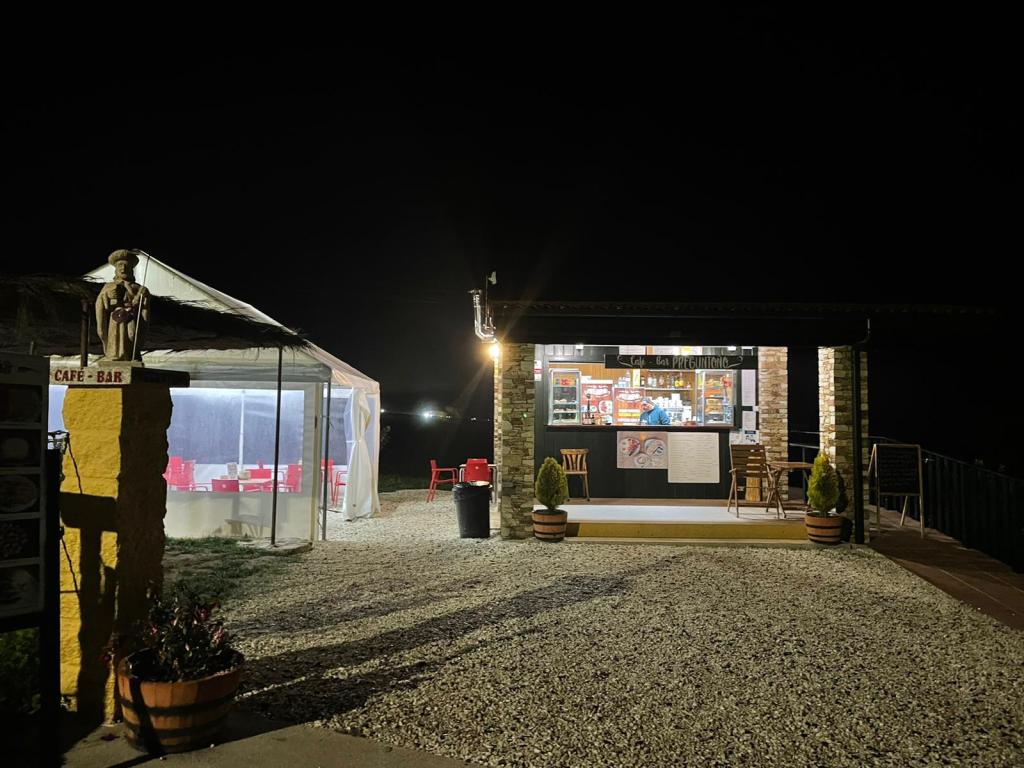
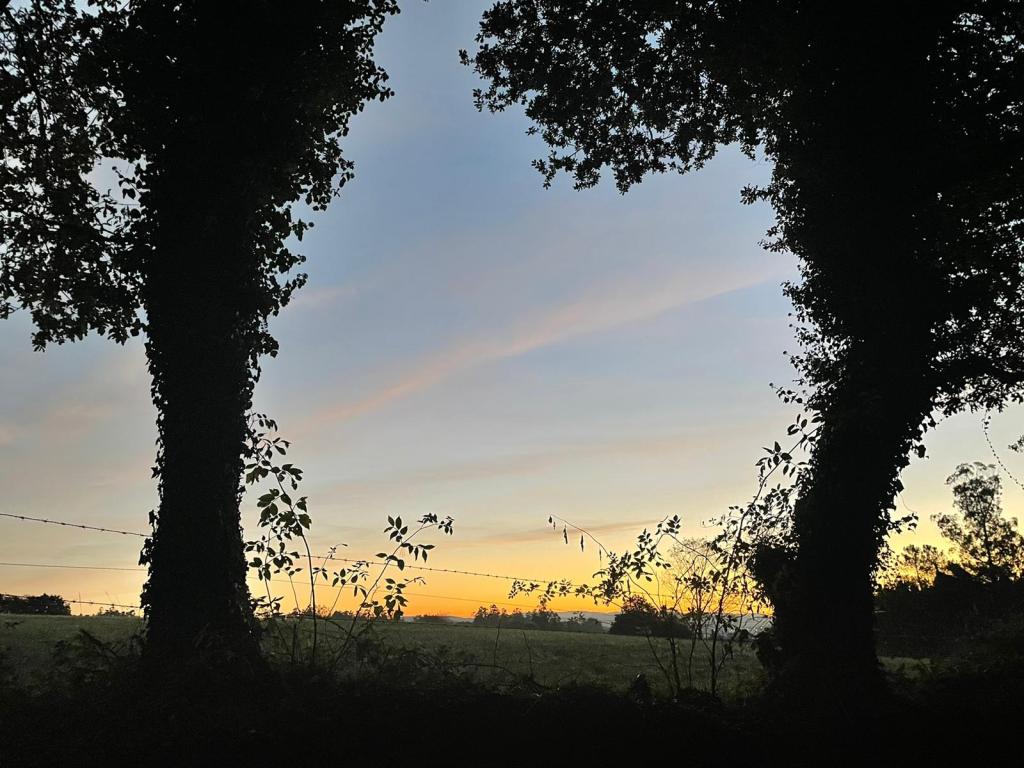
We started out really early today, at 7:30, pitch black when out of the city lights which was pretty quickly. But we wanted to beat the rain and have quiet in the morning. Which we did and it was completely wonderful. Today was one of those blissful days for me – of which I’ve had an amazing number. I just walked all day. Didn’t listen to anything but the birds, cows, dogs, roosters, my footsteps. Rick and I talked a bit here and there, but mostly walked separately as I dawdled. At first we walked pretty briskly, but then I realized we were striding not strolling and I wanted to stroll. Empty the rocks out of my shoes, find a bush, take photos, have a snack, that sort of thing. So I did!
Rick bought a headlamp in Melide and that made a big difference for the first hour until it started to get light and I slowed down. Our first stop was here for a much needed coffee for Rick:
It came as a shining beacon and the place was so cute. We would have eaten, but it was too early, so carried on.
There was a bit of a ditch between me and the barbed wire, so you just have to look past the wire. It was beautiful.
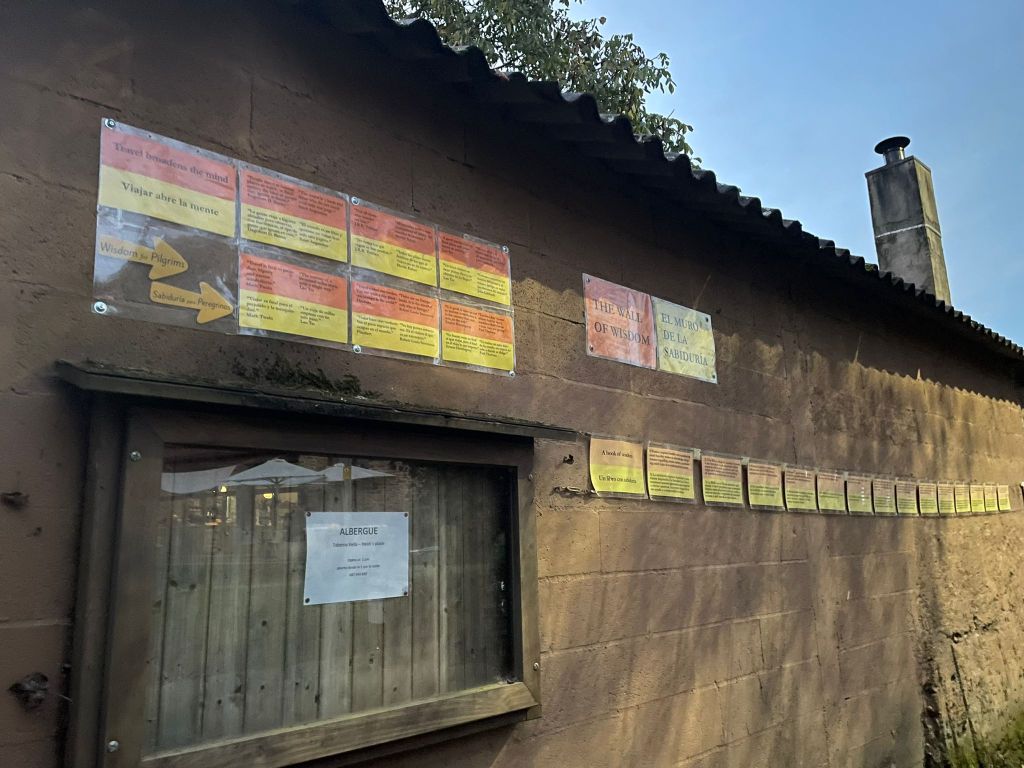
Another potential stop for breakfast, but not open yet. I read everything – it was in English as well as Spanish – but then decided the writer, while expressive, was a bit confused as to what they were trying to advocate. But fun to read their exploration of taking the Bible into current day living.
Then great breakfast. Rick realized yesterday too much gluten was flaring things and I’m A-OK with cutting back on bread. We found a great place that did eggs and ham, fresh orange juice, coffee, hot chocolate. We walked in to quiet and within 10 minutes it was full of pilgrims. The two tables next to us filled up with 8 Spanish guys who ordered food, but first got their beers, bottle of vodka, glass of red wine for one and settled in. It was 10am. They saw my grin looking over and wanted us to join, but I said I wouldn’t be able to walk. They were laughing, no – this helps the digestion! The walking! Join in – they were all raising their glasses. So happy. I stuck with my orange juice, but enjoyed watching and listening to their camaraderie.
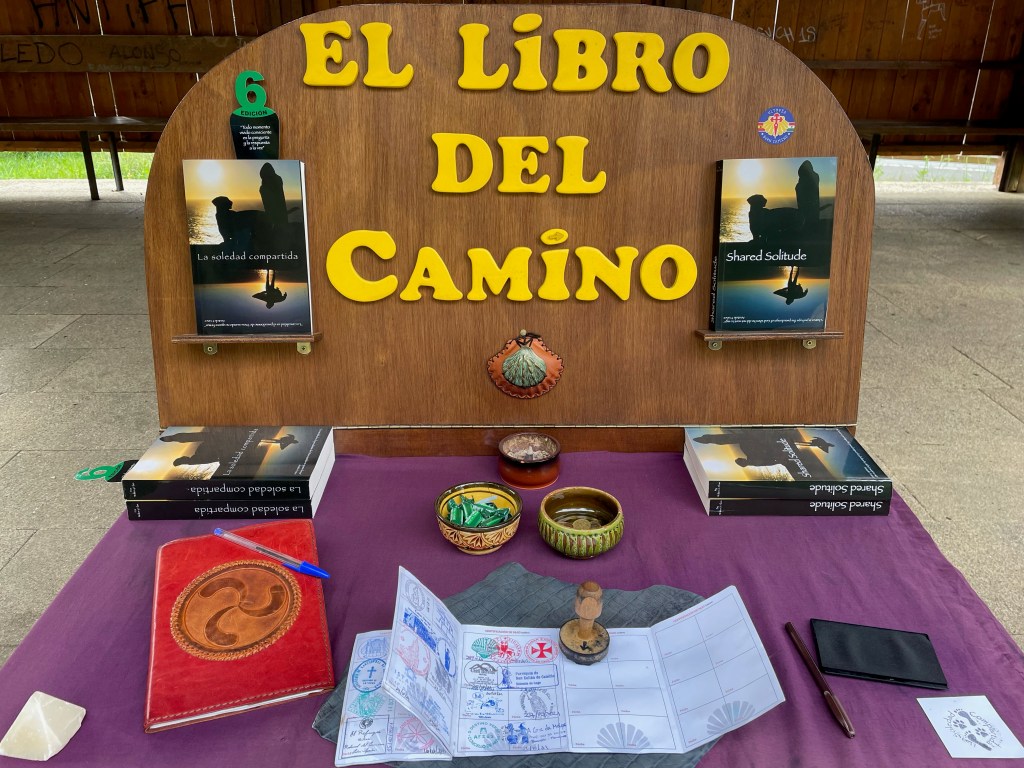
Next stop – had to take this photo and get a stamp. The guy had written a book about the Camino and its spiritual journey, had unpacked his van next to the Camino with a handy rest stop and set up his stella, books, signs and incense. That’s my second Camino passport spread out with the stella ready to go.
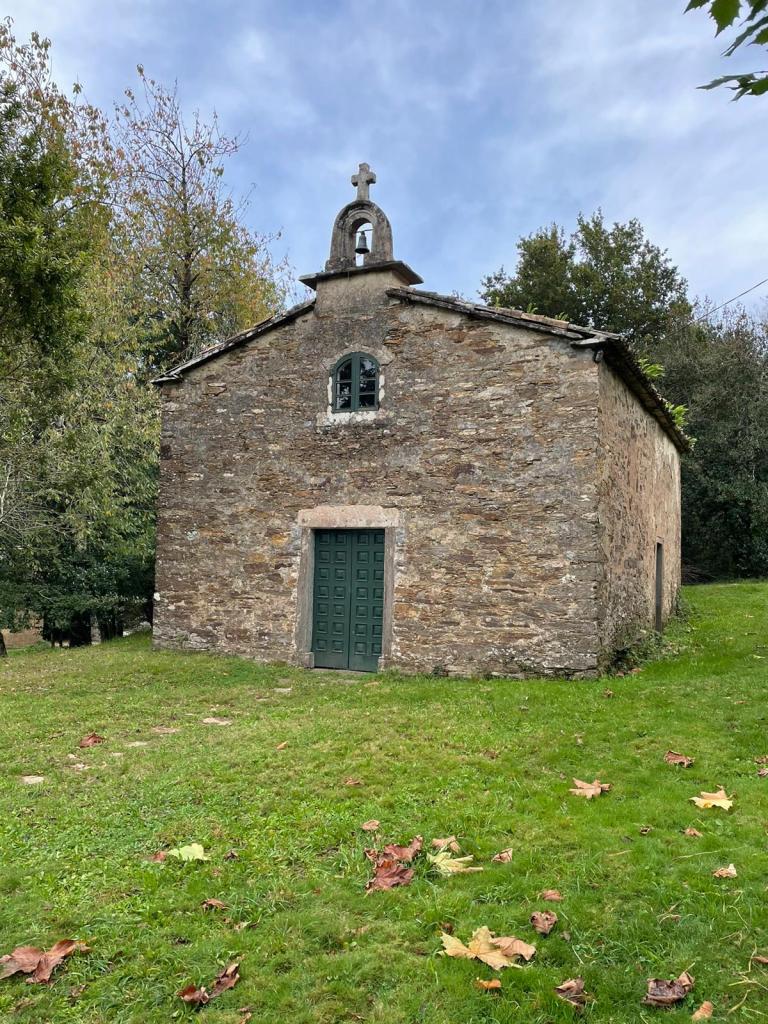
And then Irene. Ah, Irene. So – I’d read about the Chapel and Fountain of Irene. Here’s what’s very confusing.
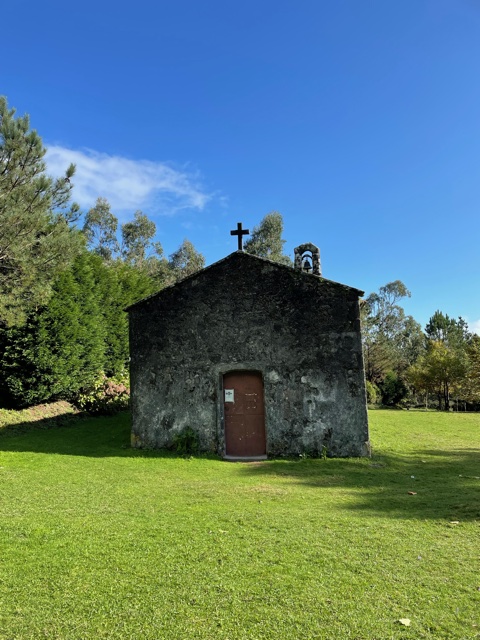
Cute little chapel, built in the 17th c, but while it’s called the Chapel of Saint Irene (well Capella de Sta Irene), it’s actually dedicated to San Pedro. Really? How does that work? And which Saint Irene? From Rome? Died 288 AD, was a Christian woman in the Roman Empire during the reign of Diocletian. OR Saint Irene of Tomar, Portuguese: c. 635-653, a Christian who was martyred for her faith in Visigothic Portugal. Guessing the second. But then where does San Pedro come in? Explored online, but it’s just going to stay a Camino mystery.
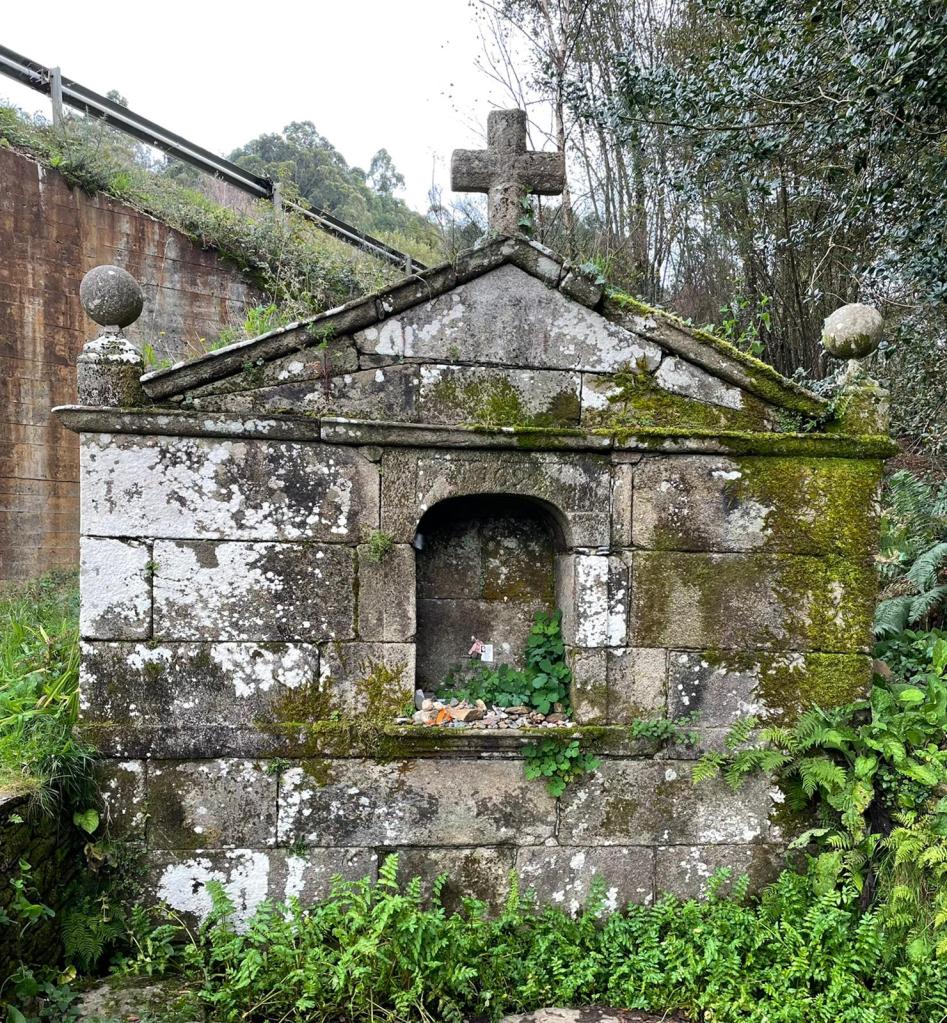
Then next to the Chapel is a wonderful old fountain with a history that’s much more clear. You can’t see the actual water fountain here, it’s just to the side.
Notes from online: The water emanating from this source is able to kill pests and plagues of crops, so it was used to spray the crops. Also, it is presumed that it cured all the ills of children, who stopped crying when they passed by the image of Saint Irene. Sadly, the image from 1692 was stolen in the 80’s.
It wasn’t the first time stealing happened in this area. In 1808 Napoleon’s troops, on their way to Santiago, entered and robbed in this chapel before going to sleep in the atrium of the parish church of Arca – next town over.
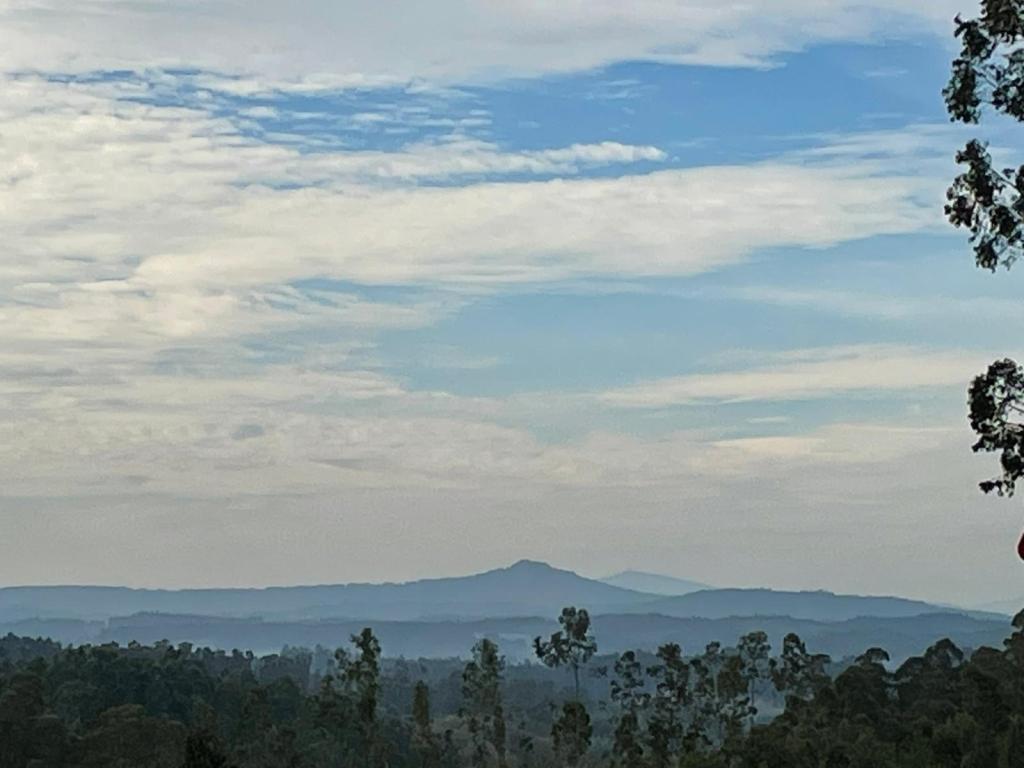
Then, using the Chapel of Saint Irene for location, just after, if you looked south, you could see Pico Sacro:
Hazy with incoming weather, but you can see the peak. Here’s the story from the CC Book III (note below) within the Pilgrimage book:
“The martyred St. James’ body was brought to Galicia for burial. The lady Lupa, the region’s ruler, set Santiago’s disciples many trials in order to secure her permission to bury the Saint. The last was to take the body to Mt. Ilicino and to harness to the burial cart the wild oxen they would find there. She neglected to mention the fierce dragons that were terrorizing the mountain’s inhabitants. With faith, and some judicious exorcisms, the disciples banished the dragons, and the ferocious oxen, cowed by the miraculous example, came placidly to the cart. The mountain was renamed Pico Sacro. Centuries later, Christians built a small chapel to Santiago on the mountain.”
I mean, dragons! How could I not want to see the peak?
More than you ever wanted to know – but I’d like to have it as a record, so putting it here. This is one of the main sources referred to repeatedly in The Pilgrimage Road to Santiago by David M. Gitlitz and Linda Kay Davidson that I keep using as my reference guide throughout my trip. I realized I never really explored the Liber Sancti Jacobi. Codex Calixtinus de la Catedral de Santiago de Compostela. It was referred to in the movie The Way by the Irish poet making a passionate argument about Roland (I think).
This is the link if you want to learn more about it – but to summarize. The book was written between 1160 and 1173 by several people, but it was brought about by Calixtus, who become Pope, but before that was a monk and then the Abbott of Cluny. He, the secretary at Cluny, and others were instrumental in getting it written. One of the books of the Codex was a guide for pilgrims. Here’s the site online for a full description – it’s really good!
The town where we’re staying is wonderful, a small medieval town with our hotel less ancient and great. Great food, comfortable room and it’s pouring rain out while we’re cozy inside and looking forward to dinner. Plus there’s a little living room like area next to our room and I’m sitting here writing, watching the rain and feeling completely happy.
The thought that popped into my head today was that I would be happy to go home. Not rushing it, but will be happy when it unfolds. It’s a gift when a transition will happen that you’re not dreading or desperate for, but just pleased that it will happen when it does happen. Make sense?
So, this town cleared up a mystery for me. I’ve been so curious about these horreos, the little buildings up high that have been everywhere. I was told that they were for grain. Did I write this already? Anyway, neither Rick nor I had come up with that guess. In the old days, the horreo in the yard indicated someone’s wealth. The size of the farm determined how big someone was allowed to build their horreo. The families stored their grain in the horreo to dry out, stacked on shelves, or piled, but the air could get through, the water couldn’t and rodents couldn’t get up to it.
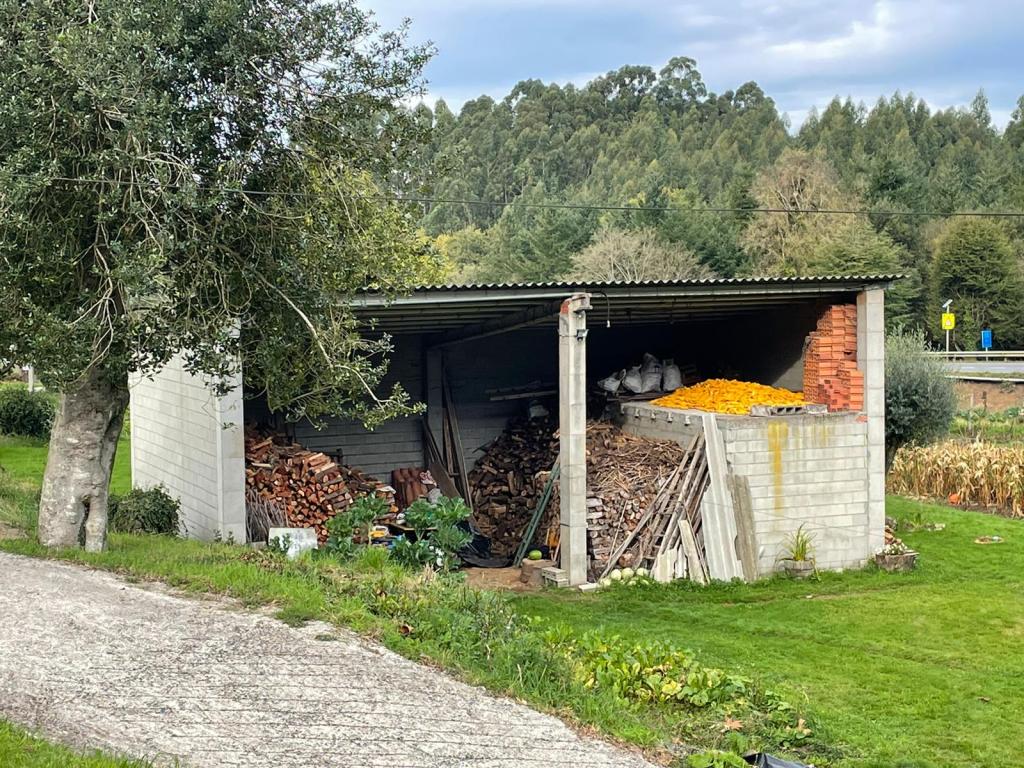
Today, Rick and I first saw someone who was piling her corn on top of a small building to dry. We actually saw her laboriously pushing her wheelbarrow up next to Irene’s chapel to her house, then piling the corn up. I wanted to help when I saw her going back down for the next load, such hard work, but thought better not.
Then I was taking a video of this town just to show it and realized at the very end that four people were actually using the horreo! Sadly, I didn’t want to seem voyeuristic so stopped once I realized what I was seeing. Older folks, two men up next to and in the horreo, two women sorting and piling corn from a small wagon into pails and handing them up – relay to get the corn into the horreo. I came back and asked the guy downstairs at the hotel about it. He said the corn would be in there all year. It’s used now for animals. Before corn was also used for flour, but no longer. The corn that most people eat comes from big industrial farms, like our Nebraska.
Here’s a small group of ancient buildings, including the horreo, that someone has made livable. If I can get it to go, a wee video.










 Reb's Walks!