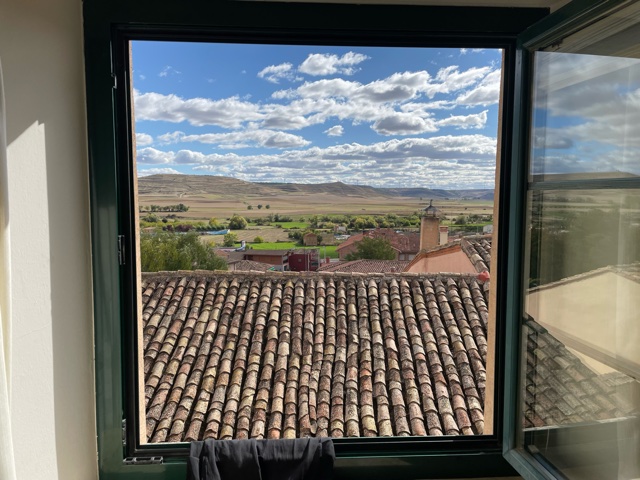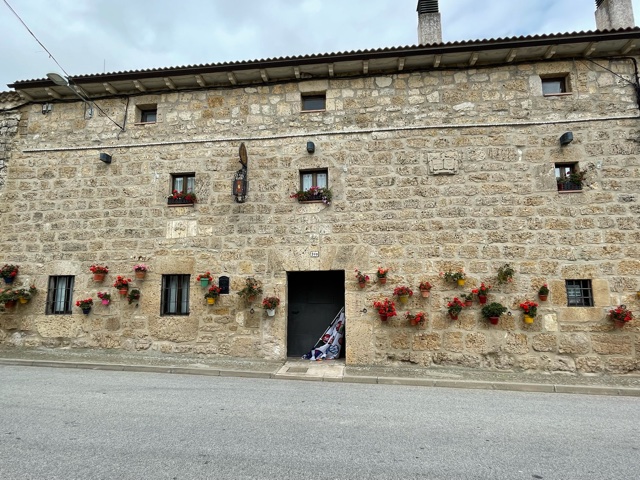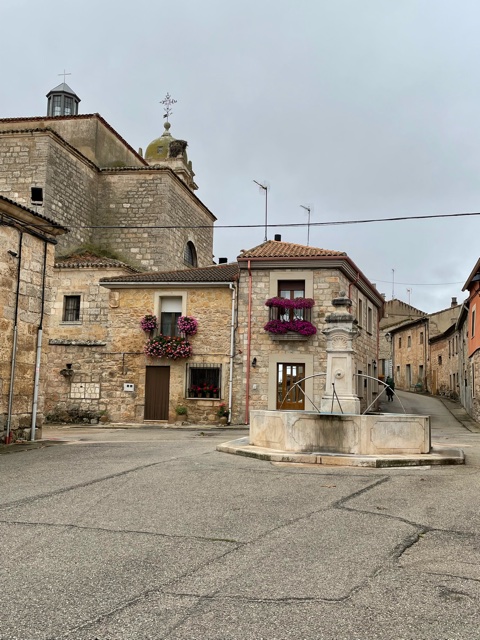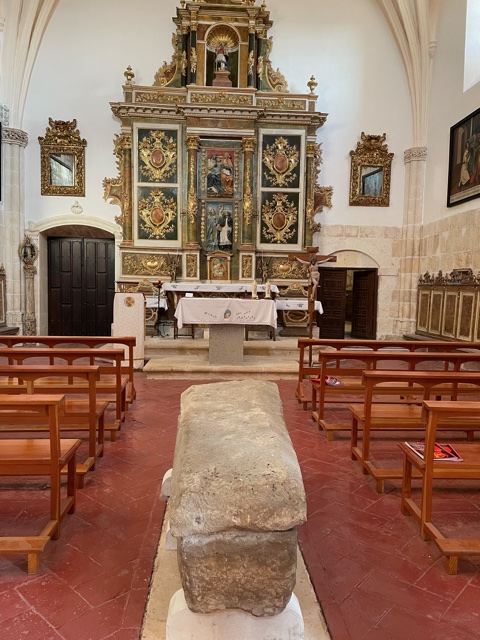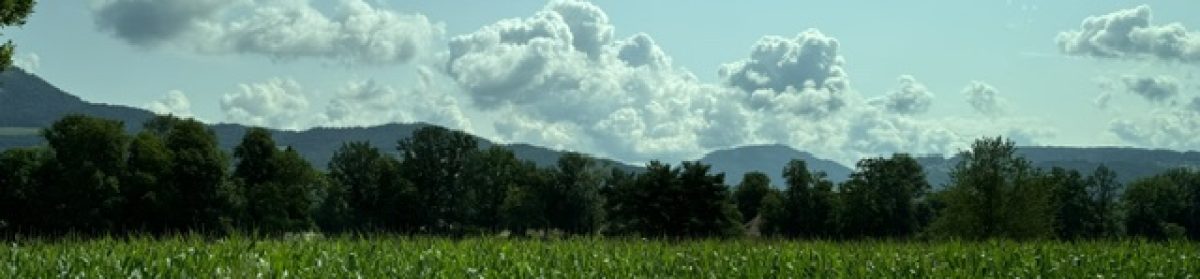
Saturday, 9.Oct. Sahagun to El Burgo Ranero, 11 miles

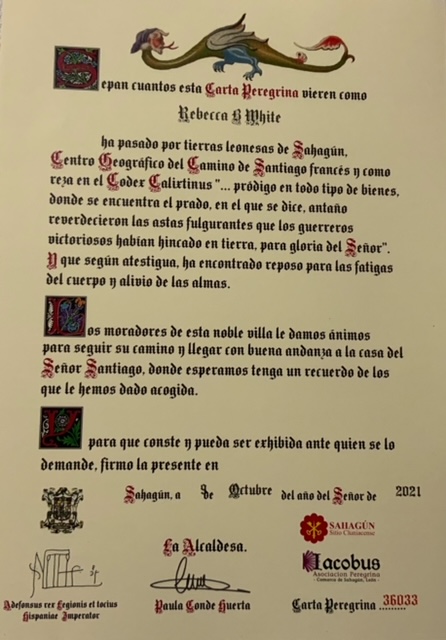
I got my halfway certificate today after we got back from El Burgo Ranero. Went with Sue and we were both quite pleased with our certificates! I asked him if there was any significance to the dragon and he didn’t know, but was so nice about doing the whole thing.
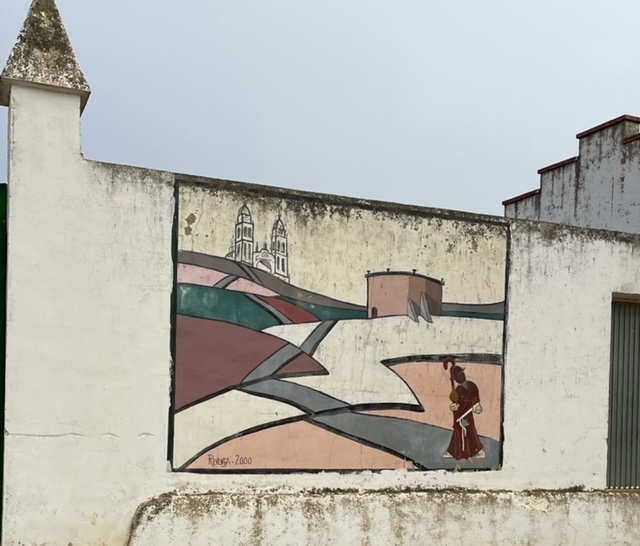
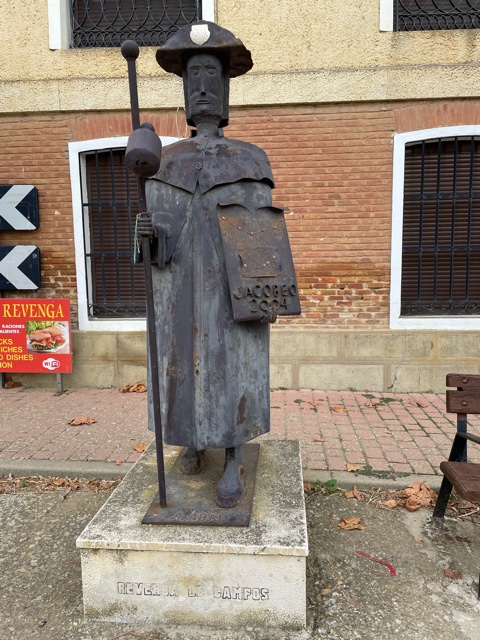
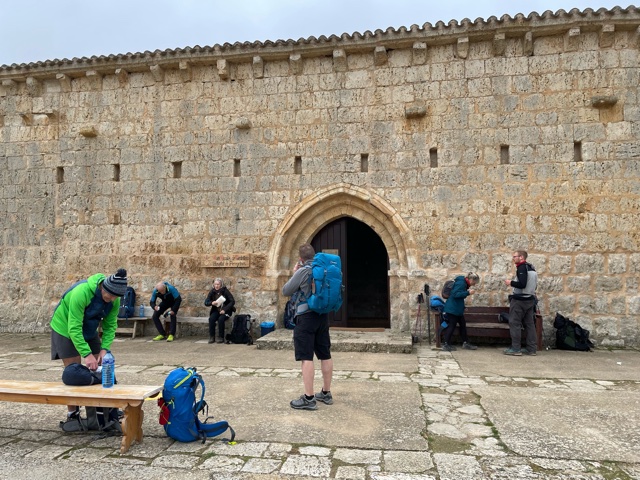
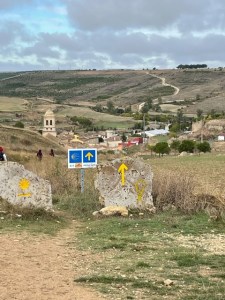
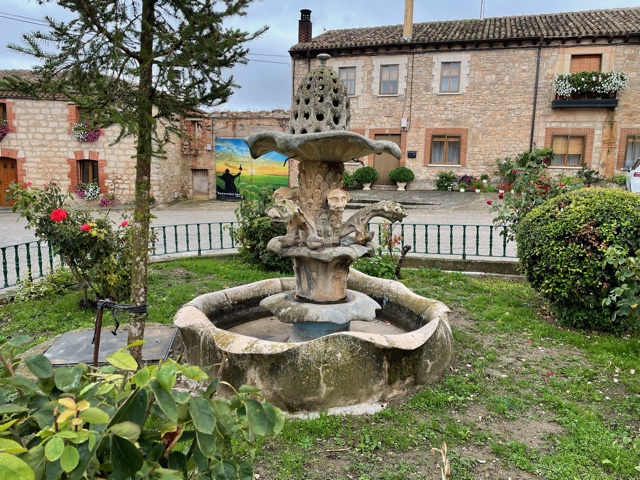
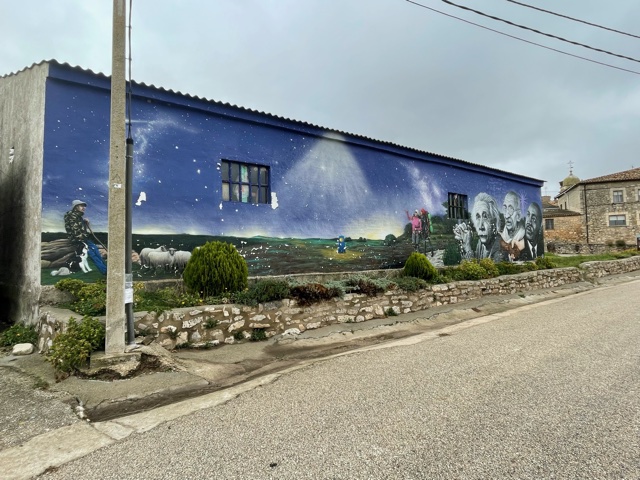
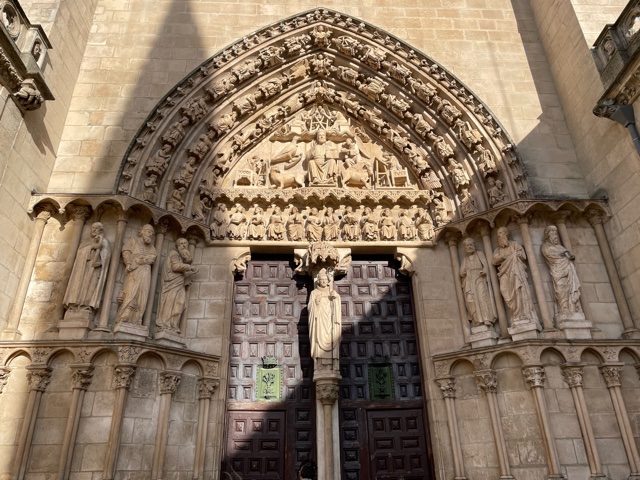
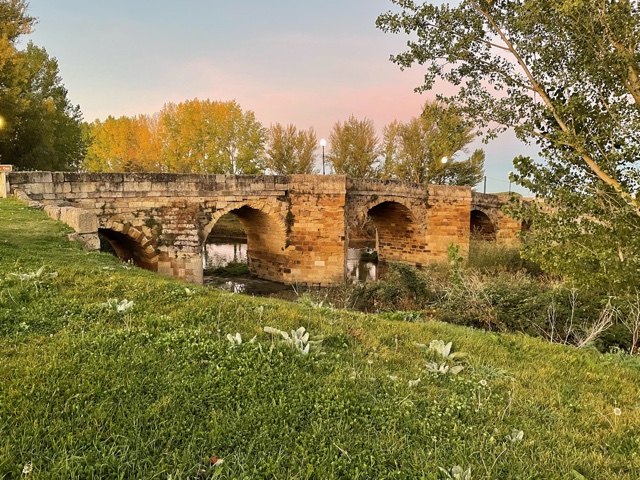
Sue and I were in different hotels, but both walked from Sahagun to El Burgo Ranero, then got a prearranged taxi back to Sahagun, so 2 nights in the same place which was a treat. Beautiful cold to cool morning to walk, so nice. Morning Sahagun shot of an old bridge and a statue that was repeated, but with different carving in El Burgo Ranero. In the Burgo photo, there’s a building behind and to the right that I think was a silo. Isn’t it pretty? Love it that they put such detail into things like this – or used to. Not mentioned in my book, so not ancient, just pretty.
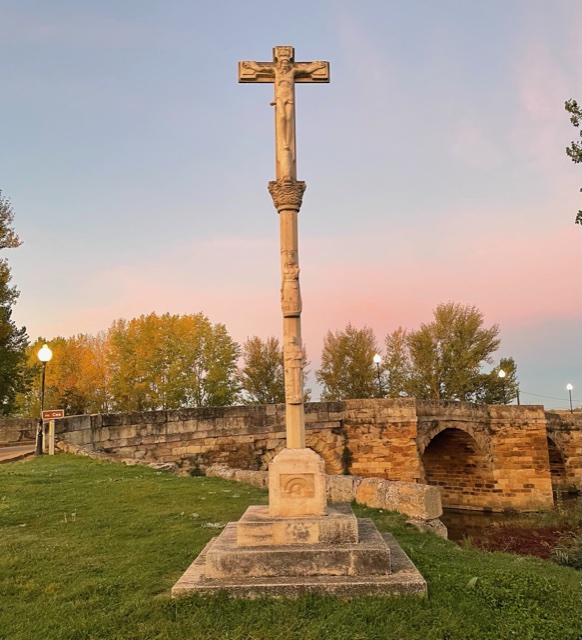
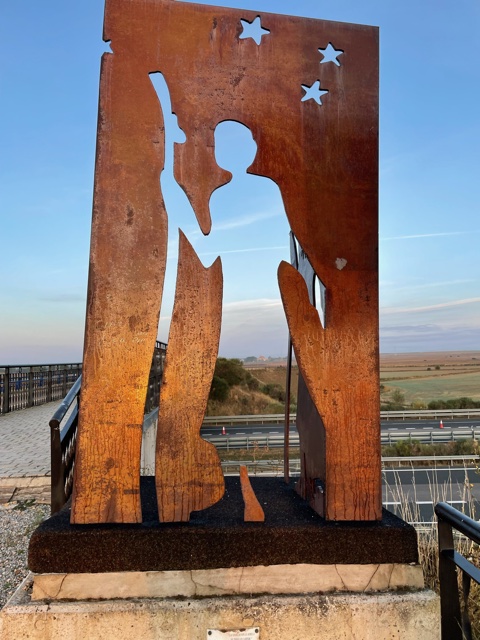
This statue covers it all for the Camino, Jesus, Mary and the pilgrim. 

Sahagun is the biggest town between Burgos and Leon. Today, Saturday, was market day and the place was very busy. It’s a small accessible town, so nice to see it filled up with people and the markets that went for blocks with clothes, food, nuts, purses, things like that. Then everyone eating in cafes and talking and talking. It really is a wonderful culture for taking time to talk and drink coffee/beer/wine. The kids all played in the main plaza on scooters, roller skates, running around while parents sat around the side eating, drinking – but mostly talking. I should have gotten a picture of that whole scene, but was sitting with Sue and talking (guess it’s rubbing off) and didn’t think of it. But I did get a short video of my clothes drying on the little balcony with a gathering of only about 10 below on the restaurant. Not a special party or anything, just an afternoon. I did pick up that at least some of the time, the guys were talking about a game. 

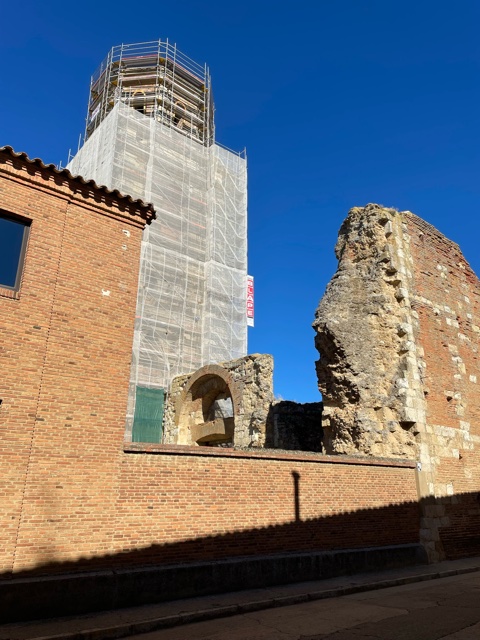
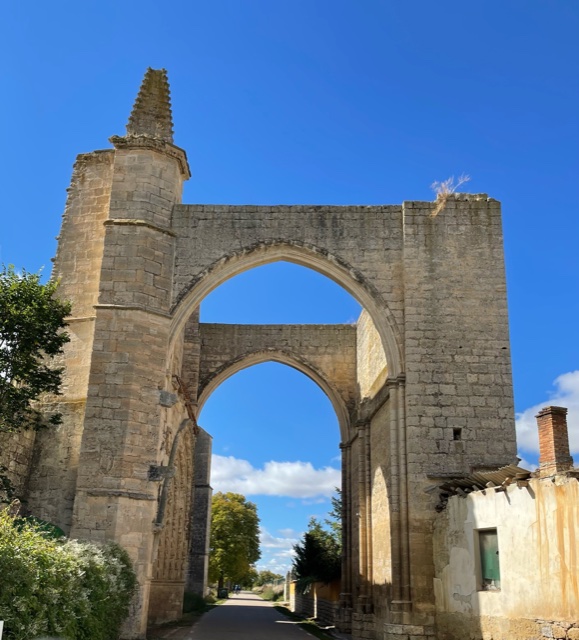
There are churches here, of course. One is falling down and they’re trying to preserve it, the arch is from 1662 and is one of the entries to the city, used to be the facade of a church – must have been huge. Next is the Convento de las Madres Benedictinas, consecrated in 1184. It’s been completely rebuilt, and right next to it, they’re continuing to work on rebuilding and oh man, they have their work cut out for them!

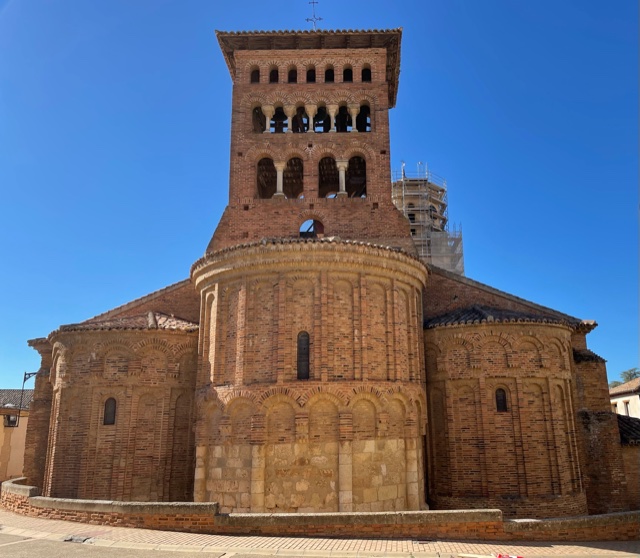
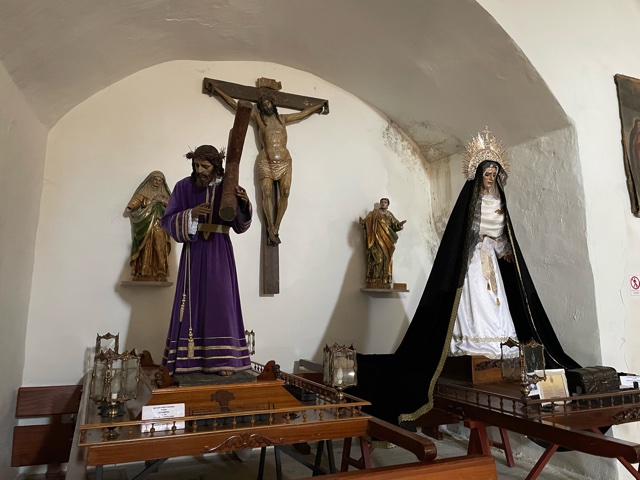
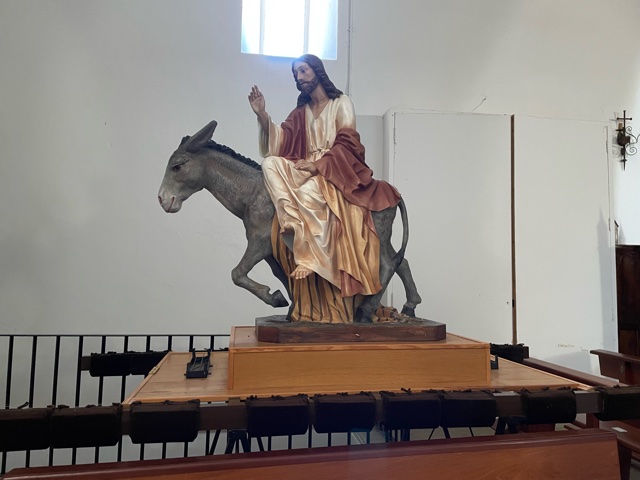
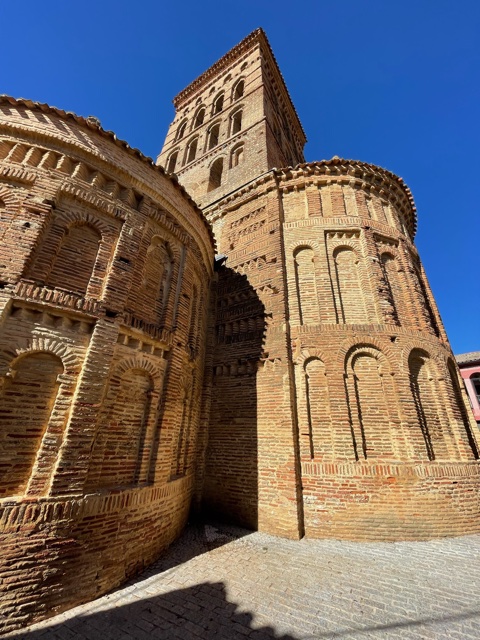
The main church I spent time in was the Iglesia de San Lorenzo. The current building is early 13c. Amazing because the brick is just beautiful. I went in and was lucky that there was a women there so I could go in and see their platforms that they carry on Santa Samana, Holy Week. The last time I’d seen this was when Rick, the kids and I got to Granada 15 years ago and realized it was Santa Samana. Everything closed and procession after procession of men (now mixed with women) carrying these incredibly heavy platforms through the street.\

This church had all statues and I didn’t see any giant reliquaries of silver like in Granada, but these statues were big enough! To Americans, the costumes are disconcerting, the statue outside shows the hoods that they wear with the robes. I asked about this and she said that it was just the custom and it made the people carrying the platforms anonymous, it was all about what they were carrying. She and the other couple who were Spanish all understood right away why I thought it looked negative, rather than celebratory. I only took a few photos, but you get the idea. These were actually three of the smaller platforms.

The brick work, again, just gorgeous. 
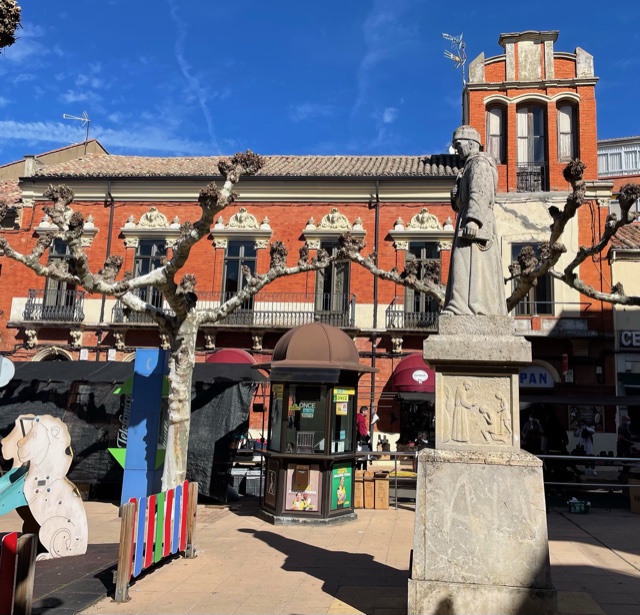
Here’s a curious thing. Sue and I realized the dead looking trees (assuming they grow and bloom in the spring) had been spliced to make continuous arches for the plazas they surrounded. They were in several places around the town. This photo shows a few connected trees:
Another curious thing – what was this about? An arch just randomly (to me) placed on the path today:
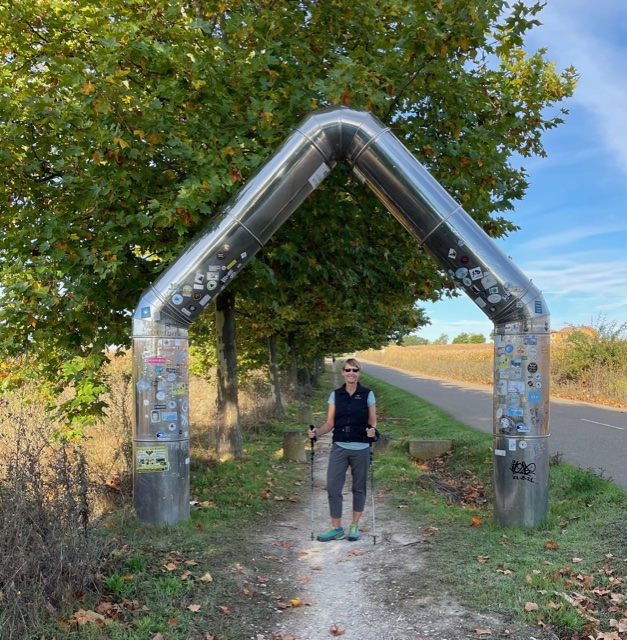
Tomorrow, we get transferred back to El Burgo Ranero and will carry on hiking from where we left off today. 

Friday, 8.Oct. Calzadilla de la Cueza to Sahagun, 13.6 miles

Can’t believe it, but today is the halfway point to Santiago. I’m halfway there!

Today’s thought topics during the walk:

Yongey Mingyur Rinpoche is brilliant and also funny.
Opposable thumbs are important.
Rollies make a lot of noise.

For Rinpoche – his book In Love with the World is just remarkable. He’s escaped his monastery where he’s an Abbott and is making his way to Varanasi alone, with no attendants and little money. And the relative life is coming at him in all directions. He’s able to articulate the overwhelming sensory input, his body/emotion/mind responses and then make himself use his training to manage his mind and its thought processes. Absolutely amazing. A real example of what we can do to manage our reactions no matter the situation. And, I’ve laughed out loud several times. He’s so wry and definitely recognizing how cosseted he’s been from childhood because of his Buddhist lineage and status. 

Opposable thumbs are really important when you have a window of opportunity to grab a bush with no one near and then realize you can’t unbutton your shorts because your hands are too cold and your thumbs don’t work. Well, hold on and carry on, as they would say in Blechley Park (my other book location). Luckily the sun came up and I warmed up in time. 

A gentleman went by on the road that was parallel to the path (with bushes in between) and was pulling his rolling bag. Hiking boots tied on and he was fast! I was in the “focus on sound, not the source” meditation, when we were walking parallel and it was loud! I tried to just let the sound be, not think about how it was drowning out the song birds, the roosters AND the crows. Finally, I just stopped (for reasons noted above) and emptied the rocks out of my shoes as well to give him time to get ahead and let quiet descend again. 

Later I caught up as he moved off the road onto the path because the road turned and he’d put the bag on his back. Wow, that can’t be that comfortable, even if it is a softish duffle with wheels. But clever, allows him to do the trip and take his things, but not have to carry all the time. 
Here are some morning sights:

The last picture is just classic for this section of the trail. 
These next two are from a town called Moratinos. I said a bit about it in the video from the hill, but the wind interfered. The Moors were here as the full or partial population until 1609 when they were completely pushed out of the Iberian peninsula. The little caves with doors were used for food storage and wine-making, part of a wine culture that dates back 2,000 years to the Romans. They don’t know for sure, but know the caves have been used this way for at least 500 years. The sign noted: “Legend says that they were dug in wintertime, a past time for children who could keep warm and occupied scooping out the soft clay. Once exposed to air, the earth hardened to a stony finish strong enough to support the waster earth that was raised in buckets through the chimney ventilation-shaft and dumped out to form the roof of the present ‘Castillo’.”

That’s the hill that I’m standing on to get the video of the surrounding area.

I’m in Sahagun tomorrow night as well, getting transported back here because of housing logistics, so I’ll write about it tomorrow.

Thursday, 7.Oct. Carrion de Los Condes to Calzadilla de la Cueza: 9.9 miles

Today was the shortest hike I’ve done, I think, and I took the day off. I walked, but all I did was listen to Rose Code, look at the fields when I remembered and spent most of my head time in England at Blechley Park where they did code-breaking. It was great and a nice time out of my focused thinking. 2.5 hours left, I’ll finish it tomorrow after I do most of my usual things.

No church sightings, no sightings of much of anything but fields and it was wonderful. Got hot again today, down to shirtsleeves for the first time in days and the flies were very busy. Didn’t have my bug spray, but I’ll carry it tomorrow. 

We compared at breakfast how many flies we had. I only had one and named him Fred the Fly because he liked to be VERY close to me at all times. Happily, he was tricked by light so I managed to get him into the bathroom when it was time to sleep. Sue said she killed all she could, swooping around the room. I asked if she sang a little song for their happy passing and she said she wasn’t that nice. 

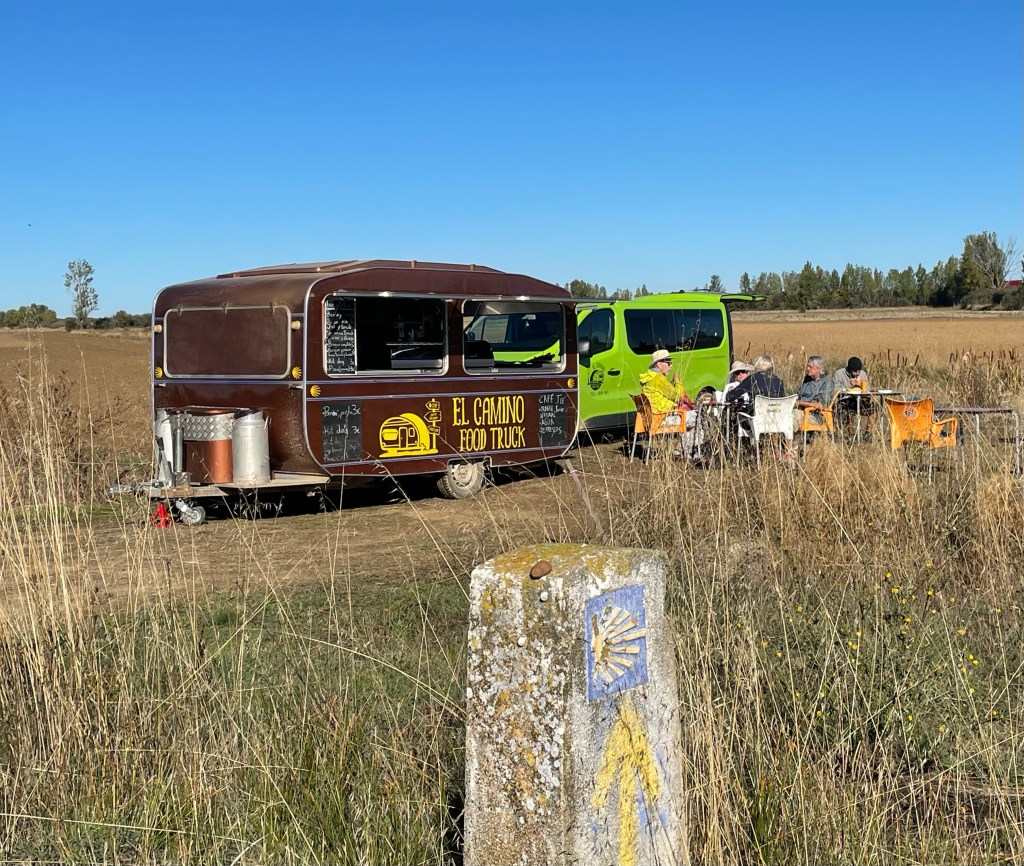
The only place to stop today was a food truck and bless his heart. It was perfect timing and very few walked by. That group of 4 at the first table are who I’ve been spending most of my time with at meals over the past few days. 3 from Texas and Sue from England. We had dinner at the monastery last night and were giddy because it was such good food. I had a full vegetarian meal!

Here’s where we came from, the mountains near Burgos. Such a clear day. 

And this video is from my room/hotel. Big change from last night and I love it. Every day brings something new. This hotel is the only hotel, the only bar, the only restaurant. Very small town, says population of 50, hard to imagine. There is a church, but it’s been rebuilt and rebuilt from the medieval times. The main thing to see are the “best Roman ruins on the entire Camino.” But – 3.5 k from the town. The owner pointed out the grove of trees where it is and if I had a bike, I’d definitely go. But really don’t want to add on 7 more k in the heat. So – enjoying an afternoon in my room, listening to all the community action happening downstairs. And in the room next door, can hear every word, but it’s in Spanish so not a problem.

Here are a few overall things I’ve noticed.

I’ve eaten more tuna that I’ve eaten in my entire adult life since I learned about mercury in tuna and swordfish. They put it on almost all the salads. There was tuna soup the other night. I don’t know why, but put me down for mercury by the time I get home.

They are super conservative with light, hit the switch, go in the bathroom and you’re lucky if you’re out before the light goes off, same with corridors, stairs, etc. But – night time every town, every hotel but a few has a gazillion very large bright lights on all night long.

They don’t seem to have a water shortage, or at least even the smallest hotels have great shower pressure and hot water.

Hard surfaces are everywhere, all through towns with cobble/cement streets, hard surfaced houses, small lanes, no grass or trees to soften and very little regard for how sound carries. And it carries! Outside if anyone is outside, you know it. Inside, even the nicest hotels have thin walls, so snoring, talking, etc. a shared experience. No one complains, maybe hearing each other is a comfort?

Sue and I have marveled at the amount of beer and wine that is drunk, but we’ve never seen sloppy behavior at all as people gather outside for tapas and drinks. And they gather a lot! Very social culture, so nice to see. COVID? Must have been even harder for these communities since they clearly spend a lot of time gathering with friends and family. She also noted that because of the lack of behavior, no police. In England, she said they’re constant because the behavior of groups of people drinking is so challenging. 

Just love getting to learn, wish my Spanish was growing, mostly I’m cementing some basic words and I pull them out repeatedly!

Wednesday, 6 Oct. Fromista to Carrion de Los Condes, 10.6 miles

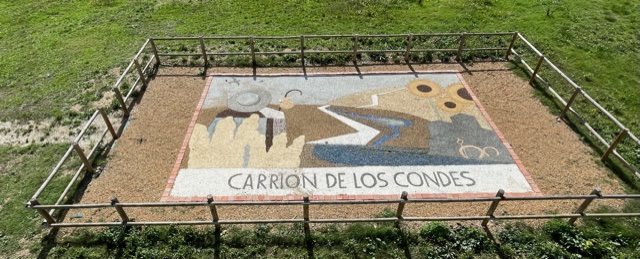
John, one of the English guys I walked/lunched/dinnered with for a few days is a day ahead now and sent a text to Sue and me saying that this day coming up was totally boring. Not! I’m so entertained by my own head, the books I’m listening to, the art, trying to stay in an observing state – the people, sounds, sights, so much. Here’s a snippet of the art – you can see a church in the distance in the bronze cut out statue, very careful placement:

The first taken from a bridge with me hanging over.
Then there’s the nature:

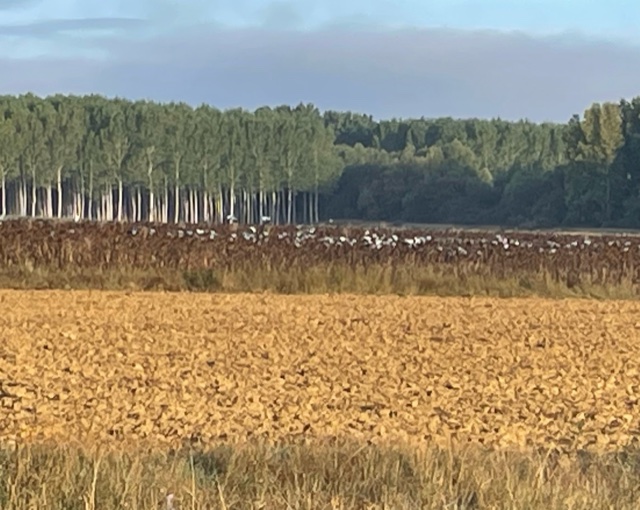
Birds eating the sunflowers before they can be harvested, hope there’s some left for the farmer! Sorry about the blurry photo, they were all in motion.

🦅

FORGIVE THE VIDEOING! Didn’t want to be horribly obvious so rested it on my poles.

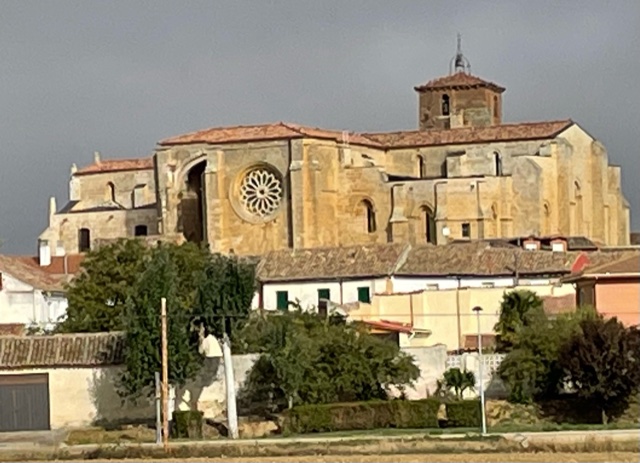
Then the churches. Every day I think this is going to be the day for no more churches, then something different shows up. This one was great. First, it was clearly a fortress/church:

This was in the town of Villalcazar de Sirga. I’m going to go back to The Pilgrimage Road to Santiago: “According to tradition, ca. 1157 Castilian king Sancho III invited the Knights Templar to protect the Santiago Road. They established their base in Villalcazar and within 40 years had constructed a monumental fortified church and residence complex.”

This is the Iglesia de Santa Maria la Blanca. Most of it dates from late 12th c and early 13th c. “Legend holds that in 1157 Queen Blanca de Castillo, the wife of Sancho III, donated some of her jewels for the refurbishment of the church and its dedication to the image of the White Virgin.” 

What’s incredible to me is that the earthquake of 1755 and the war against the French in 1808 caused the loss of: fortified tower, cloister, chapter house, residences of the Knights Templar, pilgrim hospice, silos, stables, the enormous surrounding wall with it’s towers, gates, etc and the west end of the church. And look at what’s left! Unbelievable.

THEN – the miracles of the White Virgin:“An unrepentant French pilgrim could not physically enter the church until he had begged the Virgin to forgive him.”“A crippled German pilgrim who saw the ‘great number of pilgrims going to Santiago from his country’ decided to hobble along with them and although he found no cure in Compostela, he was granted his miracle in Villasirga on the return trip.“A sinner from Toulouse was sentenced by his abbot to walk to Compostela carrying with one hand a 24-pound iron weight to lay on Santiago’s altar. In Villasirga he rested it on the alter and prayed for pardon. The weight split in two, and since no one could lift either piece, he was free from his obligation.”

The best for me, personally, is they had music playing. I, absentmindedly, had forgotten to take out my earbuds when I stopped listening to my book, so the music was not really loud (!), but I could hear it. Here’s the church:

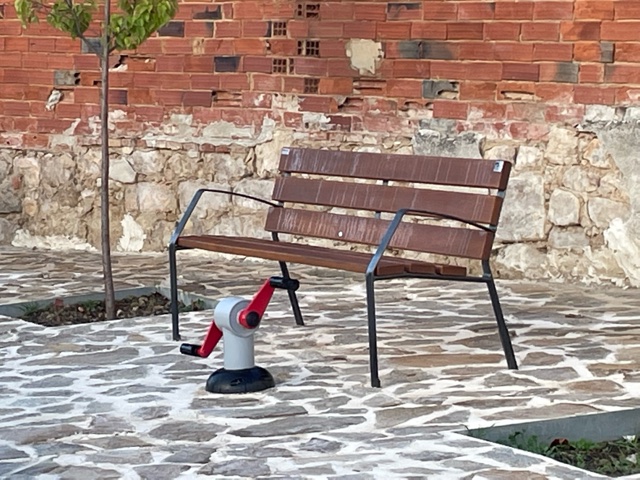
Curiosity and maybe a great idea for old folks:

Maybe for old bikers?!
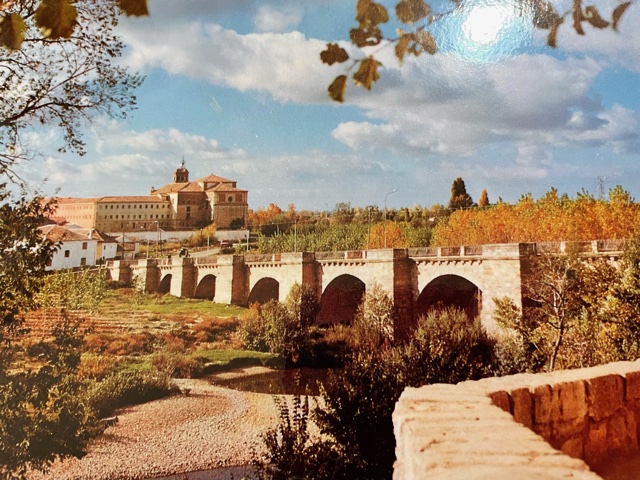
And then the piece de resistance, crossing this bridge (cheated and got this from a postcard) and see the next church/monastery:

And, oh yeah, that’s my hotel! I can’t believe it. Seriously nice, remodeled from a monastery complete with cloister and giant church. The room is wonderful, I’m not flipping back the covers so I’m only touching the sheets, it’s quiet with a courtyard outside my window and a cloister outside my door. Did the same goofy thing with the video, but had to take photo and video of my room. 

First from my window, then out my door:

I was hoping for music and to sit in the church, but there was a video/recording that never stopped talking (in Spanish) about the Cluny reformation in the 11th c, that’s when the Royal Monastery of Saint Zoilo, began to shine. The brochure: “We know that a community of monks lived here in 948 AD. Teodomiro was the abbot’s name, who finished writing the cartulary, foundation book of the monastery in that year…in the 5th century the monastery changed its dedication from St. John the Baptist when the relics of the martyr Saint Zoilo, also name Zoil, were brought from Cordoba.” So flexible, right?

It became Benedictine in the 15th century and the “current cloister was constructed in order to impress in stone the importance of Benedictines throughout the centuries and History.” I’m impressed!

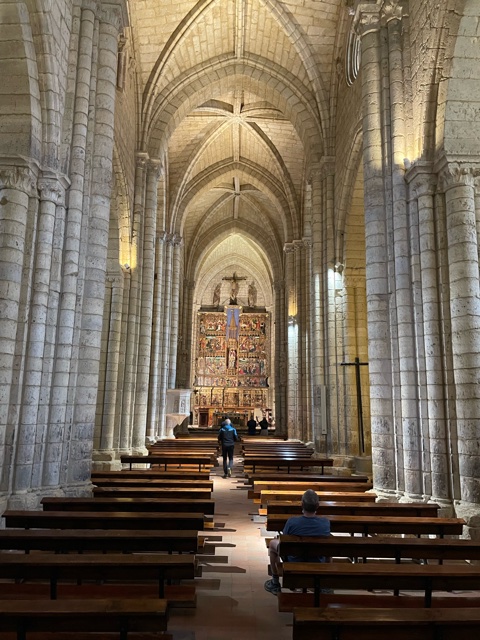
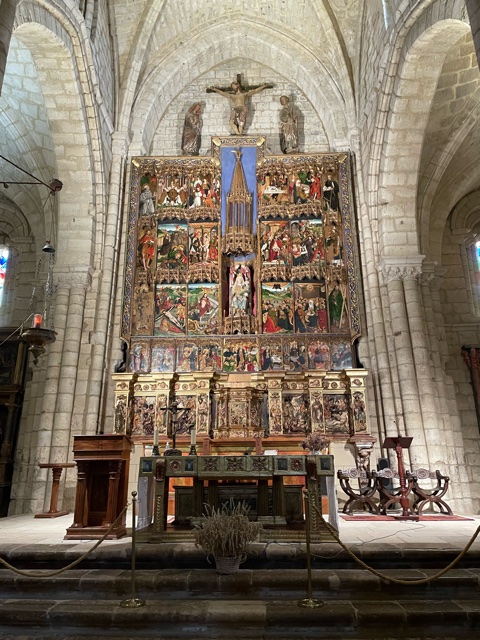
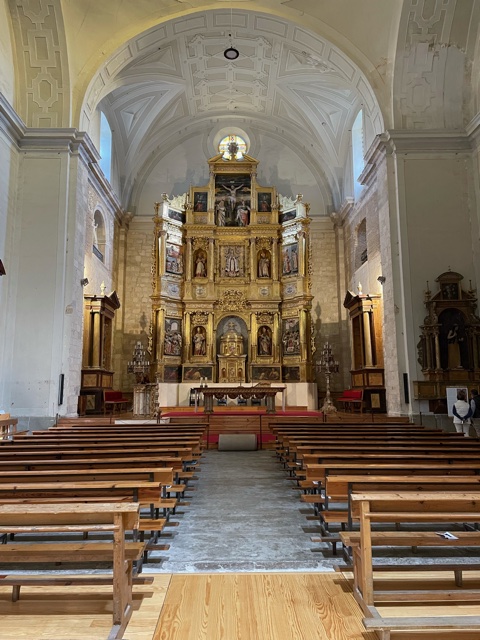
You saw the cloister in that splendid video, here’s the church. That giant box must be the reliquary for Saint Zoilo’s relics. 

And, because I’m always curious about these saints, from Wikipedia: Saint Zoilus is venerated as a saint by the Catholic Church. Christian tradition states that he was a young man martyred with nineteen others at Cordoba, Spain.” I think they all became saints. There are a LOT of saints here. 

Oh, and also, there’s a Michelin starred restaurant here, so there are variations on the….meat, cheese and bread 🙂

Tuesday, 5 Oct. Castrojeriz to Fromista, 15.5 miles

Long windy walk, but so pretty. 6.2 miles then a town, 6.2 then a town, then 3.1 and hotel. So long quiet walks with wind blowing, but bit warmer so all my layers worked and my hands didn’t freeze. Walked over a Roman built path then climbed a hill that had a lot of people gasping a bit because of the false summits, but the view was beautiful. 

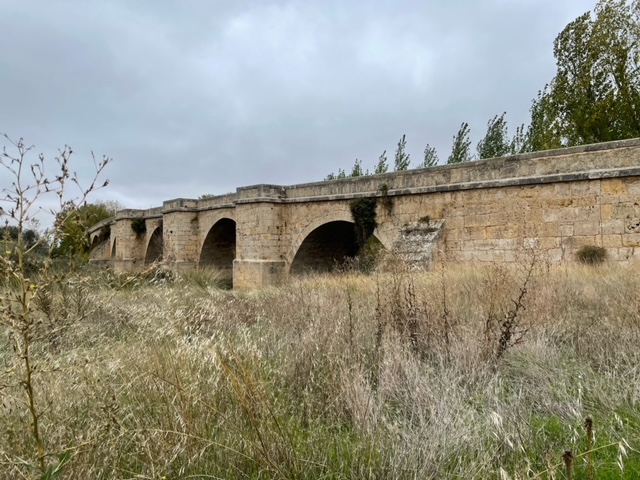
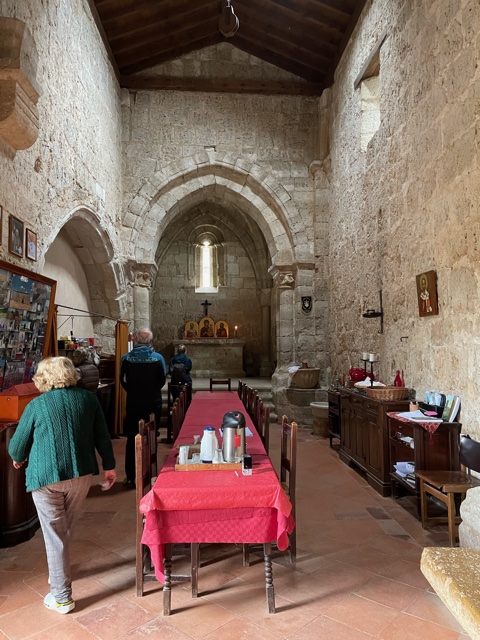
Continued the walk, then a bridge built in the 11c to assist pilgrims (with frequent reconstruction keeping the original design), then the Hospice of San Nicolas from the 12c. This was cool because the Italian Confraternita de San Jacobo di Compostelle di Perugia has restored it as a pilgrim refugio. And people around me took refuge! Long time, full exposure and it was the first bathroom. They were giving out coffee and wine (10:30!), cookies and cooking chicken. Just a little place, but it was a really nice outpost. 

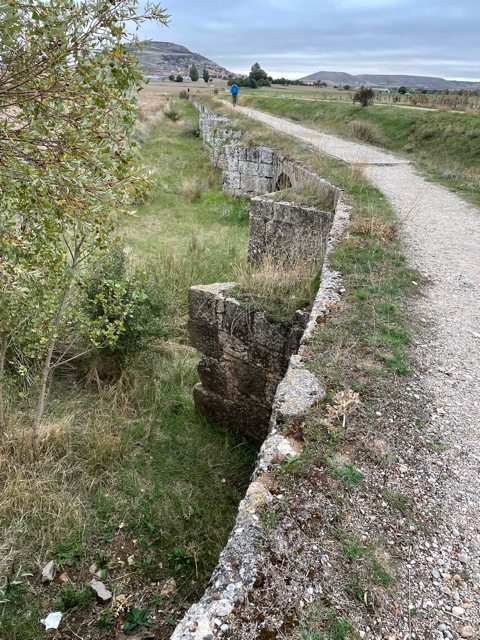
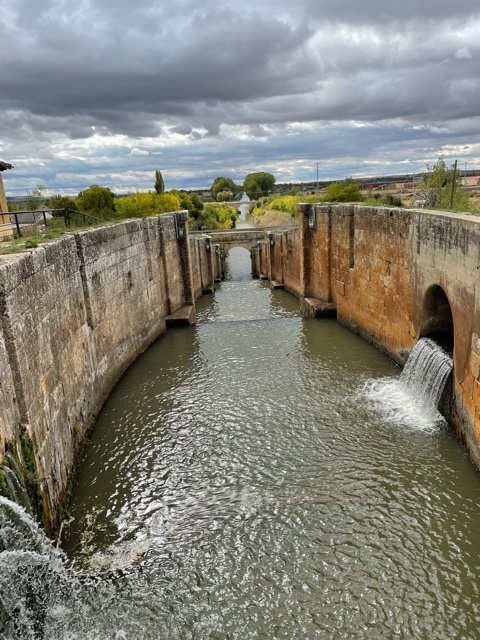
Then a very pretty surprise canal (surprise to me, just appeared), 17.4 k long with lochs to allow for elevation changes.

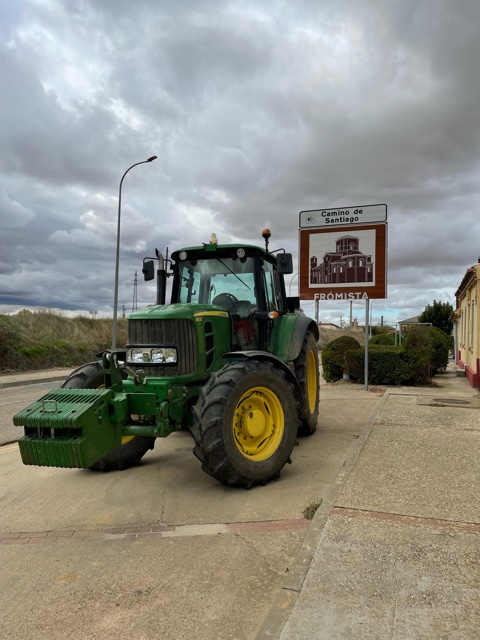
Then arrived at Fromista. I took this photo and thought I bet this says everything about the town, farming, and Camino.

Then, got to the hotel and read what my friends David and Linda had to say about Fromista. “Two words explain Fromista: wheat and pilgrimage.” Yep, the photo says it all. It was really rough here when they were totally dependent on the vagaries of weather and fighting locust attacks. Then, in 1773 the Canal de Castillo was built to bring water to the region and it made all the difference, actually reversed a decline. 

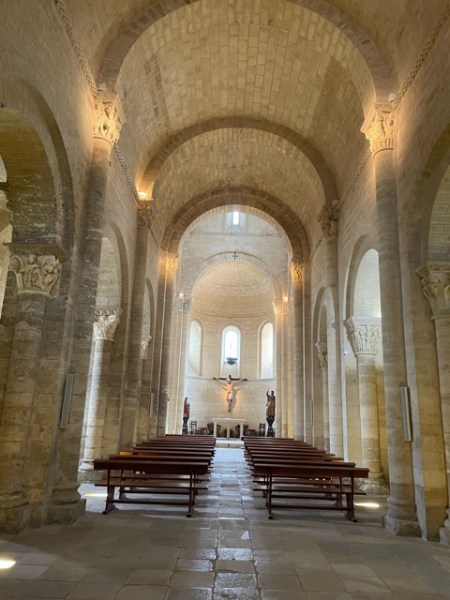
Here’s the church that I can see out my window, hoping I get to hear the bells all night, I love that since I’m usually awake anyway!

Iglesia de San Martin, built in 1066 to 1086 with updates to maintain it.

Monday, 4 Oct. Hornillos Del Camino to Castrojeriz, 12.5 miles

I know I write in hyperbole, but truly every day brings wonder. I had decided to do today without any talking or listening to books and it was so easy. The walk was shorter and easier on feet and effort. I loved the open spaces. It was colder, started at 39, and maybe got into the 50’s. I was good except for the hands. I didn’t even realize how cold they’d gotten until I had to ask someone to open my hot chocolate packet because I couldn’t make my thumbs work – but otherwise, the clothes worked and the walking was wonderful. 

The first town I came to after about 6 miles was Hontanas and I realized I’d started to think in terms of medieval safety of pilgrims. This is the entry to town and I thought – what were they thinking? They’re down in a little valley, no castle and totally unprotected!

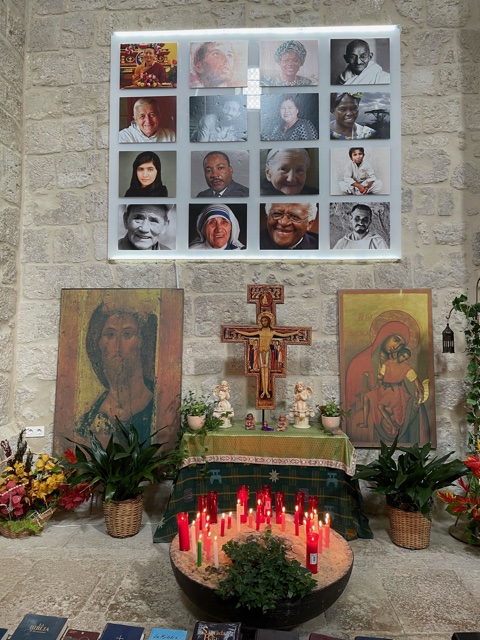
 But I went looking for a cafe and hot chocolate and the church, of course.  The church was interesting because, yes 14th century and all that, but inside they had put a series of photos and descriptions of pilgrimages in Spanish and English going up the steps to the tower. Including pilgrimages of all different religions. The first scene when you walked into the church showed a photo montage of current day – saints? Not sure, but again, from many walks of life. I’ve never seen any reference to anything but Catholicism in any of the other churches. Of course, there was one figure that filled me with curiosity – have no idea – had to include her because she does look like a story is there…

Not happy, but definitely evocative of something and the brocade mantle is amazing. 

Then walking walking for 5 more miles after my two hot chocolates to warm up, blissfully dreaming and focusing on the breath and then see this – just out of the blue on the country road. 

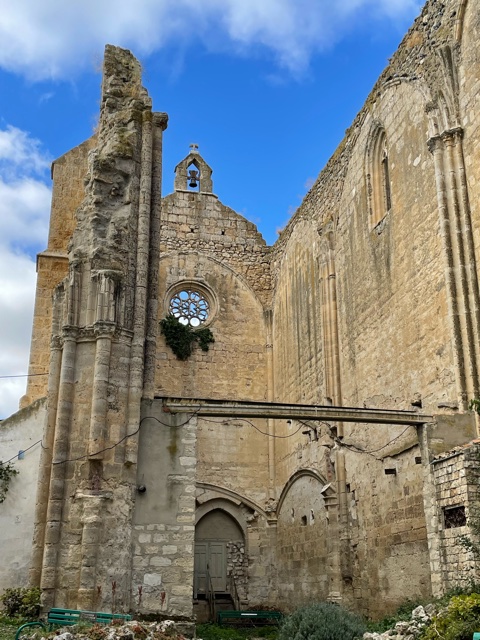
The main ruin was to the left to this entry arch. I walked in and the feeling was of comfort, just a ruin, a gorgeous ruin, but something was left there. Everyone walked into the space and just fell silent. So many people were helped is all I could think. First time I’ve had that feeling in all the places/churches I’ve been in so far. A giant monastery and hospital of the Order of San Anton. These are mainly from 14th and 15th c.

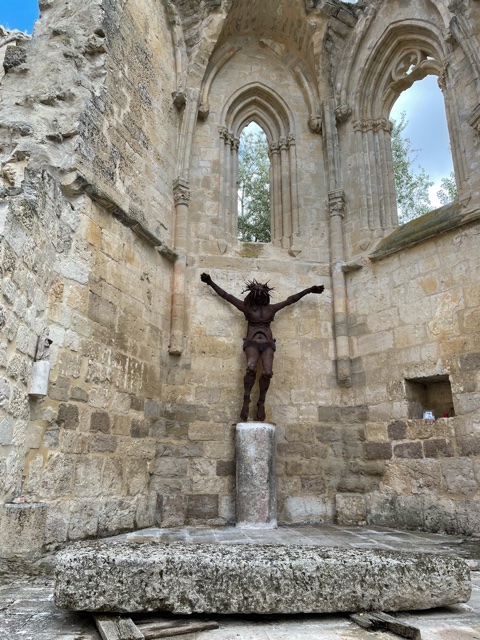
OK, the statue was jarring, but the piece of building behind it. 

David and Linda in The Pilgrimage Road to Santiago write this about the group that built this:     “The Order of San Anton was founded in 1093 in St. Didier de la Mothe when the hermit Anthony’s relics were taken there and a man named Guerin, whose child suffered from a burning affliction seemingly akin to leprosy, prayed to St. Anthony and the child was cured. The symptoms of St. Anthony’s fire – the burning sensation, bluish color, loss of circulation and eventually gangrene, as well as loss of mental functions – suggest ergot poisoning, caused by eating barley bread infected with a fungus generating the alkaloid ergotine. This plague, who’s onset is documented in the 10th c., reached epidemic proportions from the 11th to the 14th c. The disease could often be alleviated by change of diet (eliminating barley bread and increasing intake of wine, which dilated the veins) and vigorous exercise: e.g., pilgrimage. The hospices of San Anton credited with curative powers, sprang up along Europe’s major pilgrimage routes. The Order also treated cases of leprosy, which was likewise thoughts to be cured by pilgrimage. Well, it if it did not cure it, at least it got the presumably contagious lepers out of town.      Ergotism’s symptoms additionally resembled those of a porcine disease that the Order also attended. This may explain why San Anton is often shown accompanied by a pig. Since lepers had to announce their approach by banging 2 boards together or ringing a bell, the bell is another emblem of this saint. The Order adopted as its symbol a tau, said to resemble the mark the angel placed on the doors of Egyptian Jews to exempt them from the plague that killed firstborn sons. The Order’s members wore a blue Tau on their black habits, and they fed pilgrims white bread marked with the Tau. At its height, the Order of San Anton administered as many as 369 hospitales in Europe. The Order was disbanded in 1787.”

So cool. 

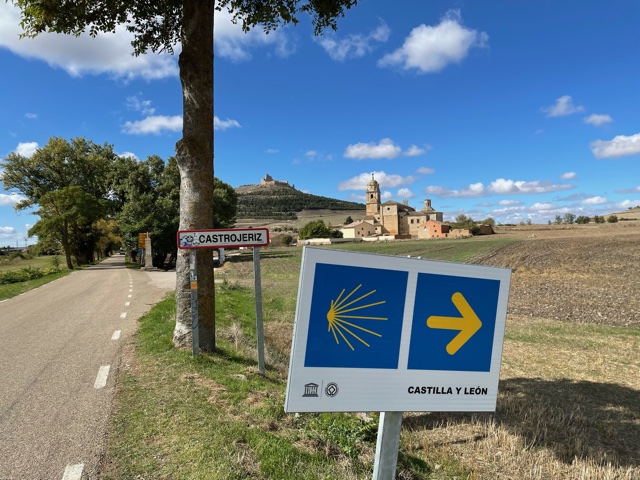
Then within another 2 miles was Castrogeriz, where I’m staying tonight. Here’s the scene at the start of the town:

It has everything. The Camino sign, the town name, the church from the 11th c. And the castle for fortification above. 

Another wonderful medieval town. This seems a bit livelier, people walking around a bit. I would spend another day here if I were just adlibbing this trip. I couldn’t find the hotel at first, my GPS failing me for the first time and telling me I had miles to go yet. No!! Then walking down the street, I heard my name being called and finally looked way up and saw Sue leaning out her window on the third floor saying it’s here! That was wonderful. AND there’s an elevator, so I don’t have to carry my bags up 3 flights.

I think I’m going to have my second night in Spain that’s quiet with the window open and just birdsong in the morning. 15 miles tomorrow, but it’s going to be tempting to go slowly leaving this wonderful town. Here’s the scene outside my window.

Sunday, 3 Oct. Burgos to Hornillos, 13 miles

Such an easy day, it was almost disconcerting. It was supposed to be raining all morning, there were fewer miles, and we were getting picked up by a shuttle at 3, so there was no reason to sprint out. So I didn’t! I actually slept on and off, but really woke up at 7:30. Incredible. Ate a full breakfast with Sue, then we both set off, though at different times. 

Didn’t go into a single church today, but couldn’t resist a few photos. I just continue to be amazed and delight in these ancient small quiet towns. It’s horrible that they are all shrinking in population, but oh, they’re pretty to walk through. Loved the fountain in this town – the faces looked like the carver had a sense of humor!

This last one is a building that’s now a home, but was the original (with update fix ups) of a hostel/hospital for pilgrims from the 13th c. 

Couldn’t resist this little hermitage with the bells ringing from the church at the top:

And the art along the way:

The one two above is the FIRST I’ve seen of a woman depicted as a pilgrim and there were a lot of them. 
Finally a brief video of the terrain I was seeing. I’m in the Meseta now, 7 days of walking through flatlands. If it’s like today, I don’t know why people think it’s such a flat meditative walk because of it’s lack of interest. It’s beautiful. And meditative!

Saturday, 2 Oct. Burgos, 5.8 miles

Oh, so nice to wake up at whatever and think, I don’t have to get up and breakfast isn’t until 8! I didn’t even do all the things I try to do before leaving, just lay in bed dozing, so so nice. 

I dropped off laundry, big advantage of having an overnight. Met Sue at breakfast, someone I’ve been with a bit over the last few days. She said she actually found a laundromat (I’d read there weren’t any), but couldn’t figure out how to get it all done. She ended up hand washing and was hoping to figure out the dryers. I was feeling lucky that I didn’t know that was an option, until I was handed my bag and realized they’d forgotten to do the laundry. Hmmm. Now seriously crossing my fingers that they can do it and get it back to me by 9 latest. Then will pack and go. That gives me a bit of a tight schedule to walk and get there by the transfer that takes me to my hotel, but hard to be upset about the possibility of another later morning. Especially since it’s supposed to be raining all day tomorrow, so why not go when it’s a bit lighter and warmer?

I didn’t think I would walk much today, but Burgos turns out to be beautiful. I’d read in my great book that I could spend 6 hours in the cathedral alone. It turned out to have a QR code (sp?) that I could download so that I had an English audio tour. But it took forever, went back to the hotel to see if WI-FI could get it done, nope. Then gave up and was just going back and realized I’d hit a great cel zone a few blocks away and just stopped on the sidewalk and waited until it downloaded. It was worth the time. 

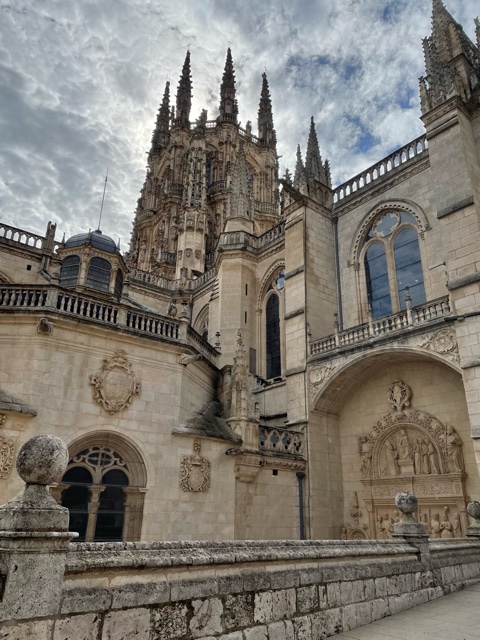
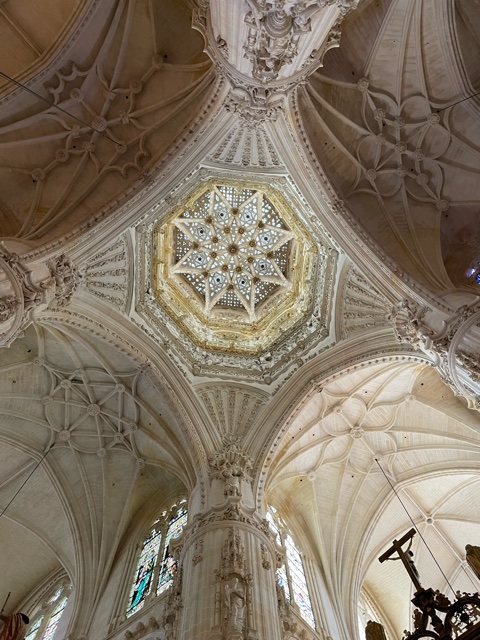
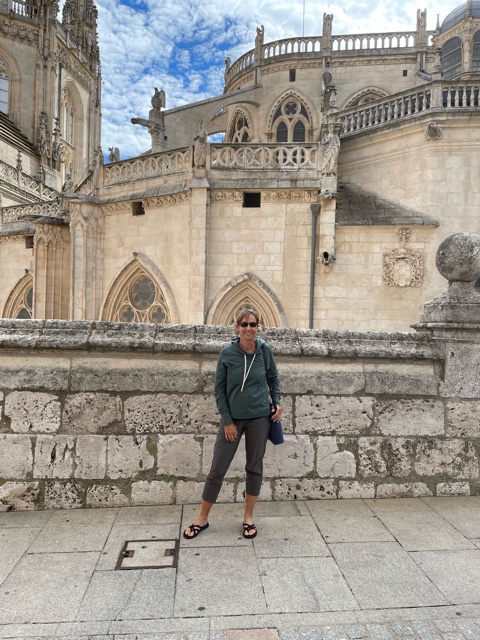
I couldn’t get a photo or video that remotely grasped the immensity of this church. David M Gitlitz and Linda Kay Davison who wrote The Pilgrimage Road to Santiago continue to be my go-to people for learning. Dad would give up because I really don’t care that much about Gothic vs all the other styles, but I’m amazed at the ages of these things. This building started in 1221, the first mass held in 1230, the ceiling vaults closed in 1243. Incredible. Additions and adorning continued for the next 500 years. I liked this: “Architects of large medieval churches strove to affect worshipers with a sense of wonder and awe. In Burgos they exceeded their expectations. For openers, think of the unprecedented size of this church. In the 13th c it stood not among today’s multistory (but not that multi story – 5?) offices, but instead rose seemingly miraculously from amid the 1 and 2 story houses that constituted the originality of medieval towns. If you can, picture Borgos’ urban landscape as a plain from which enormous pinnacles, the spires of her churches, soared skyward as visible links with heaven.”


That’s what I think about when I sit in these churches, what people thought as they looked at them. What hopes and dreams and security the churches offered. Of course there were others that were paying tribute to help pay for them, but still. The other thing I wonder is who was actually allowed to be in these churches? Everyone? Hierarchy in seating? How often did they come? I’d love to know some of the personal history, rather than just architectural history. Though it is amazing because they give attribute to the specific builders, painters, sculptors. These were serious craftsmen who were recognized as artists. 

Here’s a bit of what I was able to capture, nothing compared to the capacity. There was a wedding going on in a whole other giant piece of the cathedral that was packed and closed. That’s where mass is held. If I were here during a high mass with music, I’d definitely go, it would sound incredible. You can get a sense of the sound from the bells in the dizzying video of a bit of the cathedral. 

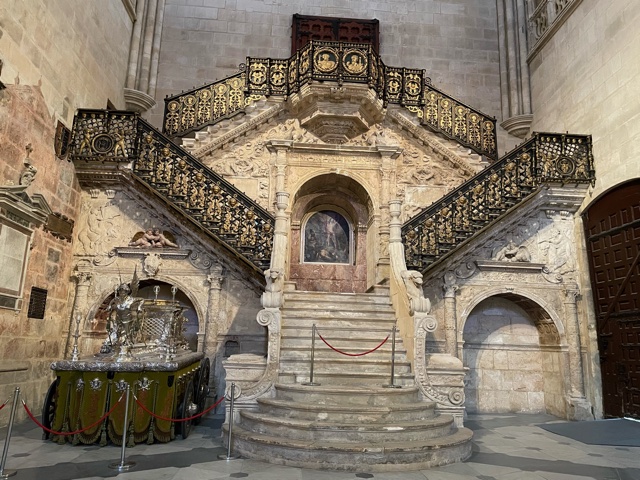
That gorgeous staircase was so that tradespeople and goods could come in without going through the rest of the cathedral. Crazy. 

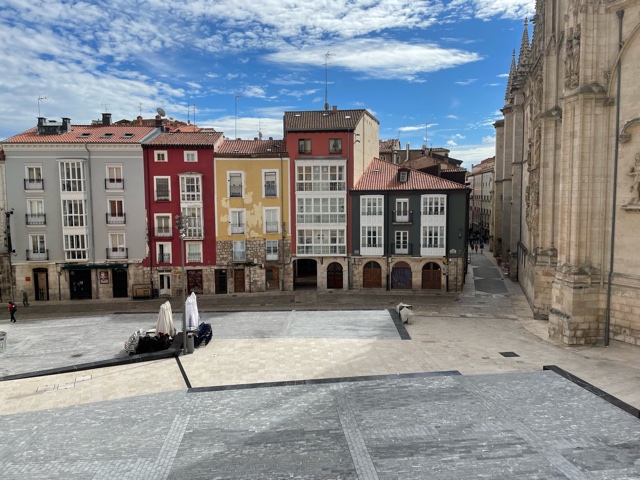
Then I just started walking, starting with circumnavigating the cathedral. All the streets are pretty, clean, and there’s a walk along the river I came into town on that goes for miles. Old buildings taken care of, really. Glad I got the extra day!

Just got the call that they can do the laundry! Yay! Off to dinner with Fiona,  Merv and Sue. Think I will definitely have to call Fiona and Merv if I ever go to Dublin. I’ll be sorry to see them go.
PS –  This was Franco’s base – definitely a rough piece of Burgos’ history. 

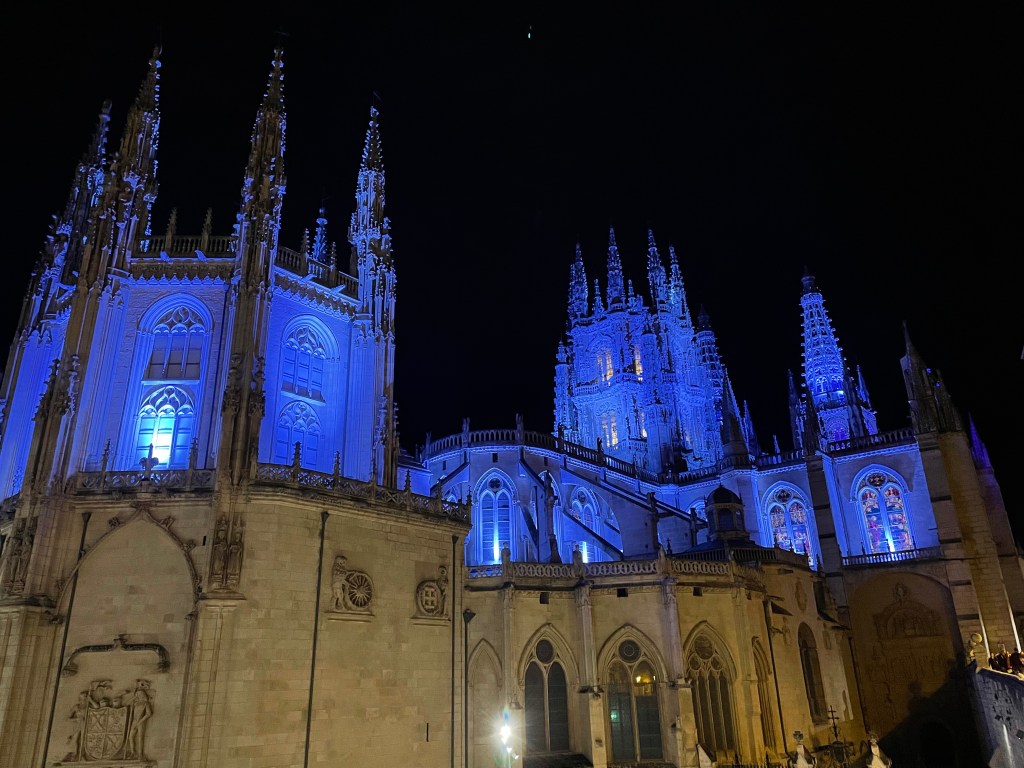
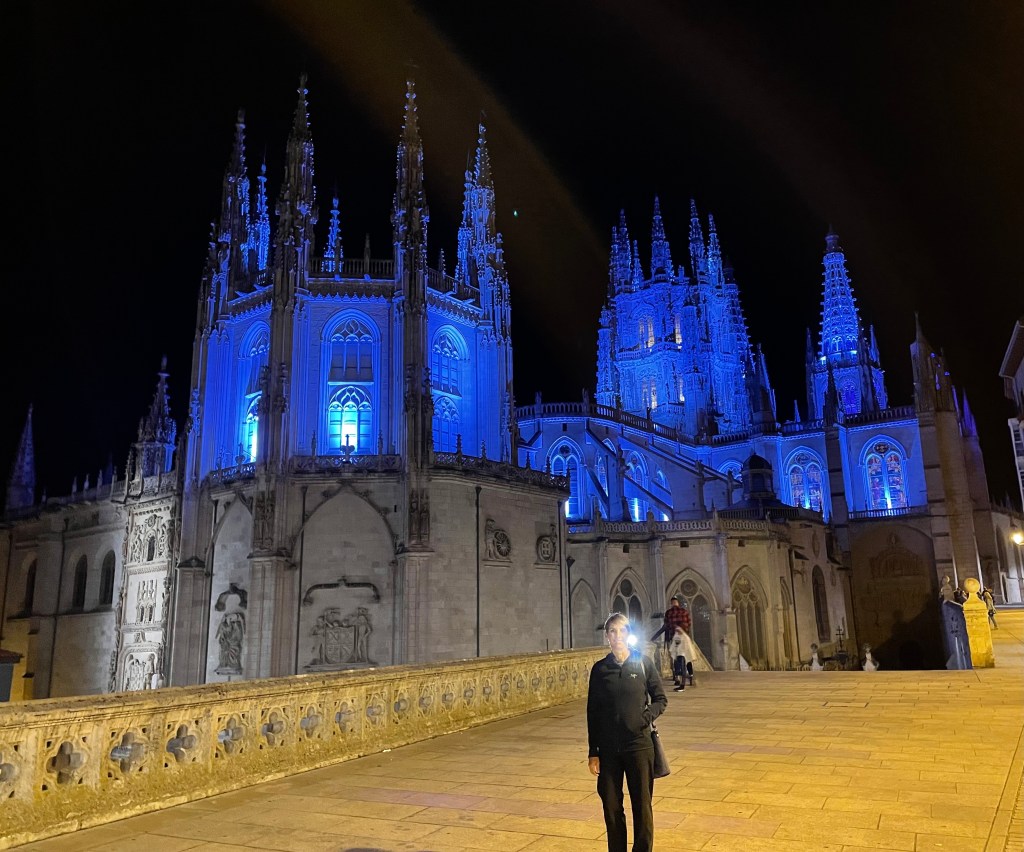
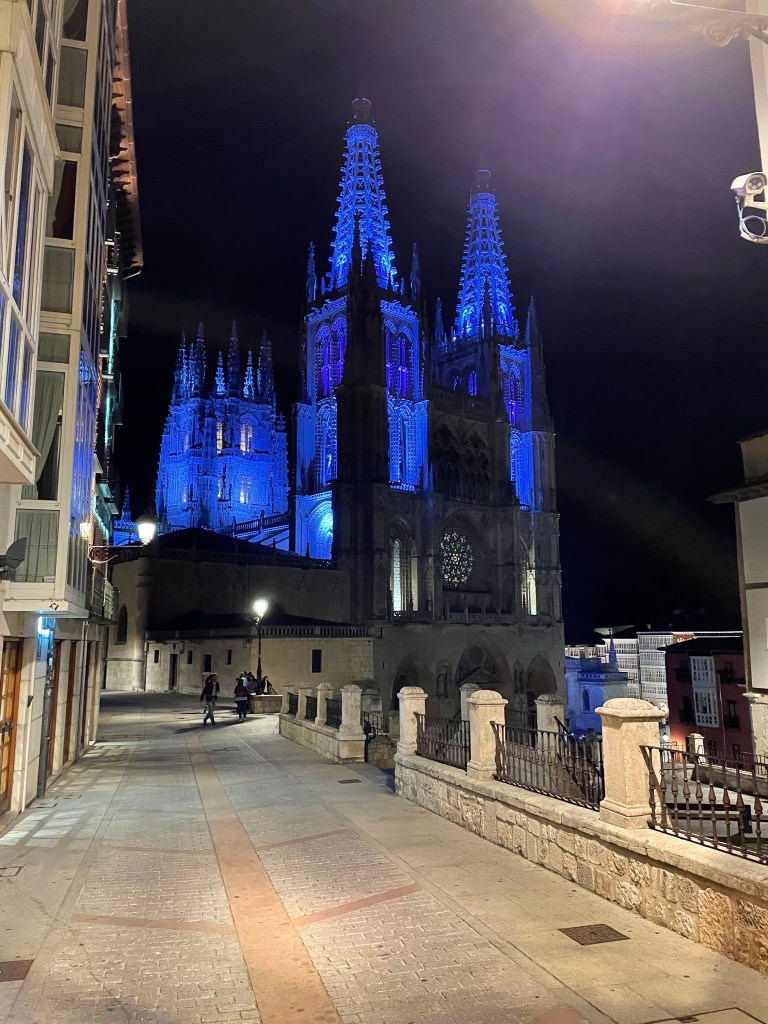
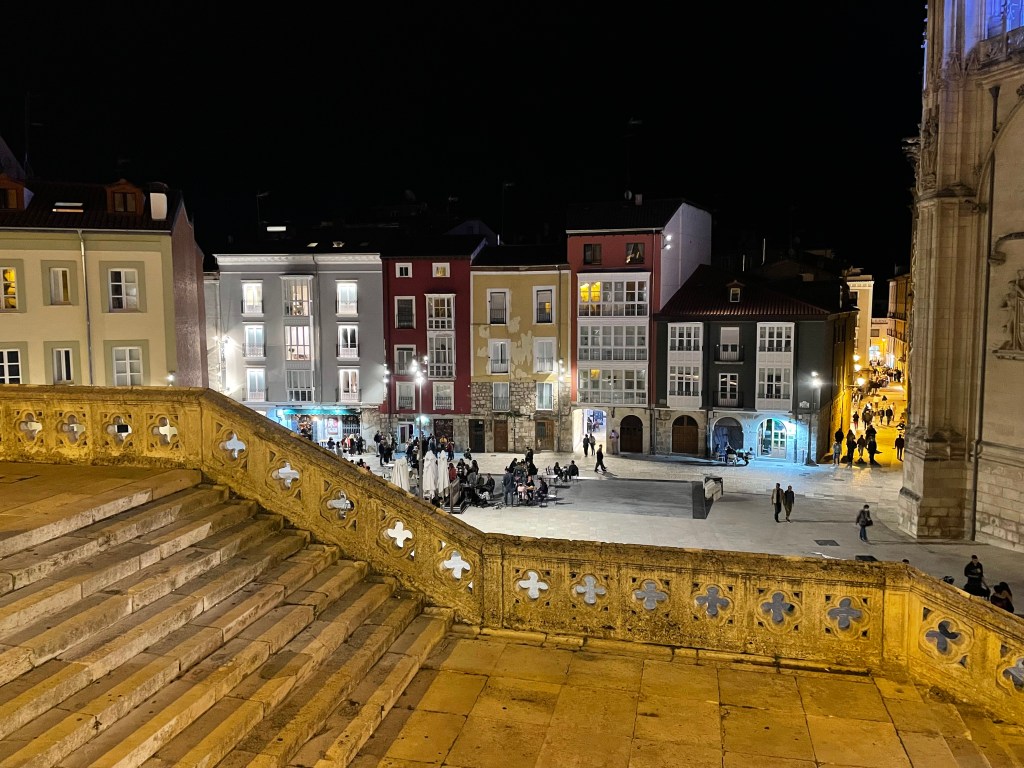
Catedral  de Burgos at night. It was spectacular to see so many people out, having fun and the city was as beautiful at night as it was during the day.

Friday, 1 Oct. San Juan de Ortega to Burgos, 16.2 miles

Spectacular sunrise, I was so lucky to be able to see it. I left early, there was no breakfast – well it was a generous bag, but I’d only taken the OJ and banana, so left by 7:25. I thought that was late, but it was still dark out. Sunrise later and heavy clouds. I turned back and looked at the little town, dark clouds with a hint of dark purple and red over the bell tower and a crescent moon above. So pretty.

Then entered a wooded area and it was really dark, but I was moving quickly since others were also starting and chatting. I do love the quiet, so moved ahead hoping not to trip and then it started lightening, such a cool way to start the day.

No pictures of churches today. Didn’t go into any, the little towns that I went through either had churches too far to go to – not taking any extra steps – or were closed. I thought I’d connect with the people I’d been having dinner and some hiking with, but my timing was off.
Most towns, no matter how small, have their own way of incorporating the Camino. After all, they all exist because of the Camino. Loved this sign – the plate-like display is of the town with numbers for significant things. Tiny town.

In case you weren’t sure who lived in this barn:

Sun hitting the fields:

Then I hit Burgos. Back to one of my days where I missed on the food. By the time I checked in and got a shower, lunch time was over. Most places were just doing coffee or drinks. A few had little snacks, but they looked so unappealing. The place that looked great – had a Michelin sign – I couldn’t figure out how to order. Really.  It’s intimidating when there’s clearly a way to do things and you have no idea what it is or how to get someone’s attention to order.

I’m in Burgos which is a major town and tons of people out on the town, just like in Logrono and very few – didn’t see any – peregrinos. I’d thought I’d connect with John, Sean, and Sue for dinner, but cleverly forgot to get any of their phone numbers. I’m so used to seeing everyone I’ve met or seen on the trail at night – it’s different in a big town. So no English and I was tired and hungry and gave up. Finally found a bakery and got two pastries and came back to the room. So happy to have a quiet clean room for two nights. Decided I’d relish that and tackle food again tomorrow.

Plus tomorrow night will be my last night with Fiona and Merv who’ve taken a different pace the last few days. So – one more night with friends and then – it really will be a new Camino.

Thursday, 30 Sep. Belorado to San Juan de Ortega, 14.9 miles

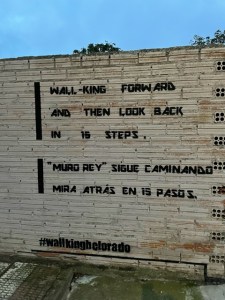
Today felt like a calmer day. As I started, within a block, I sat to take a rock out of my shoe and saw this sign:

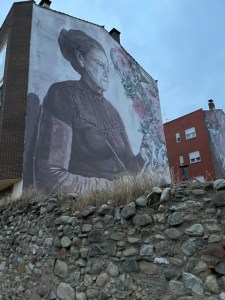
Honestly, it was early, I was just walking and not noticing. I would have missed the sign if I hadn’t sat down. So – I counted my steps and looked back and saw this:

Amazing. Such an intense face. I don’t know who she is or what is being conveyed, but it was striking. The next mural was this:

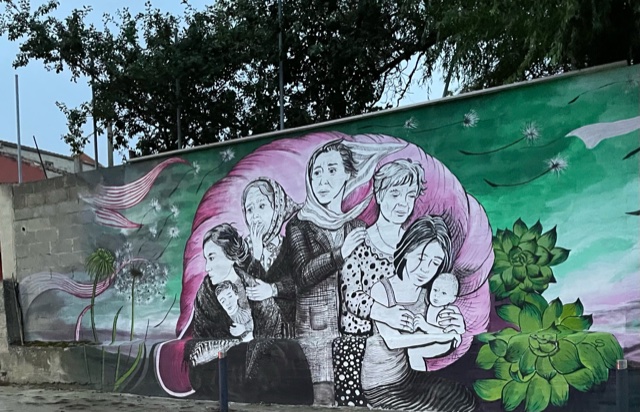
Refugees? Franco’s regime? Women’s plight the world over? I don’t know.

All along the Camino have been art installations, photos in the fields, hanging from trees, murals with “Art Installe” (I think). Maybe it’s all year, maybe it’s September, I don’t know. But it always adds a note of something more. OK – just found it online for Belorado. Street artists cover Spanish village in murals celebrating local women. “Village of Belorado has a very unique and peculiar tradition – the game of bolo beliforiano, a type of bowling played exclusively by women. And to celebrate that tradition, the local cultural organization decided to paint the facades of eight houses.” This was in 2019, the photos look amazing, I just saw these two.

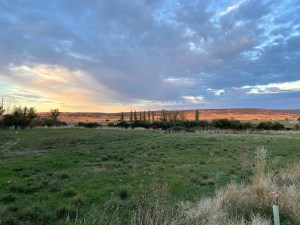
The terrain has changed and is beautiful in a new way. Here’s the terrain and here’s me walking with the sun coming up behind me.
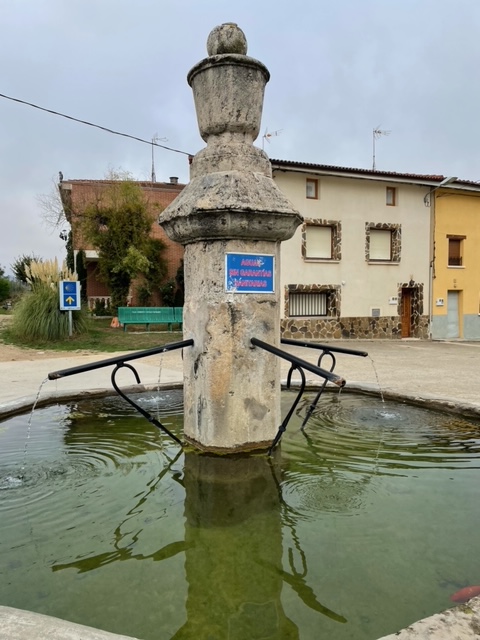
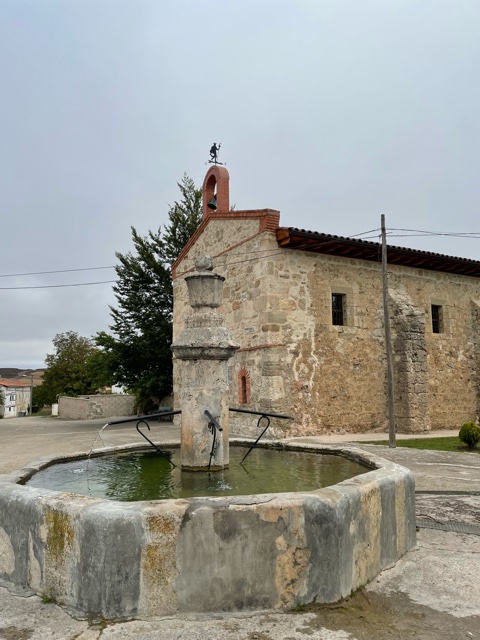
This tiny town didn’t have anywhere to stop, but I loved the sign on the fountain and the church behind it with a peregrino wind vane.

I walked a lot of the way alone, then had a morning snack with John and then caught up with him and Sue to walk the rest of the way into San Juan de Ortega. Nice to have the chat/distraction for the last couple of miles.

When having the snack before John joined, I started reading Dr. Edith Eva’s book, The Choice recommended by Fiona. Incredible. I told John it was a good thing he came along because I could have just sat there for the next hour. So now I have great books on audio and on Kindle. 

On the way, we passed a memorial to the 300 people killed by the Franco regime out of Burgos, 16 miles (as we walk it) from here. One of the highest concentration of murders in Spain during that period. 

Near the end when we were getting tired, a guy was playing music, dancing and selling watermelon for whatever anyone wanted to donate, but he was giving it out whether people gave or not. Just as good as that melon from the olive grove a few days back and a really nice pick up to keep you going. Plus he was having so much fun, people would start to walk by and then would stop and sit and just be captivated. And he was probably in his 50’s!

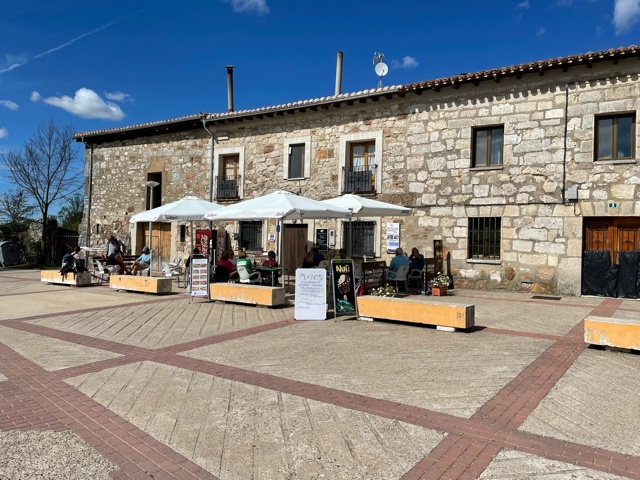
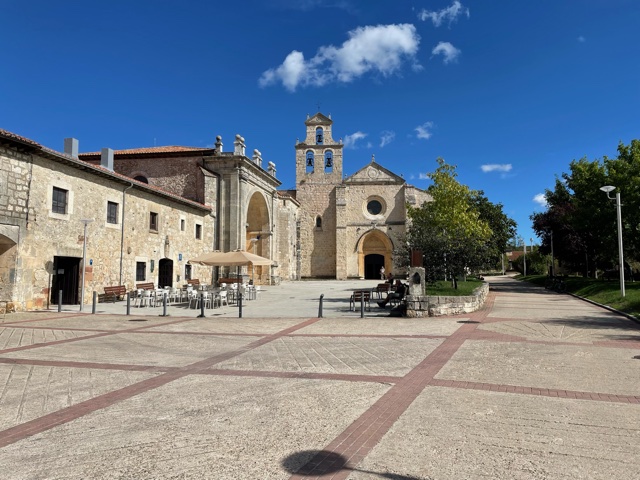
San Juan de Ortega may be the calmest prettiest plaza and church yet. It’s quiet, you can hear the tractor still going, a few murmurs, I’m sitting on a bench in front of the town fountain, water for pilgrims. I also was able to sit for about half the pilgrim mass the priest was giving. He had a great face and was able to get up and down, so doing ok in this tiny town of 18. All the pilgrims went up for communion. I just enjoy the ambience and knowing the comfort the churches in this area have been bringing to at least some of the people for 1000 years.

All one building, this is where we had lunch and dinner. At dinner I tried blood pudding, morcellas (something like that). It was actually really good. But I could only try it. I’m eating everything in front of me and the more I can put in front of me the better. Pork chops and sausage (really? Haven’t had either in years), salad and bread. The ubiquitous bread. Then cheese with honey, a local desert. Pot of cold cheese – really more like yoghurt, but thicker consistency and no sugar then pour honey over.

This plaza is the scene of San Juan’s festival in the spring. He was Santo Domingo’s protege, following his footsteps building bridges, roads and helping pilgrims. He’s the saint for surveyors and architects and they have a festival to celebrate. Think it’s probably more lively than an American group of surveyors and architects. But maybe not!

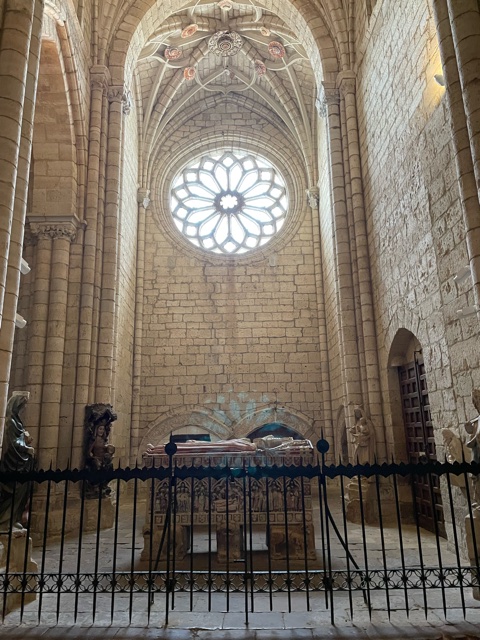
Here’s the little chapel next to the big church where they had the service. Even little chapels are awfully nice. That’s San Juan’s coffin and relics within (1080-1163). They’ve actually examined them several times, amazing. He lived til he was 83!