I’m going to go on a bit of a diversion on the way to finishing our Cambodia trip by writing about Asian toilets They’re the ones with wash, dry, massage (seriously), stop, heat, go, temperature, all kinds of buttons. I’m writing about this now because my toilet is currently very upset with me. Maybe because I’m not visiting enough? My system’s ok, but as I write, my toilet is beeping and repeatedly slamming the lid. Occasionally, it lifts up the seat too and then it gets two slams in one go. We’ve had a lot of discussions about this apparatus as well as the need or sadly, lack of need, of different members of the party. Many many laughs. But oy, to have an irritated toilet makes for a definite lack of concentration.
So – back to our last day. We thought we were going to have a morning luxuriating at our hotel, but Pat and I wanted Holly to get a chance to see some of Siem Reap and ride in one of the tuktuks like we had the night before so we went out again. We thought it was going to just be a quick hour outing, but it turns out that the tuktuk driver had things he wanted us to see!
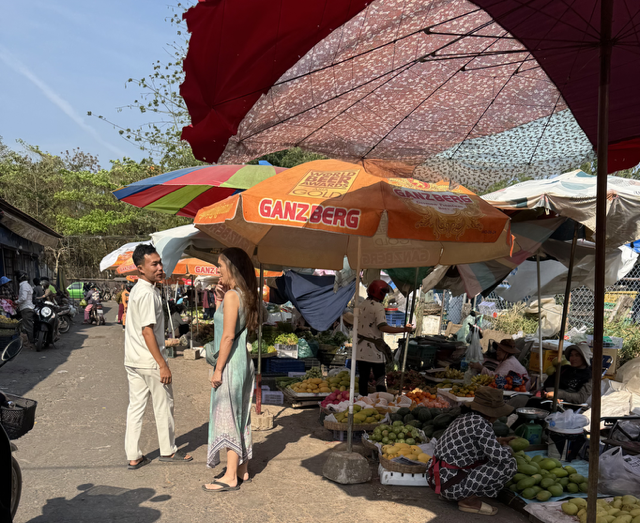
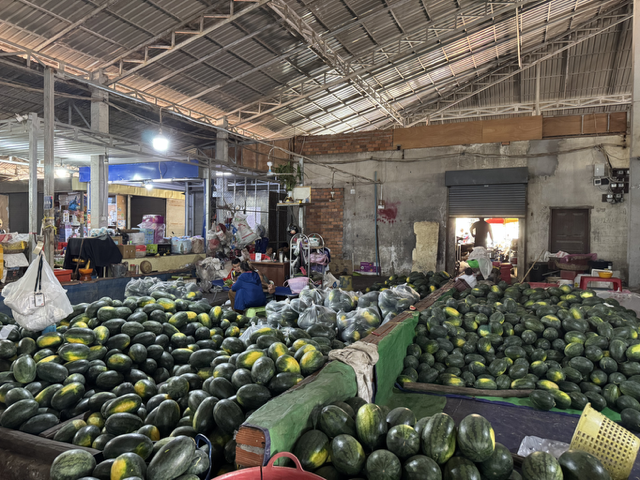
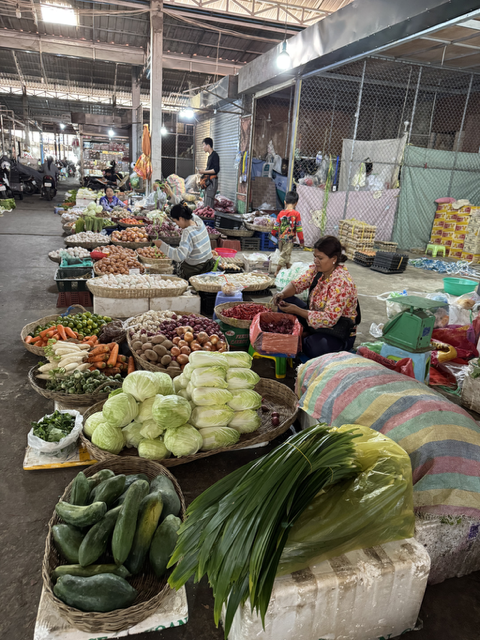
He said he was taking us to more local places than we had seen before. We went to another market where he said his mother came every day to buy – an hour into the city to buy when the market opened at 6 and then go straight back home to sell the goods in her store at the front of their house.
Our driver was wonderful. He loved working at the Aman, taking pride in the people who stayed there and his wife worked there too in housekeeping. Their first baby was due in a month and he showed us the ultra sound photo – the baby was smiling!
Our driver and Holly going into the market.
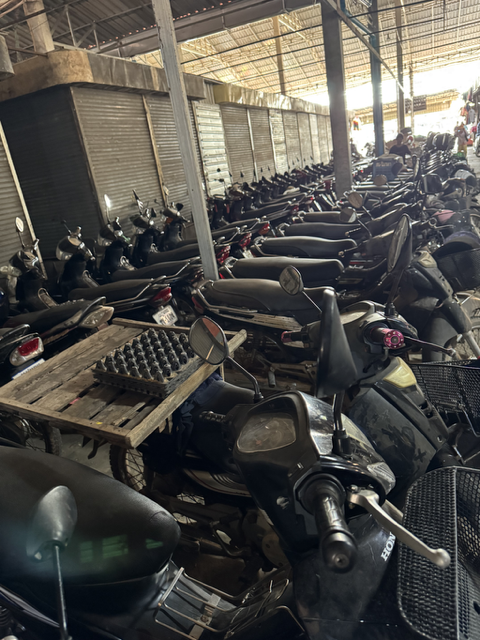
The scooters belonged to all the vendors. Incredible what they can bring in on these bikes.
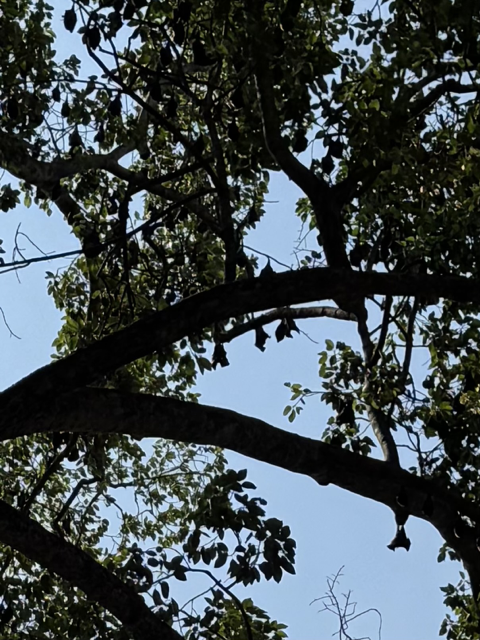
Then he took us to the Royal Independent Gardens and a group of trees. The night before, Pat and I had thought we heard swallows – a rush of them – flying overhead. Turns out they were bats! A ton of them. They nest in these trees, with a few flying around. They were huge. Holly had gotten bat pee in her mouth at Ankhor Watt when she was looking up. Pat got pooped on when we were at the trees. They both decided it was for good luck 🙂
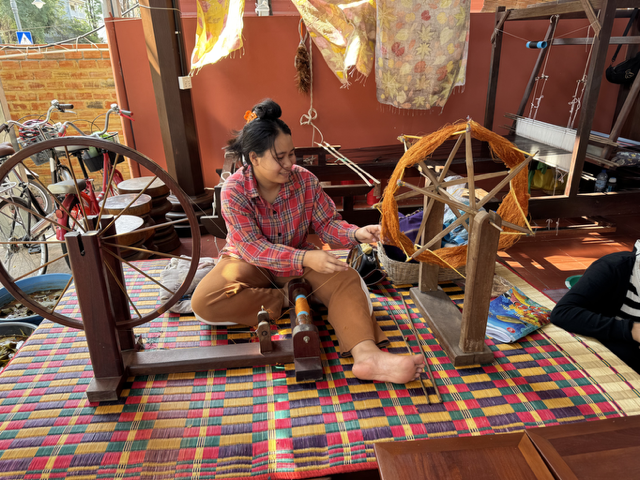
We then went to another artists market, the driver said that this one was more for locals, but also for tourists, thus showing their skills and wares. Getting a blessing.
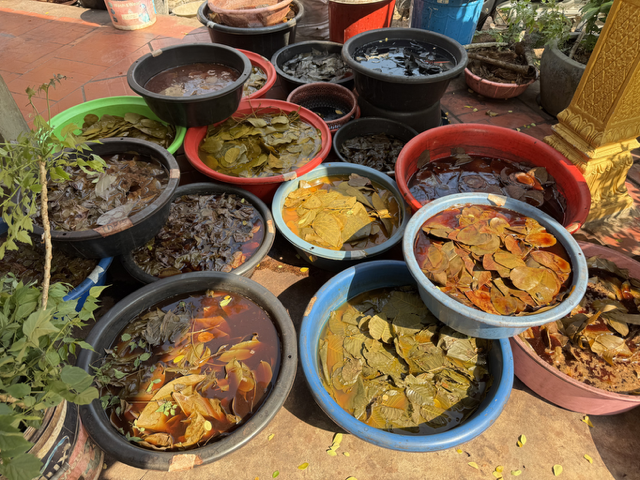
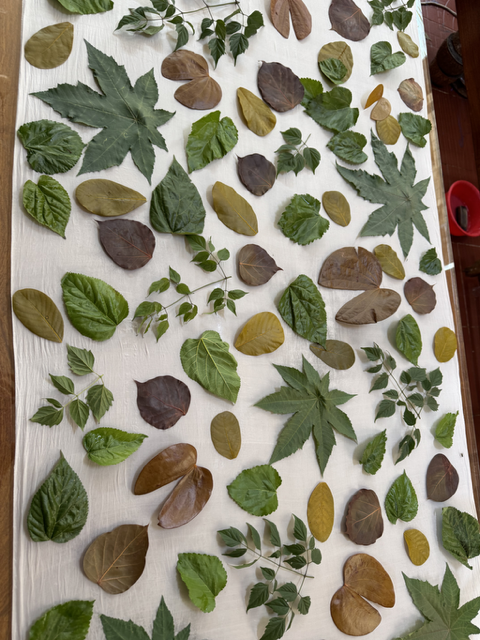
All the leaves and plants that contribute to the dyes of the weavers. So cool.
Then back to the hotel, to pack up. We were separating today, me to Singapore and Australian and the others back to Colorado.
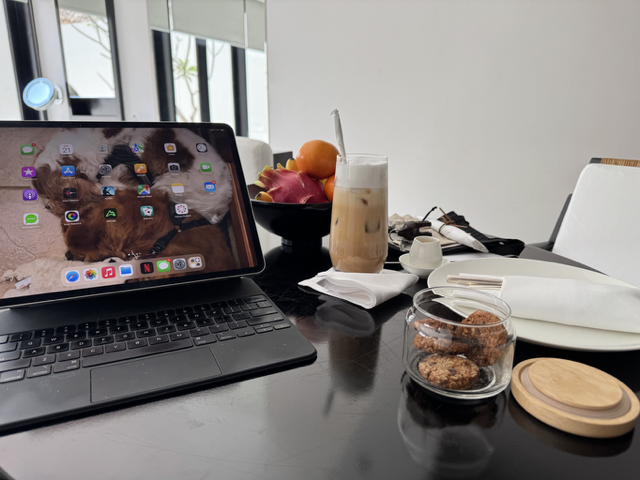
They kept bringing us last minute treats – my final decaf Vietnamese iced coffee and yummy cookies to accompany my last bits of typing.
It felt very weird to say goodbye after we’d been together nonstop for two weeks with the exception of one dinner. I was glad we were all going to the airport together for one last sit in the waiting room. I was off first and felt so lucky to have had so much fun with the whole group!
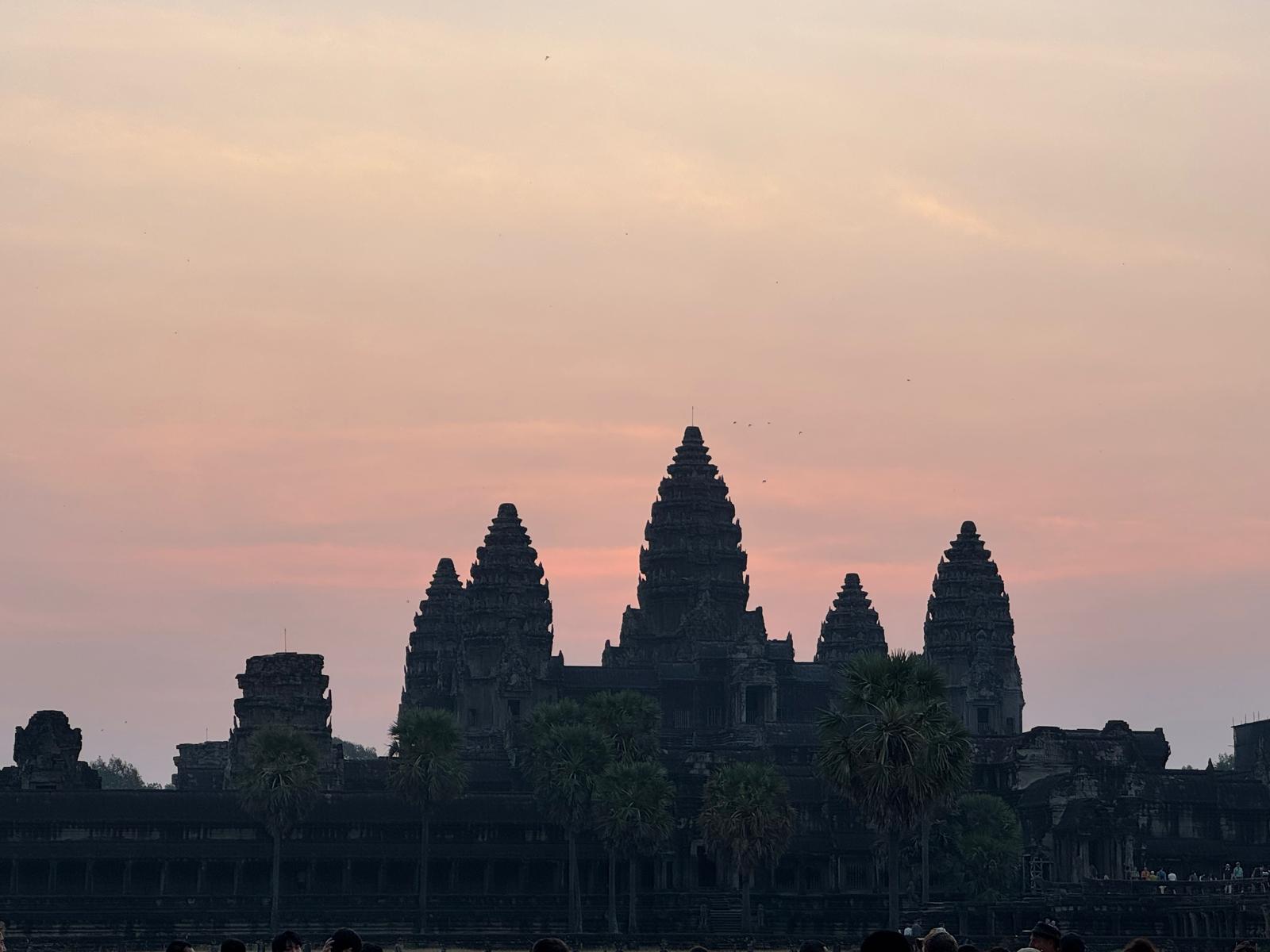
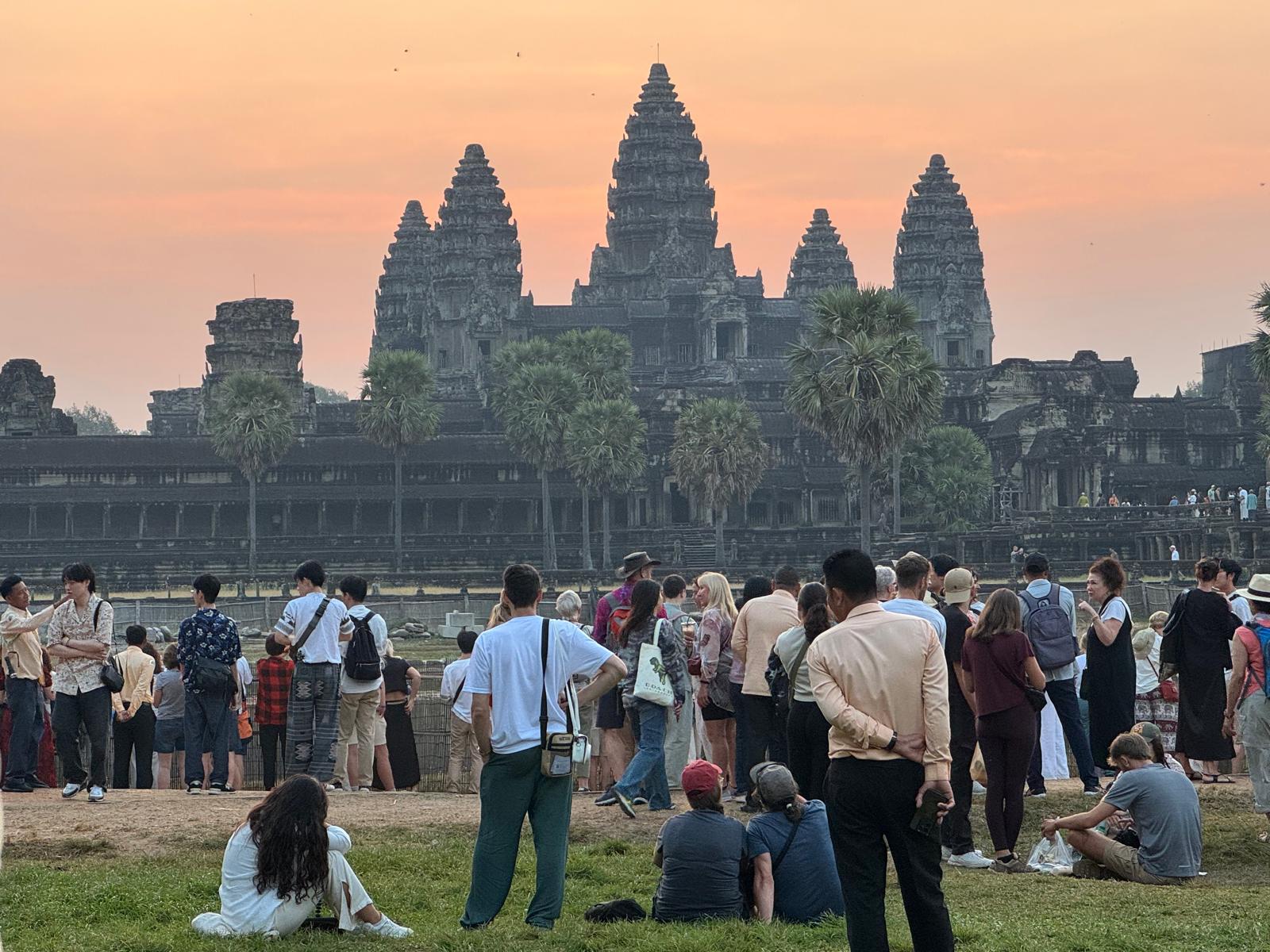
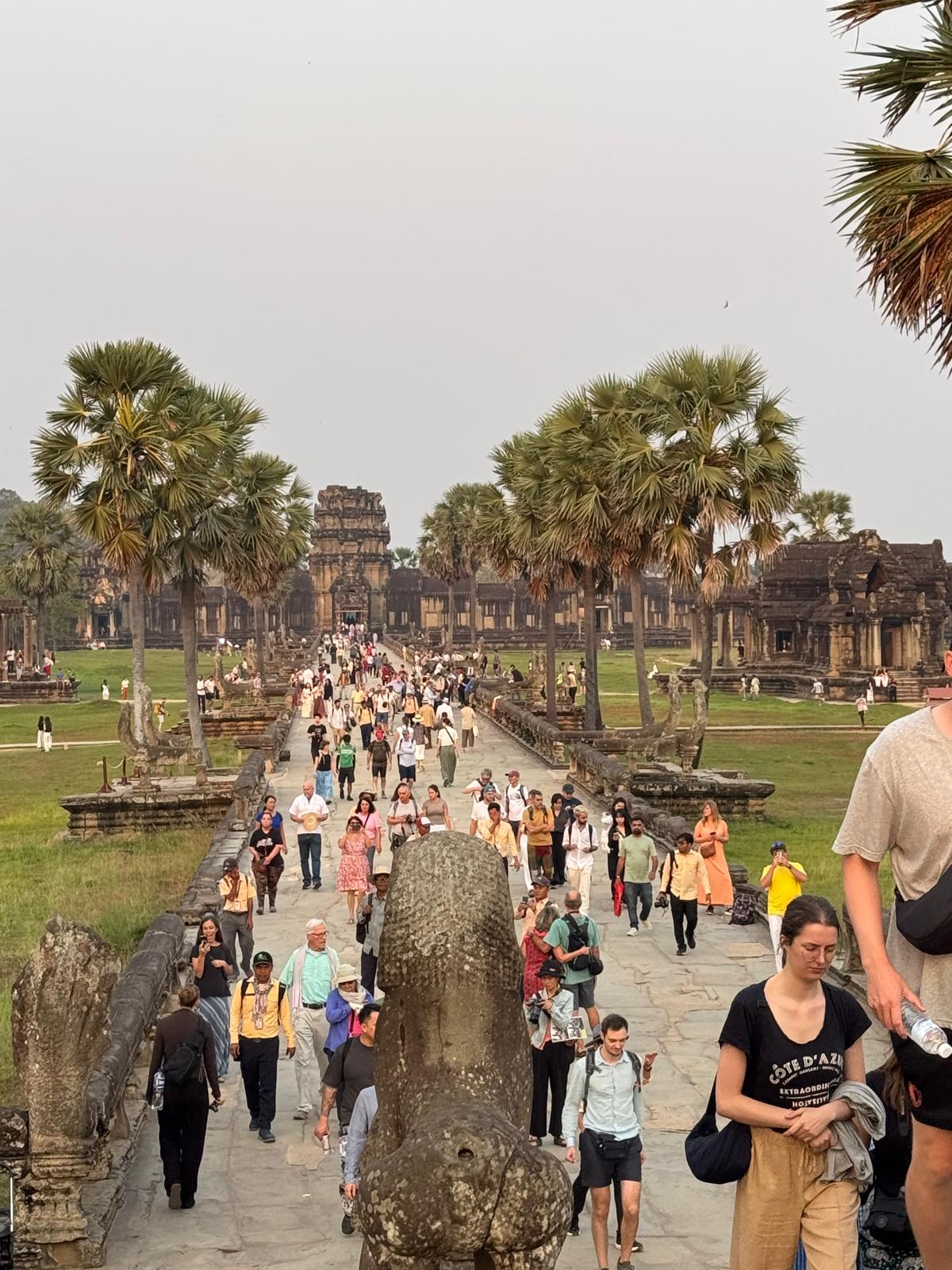
Today was Angkor Wat from the Khmer Empire. We left the hotel at 5:00 and were at the site by 5:45. Us and a whole lot of other people, but it was wonderful. We were there to see the sunrise over the towers and our guide, Sam, knew all the spots to sit and wait and shared history as well. The people of Cambodia are still primarily Khmer. The Khmer Rouge is the name that was popularly given to members of the Communist Party of Kampuchea, who followed Pol Pot and killed almost 25% of the population. So that was a distinction we needed to figure out. Sam’s family was in a small village far from the primary fighting, though two of his uncles, one of whom was a monk, were taken away for “reeducation” which meant killed. He lived near Angkor Wat and the other temples and talked about playing hide and seek in the temples, swimming in the pools in Angkor Wat – that are now drained – and avoiding all the poisonous snakes in the jungle. There are shrines in all of the temples that are still used today by the local people.
Angkor Wat was the capital of the Khmer Empire and was a mega city of almost a million people and built during the Khmer Empire between the 9th and 13th centuries. It’s the largest religious monument in the world – covering an area four times the size of Vatican City. It was built by the Khmer King Suryavarman II in the first half of the 12th century, around the year 1110-1150. Military defeat is supposed to be the main reason for the fall of Angkor, with different dates proposed for the ending.
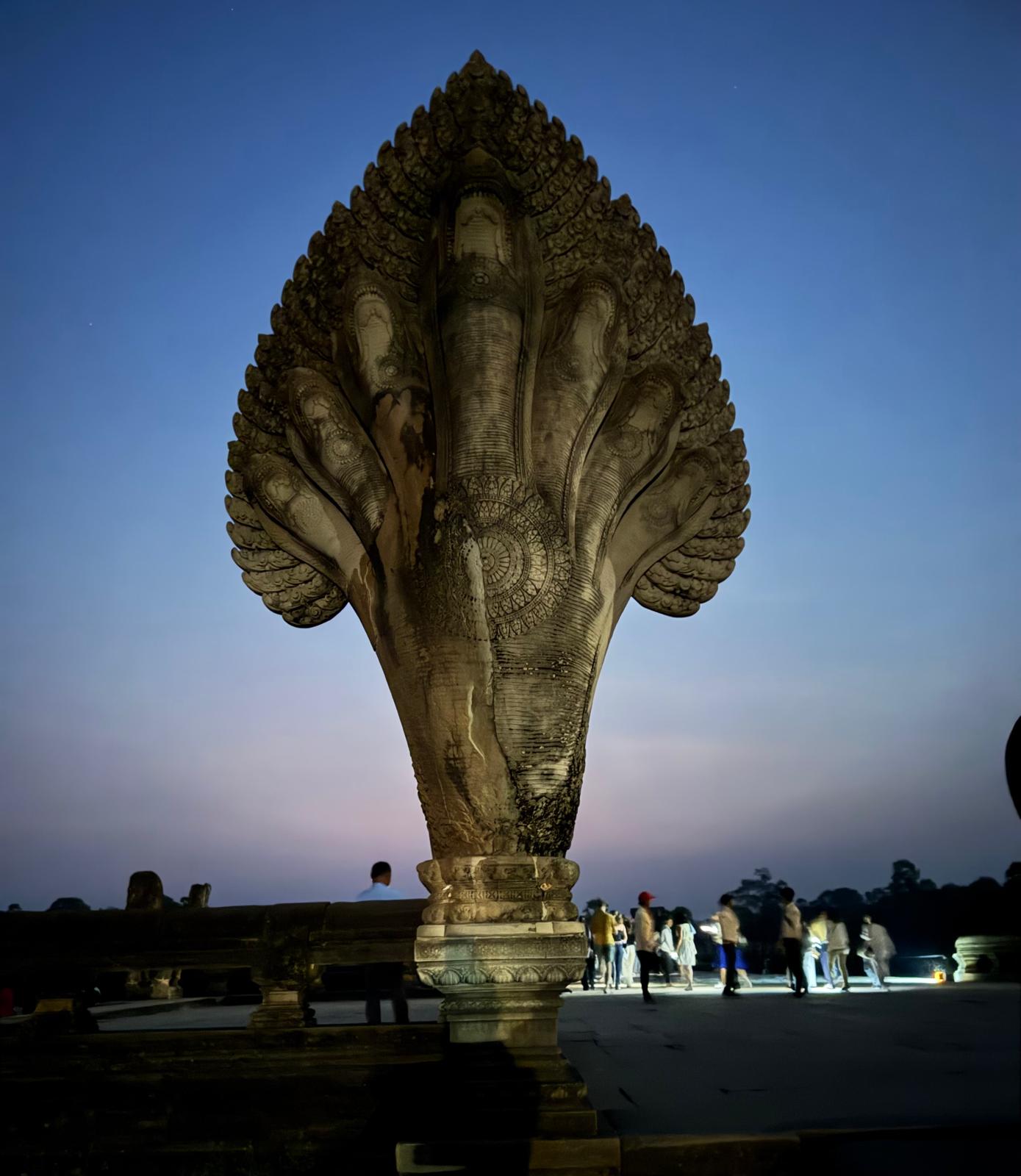
The statue below is that of Naga – a 7 headed serpent. These images were in many if not all of the Buddhist temples. Sometimes a statue like this, many other times a long – very long – serpent body held in the hands of warriors surrounding a bridge or a temple. The snake is often a symbol of protection to the Buddha and his teachings. There were wonderful images of nagas, or snakes circling temples, held in the hands of the warriors. In Buddhist lore, the Buddha had gained enlightenment under the Bodhi tree. A violent store arose and caused the water to rise. Mucalinda, the King of -Serpents, coiled his seven heads to form a hood over the Buddha. Mucalinda and other nagas sheltered the Buddha for seven days and seven nights. After the storm, Mucalinda paid homage to the Buddha and returned to his domain.
This statue was before we even got into the compound and then the walls of the compound were also incredible and we weren’t even up to the temple!
We were able to watch sunrise and get photos that imply it was serene and majestic. It was serene, but also very busy!
There were two smaller beautiful buildings where people prepared for entering the temple and then the grand walkway up to the temple itself.
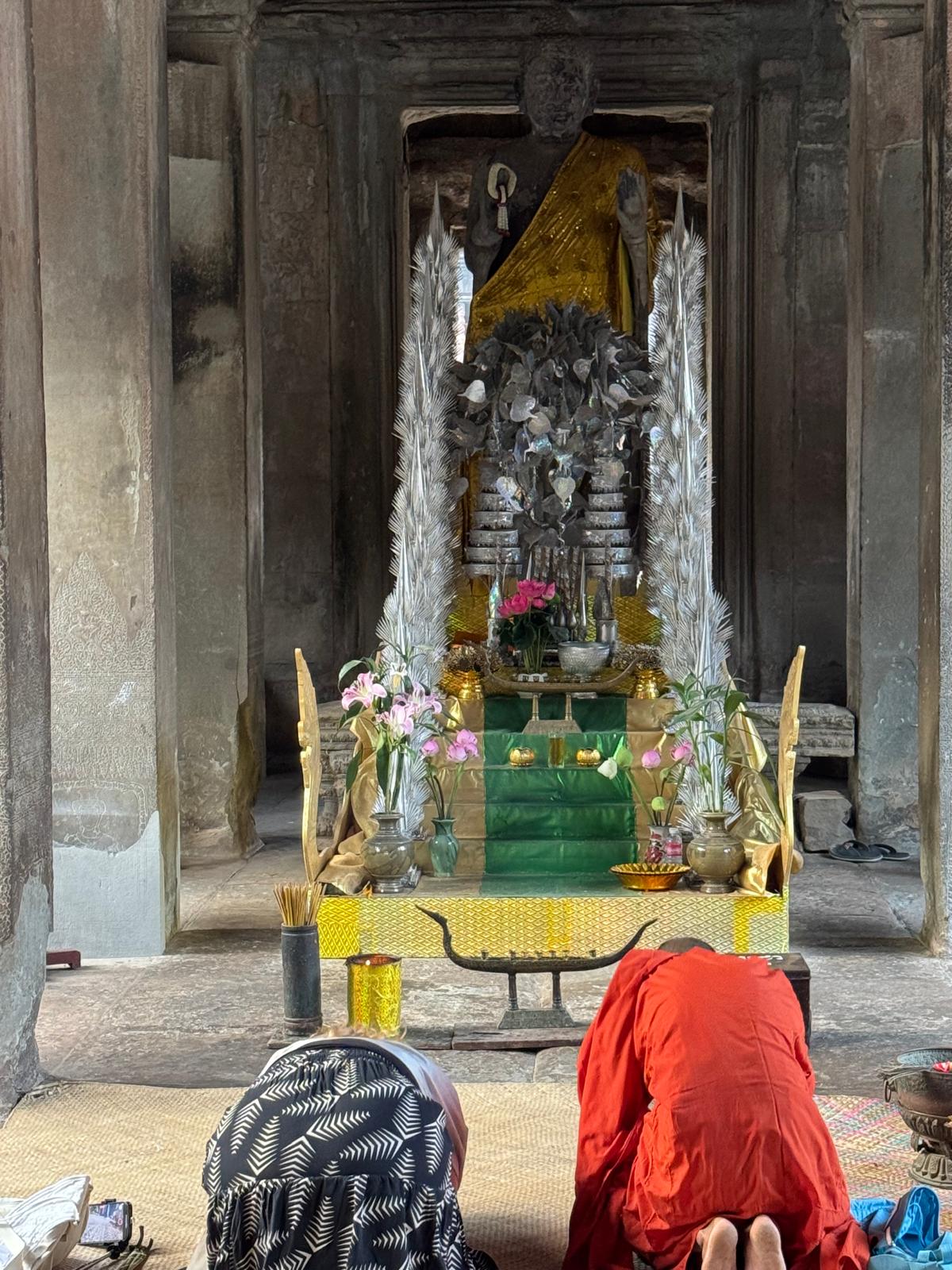
There were a number of shrines with different images of Buddha, still used for practice by local monks and villagers. There is an ongoing monastery outside Angkor Wat.
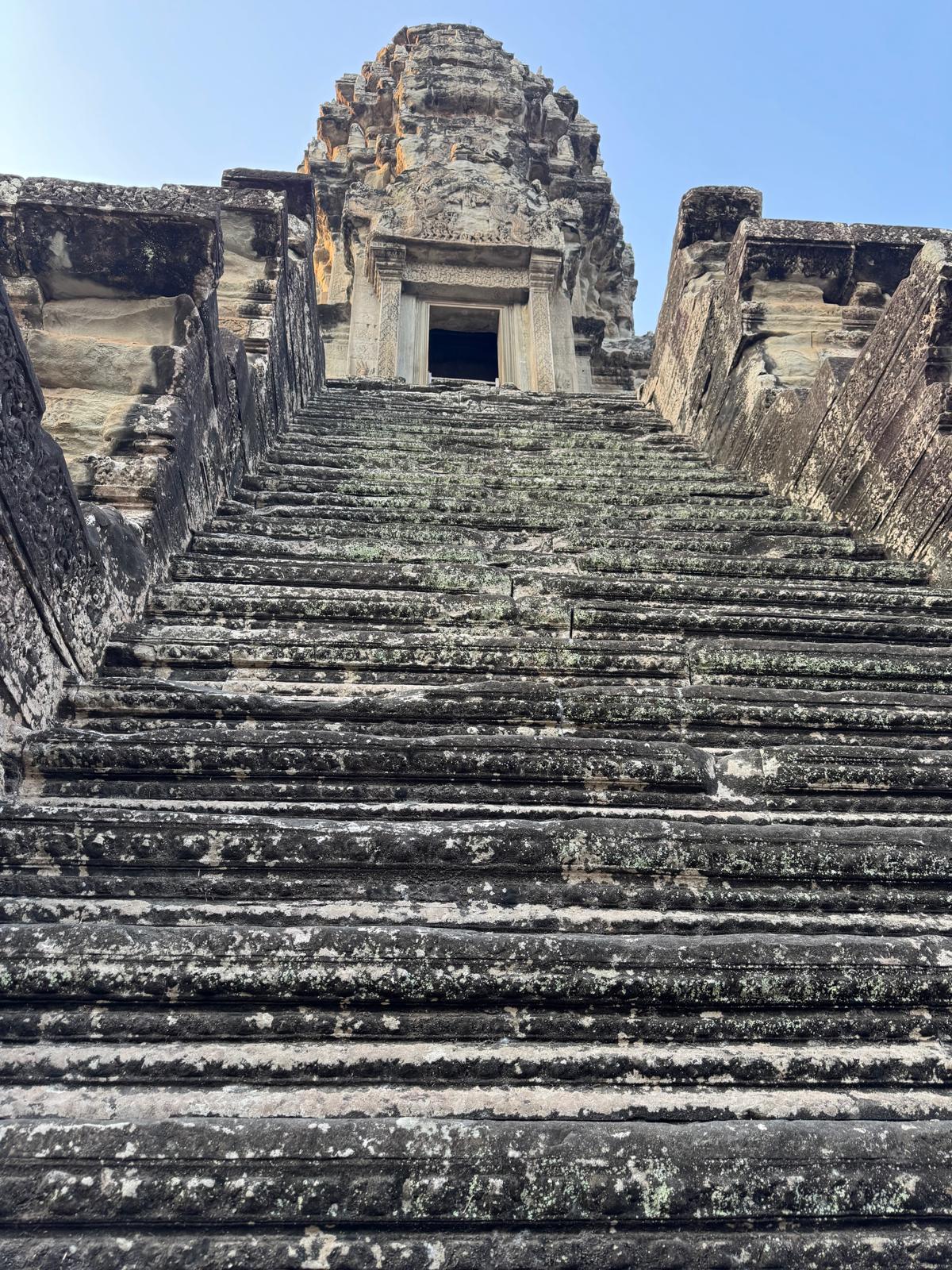
The stairs were incredibly steep. We later climbed a staircase built on top of the original and it followed the same grade, you had to use the banisters, especially coming down.
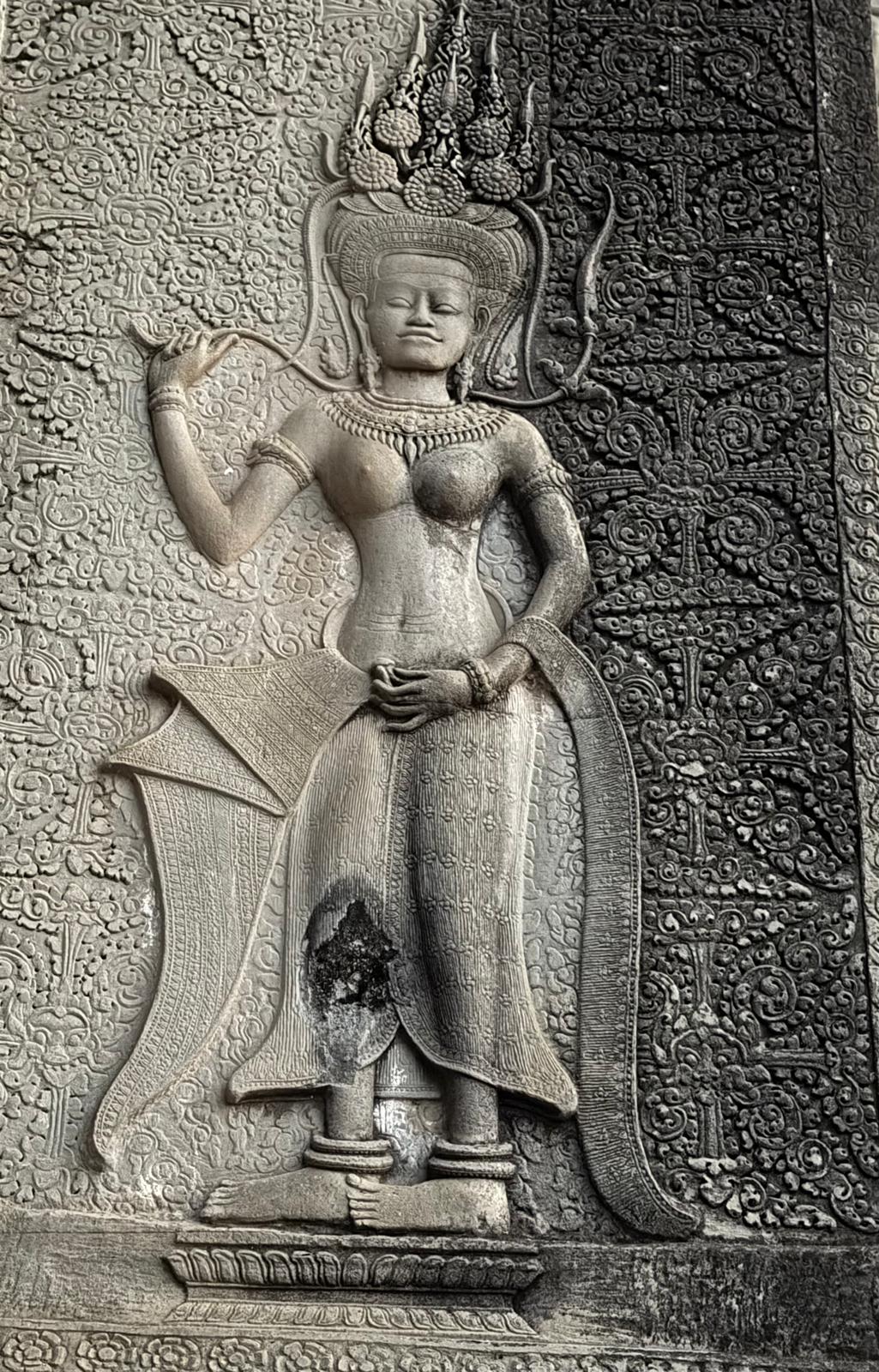
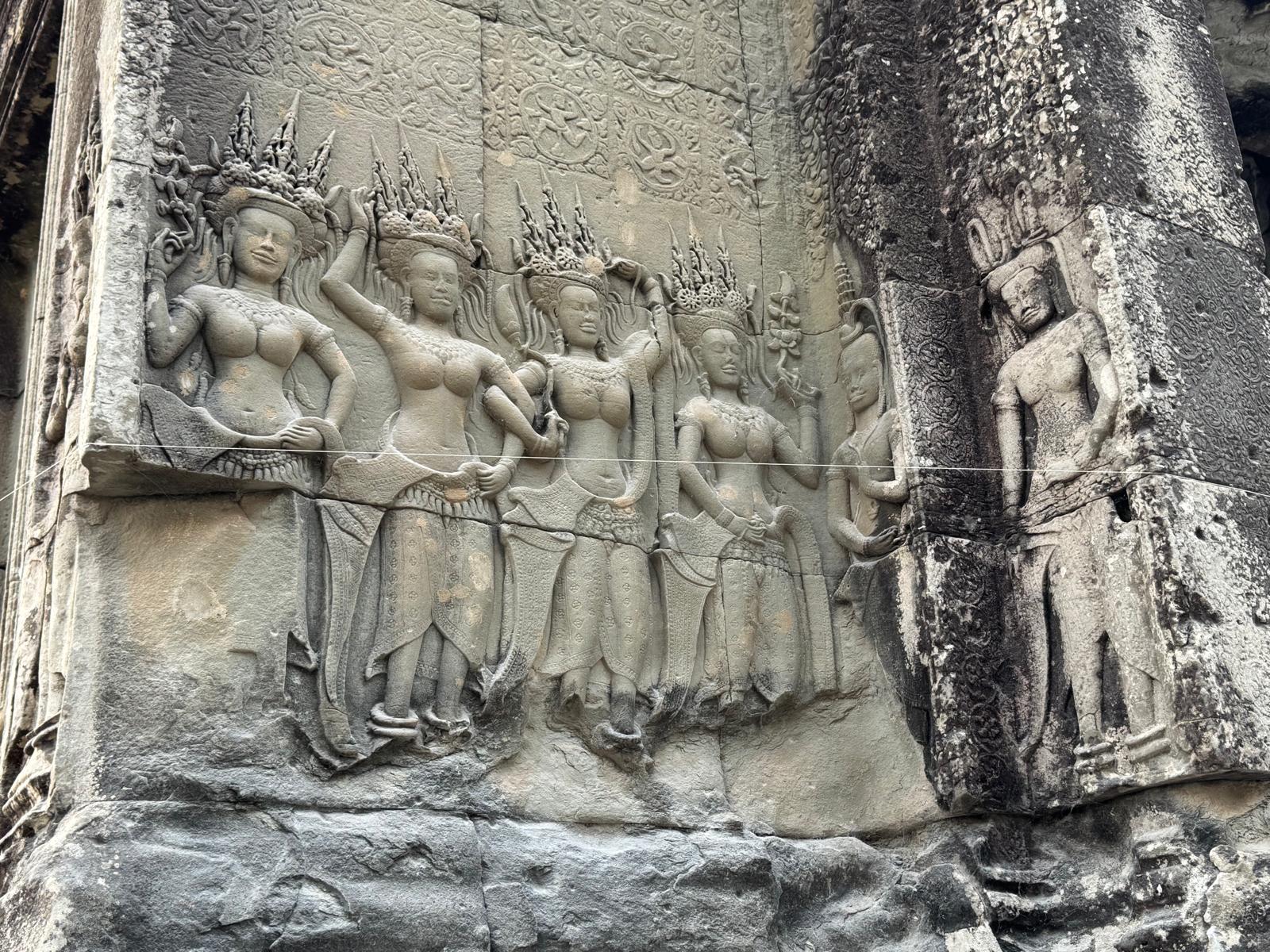
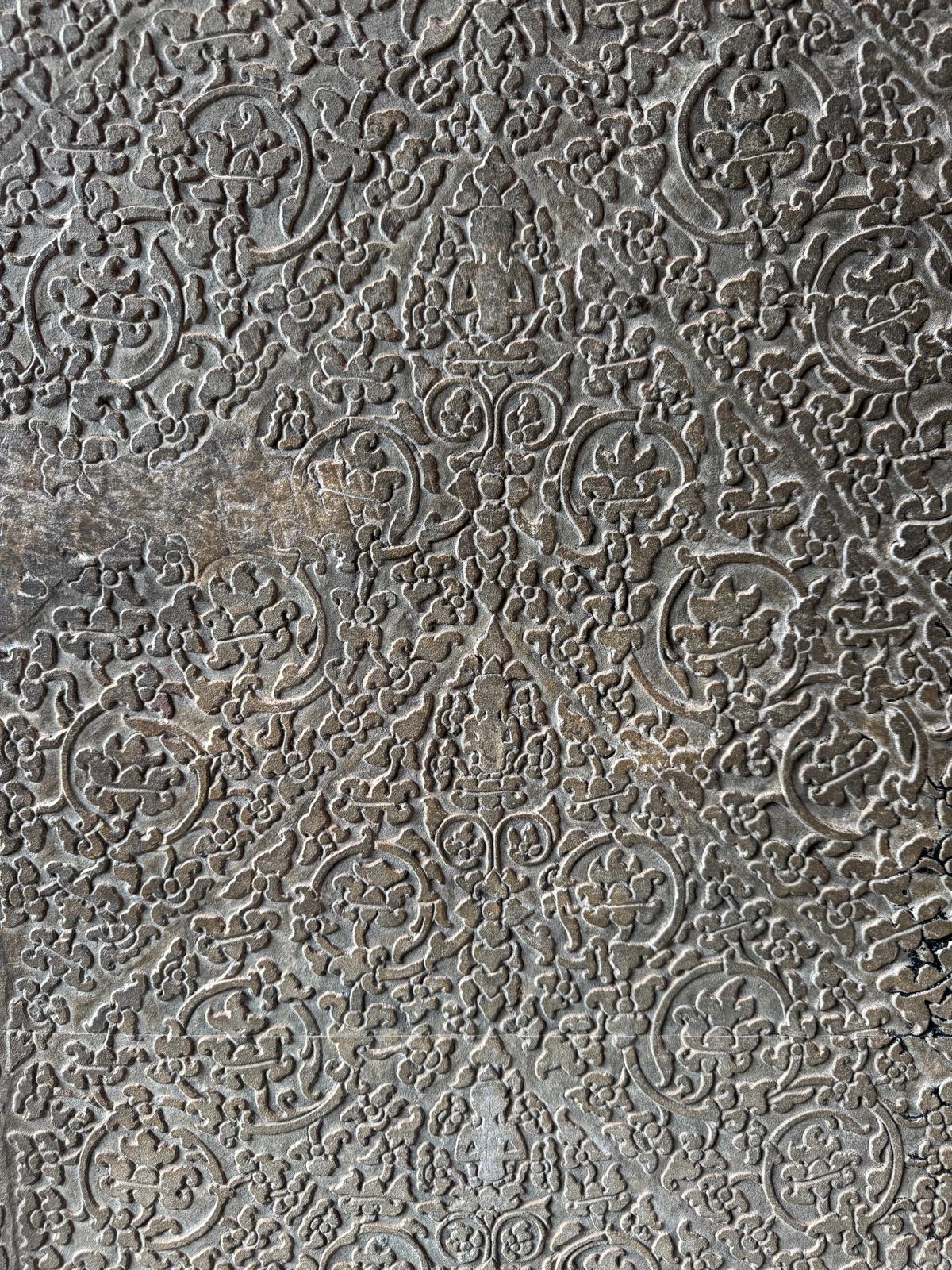
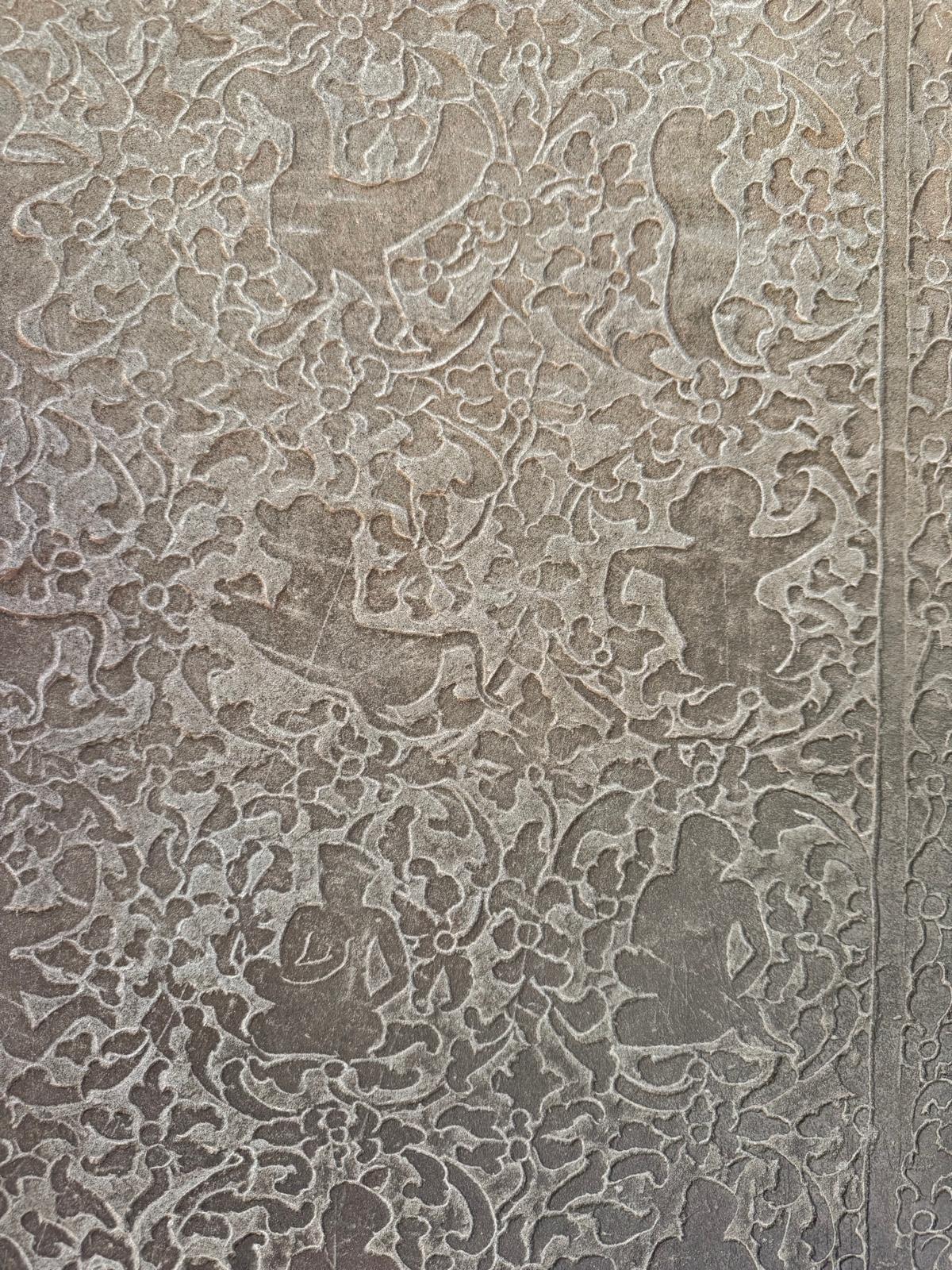
The carvings throughout the temple were endlessly creative and astonishing.
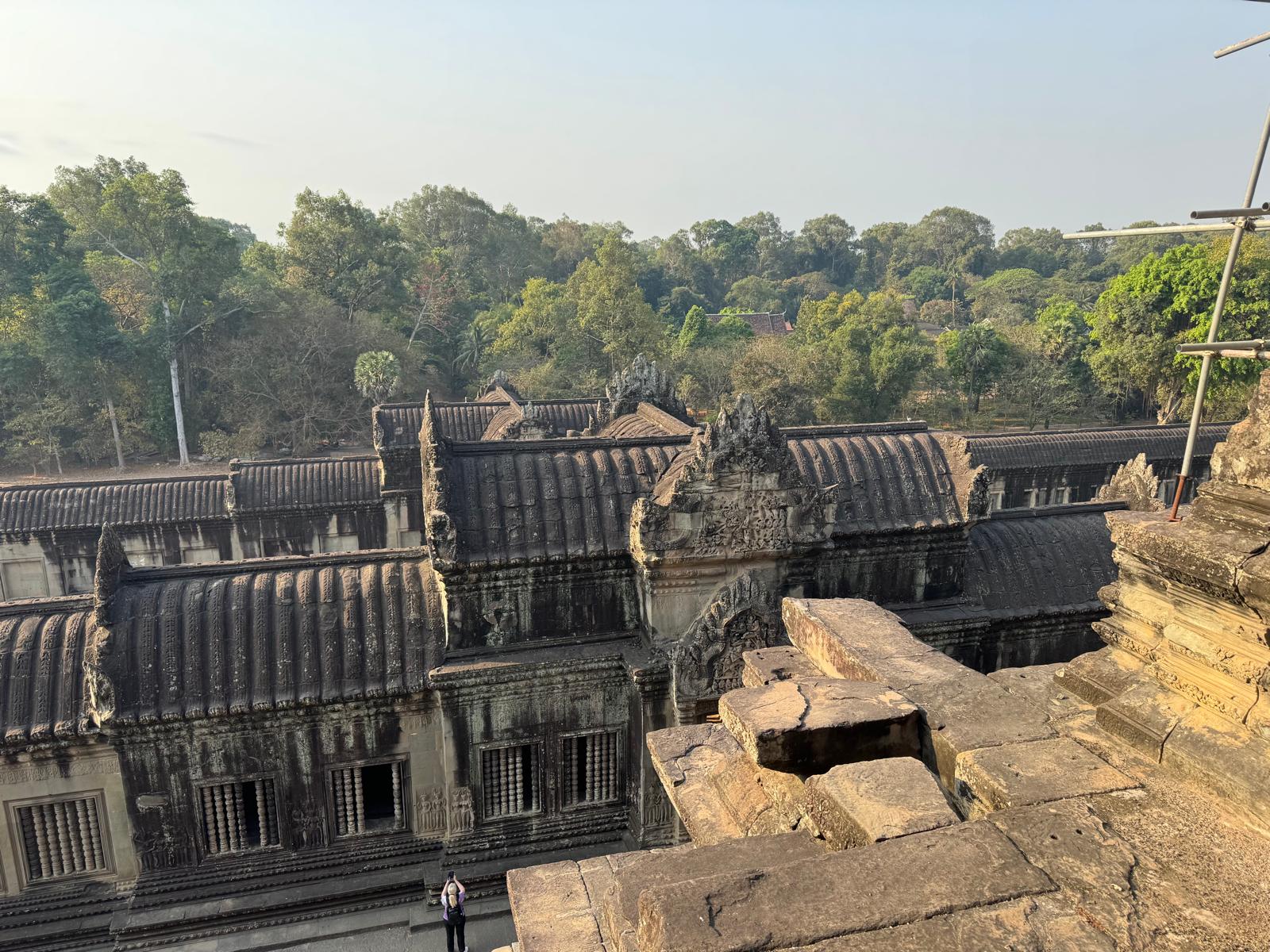
There were courtyards all the way around the central temple, as well as pools (now drained).
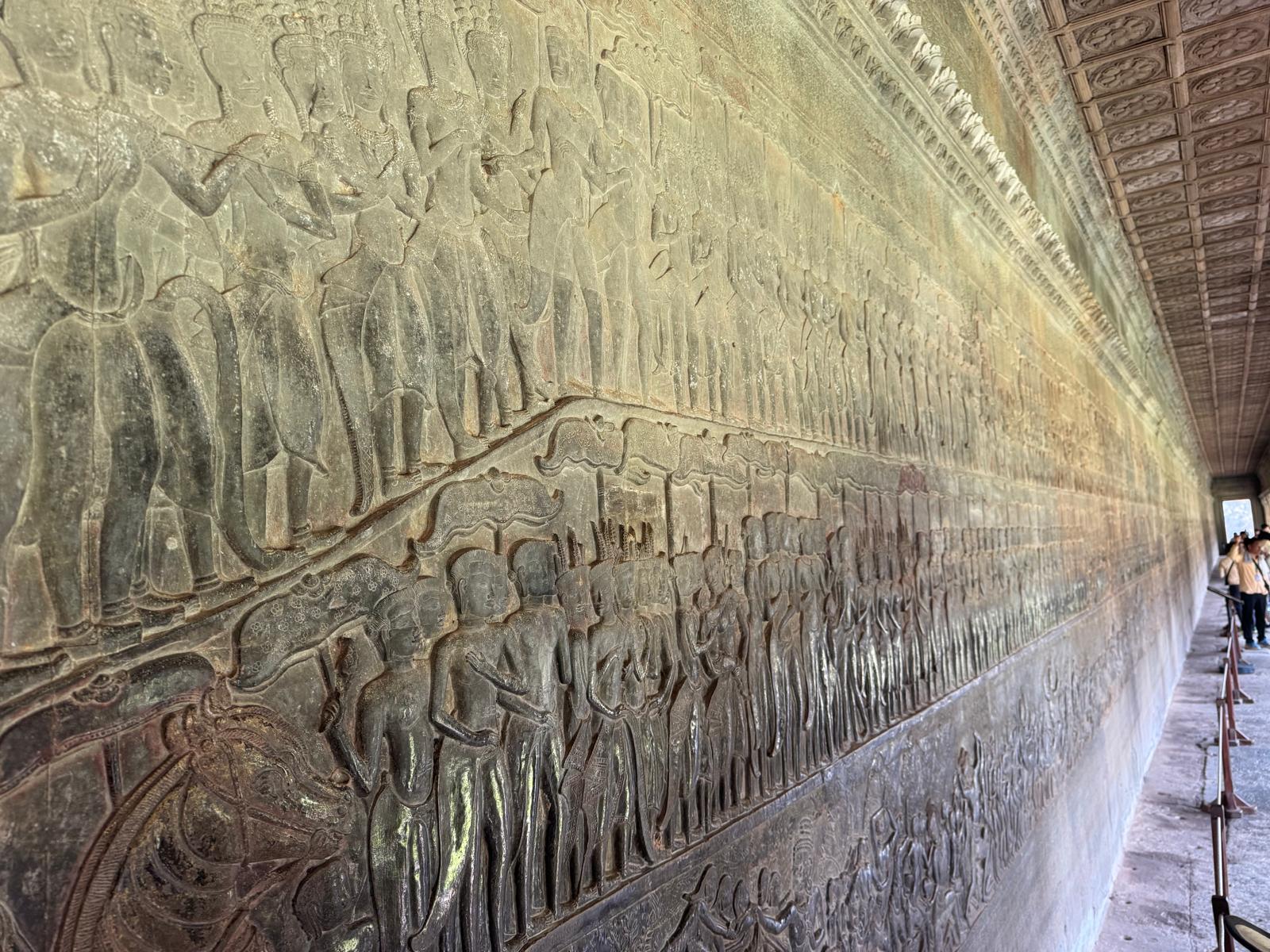
There were a series of hallways – incredible. Sam absolutely loved all the carvings and took time to tell us stories that were being conveyed. In this hallway, the series was about heaven and hell and the different levels and reasons that a being might be in one level, “The Talavrikshavana tier is reserved for those who cut trees that should not be cut, those who fell trees or relieve themselves in a deva sanctuary.”
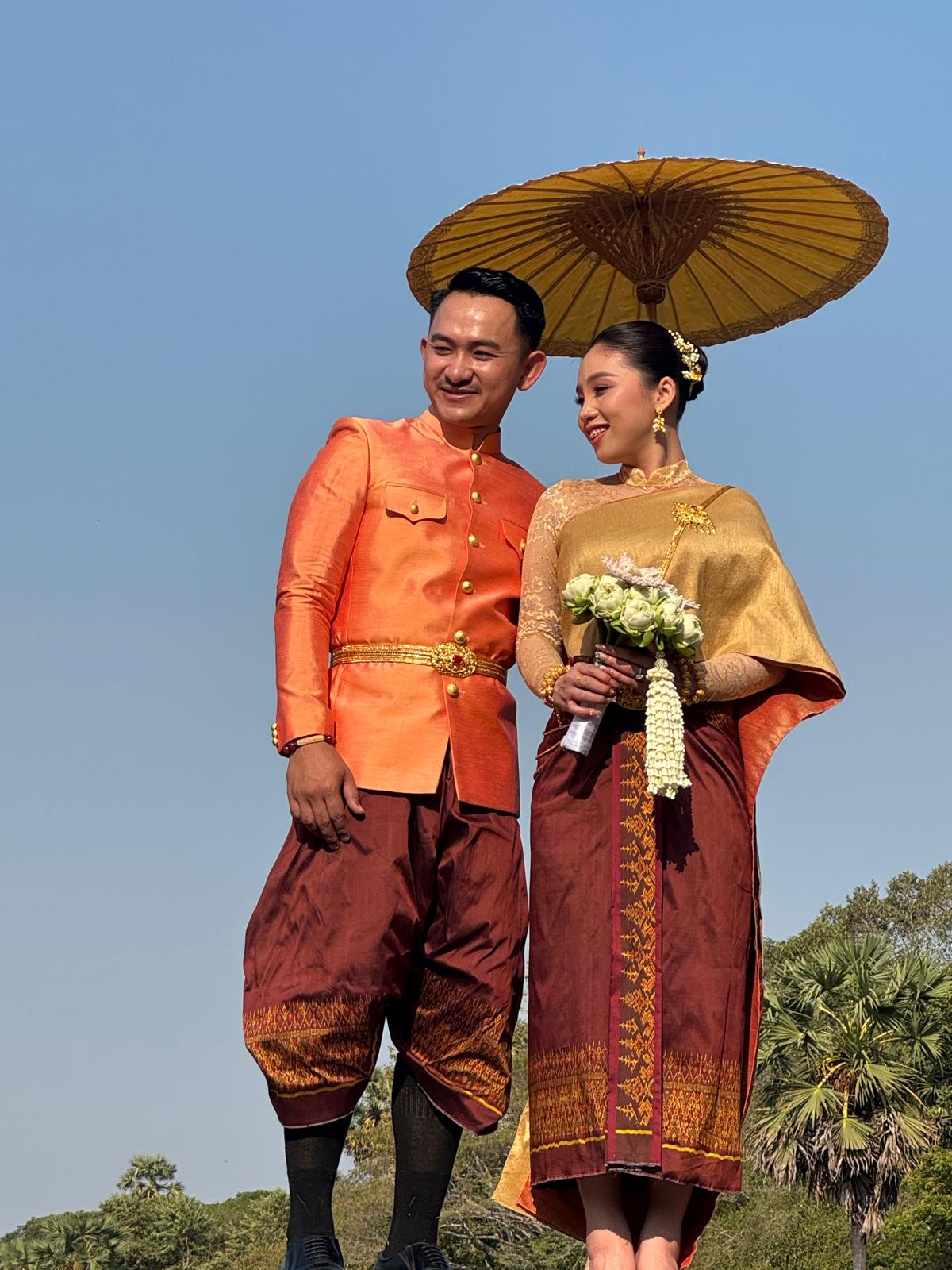
We saw this couple as we left and thought it was an instagram pose, but Sam said no, they were pre-wedding photos using traditional dress. Gorgeous.
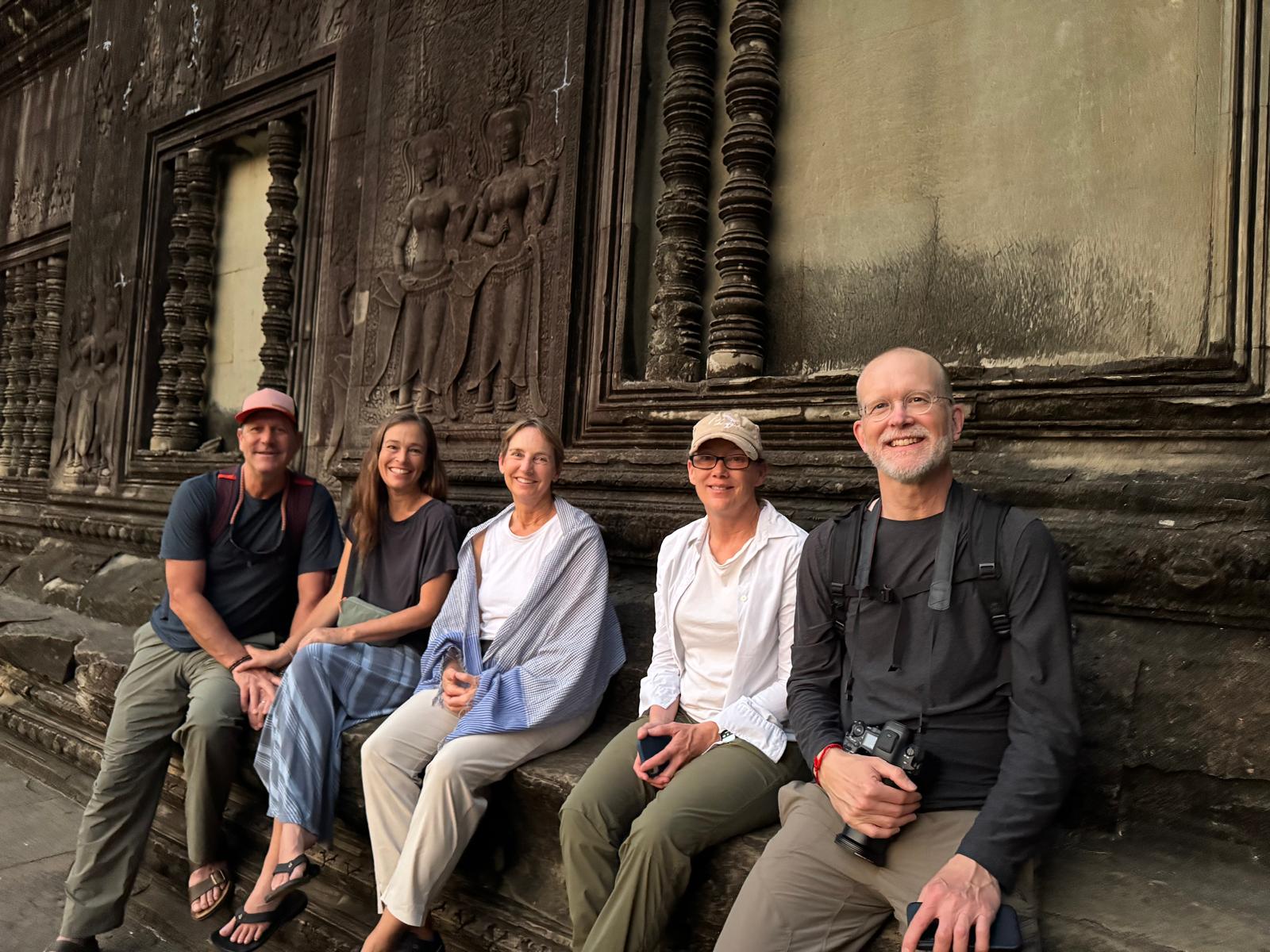
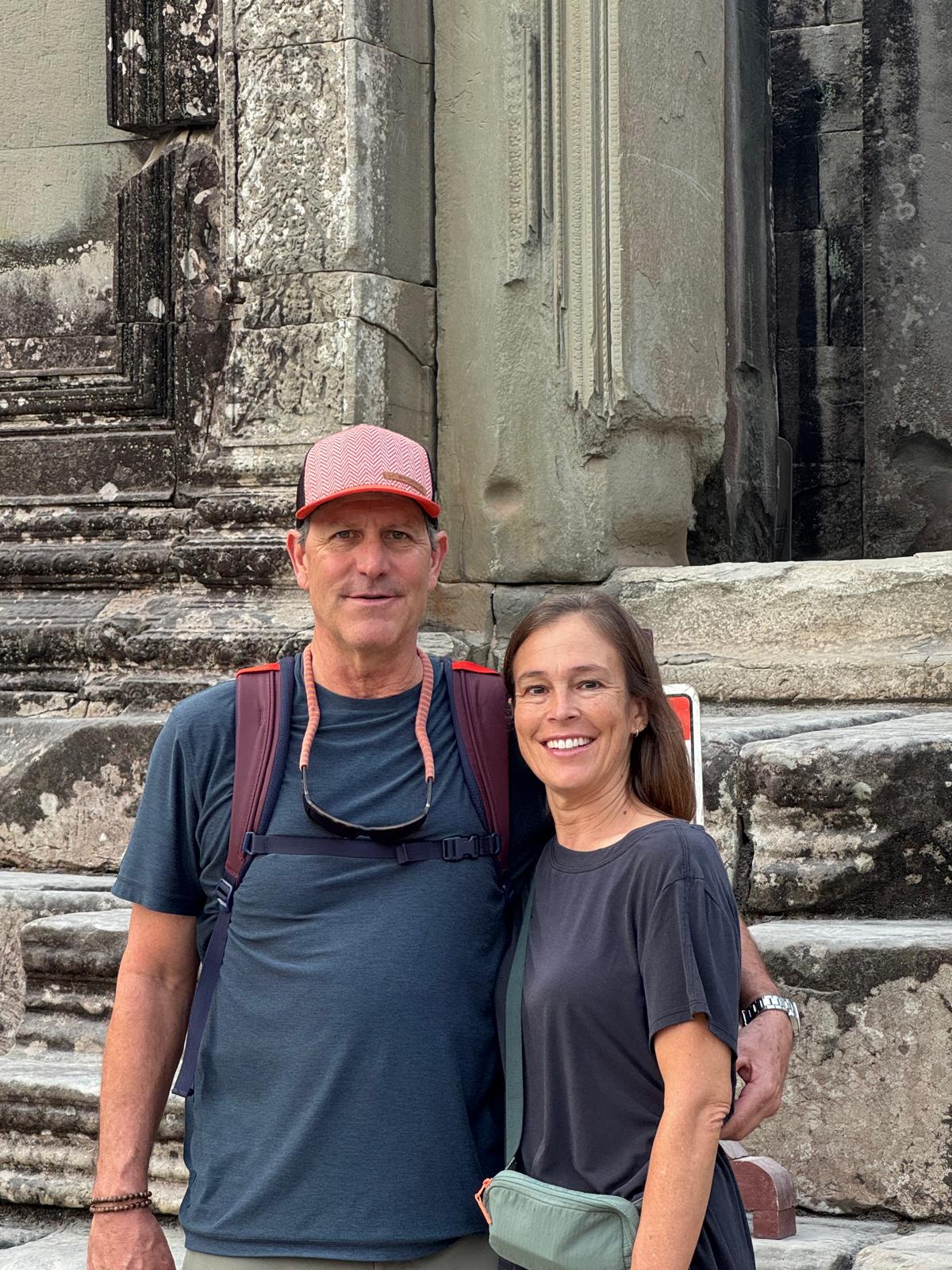
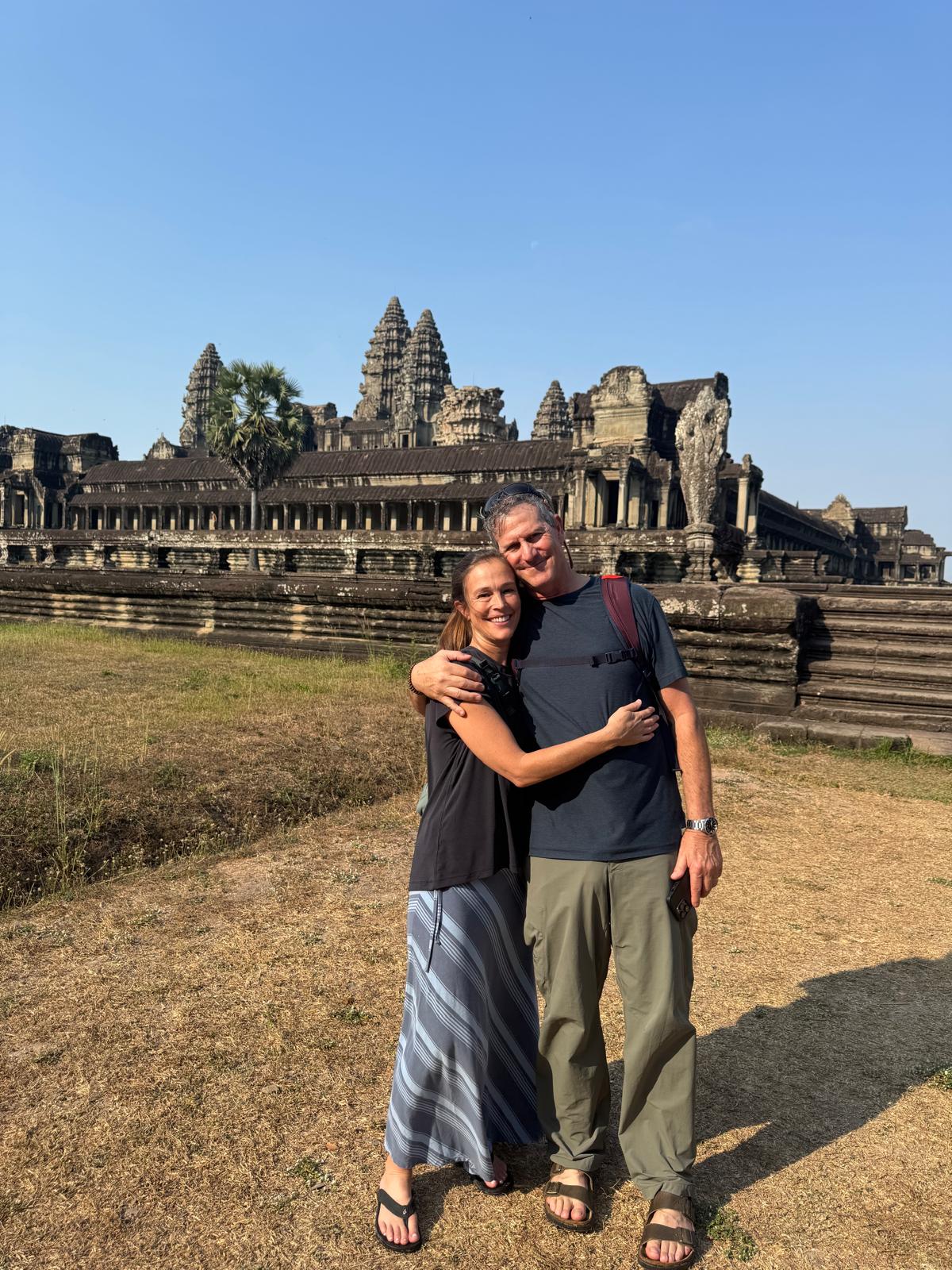
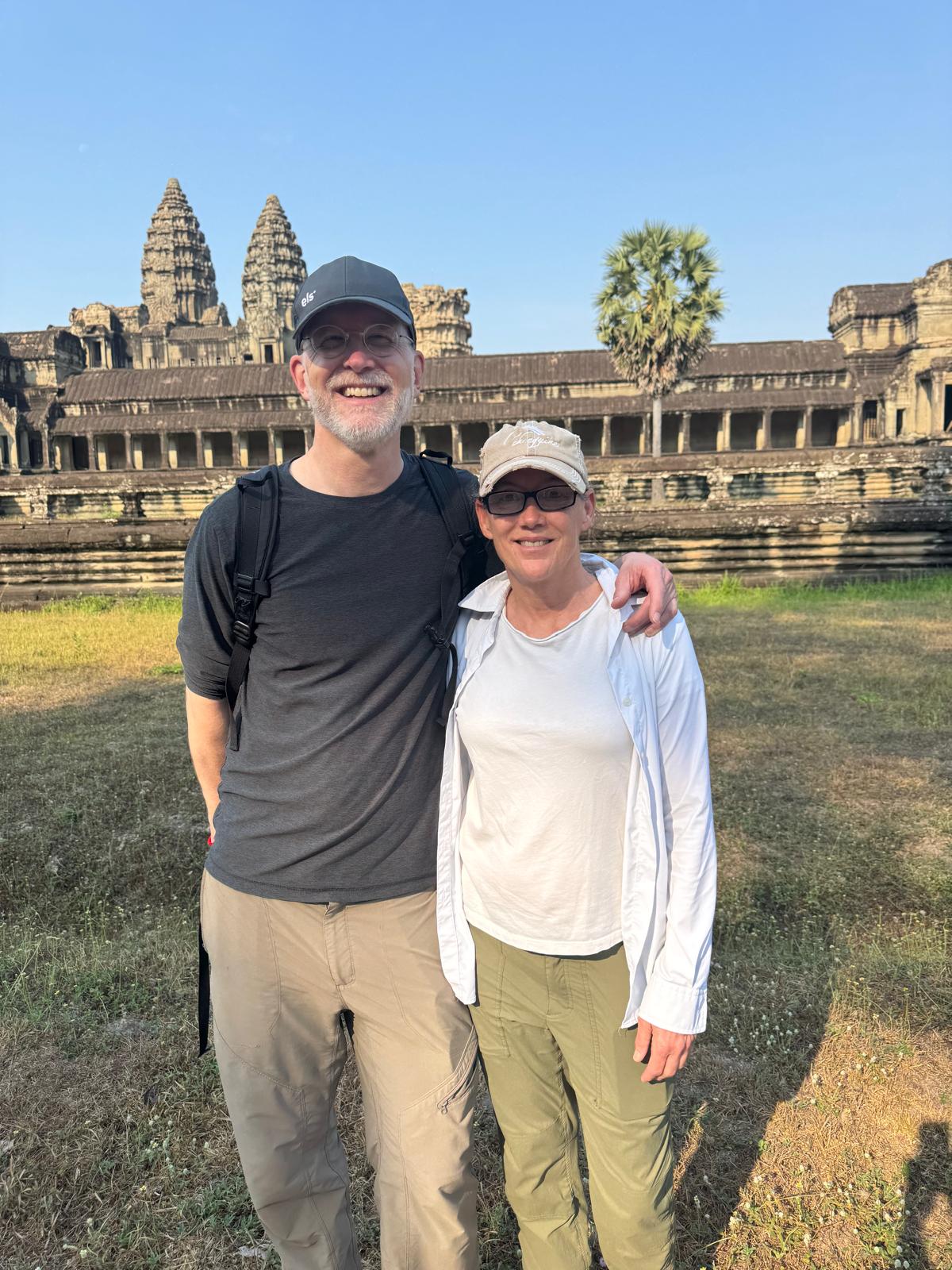
And a couple of American gorgeous couples!
Photo 16 – Pat and Holly
Sam has been guiding for 30 years and had taken Mick Jagger, David Rockefeller and a few others around which indicated his seniority in the business. We appreciated his wisdom so much. It took a good part of the day, but he finally caught on that it was ok to laugh at our mistakes – Pat was totally up for this – and Sam started cracking smiles and even laughing upon occasion.
His comments about Vietnam – they’re with the Chinese – were the same as the Vietnamese about Cambodia – they’re with the Chinese. Vietnam declared war and occupied Cambodia for 10 years from 79-89 and there are still hard feelings.
The Vietnamese consider themselves to have rescued the Cambodians from the Khmer Rouge.
There was a different feel in Cambodia. Granted, we only saw Siem Reap, so a limited view. It was not as polished as Vietnam has become (in certain areas), but it also felt kinder and more open. Hard to describe since the Vietnamese we met were largely delightful. But we’d like to go back and explore more of Cambodia. Poverty was more present, but we saw very few people who seemed like they were begging for food.
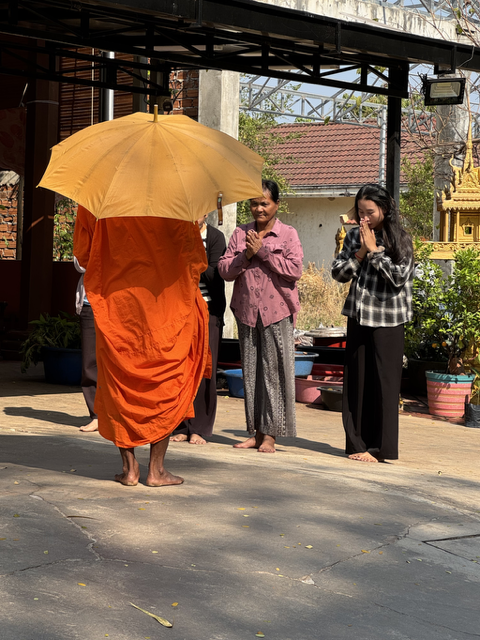
Several times we saw Buddhist monks or nuns walking with bowls. People would come to the monk and give offerings and ask for prayers. The two times I saw this, up to 5 people gathered around the monk to receive his prayers, leaving shoes and hats behind. The prayer was not a quick waving of hands, but took a few minutes as the monk spoke. Later when we were in a temple, we learned that the monk was speaking in Pali. I loved that because it’s the language of Buddha and used by those who are Theravadist Buddhist, distinct from Zen or Tibetan Buddhism.
We watched one nun (I think, different colored robe) slowly walk along the street stalls and not ask for anything, but clearly open if someone wanted to give an offering and ask for a prayer. It must be a balance and maybe the monk just keeps walking until there is enough to feed him/her for the day.
After Angkor Wat, we returned to the hotel for food and to cool down before venturing back out to see some more temples. Before I came, I had thought that the temples were basically on top of each other and right around Angkor Wat, but each had its own space and compound. Angkor Wat is the biggest, with small lakes/ponds originally both in and out. So – we were going back out to see different temples.
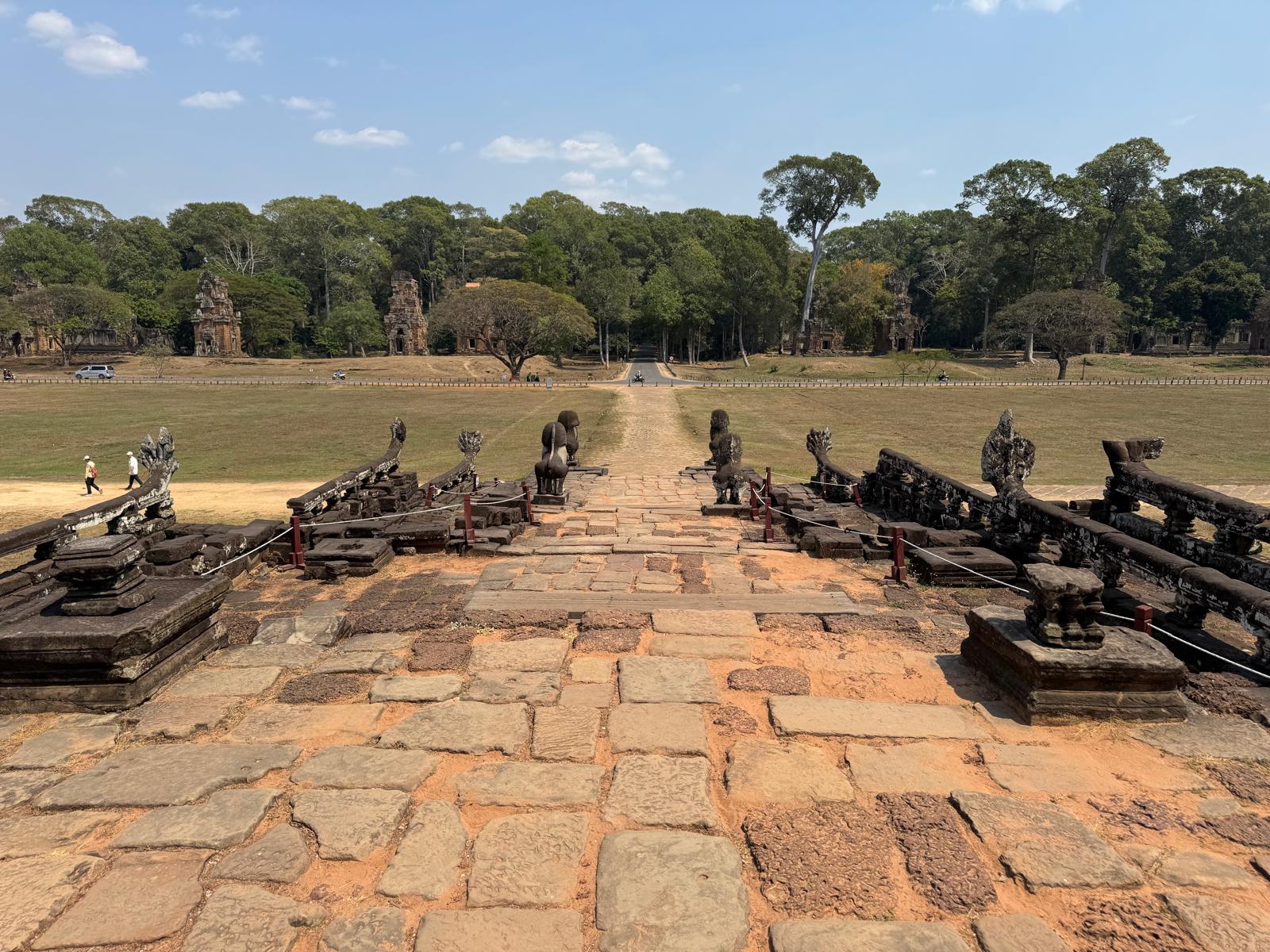
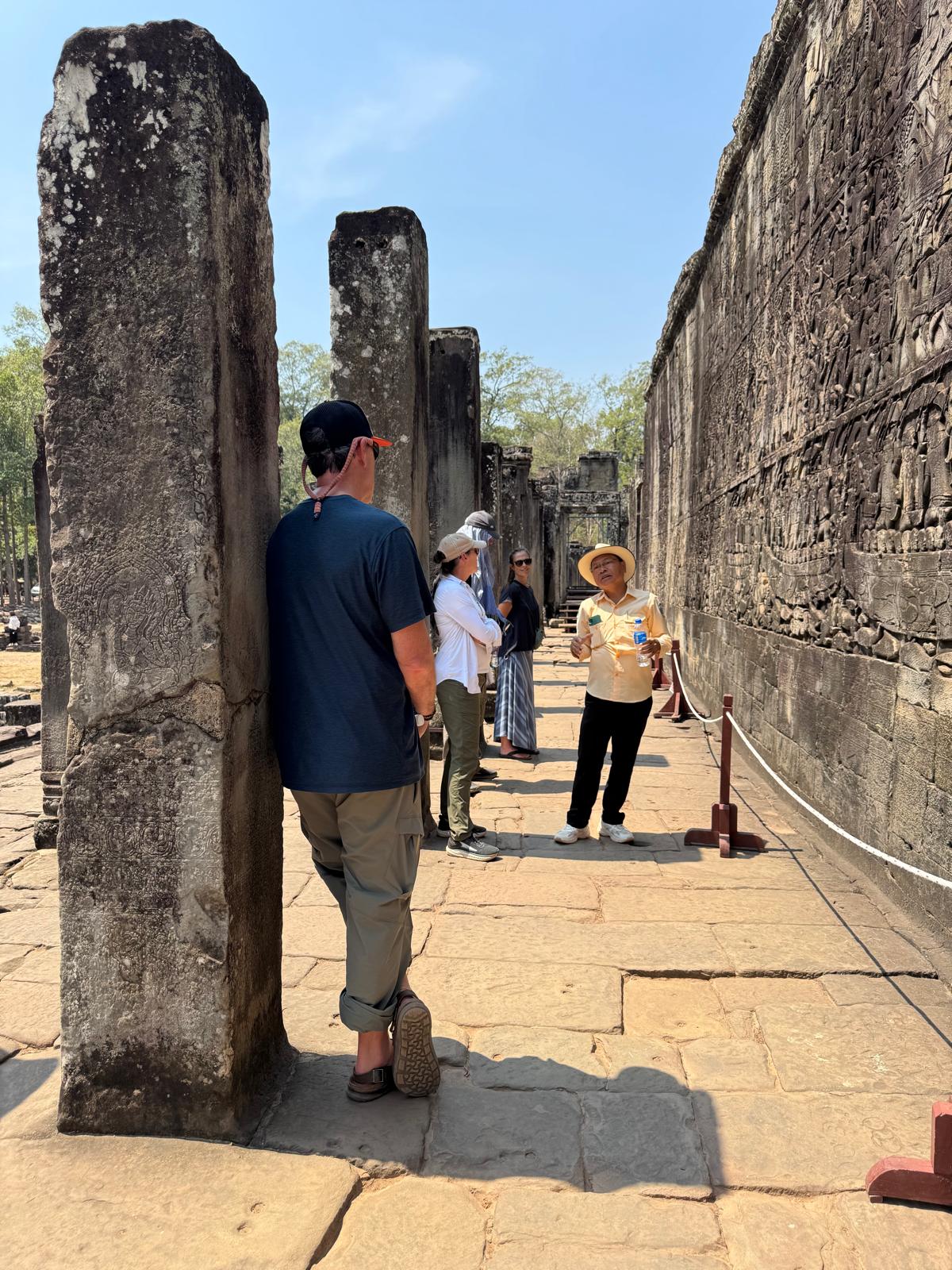
After lunch, we visited Anghor Thom, the ancient royal city of Khmer Empire, starting with the Bayon Temple. After the Cham people of modern-day Vietnam sacked Angkor in 1177, King Jayavarman VII (reigned 1181–c. 1220) decided that the Hindu gods had failed him. When he built a new capital nearby, Angkor Thom, he dedicated it to Buddhism. We could see the faces of former King Jayavarman VII facing in every direction in this particular temple. There was a Terrace of the Elephant which served as a platform from where the King could welcome back his victorious army.
Another long panel with Sam describing the stories, notice that all of us are hiding in the shade of pillars, each with his/her own pillar.
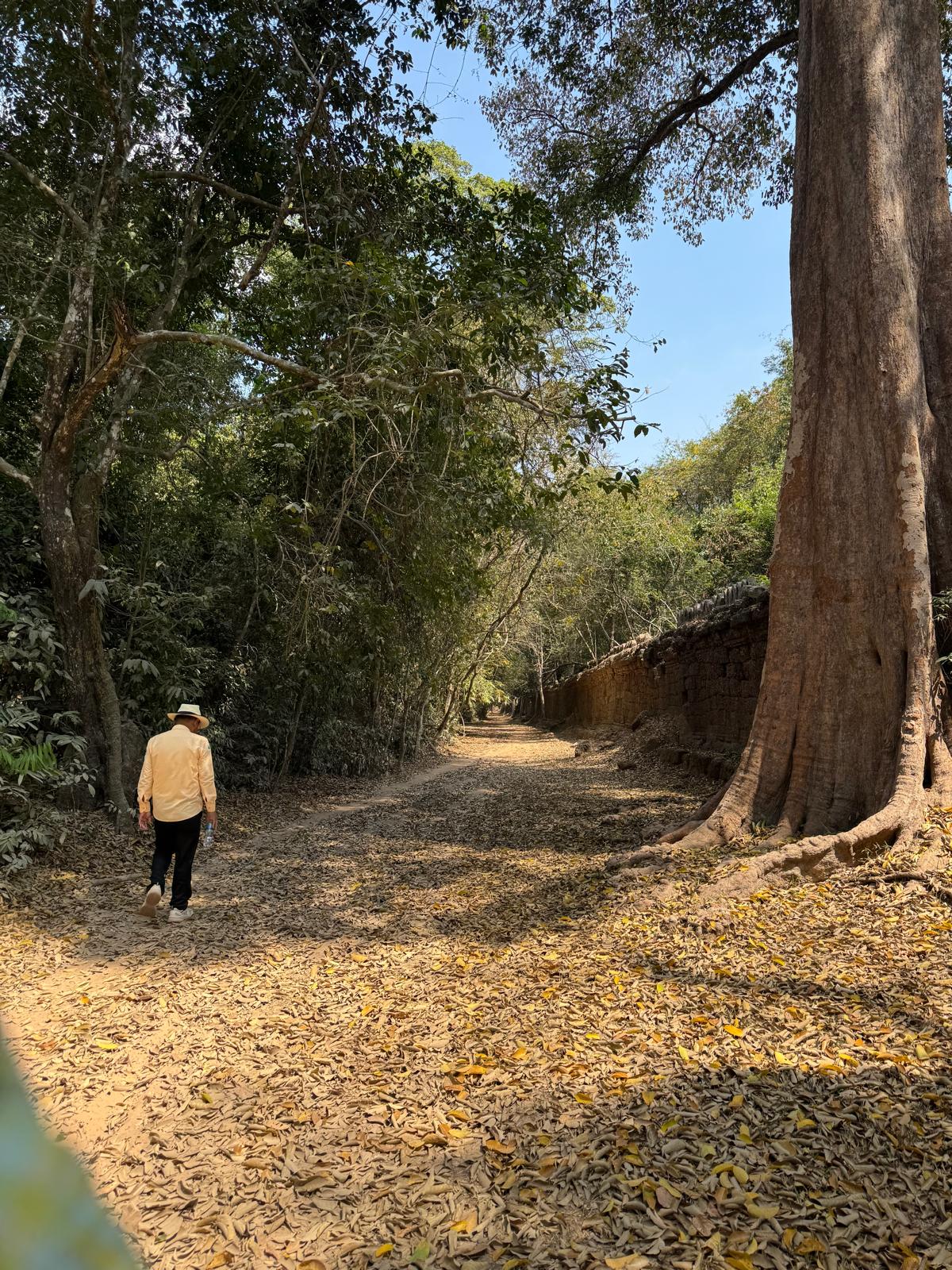
We then went to my favorite temple, the Ta Prohm Temple. At the start, Sam said he was going to take us a different way and that the building’s complex enclosed 2 miles. I was dismayed at the idea of walking for 2 more miles in the heat, but it turned out to be a highlight because for a while, it was only us walking along the wall of the complex with the jungle on the other side (not a huge swatch, you could see hints of the road on the far side).
We could hear birds and a particular call was noted as a hornbill by Sam. He said during the war, they caught and ate them, they were all starving. He said you could see all of his bones – he was 8-12 years old during that time. We kept walking and then came to the typical entrance where many people were streaming in. Thanks, Sam, for a rare quiet interlude.
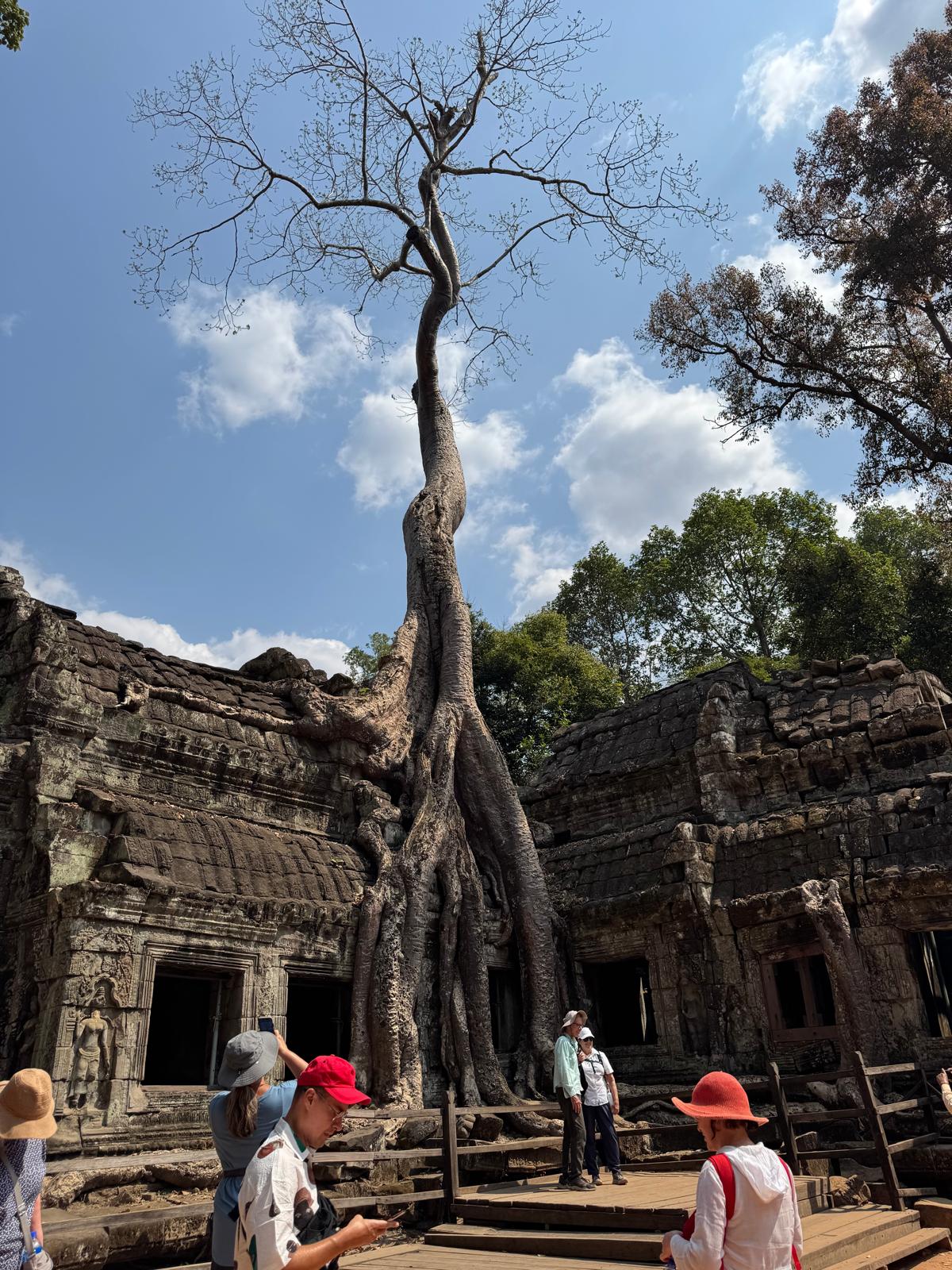
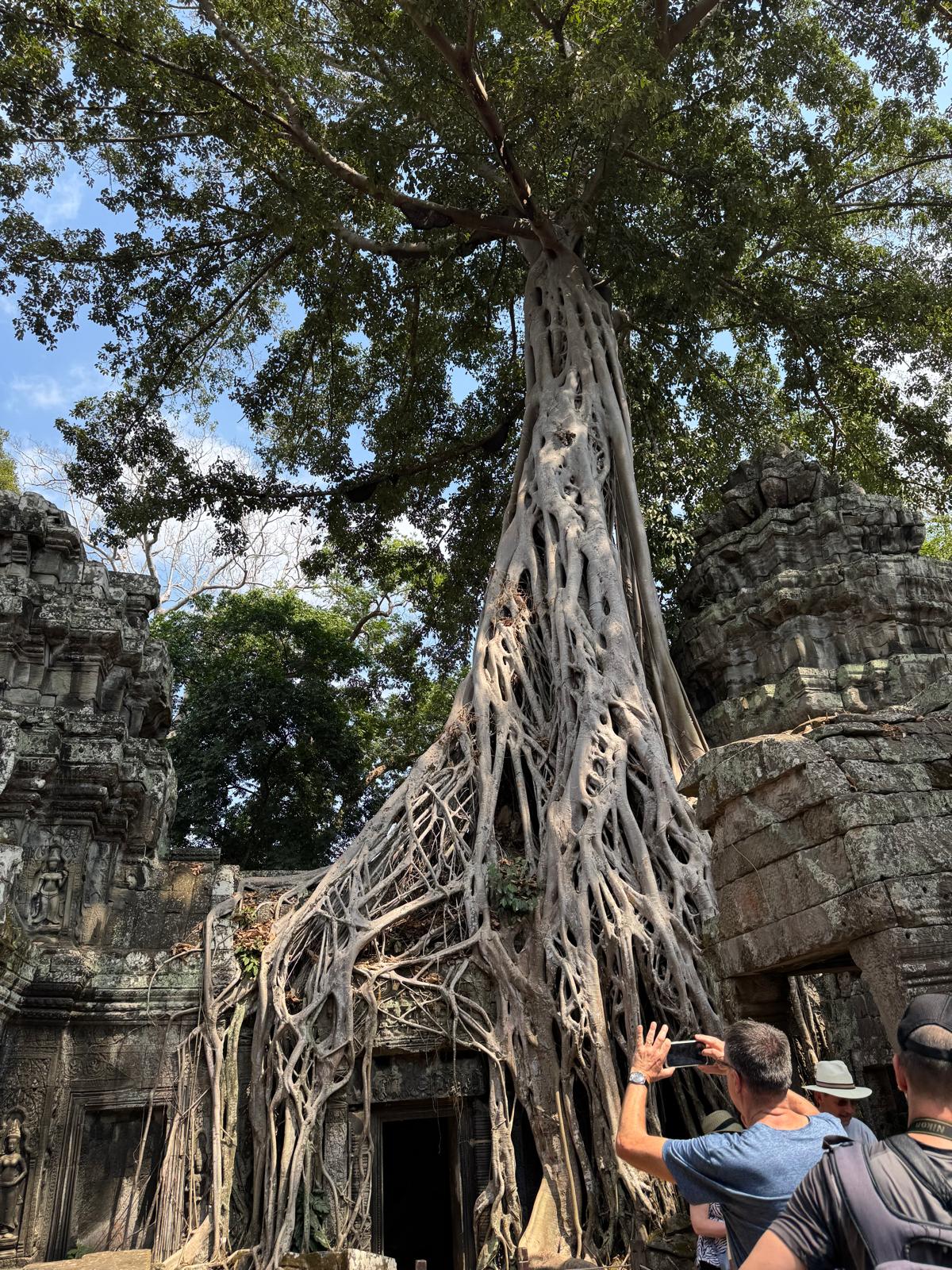
The temple was wonderful. I couldn’t tell you why it felt so distinct, perhaps projecting, but it was built by King Jayavarman VII to commemorate his mother and it had a softer feel. It was also being repaired in places, while being held up/torn down by these incredible fig trees and encroaching jungle. Part of the Tomb Raiders movie was filmed here. I may have to see it.
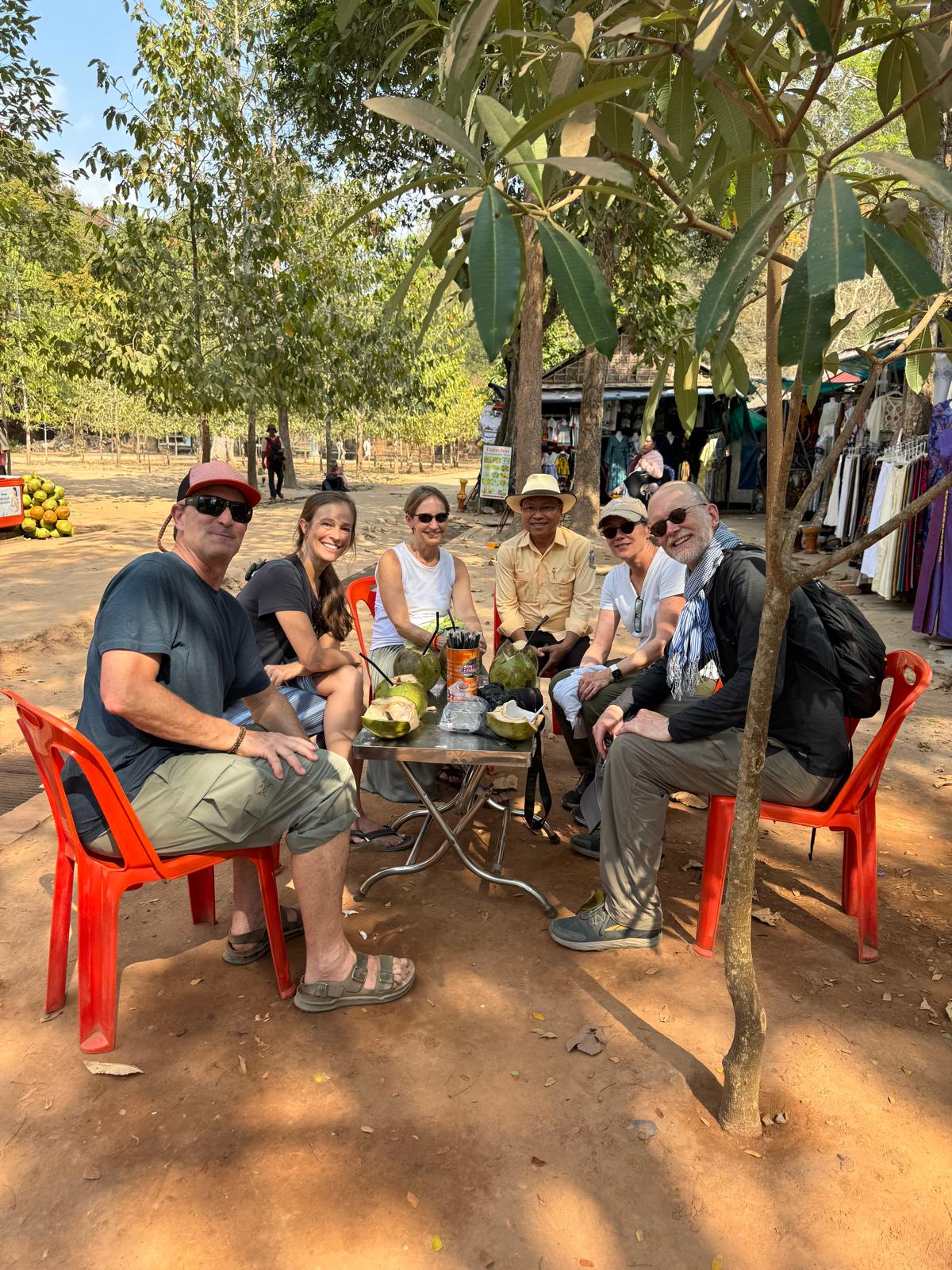
We were all completely flagging along with headaches, etc and Sam saved us by getting us all coconuts.
We were supposed to then go on to a Vespa food tour, but the food was so good at the hotel and we were pretty wiped out by the heat, so stayed in. A total treat.
And we started with high tea which was a great way to move to relax!


 Reb's Walks!