Vietnam, 10.Feb.2025, Monday

Today, we all relished breakfast again, such good food. Pat and Scott asked the server about the Vietnamese coffee that is a traditional drink. It’s very very slowly pressed strong coffee with condensed milk and poured over ice. They decided to try the coffee. They both loved it, thought it was a great addition to the coffee repertoire. Even Scott who doesn’t normally drink caffeine. Pat began slightly hallucinating because it was so strong and on top of the coffee he’d already drunk, the caffeine load was big. He and Scott then jittered their way out of the restaurant 🙂

Today, we’re driving out to the Tràng An. A scenic area near Hoa Lú which is renowned for its boat cave tours and historic temples. On 23 June 2014, at the 38th session of the World Heritage Committee in Daha, the Trang An Scenic Landscape Complex was inscribed as a UNESCO World Heritage Site. 

Honestly, it was a bit odd. It’s a two hour drive, we’ve been driving almost two hours now (I’m writing in the van) and it’s been a continual city spread, occasional rice patties, but mostly just a series of buildings, with occasional houses in the midst along the road. Reminds me of Houston, where the spread just never ends. The video shows a bit of this. 

The photo here is the “house” of one of the two cement kings. As our guide says, if you have money, you can show off as much as you want. He wanted to build a house that looked like St. Petersburg. And he did!

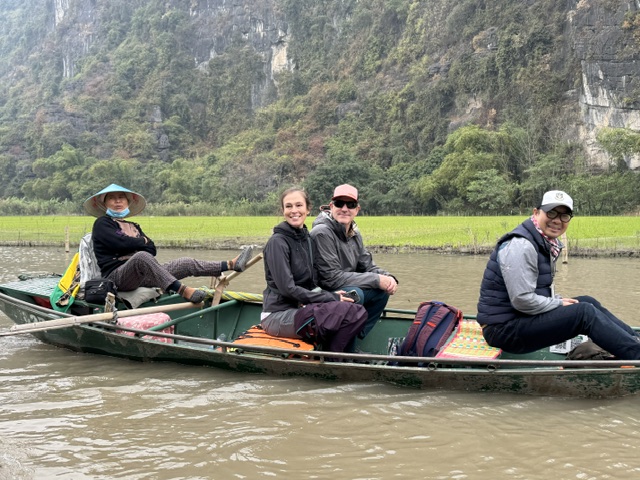
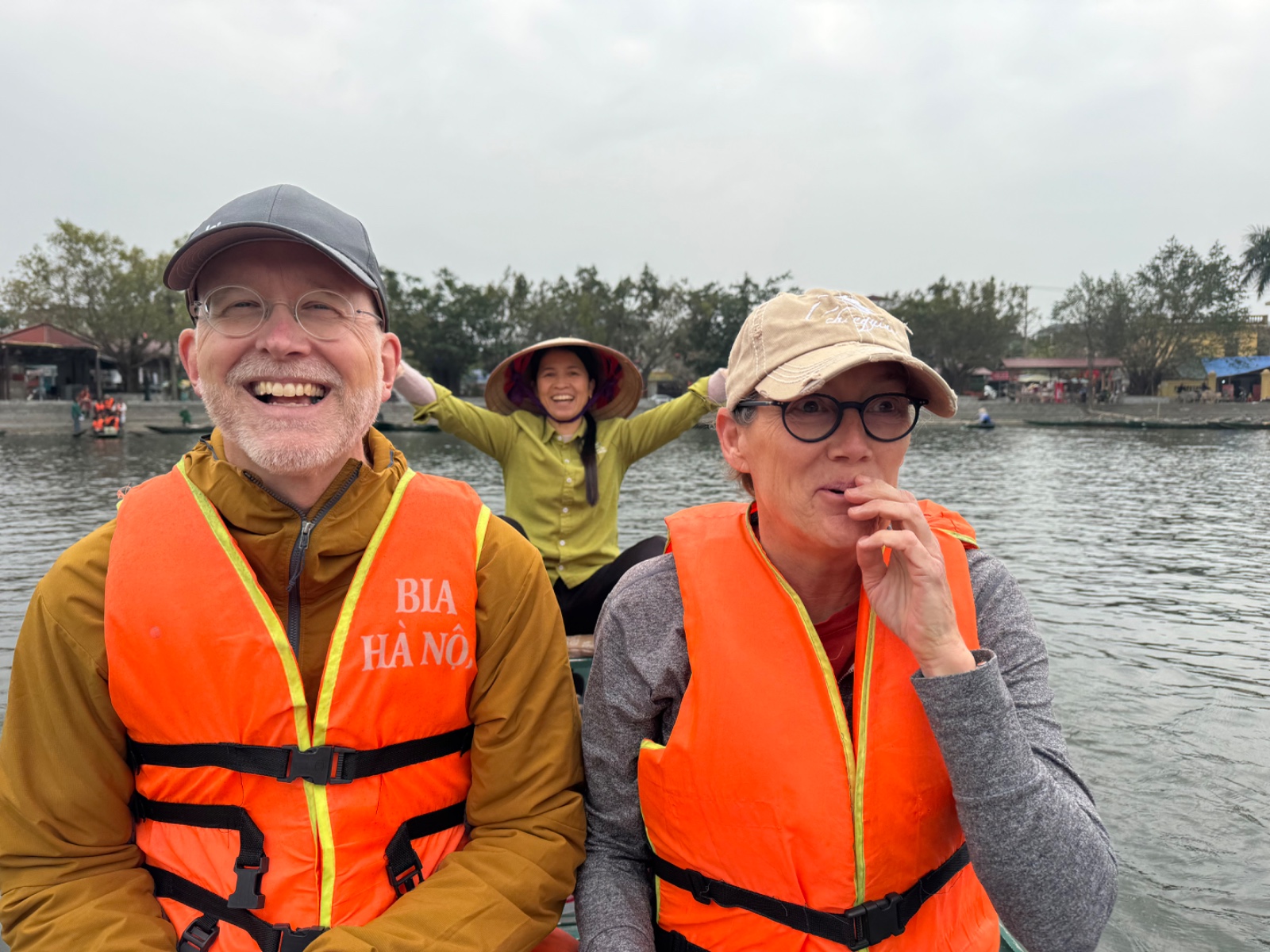
At the end of the drive, we got out and into an open air bus that drove us to a river spot. And we were in Disney. Well, obviously it wasn’t, but it felt like it. We got into boats, 3 into each with a rower; both of our rowers were women. The rowers were small and strong. They started off using hands, then switched to feet to row us for almost 2 hours up a river and then back down. So all these little boats are going along in a row, all visitors wearing bright orange life vests. 
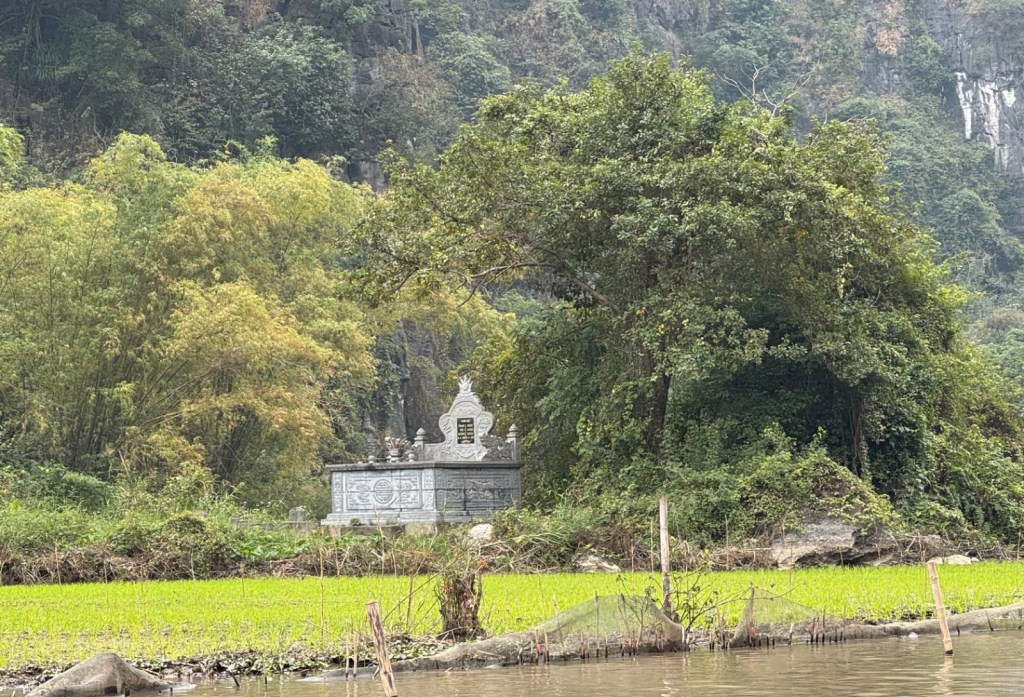
It was pretty rowing along the rice patties surrounded by the karst peaks. There were occasional cemetery spots or just a cemetery stone. The practice for cemeteries in this area is when someone dies, they are buried. After 5 years, the family lifts the body out of the grave, cleans the bones, then they put it back in with the rest of the family. The vaults along the rivers are recent and carved out of cement. Later they will be painted. Some of the cemeteries we passed were beautiful with the carvings and paintings.
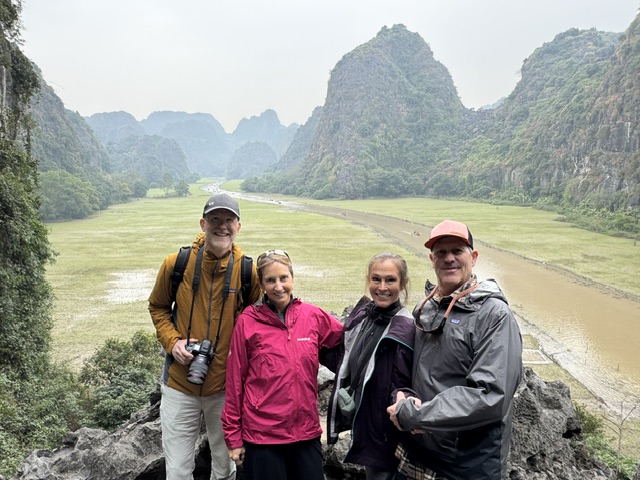
After almost 2 hours, we left the boats, thanking our guides, and walked along a path that passed an ancient small temple carved into the mountain. My photo translation of the stone said “The Tran Dynasty brought spring to the country after thousands of years of Chinese domination.” Thai Vi Lunh Tu was the leader of this dynasty who consolidated Vietnam and the various fighting factions to defeat the Chinese. 
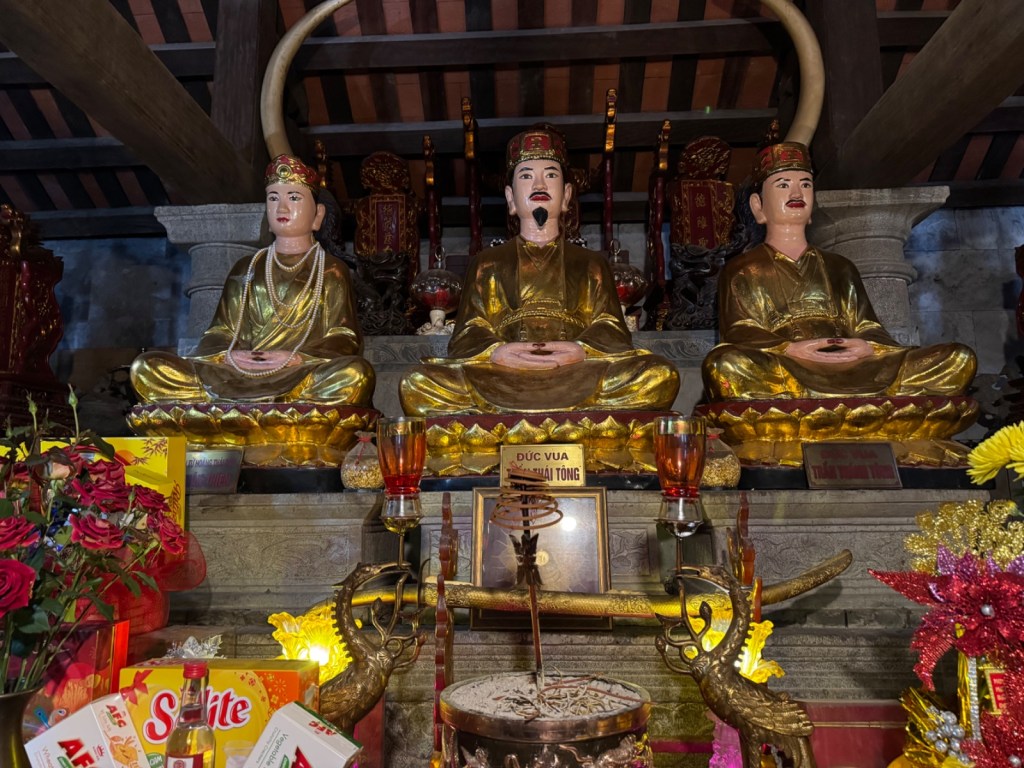
This cave temple was “The sacred place of worship of the Tran dynasty, established by the Supreme Emperor Tran Thai Tong, the first King of the Tran Dynasty to leave home and become a monk in 1273.”  The final note on the stone was clearly a more recent note recognizing history. “Since the Dai Viet era, our people have always firmly protected the fatherland, all people as one, chasing the enemy to the north. The Tran Dynasty had great achievements in the three resistance wars against the Yuan-Mongol army. Generations of Vietnamese people have always worshiped the Tran Kings as the sun that appears daily from the east, radiating a radiant halo for the nation.”

Turns out that where we were going next after lunch was the 18th century recreation of the temples recognizing these original emperors. 

Our guide told us that a temple honors kings/emperors and a pagoda is a place of worship and there were both in this site we were visiting.

But before that site, we went to a temple with some notes (transcribed) about the history: Thai VI Temple. Saving the country is a great achievement, the old temple is a 1000 years old, the Northern land is famous. May the people be blessed with endless blessings. Ancient temple, a building that the South can admire.
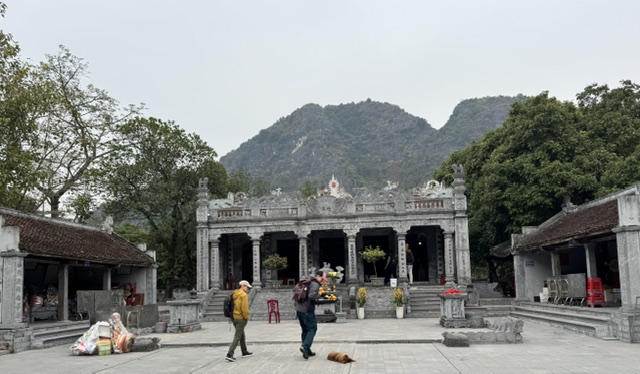
And no, it’s not a dead dog, just sleeping hard.
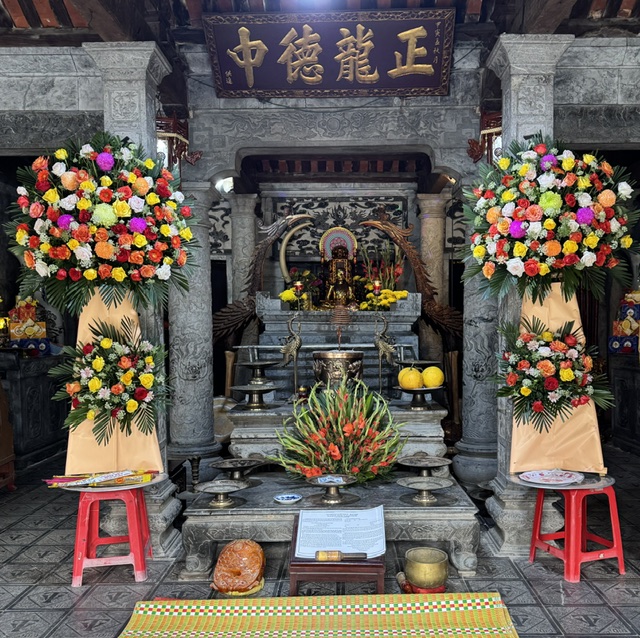
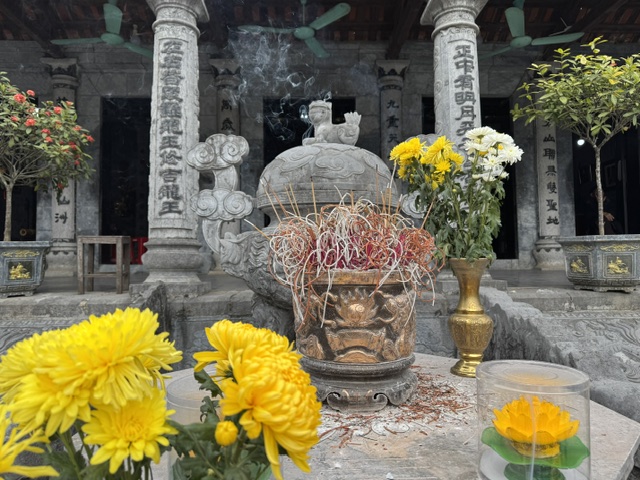
Incredible incense container behind the yellow flowers.

As we were leaving haunting music started, instantly transporting us back many years.

Then we saw the musician. I could have stayed there a long time. He told us that he was the last who could play the instrument and that no one wanted to learn.

 And now to the main destination. Lu is the site of a 10th-century capital of an ancient Vietnamese Kingdom called Dai Co Viet. This small Kingdom covered an area of only 300 hectares, and reigned from the 10th century, during the Dinh and Le dynasties to the 11th century, during the Ly Dynasty. In 968, King Dinh Bo Linh of Dai Co Viet (an ancient name of Vietnam) constructed his capital in Hoa Lu and ruled until 980. This first king fought off the Chinese and brought all the Vietnamese groups together. Hoa Lu endured for almost 31 years through the Le dynasty (980-1009) and the Ly dynasty (1009–1010). This latter dynasty cemented power and built gorgeous buildings (all now long gone). 

Banner welcoming us says: Celebrate the 1057th Anniversary of the Dai Co Viet State (968-2025)

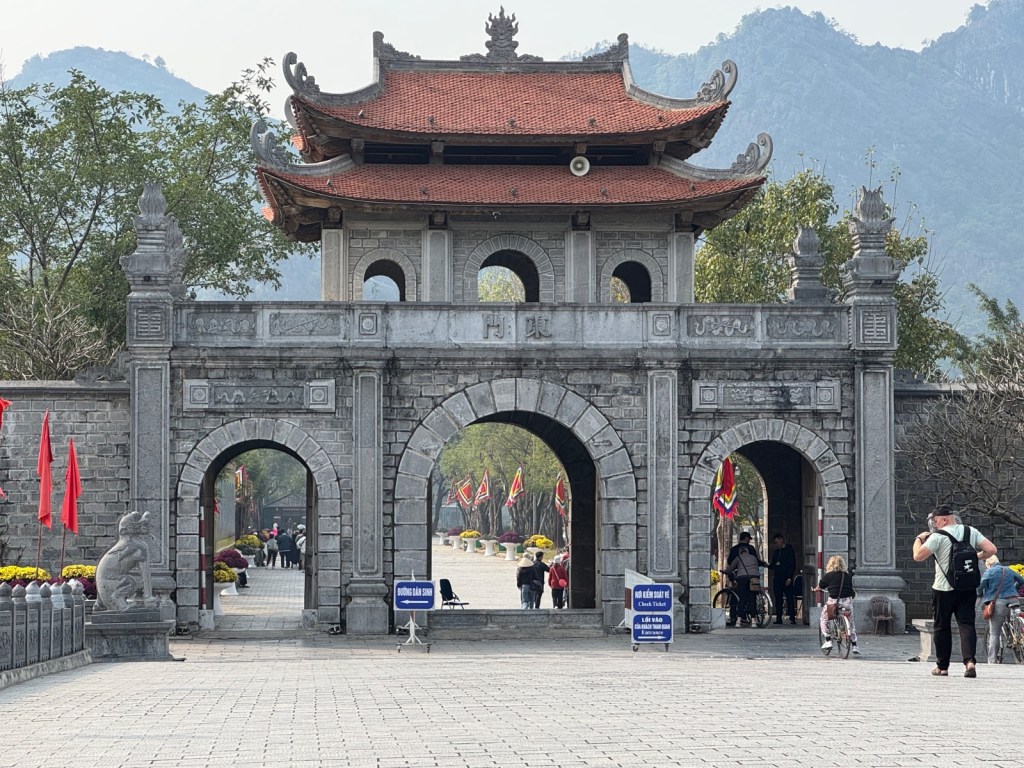
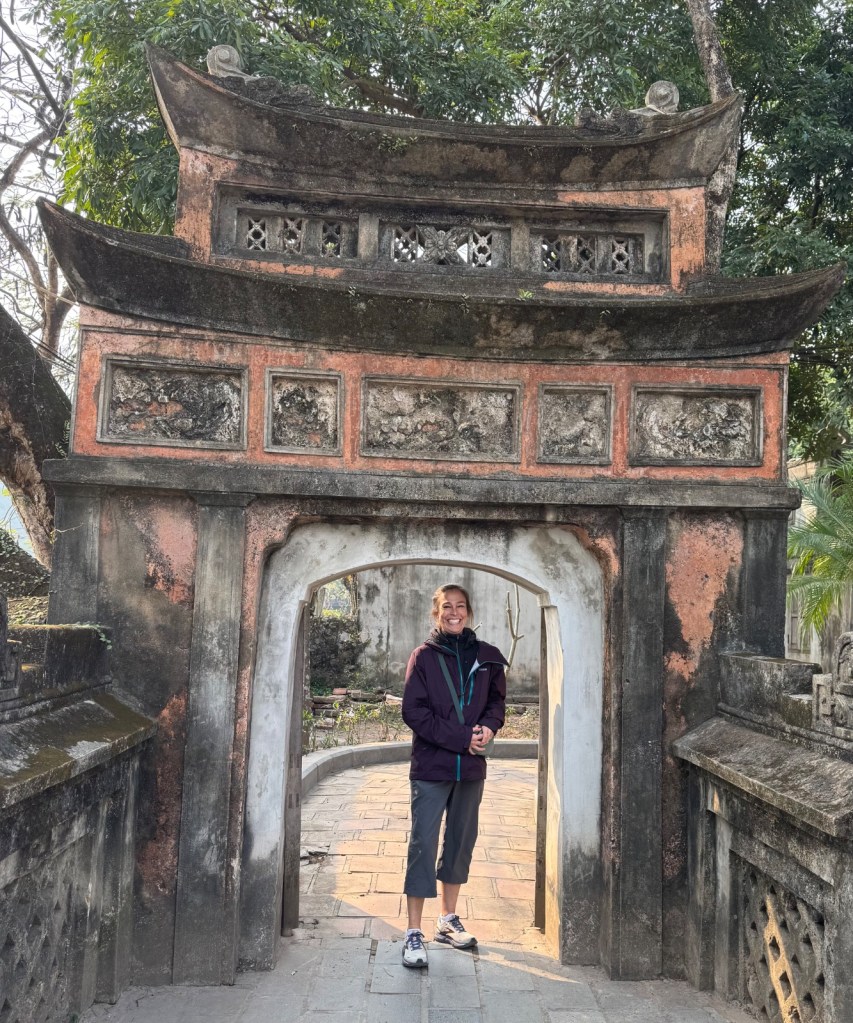
Entrance gate. 

The first emperor, statue in Hanoi.

River surrounds a lot of the site. 
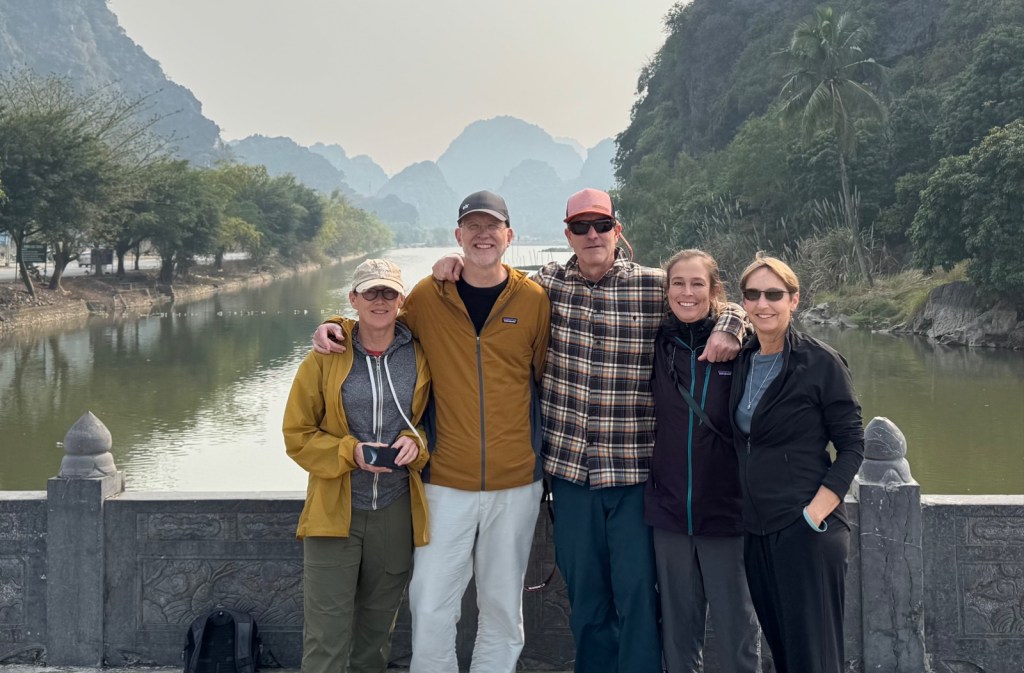
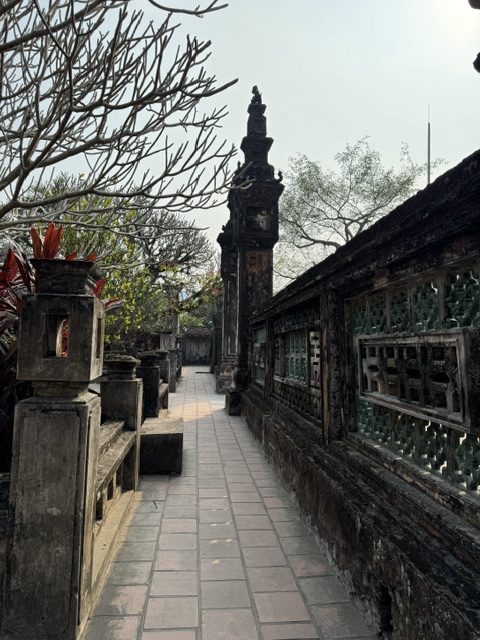
It was hard to get photos of the full buildings, ornate, with sculptures and incense burners in front. This was the first small temple we saw:

A marker next to a temple  had these words (per my Photo Translate and shortened a bit): This was the first ancestor of the Dam Huy Hoan family. More than 2000 years ago…he was an intelligent, upright and brave person and he had many descendants. In the family genealogy, there is a passage that says: The Dam family had scholars who passed the imperial examinations (more about this later) . In the family, there was a daughter who worked as an oil painter. Because she was from a noble family, she was intelligent and virtuous, complete in both her ability and her behavior. And it continued on through her son who revered her. Nice to see a woman so noted. Not a lot of that here. 

Except for these two women, mentioned several times over our days: Two of the country’s most revered heroes are the Trung sisters, Trac and Nhi, who led an insurrection against China in A.D. 40 and liberated Vietnam. One of their commanders, Phung Thi Chinh, is said to have given birth during the battle and to have continued fighting with her infant strapped to her back.

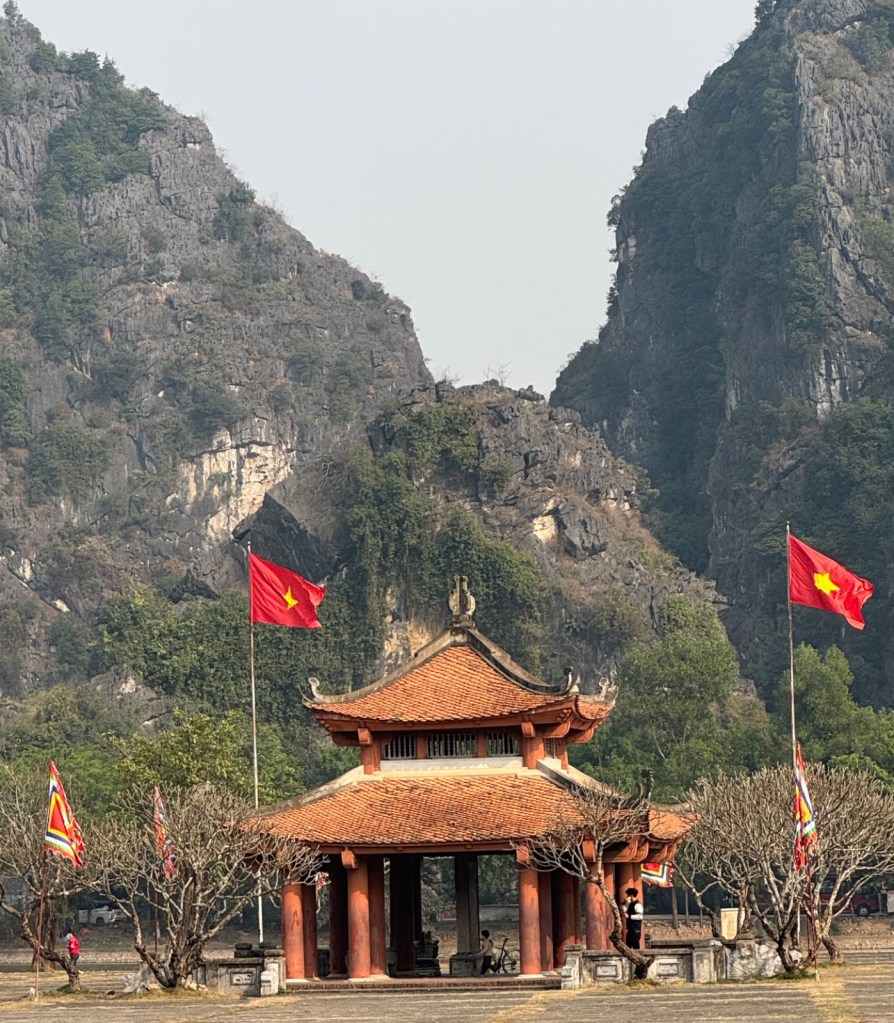
A few scenes that definitely miss the intricacy of the palaces and temples:

The Vietnamese knew where the palaces were, and the early history of Vietnam’s first emperors. The Nguyen dynasties rebuilt on the original site temples in their own style in the 17th and 18th centuries to celebrate Vietnam’s history. It wasn’t until the late 1990’s and early 2000’s that they uncovered the original palaces, finding columns, coins, pottery, etc. Amazing 1000 year old pieces. 

That night we were all feeling jet lagged and had dinner at the hotel and all went to bed. 
Vietnam, 9.Feb.2025, Sunday

I’m off on a trip to Vietnam, Cambodia and then continuing on to see Singapore on my way to visit my sister Summer in Brisbane, so a big trip. So cool. I’m with friends, Scott, Kellie, Pat and Holly and Rick was a critical element of the group and he’s not here. Rick’s beloved (by all the White clan) Aunt Audreé died the weekend before we left and he couldn’t miss the funeral. So we left without him, not easy for any of us. Hardest on Rick of course, but he rallied and had some of his own adventures while I was gone.

Normally, part of what I love doing in these blog posts is talking about the history, but oh man, the history of Vietnam is incredibly complicated. I keep trying to put it together, but it will stay a challenge throughout our trip. Between dates, colonization, wars with China, France and America, monarchies, independence at different times, etc. hard to synthesize. 

Our first day we took time to recover from the flights. The flights were so easy, connected, but oy, they’re long. When I was trying to figure out how to attend the funeral, we were able to set up flights coming back and returning without losing too much time off the trip, but then Rick did the calculation of travel versus time in country and it didn’t remotely make sense. He’s done so many Asian trips because of work that he knew what he was talking about. I was in serious fantasy land with my hopes to come back. Now I know. This is a far far distance away. 

We started in Hanoi. In the 11th century the King moved the capital here and called it  Tung Lao – ascending dragon – because of a cloud formation that he saw. Now the city is called Hanoi which means inside the river, renamed in the early 19th century. There used to be regular flooding with houses built on one side of the river to try to hold back the river from the rest of the city. Now hydro electric plants control the river so it no longer floods the city.

Sunday was a day off to explore, walk, see Hanoi and try for a nap. There’s a lake in central Hanoi that is walking distance from the hotel (Sofitel, built in 1901, oldest elevator in Hanoi, a very beautiful old building) and Pat, Holly and I went to see. Groups of middle-aged (mostly) women were doing these exercise routines to music all around the lake.

In addition there were moms with kids who would ask “do you have time?” Then the kids would ask questions from their papers – learning to speak English. So we had some delightful interactions with the kids – Pat and Holly were a hoot, they couldn’t resist any of the kids!

Pat and Holly also got caught by shoe cleaners. Pat thought the guy who told him he could repair a tear on his green suede Birkenstocks was great. Then before the end, his cool Birkenstocks had been turned into dark brown, no longer suede and the guy told him $20 American wasn’t enough and told him where to go to find a bank. Funny. 

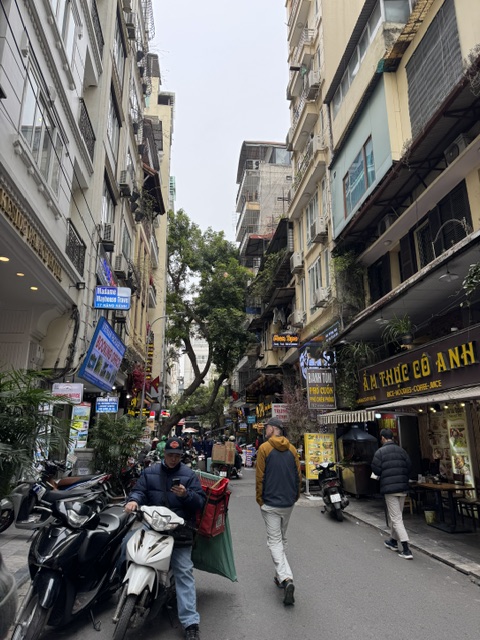
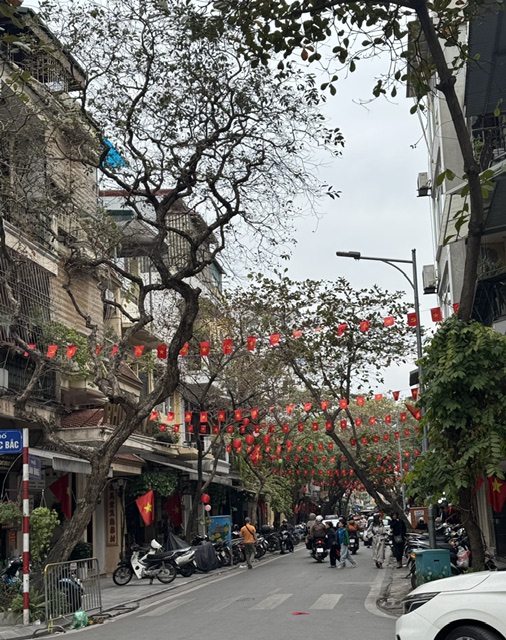
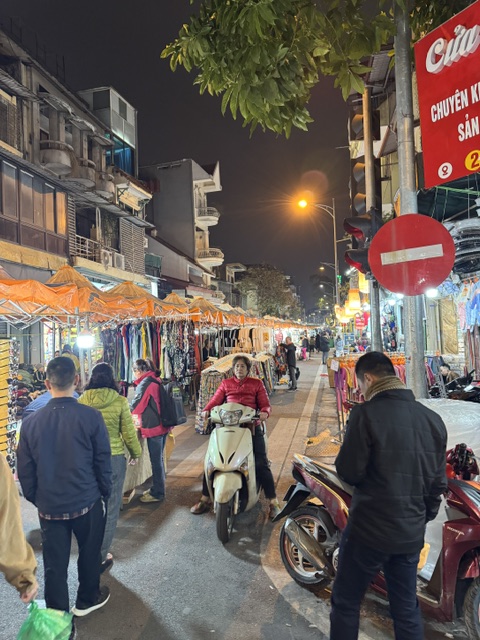
Scott and Kellie then joined after a late breakfast and we walked again, this time exploring the old city. Scott never seems to lose his way and he steadily led us on and around without ever referring to his phone. Amazing. We wound onto smaller roads, 100s of scooters lined up on the sidewalks so we walked the streets along with the cars, scooters, people, tourists, people cooking street food on the sidewalks and somehow it worked. You really can walk around Hanoi – at least the part where we were. 

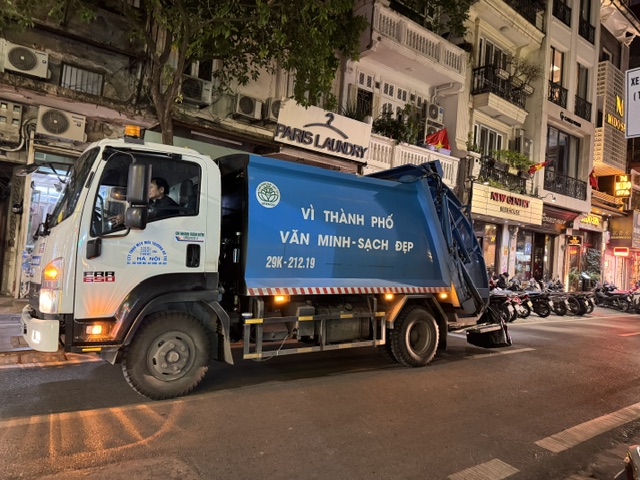
It was pretty clean, regular small piles of trash collected at the curb and then picked up. And though it’s grey, crowded and busy, the plants and trees that somehow survive add to the walkability of the city. 

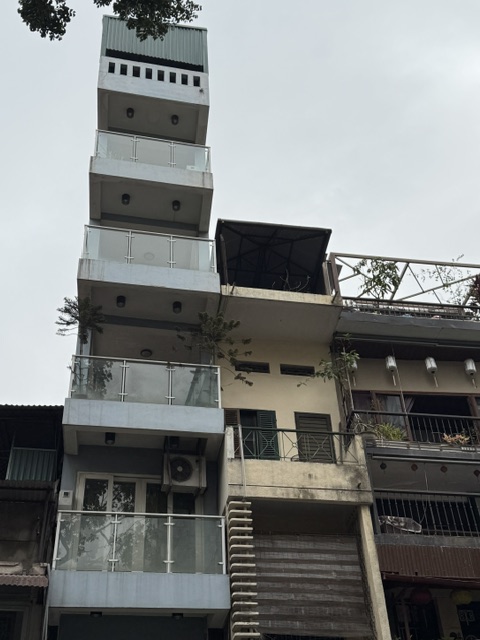
We were fascinated by the very thin and tall buildings. Some were left from the French colonial times and were beautiful, even if it’s just the facade that’s holding up. They were right next  to houses that were a wonder they were still standing. Our guide we had later for a walking food tour told us that each generation’s family keeps adding up, with the senior family member having the first floor.

Traditionally, the business was/is at the front of the building, the middle of the building committed to the manufacturing of whatever is sold and then living at the back. There were slim little alleys leading to each section and access. Our guide stopped at one point and pointed to the electrical boxes, one per family. There were 17 in one alley and you just had to guess how the configuration worked since it wasn’t at all obvious how 17 families were in that building.

Our last stop before walking back was the “train street”.  Scott knew about it and led us to an entrance, but a woman stopped us and just talked a lot about coffee. Confusing and she wasn’t letting us go up to see the train street. So we went to the left to find our way around. We found a way and then I understood the term “train street”.  The only way to be on the street when the train came through (5/day) was by being IN the buildings, looking out, or on the curb fronting the buildings. Our timing was amazing because we got front row seats in a cafe, ordered fries, cokes, smoothies and then a group came along and we heard the guide say the train was coming in 10 minutes. And it did! People were blowing whistles and waving oblivious tourists back – “you’ll die if you don’t move off the street” – and then we waited with cameras in hand (of course). Crazy. I have the video below. 

We went back to the hotel for some down time and then met our guide, Hi, for a walking food tour. We had pretty high expectations since a lot of us had done different food tours in other countries that were amazing. The next morning, Kellie said the good thing about this food tour is that none of us got food poisoning. So  – fun to see the lights and all the people out eating on tiny little stools and chairs and tables and to hear some of the stories, but it wasn’t a repeater.

One thing we saw was the trash pick up truck – it was singing a song that evidently beckoned everyone to bring their trash and both home owners and business people were bringing their bags out – small that we saw. 

Brief notes from Hi’s talk during our evening walk re different farm ownership over Vietnam’s history:

When the Kings ruled, the farmer got land for himself and land to support the owner of the land which he worked and thus paid the owner. On his own land he could also earn money for himself and feed his family.

The French ruled Vietnam from 1858–1885 and again from 1887–1954 and supported the land owners. The farmers were taxed so highly that they then gave up. So many farmers moved to working in manufacturing and mining and working for the French in the later 1800’s. 

When Ho Chi Minh wanted to unify the country, he said the farmland belonged to the farmer and the factories belonged to the country. So the farmers were able to plant for themselves, but also had to provide for the troops. Then all the land become a cooperative. All had to work and could only sell their goods to the country which undercut motivation and agricultural productivity tanked.  

In 1989 when the Soviet Union left, inflation was at 300%. Then the north started making changes, giving land back to the families, and initiating a market economy. There was a tax, but farmers could also sell at market prices. Vietnam became the second biggest rice exporter. Now industry is starting to exceed rice exports and gradually more rice land is being converted. 

Right now the average income is 2500 per person. 

The last king was in 1945. 

Here’s a synopsis of more recent history:

In WWII Japan ruled Vietnam. At the end of WWII the Chinese liberated Hanoi from the Japanese, the British liberated Saigon, from the Japanese. The British turned the south over to the French who were here before. Ho Chi Minh declared independence for ALL of Vietnam, saying no to the division and declared war against the French with Chinese support. 100,000’s of Vietnamese died. In 1954 the French retreated. The Geneva convention in 1954 declared a south and north Vietnam, but Ho Chi Minh said no. The Geneva convention set a DMZ around Danang, but it didn’t work. Americans came in 1954 in a low level way to support the Republic in the South and it just escalated further and further through the Vietnam war until Ho Chi Minh won.  

China supported Ho Chi Minh during the Vietnam war, providing military equipment, etc. That involvement escalated after the arrival of US combat troops in 1965. After the Vietnam war, China left, but left their weaponry behind.

In 1979, China invaded Vietnam in response to Vietnam’s invasion of Cambodia, but Vietnam used all of the Chinese weapons left (this was according to one of our guides) and defeated the Chinese in a war that lasted about a month, with China withdrawing its troops in March 1979.

The conflict damaged relations between China and Vietnam, and diplomatic relations were not fully restored until 1991. According to our Hanoi guide, over time the Chinese started flooding Vietnam with tourists. But the tourists were so disrespectful in their behaviors that Vietnam said no. They built a wall in the north and then restricted how many Chinese could visit.