The monastery was such an incredible experience, that I kind of assumed that would be the highlight for the whole trip, but today turned out to be completely wonderful too, though very different.
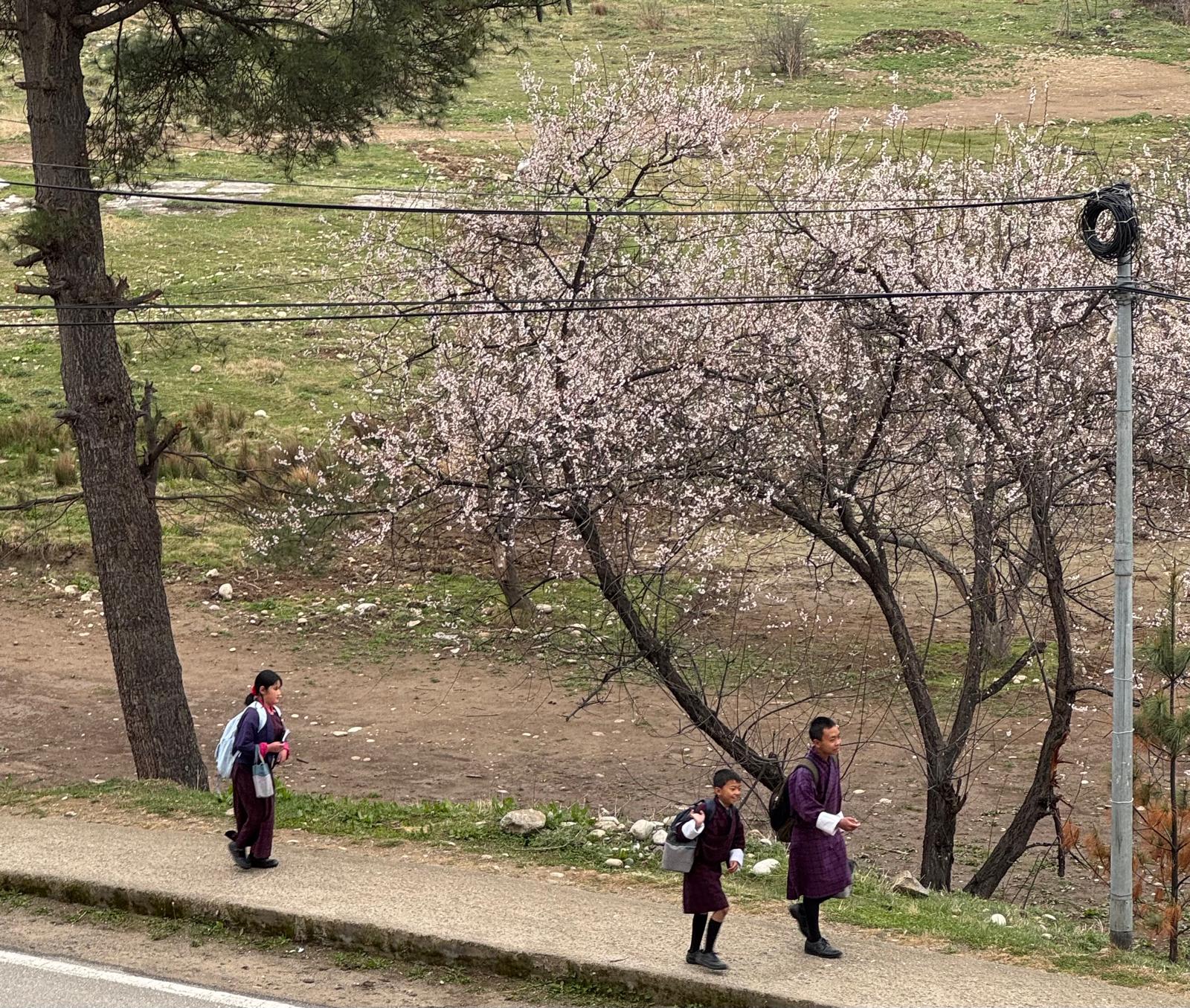
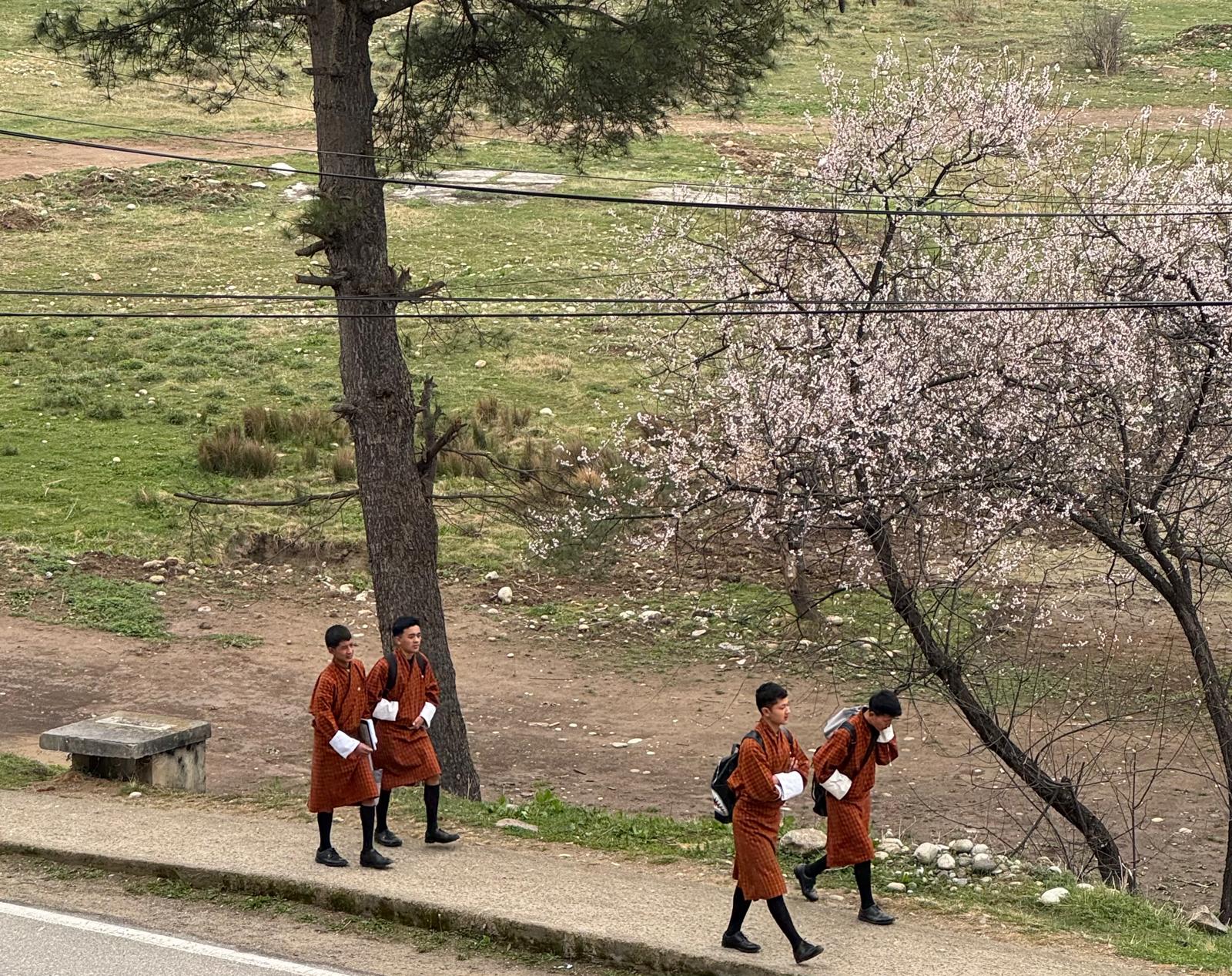
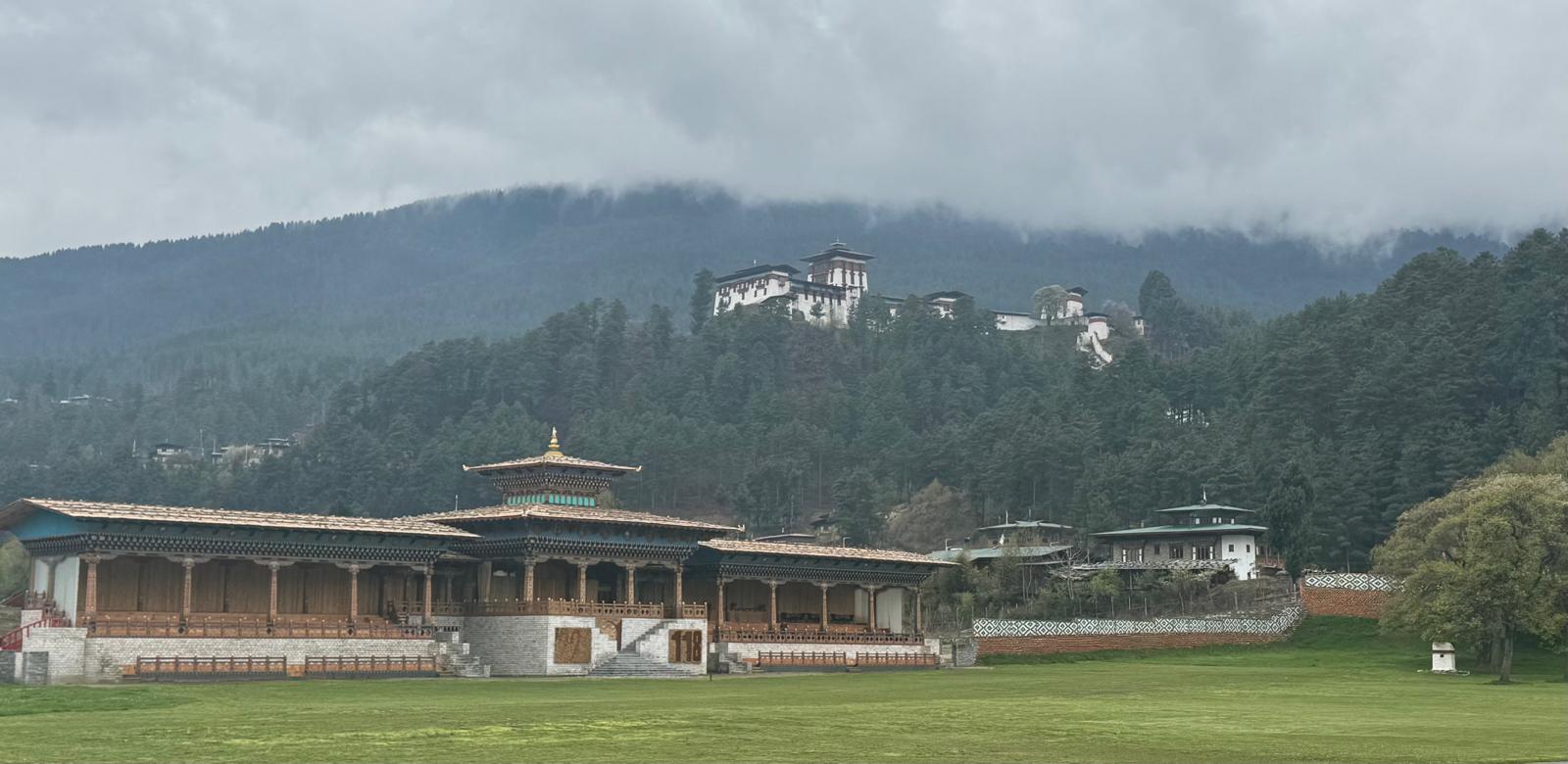
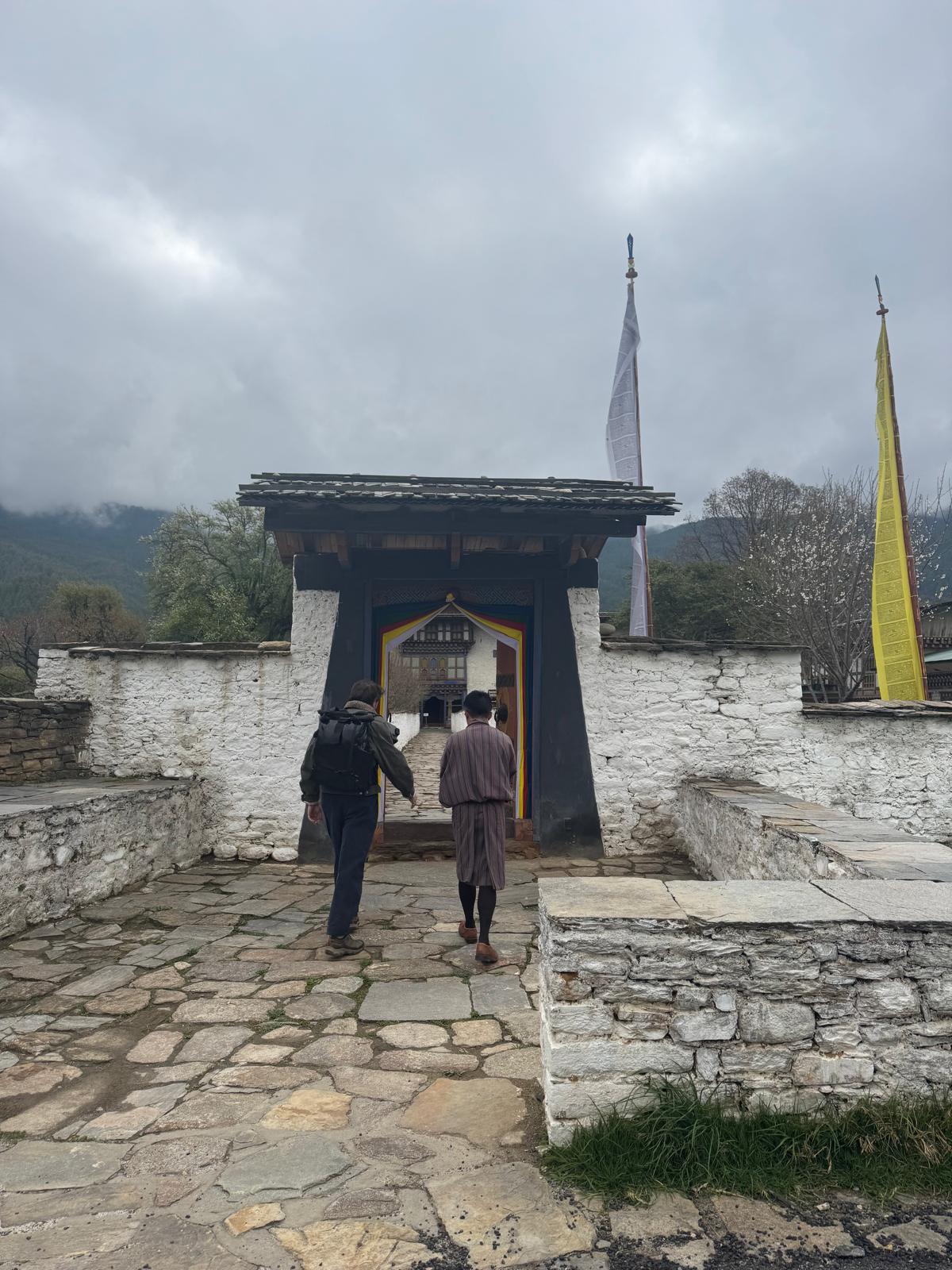
We went to the newly remodeled palace of the first kings of Bhutan. It was just down the street with one quick spin with the giant prayer wheel that was on the way. The Wangduecholing Palace in Bhumtang
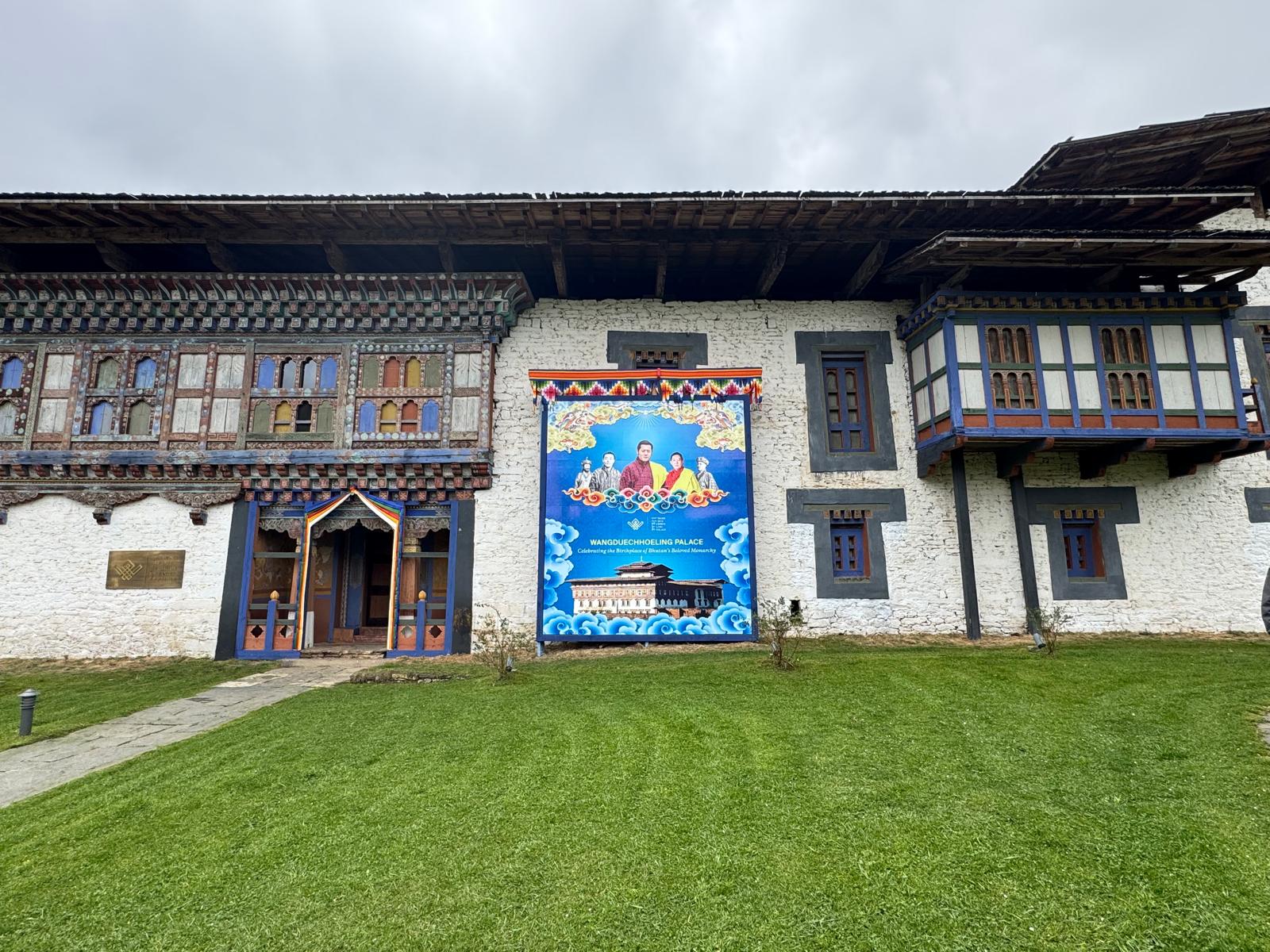
This visit centered around the Bhuddist traditional healing methods which focuses on the integration of mental and physical well-being. They assess within the construct of the four immeasurable – loving kindness, compassion, joy, and equanimity. We’ve been getting talks from either Dr. Dorji or other visiting teachers, so these terms were becoming familiar to all . I let the first talk mostly just wash over me, but then we went outside (the sun came up to the surprise of all) for a tea and coffee break and then we got to do healing yoga.
It was really interesting because many of the moves were very similar to Khenpo’s lujong teaching. Even the arrow, which is one of my favorite moves. I was right in front of the guy teaching, one of the two senior medical practitioners and he was wonderful. A great laugh, clearly so practiced in the art, and we all enjoyed learning. He kept thinking to stop, and we kept asking him to keep going. A few people got sunburned, but all enjoyed the weather and the ability to be outside and moving.
We then had a talk on compassion in action – the eastern approach to compassion. Per usual, we broke into twos to discuss memories from our life where someone had offered compassion. These talks are always interesting and they give us a fair amount of time to explore and get to know each other, which is so often lacking in these kind of group trainings. Every single person I’d spoken with was wonderful, interesting, thoughtful, this is just an incredible group. During this talk on compassion, the man on my left turned to me and said, kind of sheepishly, I’d like to talk to my dog and I’m glad I’m sitting next to you because you’ll get it. Yes, of course, we’d put a dog on the altar amidst all the people because Blue meant the world to us. It was a wonderful talk.
I loved the morning teachings because the teachers were just so appealing, and so devoted to the holistic healing arts.
We then walked to the archery area and got to try our hand with the bows and arrows. I actually got one into the target which was not the norm, so that was fun. They then showed us with the crossbows how they competed (this is a national sport for Bhutan), sending arrows over 476 feet into a target that, frankly, I couldn’t even see. Here’s a note from Wikipedia about the sport:
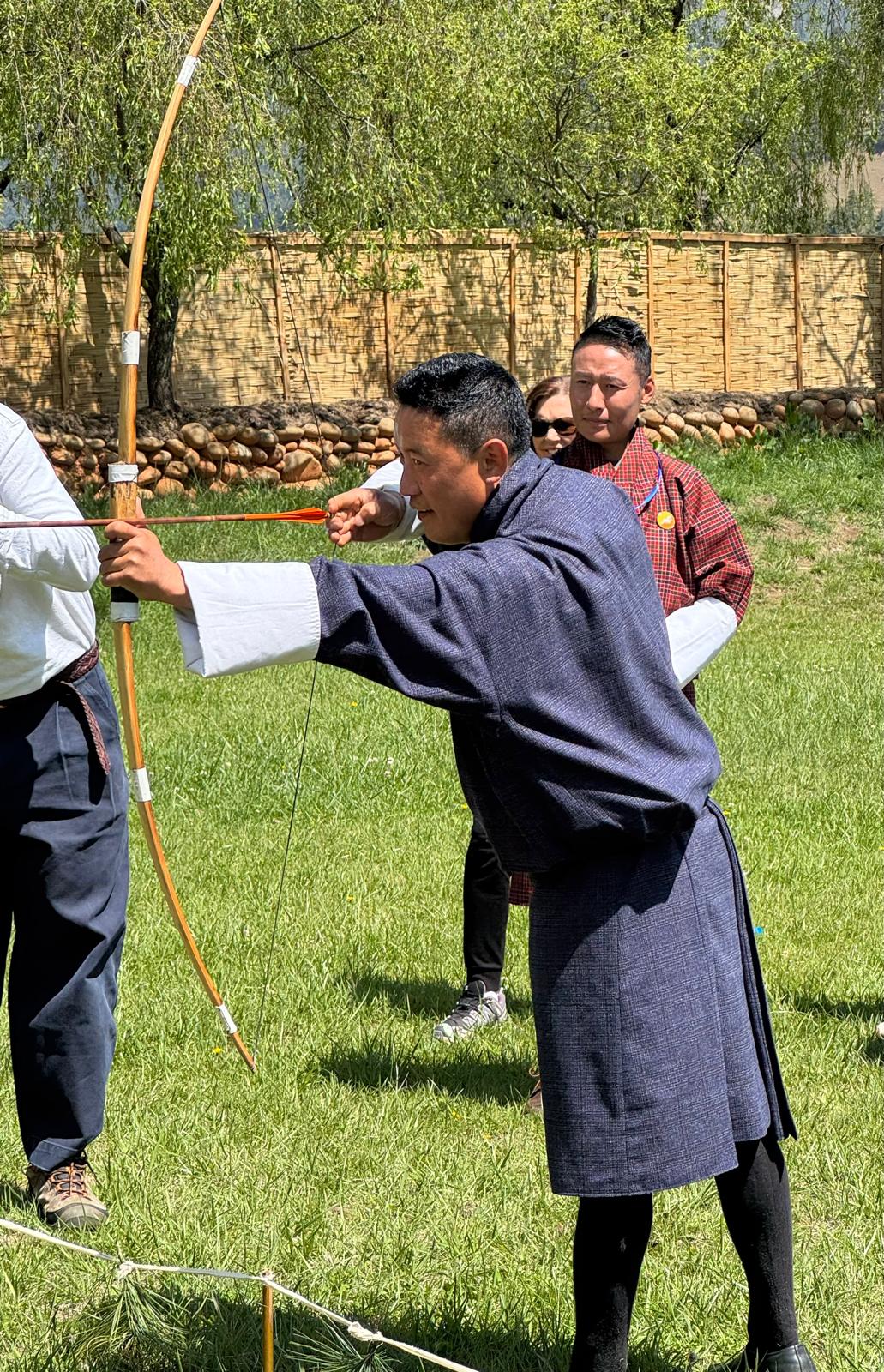
Archery in Bhutan is culturally distinctive because it is a martial art, practiced among a modern population that abhors killing. Bhutanese people from different social strata find archery one of the most enjoyable sports, being both fun and physical exercise. In addition, archery builds concentration, which contributes to mental development; according to a Bhutanese proverb, both sailing and archery require intelligence.
We then broke for lunch in the pavilion, newly built for the 118th celebration of Bhutan’s solidarity as a single country under one king. This lunch was a demonstrable example of a country trying to come into the modern world. The pavilion was beautifully constructed – just the year before, the food was generous and aesthetically set out as a buffet and was a treat. Then I needed to go to the bathroom which was down the steps and around the backside of the pavilion. The bathroom was locked (never did get opened) and next to the back were two of the servers squatting down and scraping the dishes into a bucket, tossing meat chunks to the dogs that had gathered. I don’t know how they got the food to the place in such pristine condition.
But now – to two incredible temples! The day just got better and better.
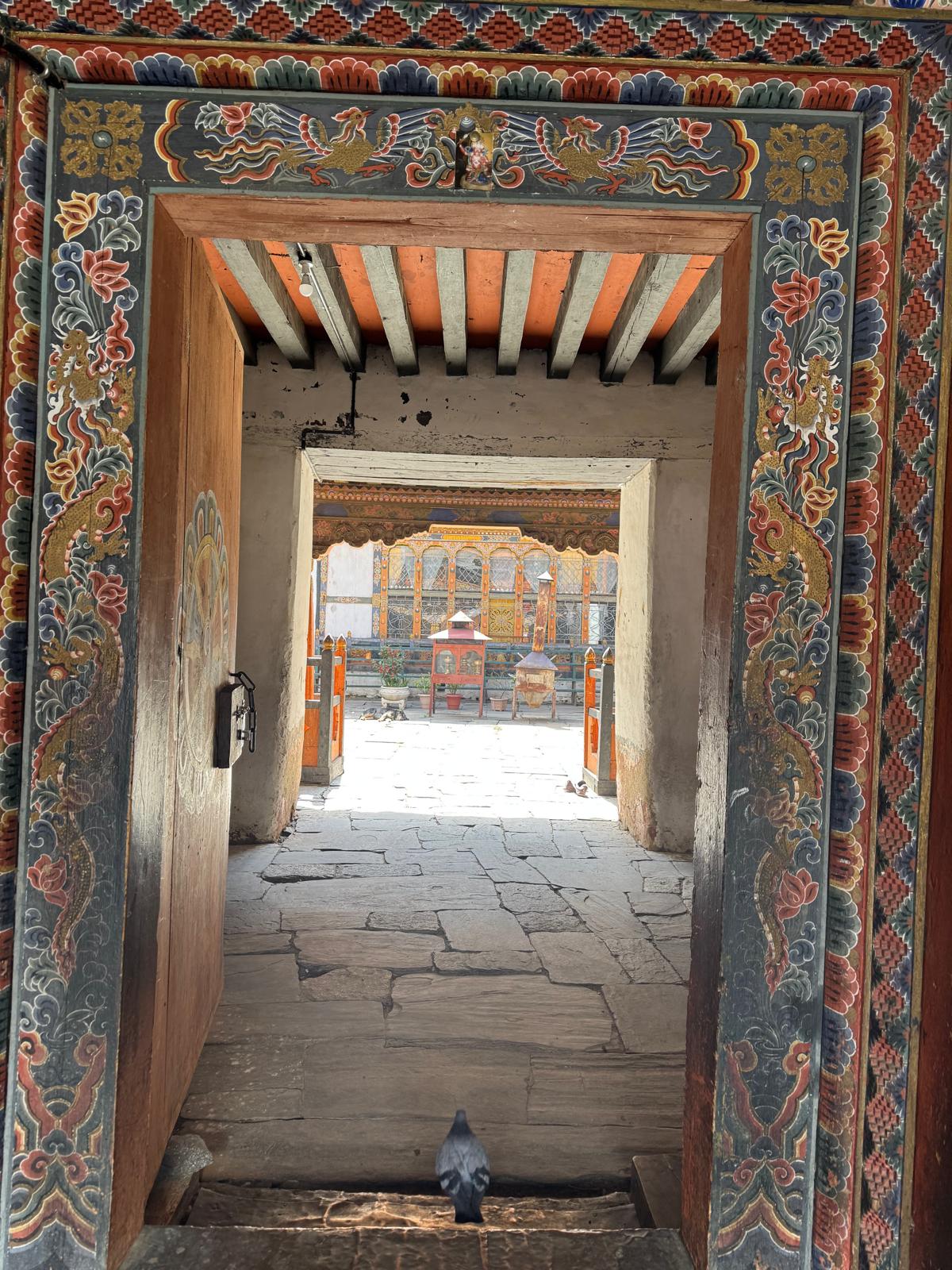
The first temple we went to was The Jampa Temple or Temple of Maitreya (Buddha to come) and is said to be one of the 108 temples built by the Tibetan King Songtsen Gampo in 659 CE on a single day, to pin down an ogress to earth forever. It was wonderful, again, no photos, but reflected the earlier practices in Bhutan before Tibetan Buddhism arrived – the practice of Bon. So there were statues and paintings of wonderfully different gods and goddesses.
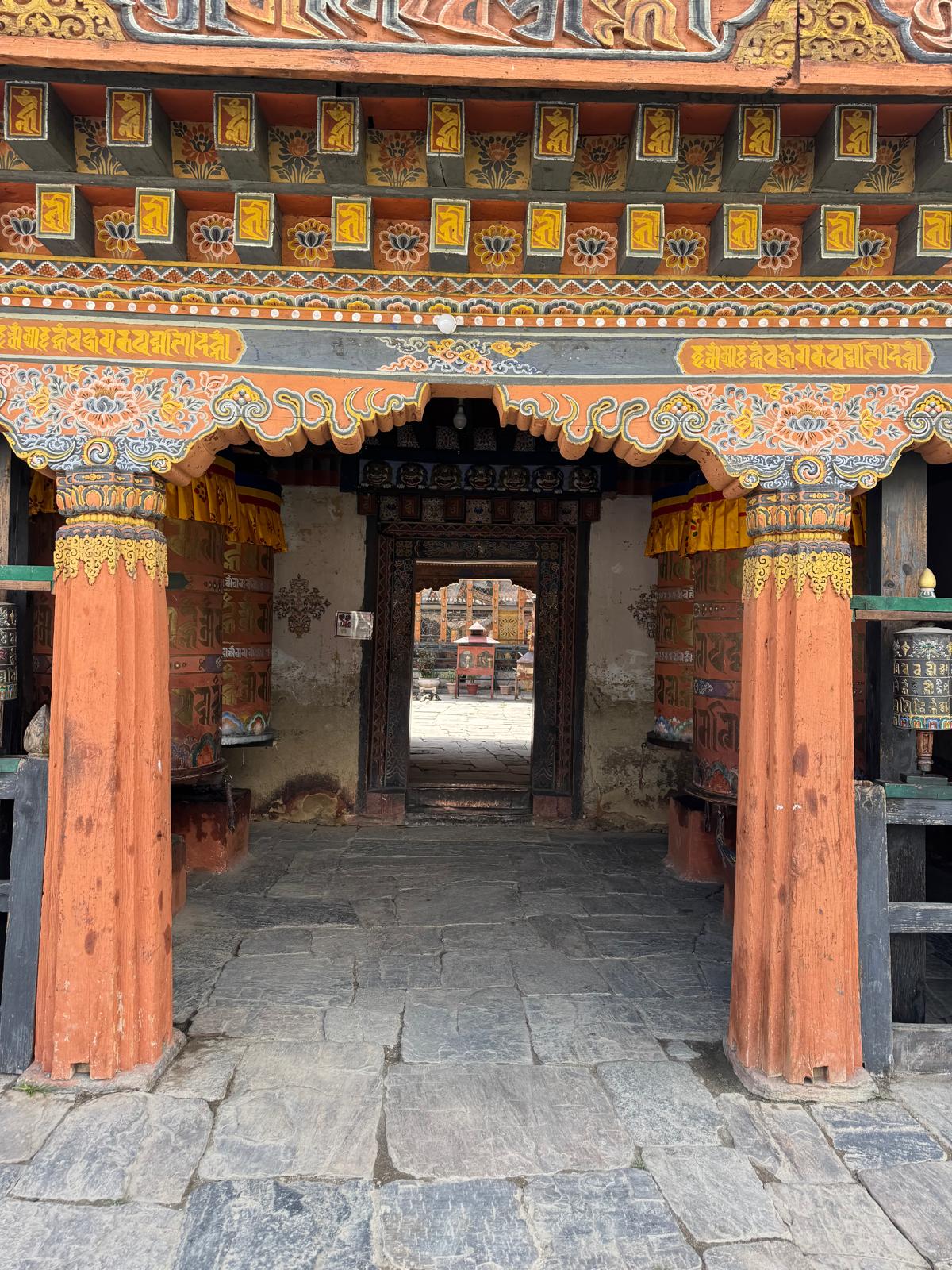
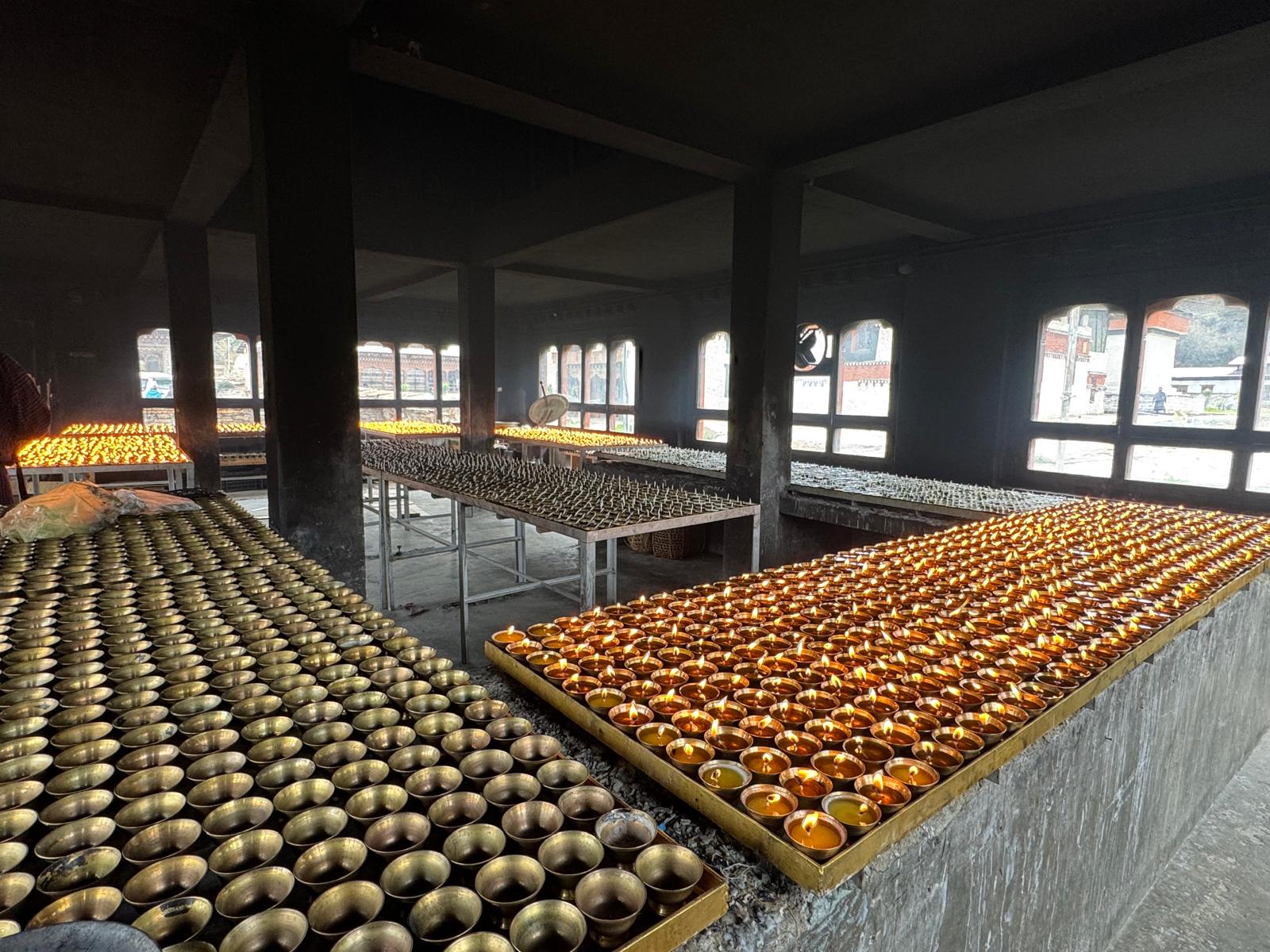
As we were leaving a few of us noticed a small building to the left that had 1000’s of prayer candles lit. We went right over as the leaders were trying to gather stragglers and were lucky enough to be given prayers and to be able to light a 100 candles – each of us lighting 20. So beautiful and a surprise gift.
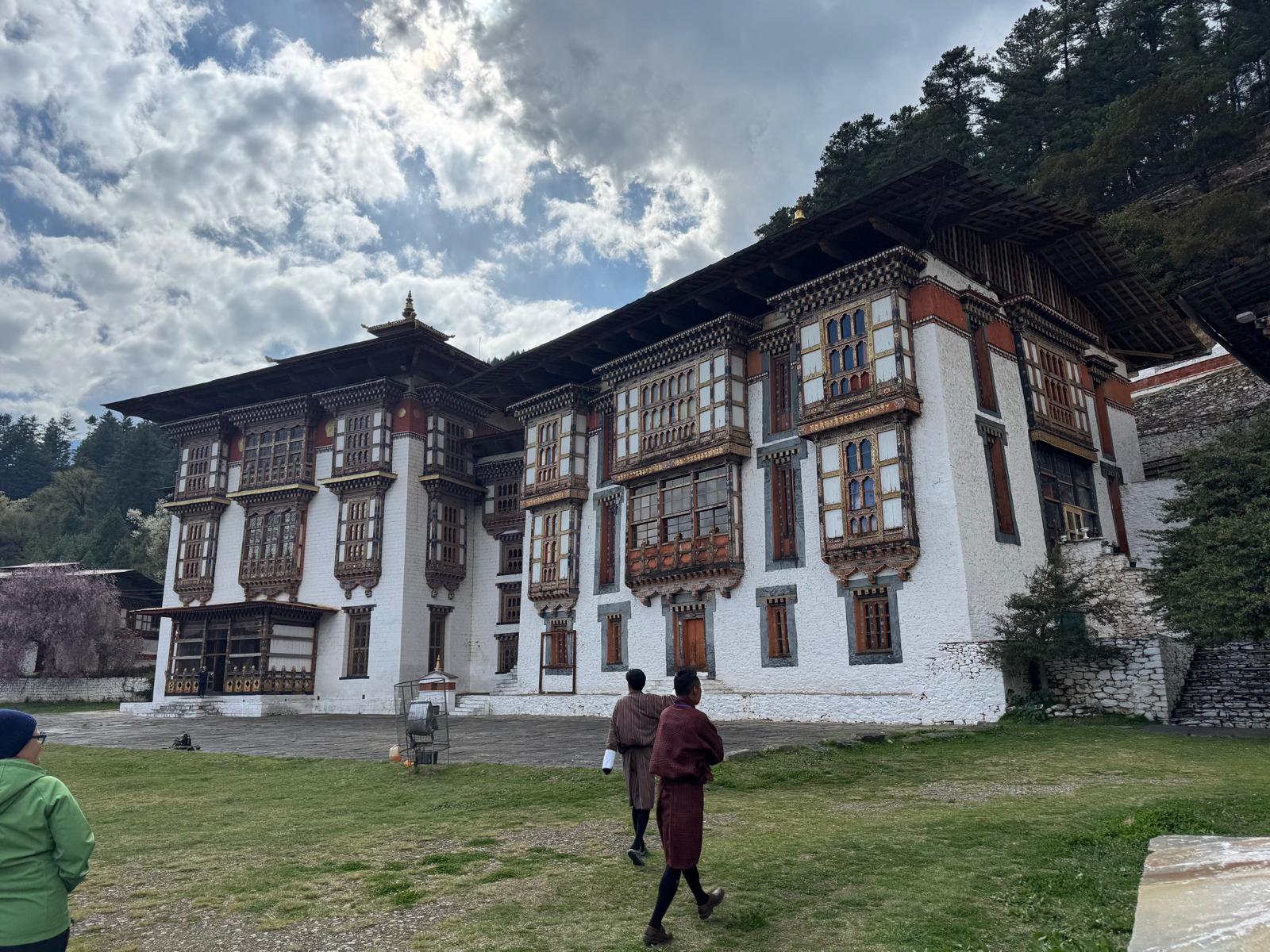
We then went to Kurjey Lhakhang which is the site of three temples. The first and oldest temple, called Guru Lhakhang, was built by Minjur Tenpa in 1652. This temple is the most important of the three buildings as it houses the cave where Padmasambhava was believed to have meditated and left his body imprint. We were given permission (Abroad is incredible in getting access becuase they’re so careful to give back much more then they’re given every time they visit Bhutan) to actually sit and have a teaching about what generosity means in the shrine room. Per usual, I was happily sitting on my little bench (one guy said that envy is one of those nonvirtues, but boy he was envious of my bench) and able to go into a meditative state. This temple did in fact have the cave behind glass as well as really large statues of Padmasambhava on both sides of the caves. There are no pictures because they’re not allowed in any of the temples.
This place made a lasting impression on me because the Padmasambhava on the side where I was sitting was a depiction I’d never seen. Most of them are either with a mustache and the king’s hat as Guru Rinpoche or secondarily, they’re Guru Dorje Drolo – the wrathful protector. This image had the kindest eyes, a gold brown, actually dead ringer for the guy who envied my bench (he’s also very kind) and a face that invited rest, meditation, contemplation. It was a truly wonderful statue. Even as I write (months later) I can see the image. It gave another depiction of Padmasambhava which is a gift as I practice.
The next temple had a giant statue of Padmasambhava that was two stories high, you could walk around on the balcony above or gaze up from the floor level. It felt so old in that temple, I’m not sure why and also invited just sitting on the floor and taking a moment because of the ambience.
Finally the third temple, newer, had a wonderful statue of the Buddha in the center, there are Buddhas everywhere next to the Padmasambhavas, but this one was primary. On the left was a new statue of Dilgo Khyentse Rinpoche and a wonderful photo of him. Oh I wanted to take a picture. He’s the reason I’d wanted to come to Bhutan. A truly realized teacher adored by all of Bhutan and beyond, revered as His Holiness by all. He escaped Tibet in 1959 and traveled all over teaching. He was a teacher who recognized and valued all branches of Buddhism and was an expert on all becuase of his training and studies – thus every major teacher was taught by him, including the Dalai Lama. When His Holiness died in Bhutan, in 1991, 10% of the Bhutanese population came, traveling for hours to get there. There were over 60,000 attendees. Anyway, he’s one of my inspirations and to see the statue and photos and his quotes, was wonderful.
Then back to the hotel and another wonderful evening – and sleep!

