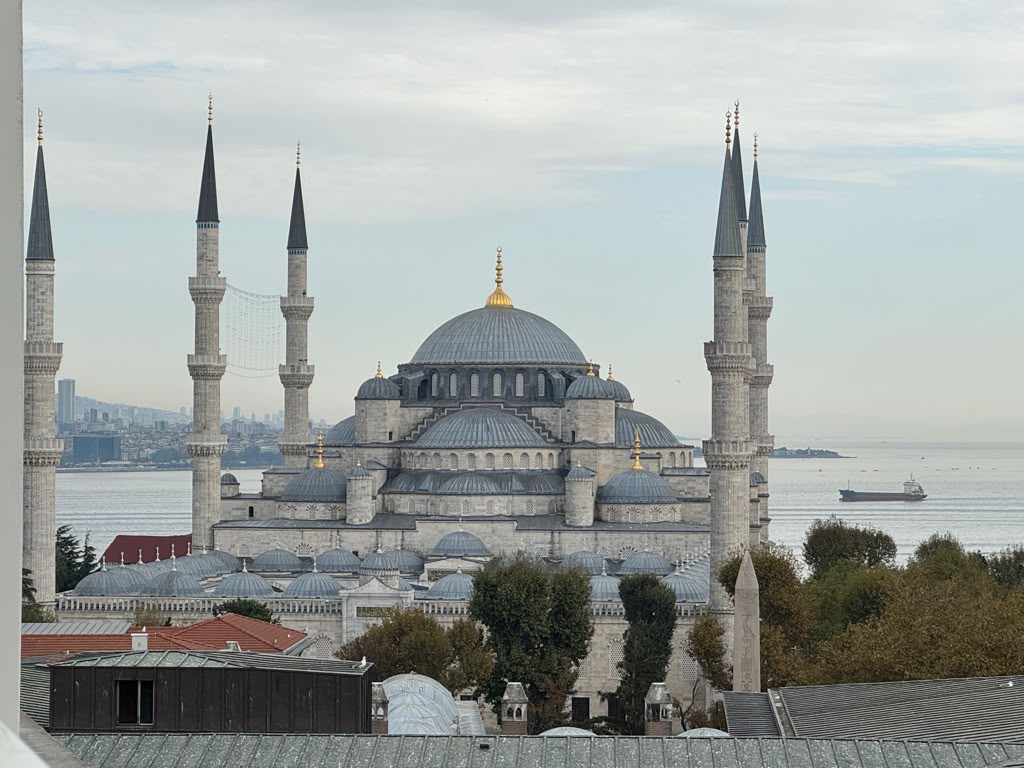
First photo – the Blue Mosque from the balcony of yesterday’s lunch restaurant:
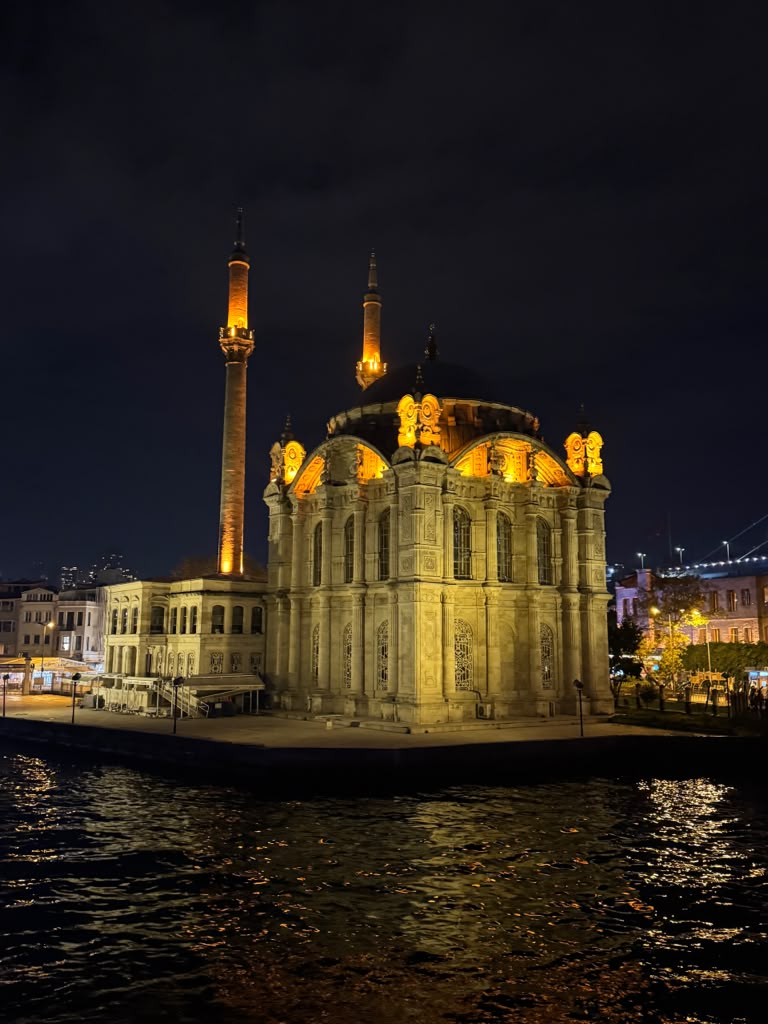
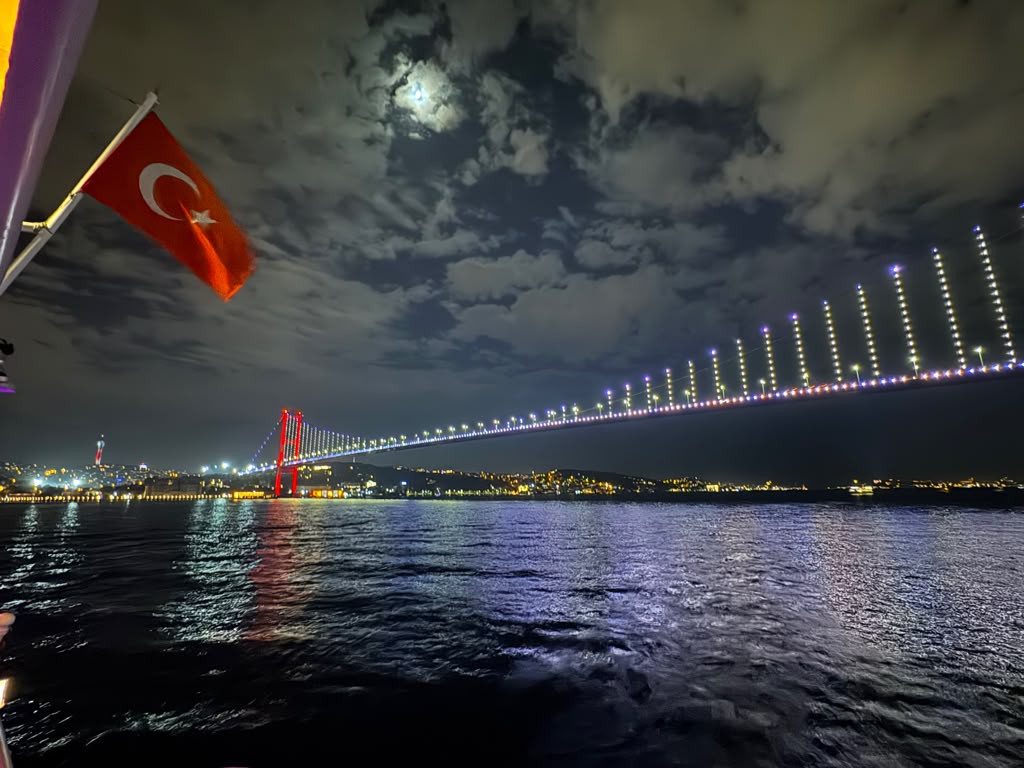
I’ll start with last night. I’m very glad Rick wasn’t with me for this boat/show cruise. The good thing is that it got me out for the night. It’s too easy to just stay in my room, especially since I went out on Wednesday. And it’s nice that it was on a boat. And I sat at a table with a woman from Texas/Mexico who was pretty funny. At first she was very indignant that they were seating me at her table since she’d asked to have it to herself. I basically plonked down and said I’ll be nice! She laughed and then we chatted for a lot of the evening.
I got picked up at my hotel an hour later than previously told, but still – I didn’t have to find my way. We then got out of the van (maybe 10 others picked up along the way) in the middle of the street and walked through traffic towards the boat. The boat went in circles for the next 2.5 hours, but it was nice to get out and have the breeze when the main room got stuffy. I could see the buildings on the shore that I’d seen on the ferry ride a few days ago. They do lighting so well here with the historic buildings.
The food was as expected and the folk dancers looked like they were working hard and probably also danced on the side, hopefully this brings in steady money for them. So there were amusing moments and it was a night out! There was one belly dancer that could move – really incredible the things she could do with MANY parts of her body. Mine looked at hers and thought we were different species.
Today we had two different destinations, first the Topkapi Palace and then the Grand Bazaar. It’s really nice doing some of these things first because Rick and I can definitely do some of these things on our own. If we were serious shoppers, then it makes sense to have a guide. I’ll get to that.
The Topkapi Palace was ginormous. It went on and on with so many different spaces and things stayed very interesting, though I was tired by the end. The signage is great, Rick and I can definitely go back and there are things worth going back for. Astonishingly, it was so protected on the hill and behind walls that I never saw anything but a glimpse when I walked ¾ of the way around it that first day when I walked the shoreline and then through Gülhane Park.
There was a beautiful church, Hagia Irene, that we breezed right past, but evidently it’s amazing. Origins before Constantine (meaning before 307 BC), most of it built by Emperor Justinian in the 500’s. It predates the Hagia Sophia, but similar design. It was never converted to a mosque and still has the a lot of its original design, very simple on the inside. Evidently once Mehmed II built his new palace, he incorporated it into his first courtyard and used it as an armory. I’d love to see it because it has no decorations and is very austere – now used as an event venue and museum.
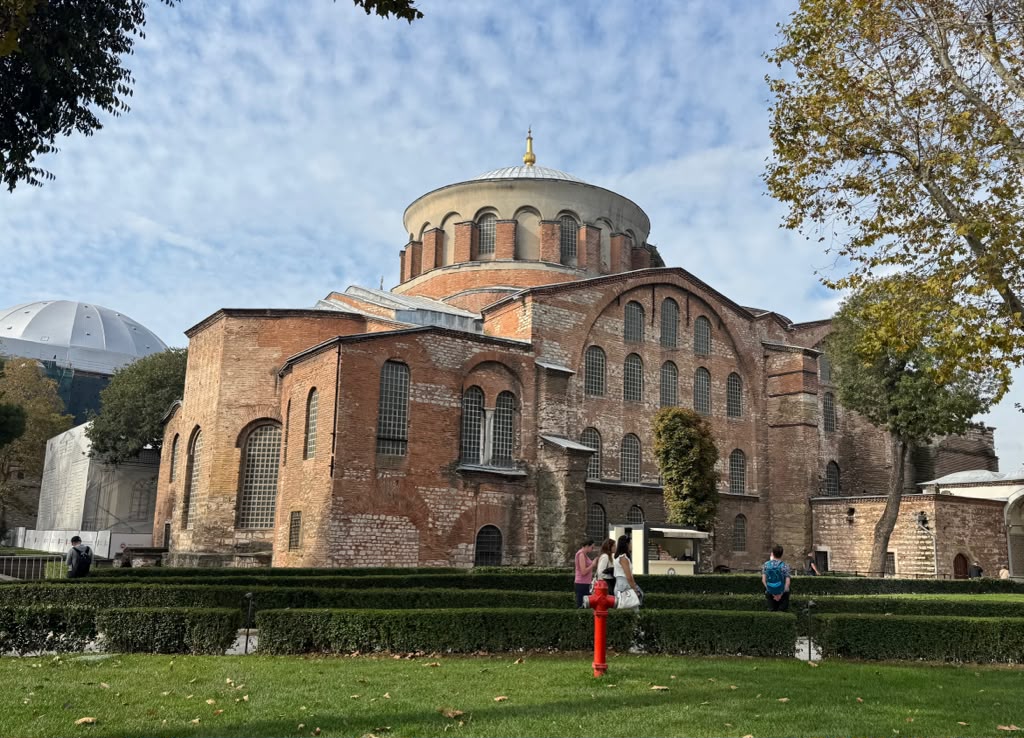
The Topkapi Palace (not one building, a whole complex) was ordered by Sultan Mehmed II (Mehmet the Conqueror) starting around 1459–1460 and completed by 1465. The palace was the seat of Ottoman power (25 sultans) until the 19th century when sultans moved to Bosphorus palaces like Dolmabahçe. It was converted into a state museum in 1924 and designated a UNESCO World Heritage Site in 1985. There are four main courtyards, extensive gardens, and the imperial treasury with the 86-carat Spoonmaker’s Diamond. The Chamber of Sacred Relics had revered Islamic relics, including the Holy Mantle of Prophet Muhammad. We finished with the expansive 400 room Harem buildings.
Honestly, I took so many photos of objects and the signs explaining that it would kill anyone trying to read if I posted even a quarter of them. Highlights – crazy jewels, relics that they believe in, exquisite architecture and craftsmanship. At one point I walked out of an exhibit saying well, if they were going to be rich, at least they did beautiful designs for objects that can be preserved for 100’s of years, unlike people like Trump. The woman in front of me turned and said I couldn’t have said it any better! There are so few Americans here that I was startled, but it was a fun bit.
It was a little challenging walking through the harem with Bulut who’s very nice, knows a lot, but probably isn’t too skilled at really putting himself in another’s shoes. Like eunuchs (they liked their job!), concubines in the harem (they liked their life and could go out any time they wanted – though they couldn’t come back in), the slaves (they took them in when they were little and educated them! The didn’t mind being slaves. There were 3 sent to Britain for education!). But then I also think women should have choices and be valued for things other than taking care of the house and kitchen. But that’s just me.
Highlights of architecture, but after looking at my photos, truly hard to grasp with multiple buildings (one gallery devoted just to coffee!), terraces, galleries.
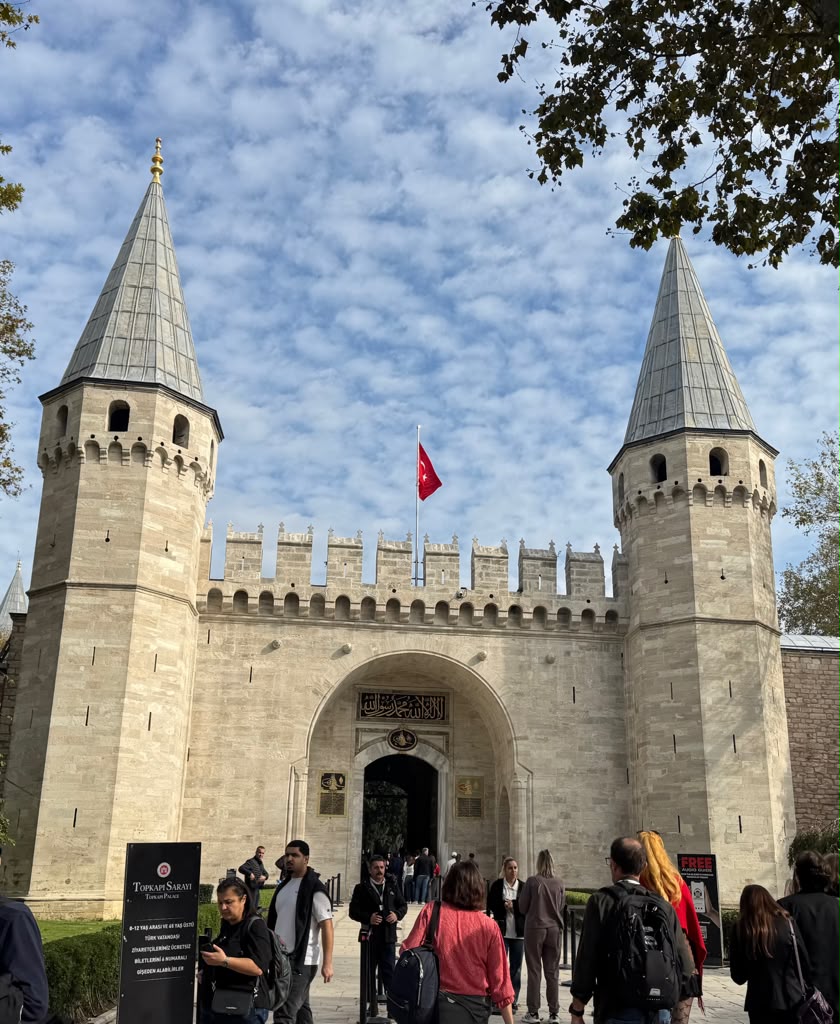
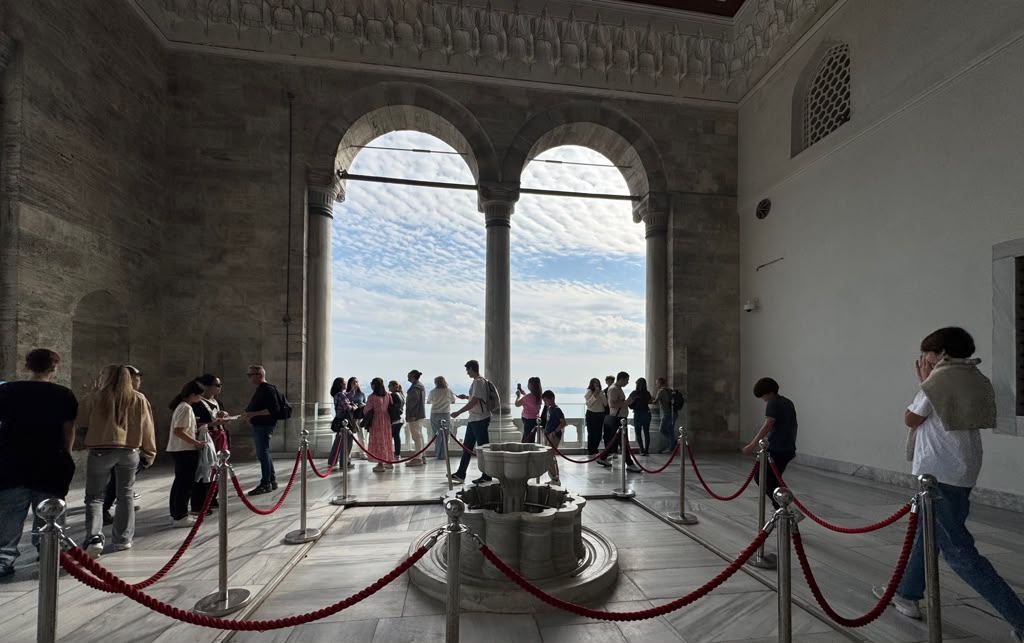
The entry into the first courtyard, and the terrace off of the Sultans room.
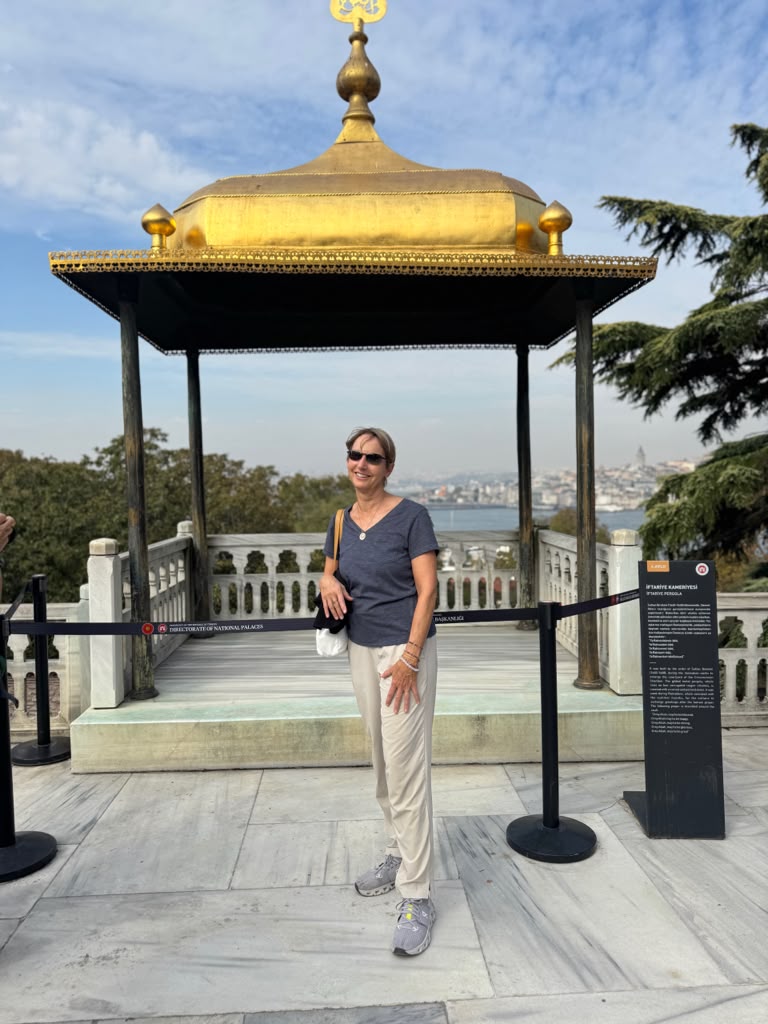
And another smaller terrace off the other side of the Sultan’s room where he (they – there were a lot of them over the years) took coffee and looked at the view.
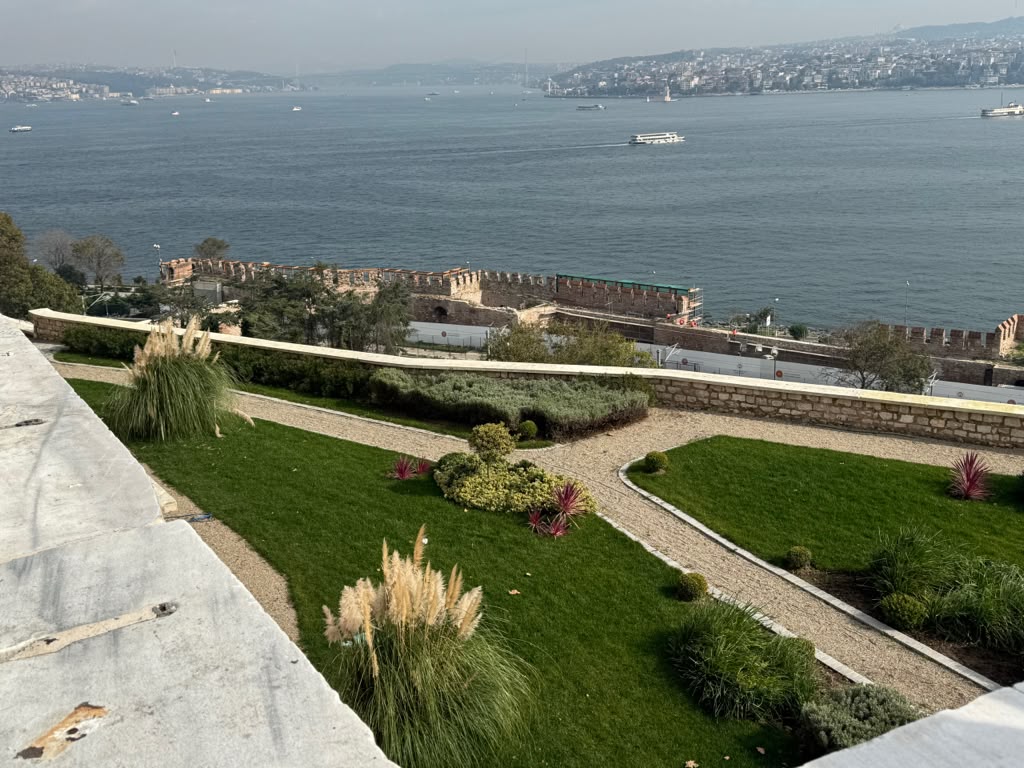
These are the walls I walked around on my first day with an idea that there was problem something important behind them, but with no glimpse of what was above!
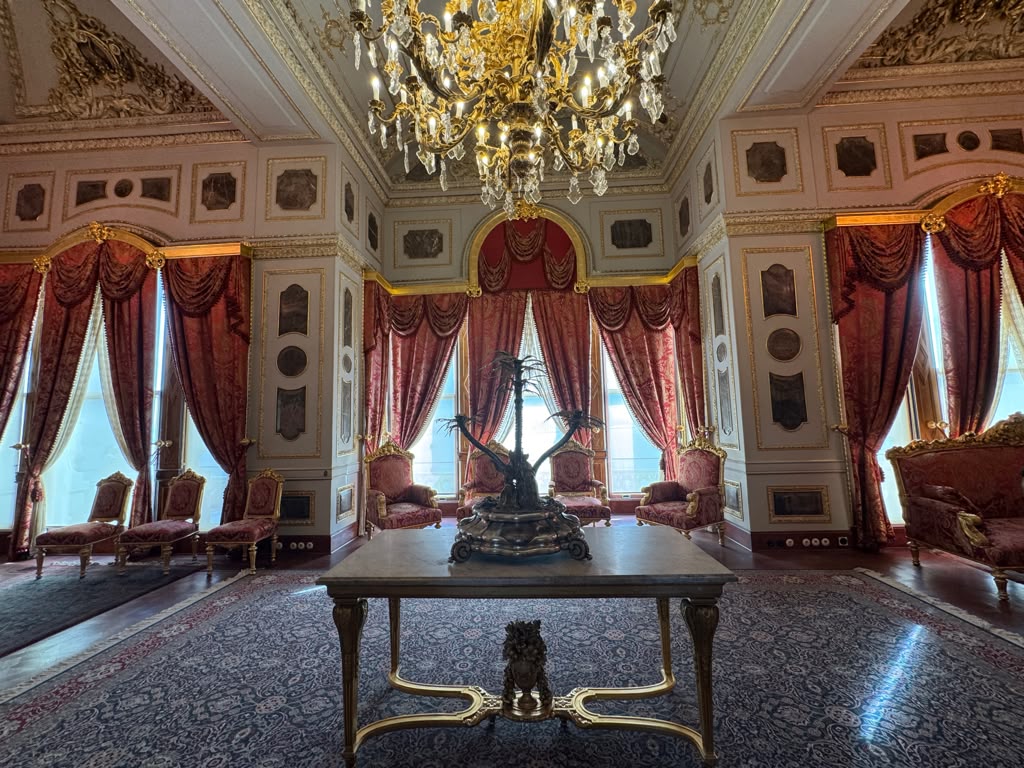
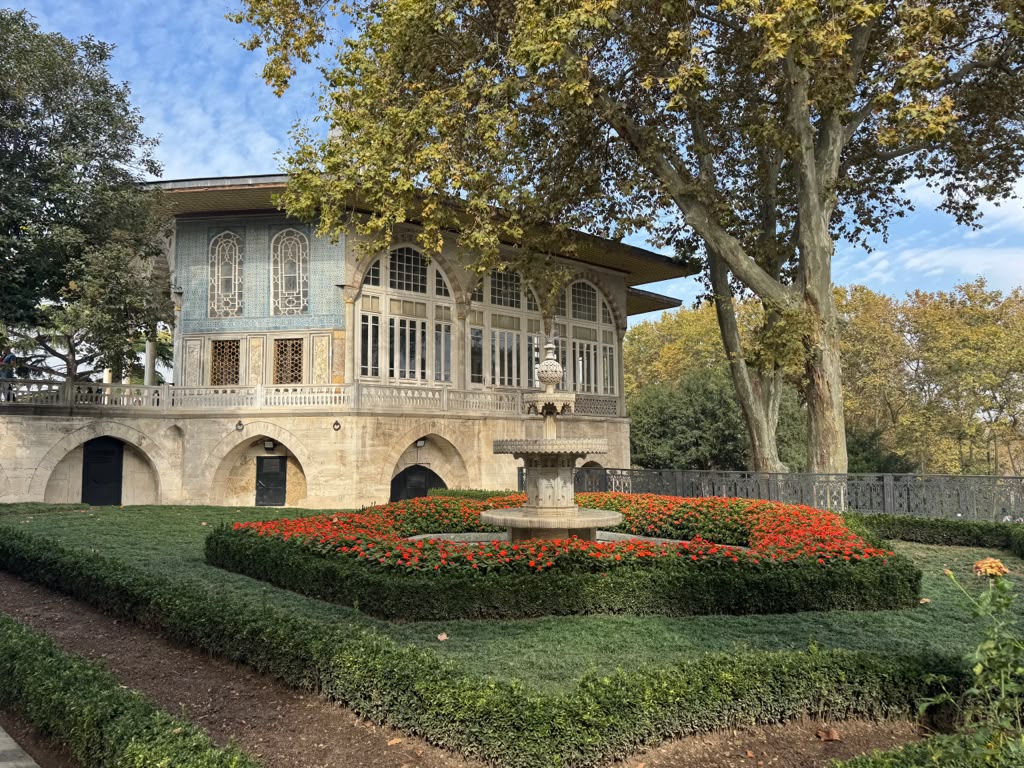
Small receiving room in the innermost courtyard, and one of four beautiful pavilions used for prayer.
Highlights of the treasury
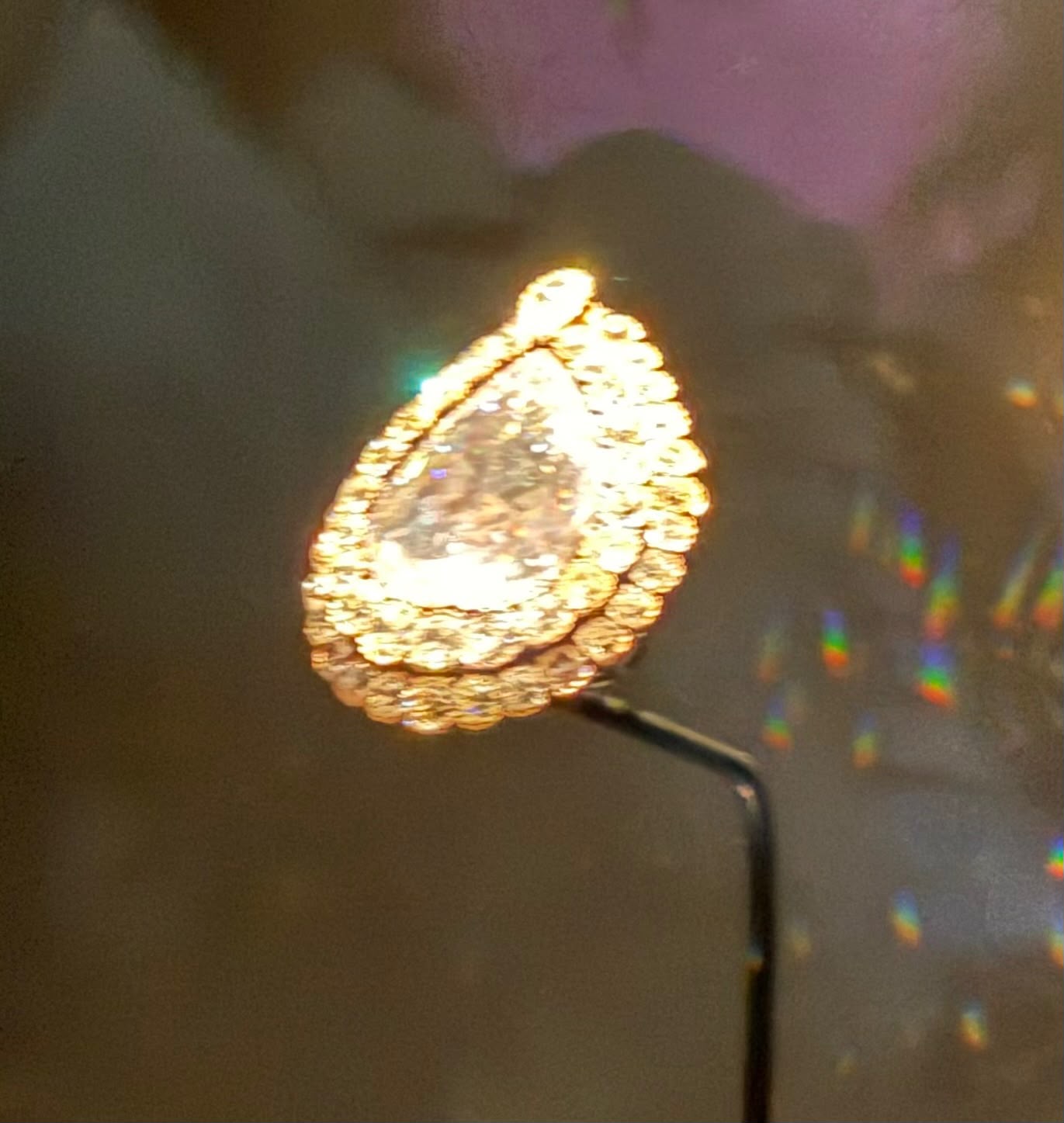
Hard to get a photo with the crowds and glare, but it was astonishing. The Spoonmaker’s Diamond is 86 carats and 4th largest diamond in the world. There are a number of stories behind the Ottoman acquisition.
The Fisherman’s Tale: Recorded by Ottoman court historian Rasid, the legend states that a poor fisherman found a shiny stone in an Istanbul garbage dump in 1669. Unaware of its worth, he traded it to a local spoonmaker or jeweler for three wooden spoons, which eventually led to its acquisition by the palace.
The French/Pigot Theory: Another story links it to the 1774 Pigot Diamond purchased in India by a French officer. It allegedly passed through Napoleon’s mother, Letizia Ramolino, was traded or bought by an agent of the Ottoman governor Tepedelenli Ali Pasha, and was later confiscated by the Ottoman Treasury after Ali Pasha’s execution for treason in 1822.
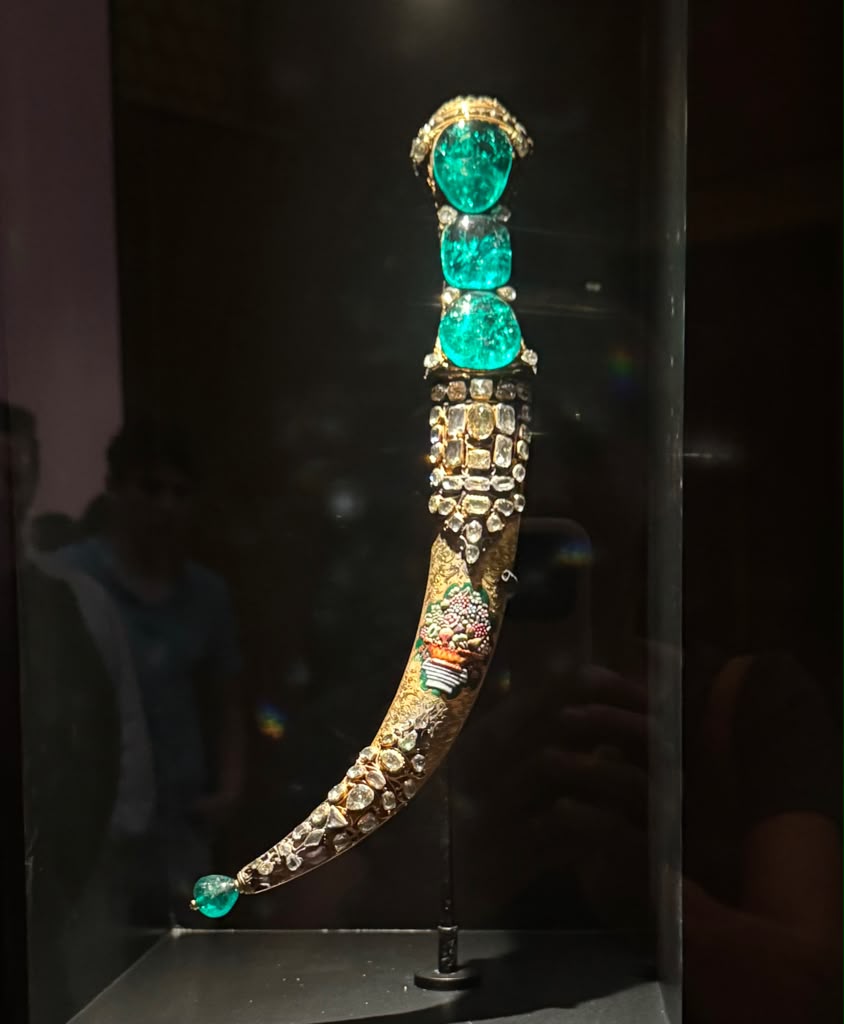
Tokapi Dagger: The Topkapı Dagger is an emerald-studded curved dagger, known as a jambiya, created in 1746 by Ottoman craftsmen to be given as a gift to the Shah of Persia.
Highlights of the Chamber of Sacred Relics
Best quote while behind a tour guide (Bulut didn’t go in with me) and his client: “ This is the prophet’s room. His footprint, so many things. Sometimes I see people crying. Like me seeing Pink Floyd.”
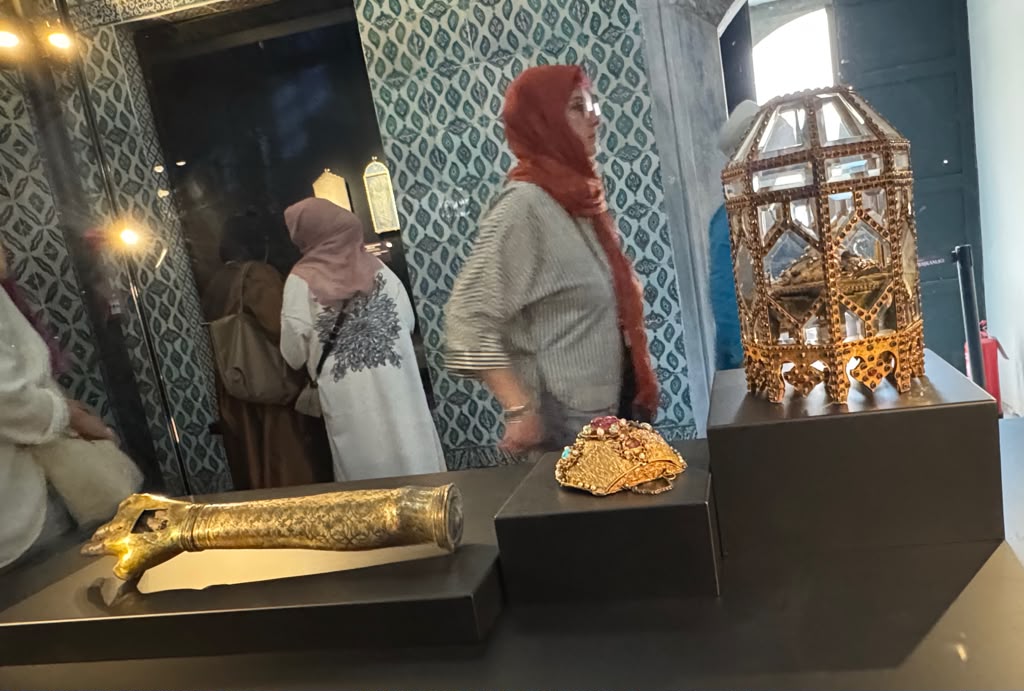
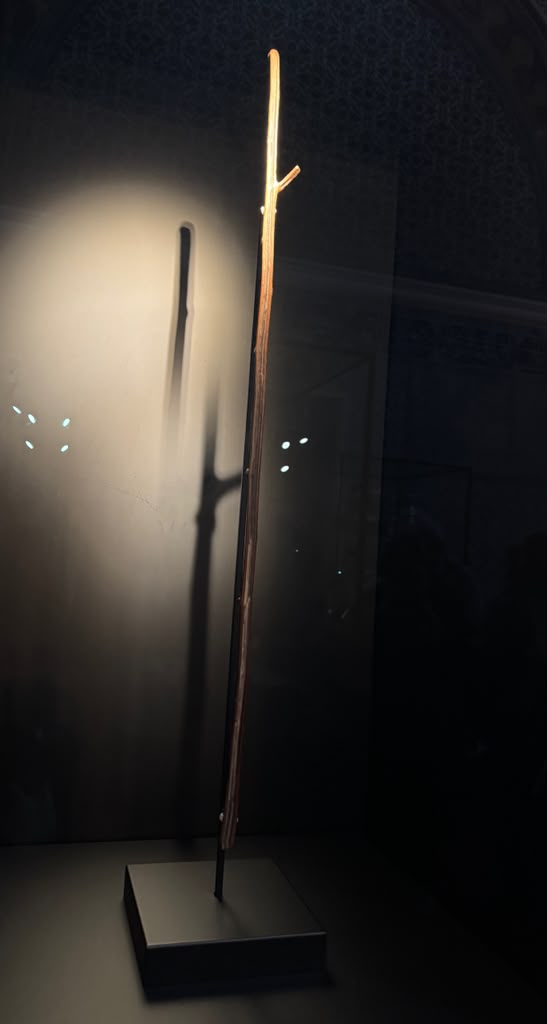
John the Baptist relics, arm, and skull. And the Staff of Moses, 13th Century BCE. Honestly, the Staff – can you imagine if it was true?
There clearly is total belief in these relics. I would be more dubious, but the Ottoman Empire encompassed Mecca, acquired in 1517 AD, when Sultan Selim I conquered the Mamluk Sultanate and incorporated the Hejaz region (including Mecca and Medina) into the empire. And Mohammed was a real person and lived from 530 to 632. By that time, the idea of relics would be fully established by Christianity and Buddhism and probably other religions. So maybe. But did you constantly shave? How did so many beard hairs get saved and preserved? Ok, there’s an answer: According to Islamic tradition, when Muhammad shaved or trimmed his hair and beard—such as during the Farewell Pilgrimage—his companions (Sahabah) gathered the strands so they would not fall to the ground, dividing them among themselves as cherished mementos. Wow. And some of them are in the palace’s treasury, as well as his sandals, his footprint, his shawl….
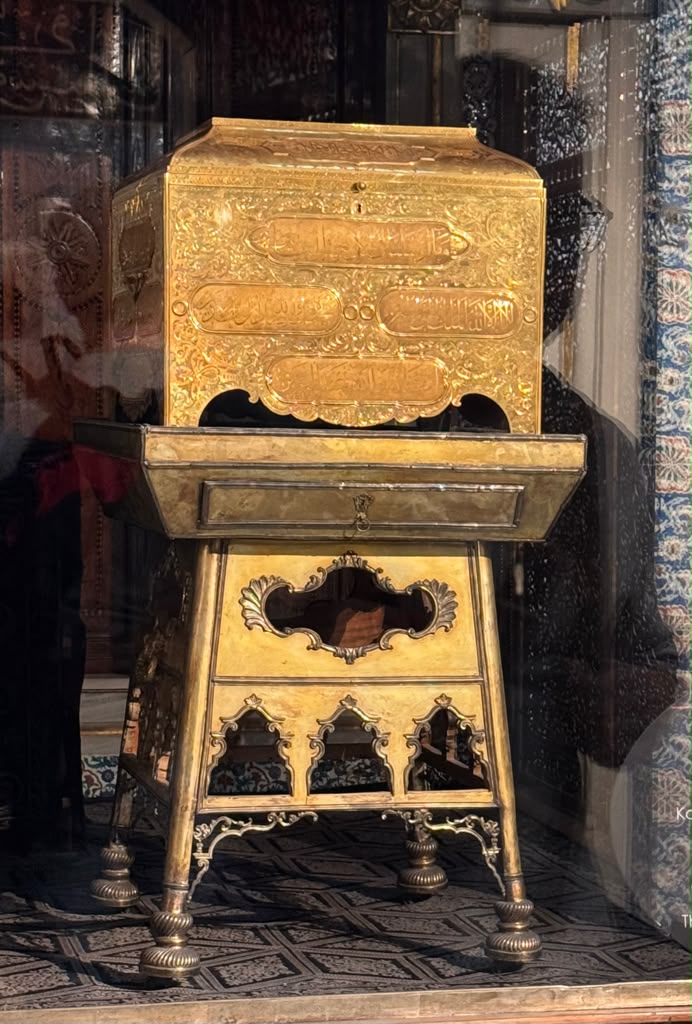
This one, I confess, made me wonder – casket for the Prophet’s Holy Cardigan. I wondered what made this cardigan holy versus his other cardigans? But then I realized it was holy because it was a gift from Mohammed to a sultan. That would be a big deal.
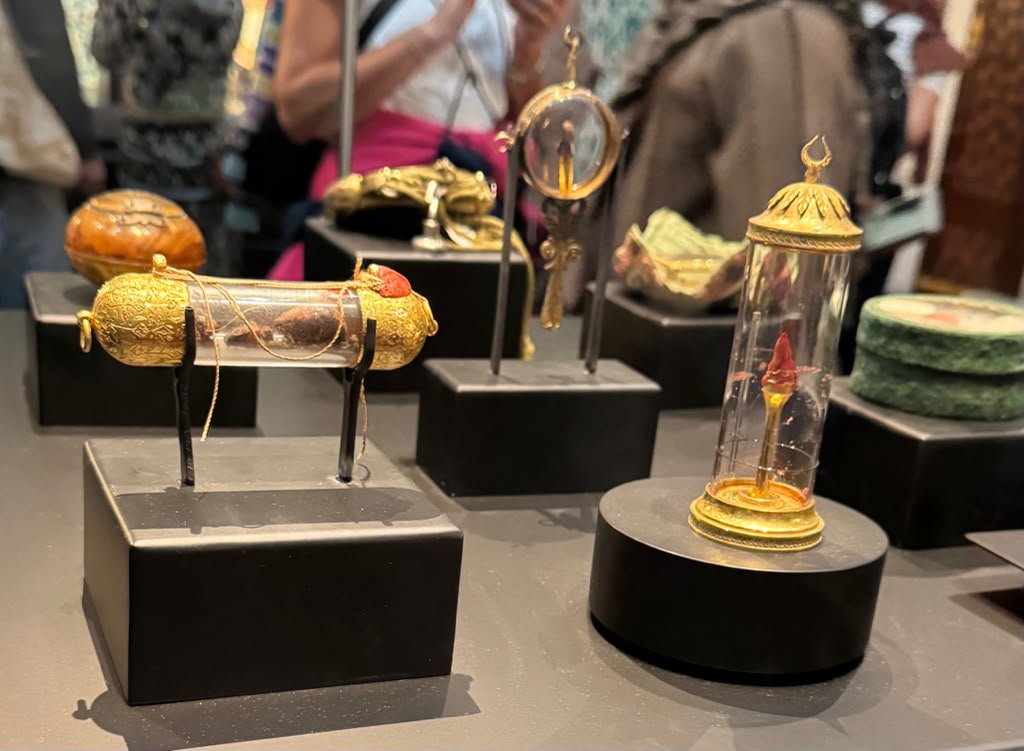
Beard hairs of the Prophet.
Highlights of the Harem
Honestly, the Harem was huge – like the whole palace and made it really hard to capture – from the first rooms that were all the soldiers’ quarters which were very basic. Then the eunuch’s quarters, especially the head eunich. Bulut said they were all black because they were so much bigger. I thought it might be because they were slaves…I looked it up and in fact, it was because they were slaves, and because of this they had no political or familial ties to conflict with them being kept and beholden to the sultanate. Then the women’s quarters, from wives to concubines and then the sultan’s rooms with the special door and tunnel to get there.
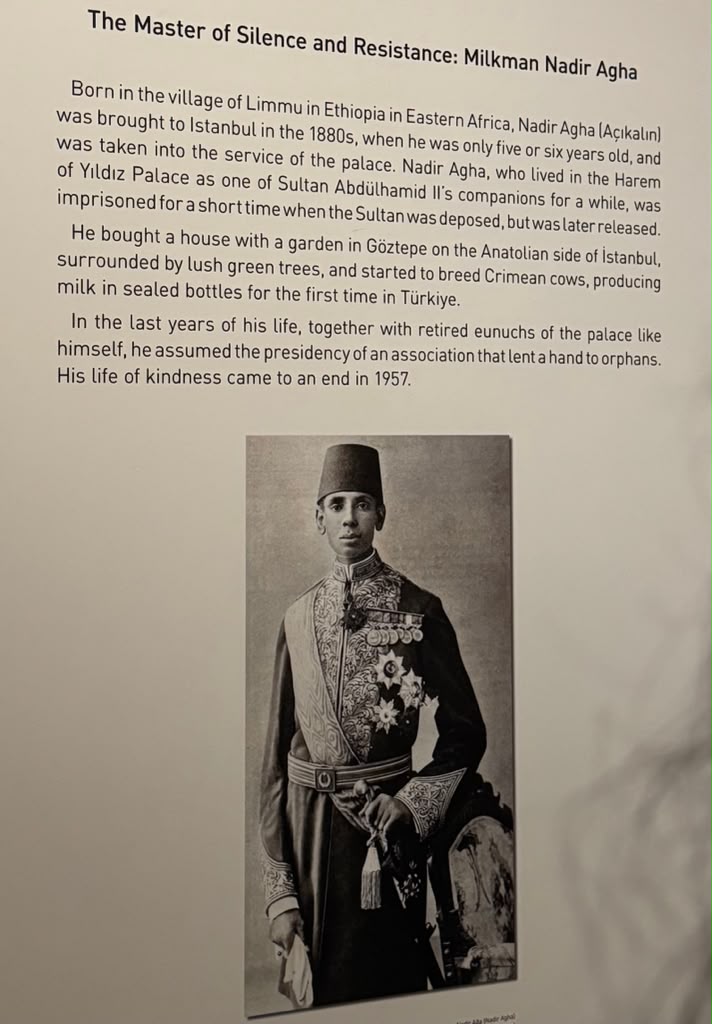
The Chief Black Eunuch (Kızlar Ağası): This official grew to become one of the most powerful figures in the entire Ottoman Empire—often ranking just below the Grand Vizier. He controlled access to the Sultan’s private quarters, managed huge charitable foundations (waqfs) tied to Mecca and Medina, and held immense influence over court politics and the succession of Sultans.
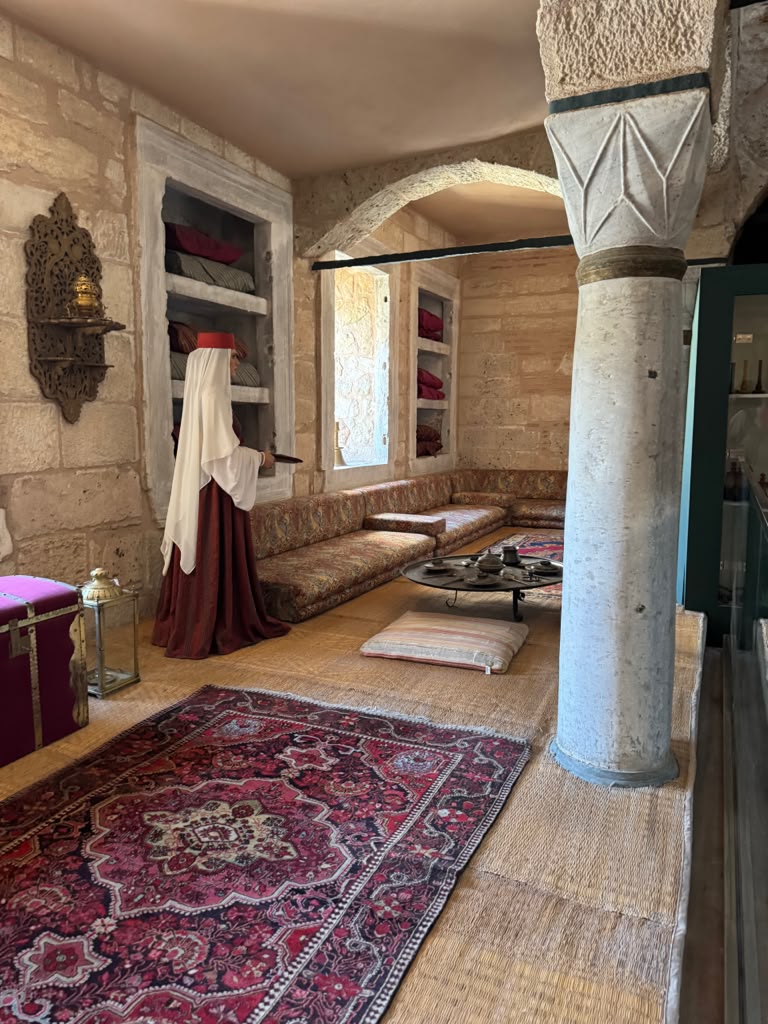
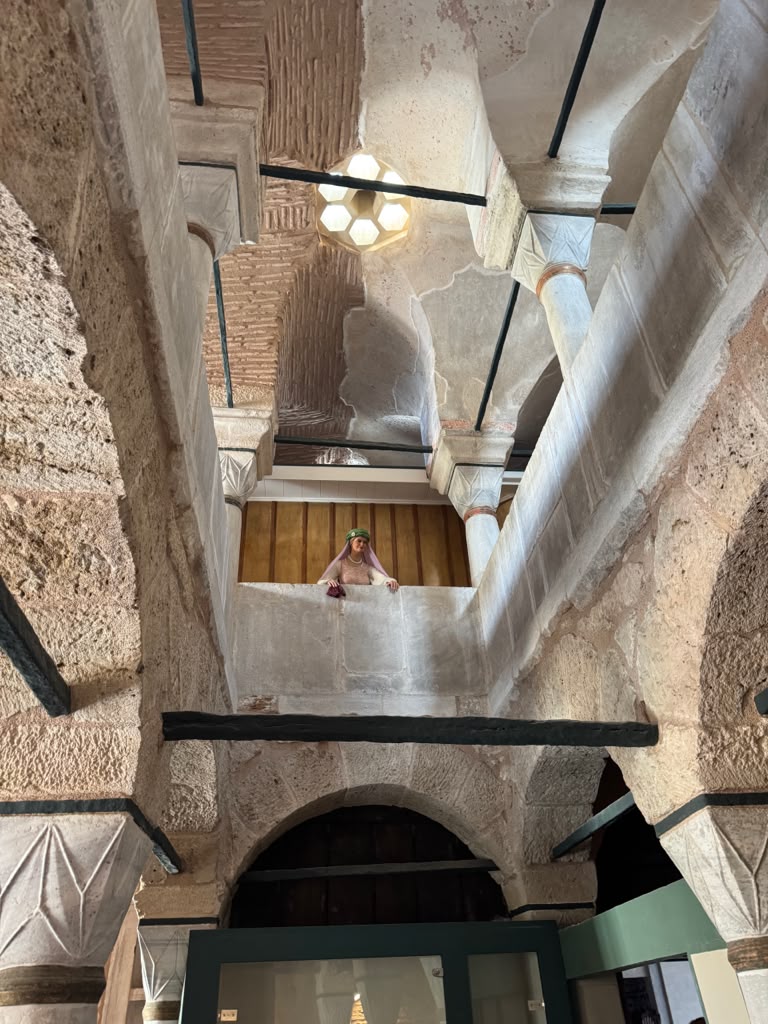
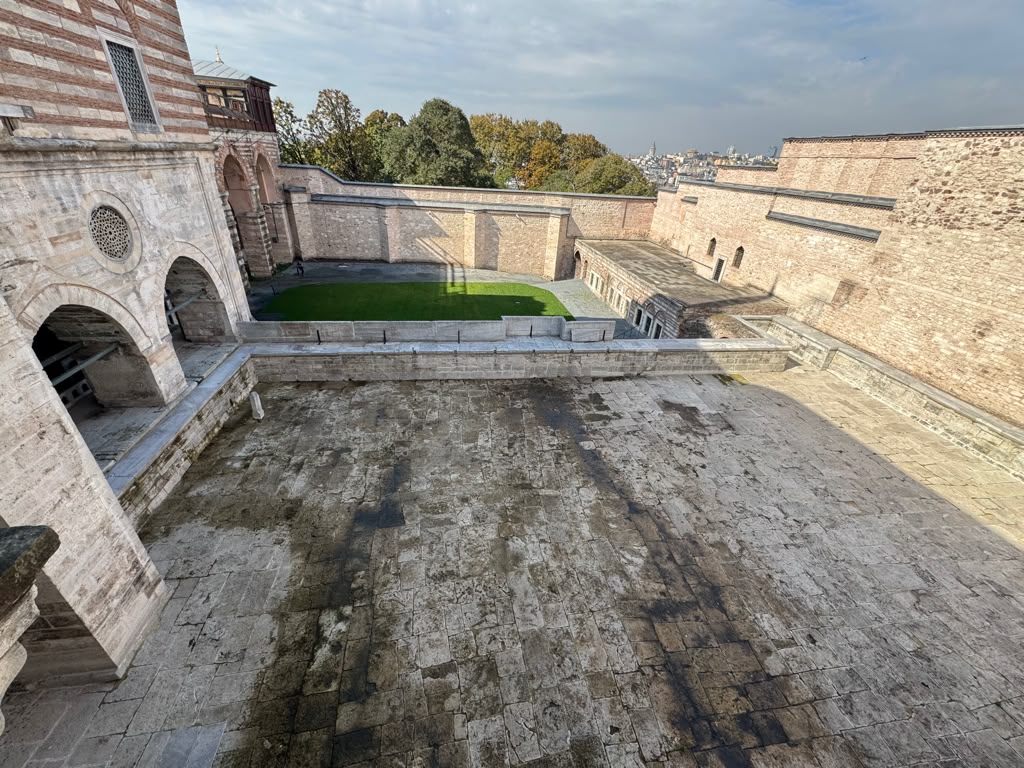
Women’s quarters, just a bit to see, first a living area, then the building surrounding the different living areas, then the huge terrace and seriously big pool (empty now).
Shopping – we then walked to get lunch and walked out of the mostly tourist restaurant area. Bulut turned into a small stair that I hadn’t even noticed between two stores and we went up to where it was clearly a local’s place. Fast, good, basic, and we both got a bit of energy up to walk to the Grand Bazaar.
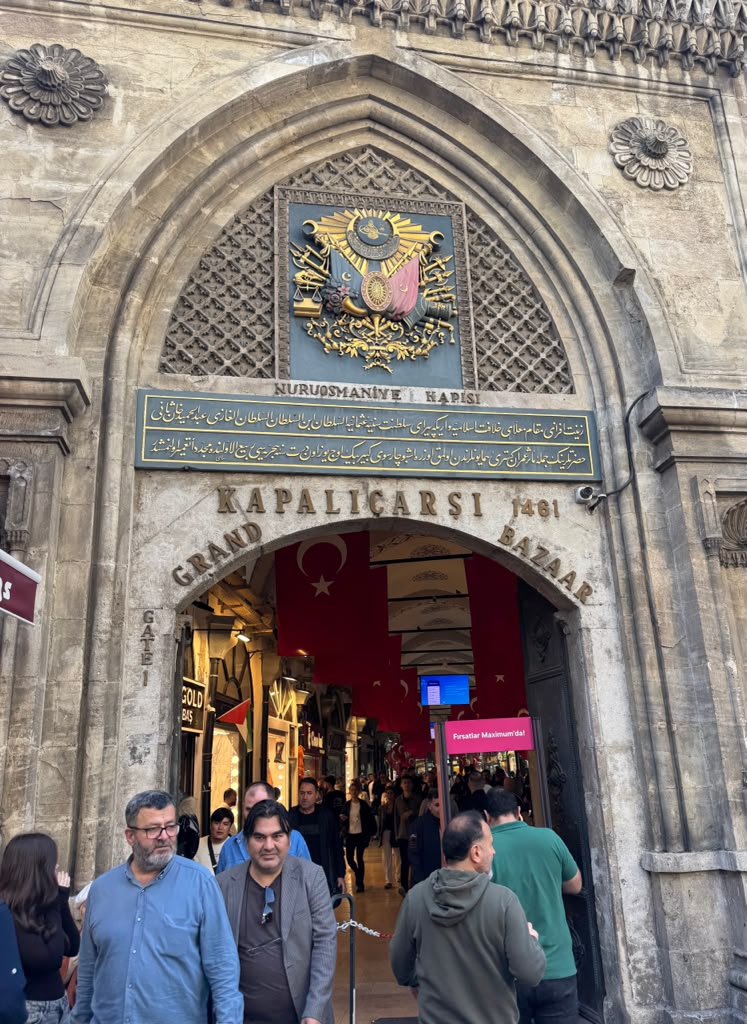
The Grand Bazaar build started during the winter of 1455/56, shortly after the Ottoman conquest of Constantinople and was part of a broader initiative to stimulate economic prosperity in Istanbul. Sultan Mehmed II an edifice erected devoted to the trading of textiles and jewels.
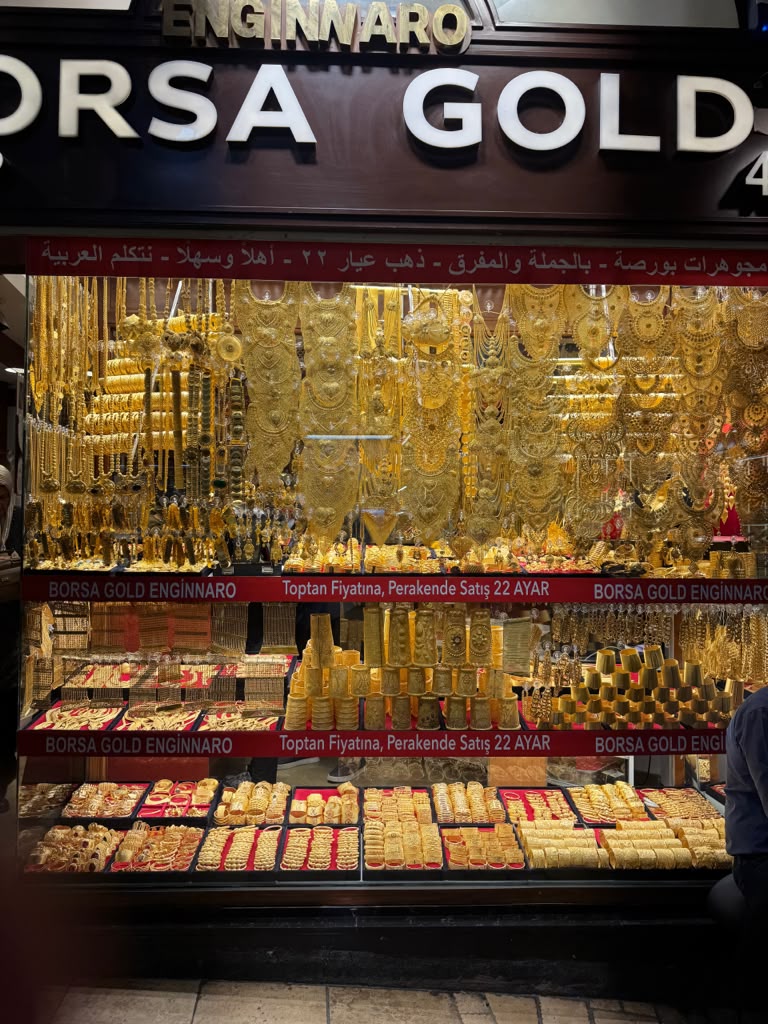
I was expecting a huge market like the spice market but with more things, and it was that, but it was really just a huge indoor shopping mall with a gazillion people and stores. It’s evidently one of the largest and oldest covered markets in the world, with 61 covered streets and over 4,000 shops. It attracts between 250,000 and 400,000 visitors daily. I believe it!
How in the world would anyone choose any store in particular? Gold, diamonds, handbags, so much with corridors going off of the main passageway. Then Bulut took me outside the Bazaar to show me the stores outside. He knocked on one door with no sign I could see and we were in a store that had just gorgeous handbags. Walked further down the block and another door and it was scarfs. Oh – that’s why you want a guide if you were a shopper. An entirely different arena of shopping behind doors and lined up on the outside of the bazaar.
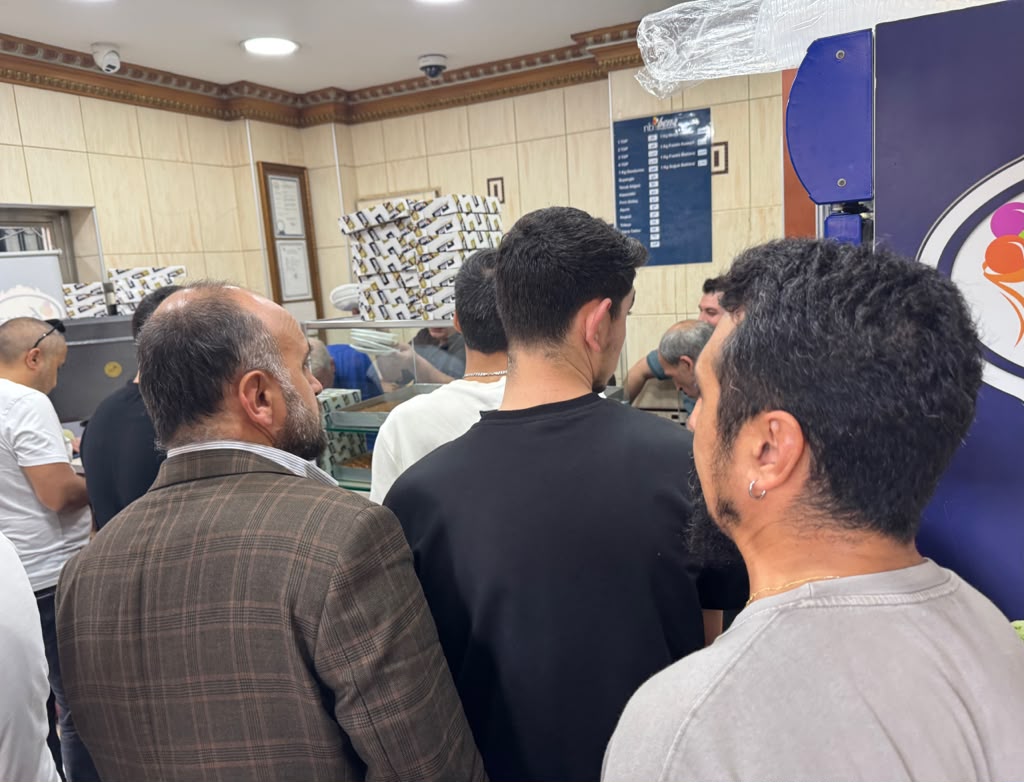
Then we stopped for a desert – end of the week. I hadn’t really wanted anything, but it was great! A tiny counter with men behind it, another across a bit of an aisle taking the money and about 10 men in line getting their deserts. Where were the women? Bulut said in general, women like sitting down for their meals whereas the men are eating on the go or taking it home.
As we sat on the steps of a mosque and had our treats, I did see women go in, but not many!
And that was the end of my days in Istanbul. An incredible visit, I’m so lucky I get to come back and experience it with Rick.
Off to Nepal!

