Today started like the last two days. Except that I was too tired and didn’t get up in time to do kora. Had the middle of the night back spasming thing again and then with Tylenol/Motrin combo was fine in the morning. I’ll take it!
Others were the same with tiredness so all skipped kora. Instead we met in the lobby at 7:30am and took cabs to Pashupatinath and then met a couple of others there, so group of 8.
This was an amazing experience. Pashupatinath Temple is a Hindu temple dedicated to Pashupati, considered a manifestation of Shiva. Located on the banks of the sacred Bagmati River in Kathmandu, Nepal, the temple is one of the oldest and most significant religious complexes in South Asia. You couldn’t really grasp how big the whole complex was because of the layers. There is a big shrine building, but we didn’t see it and that might be because we wouldn’t be allowed in it anyway. However, the river and the small temples lining it and the activities of the dead (well, relatives of the dead) and the dying are obviously devotional rituals. We were very respectful and sat a distance away, but then were able to watch an unbelievable amount of the rituals.
Note from online: Pashupatinath is the most important temple dedicated to god Shiva. Every year this temple attracts hundreds of elderly followers of Hinduism. They arrive here to find shelter for the last several weeks of their lives, to meet death, be cremated on the banks of the river and travel their last journey with the waters of the sacred river Bagmati, which later meets the holy river Ganges. Hinduists from every corner of Nepal and India are arriving here to die.
It is believed that those who die in Pashupatinath Temple are reborn as a human, regardless of any misconduct that could worsen their karma. The exact day of their death is predicted by astrologers of the temple. If you are attracted to the places where the spirit of death can be felt, then consider Pashupatinath as your first destination. It is a temple with special atmosphere of death; death is present in almost every ritual and every corner of it.
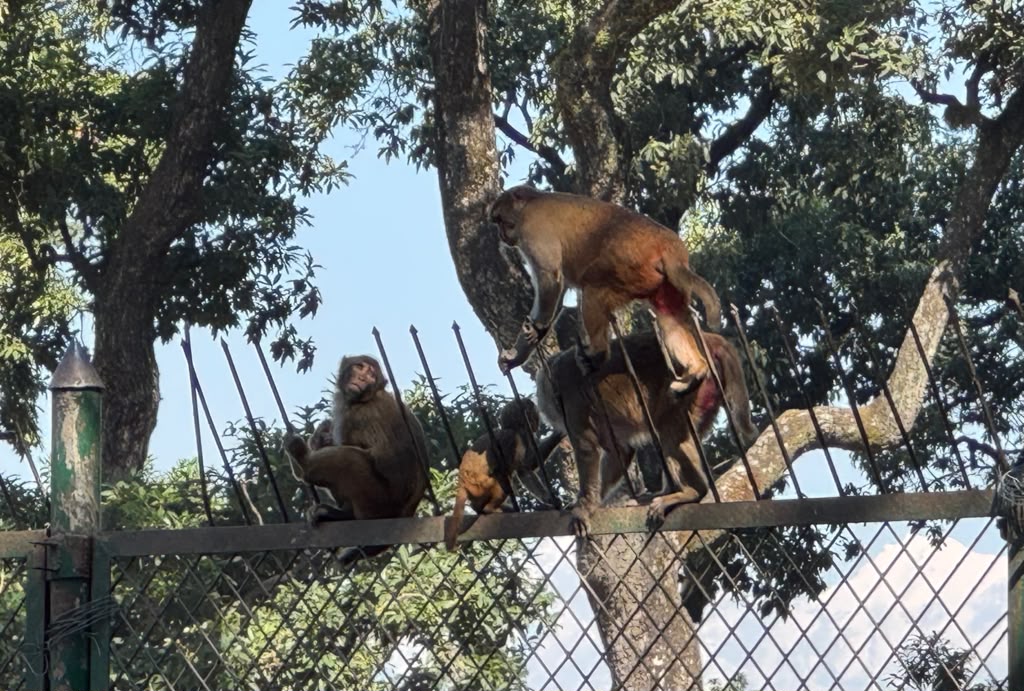
Another cultural thing in Pashupatinath is the image of local women washing clothes downstream the river. The waters of Bagmati contain animal fat because of the ashes of cremated Shiva followers and easily wash the dirt from linen. It is believed that this is how the soap was invented. Since Shiva is considered the patron of animals and all living organisms, monkeys and deers are wandering all around the temple complex on both banks of Bagmati. Monkeys are very often unfriendly, they beg for food, snatch things from careless tourists and may even be dangerous.
Back to me: We didn’t see the women washing and we didn’t see anyone dying, everything else yes.
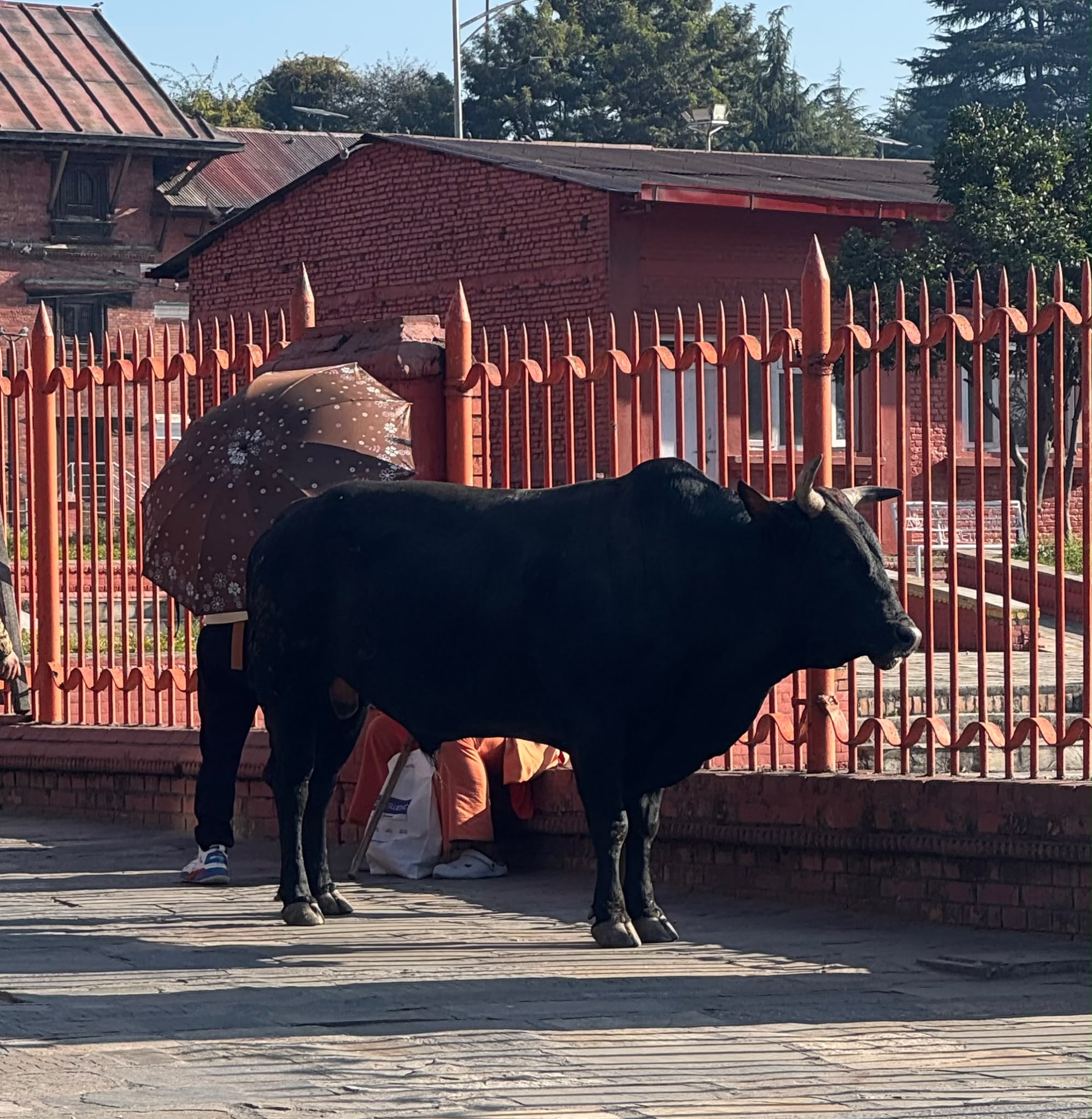
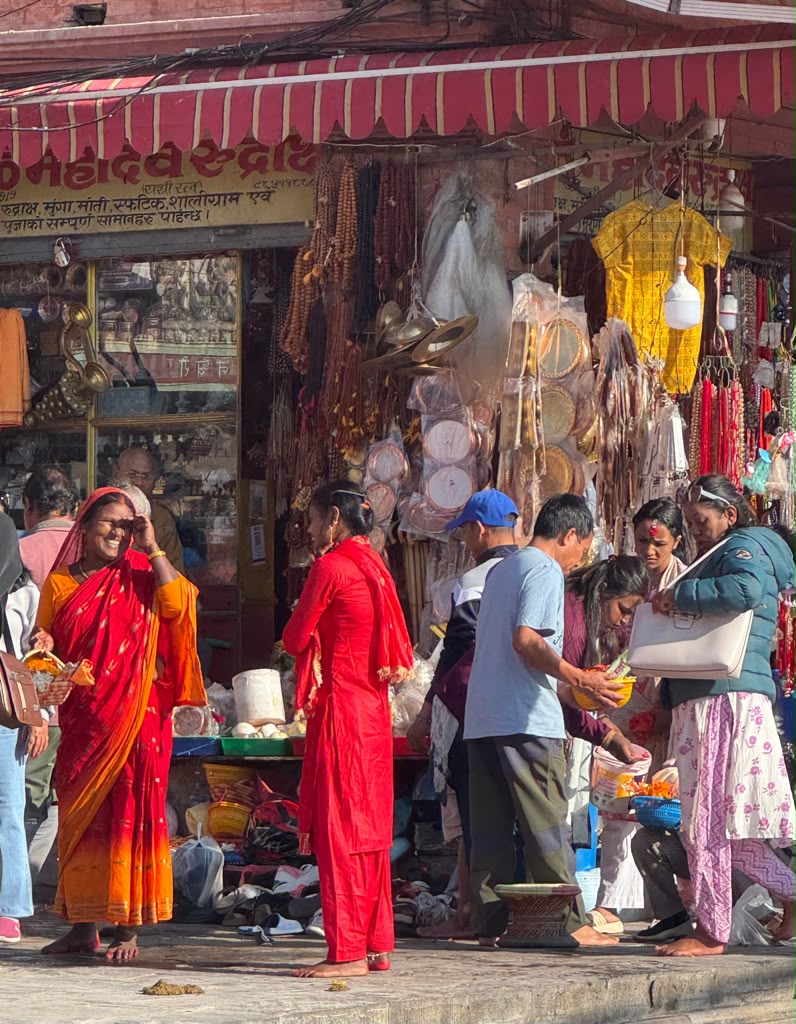
Since cows are sacred, there were a few token bulls walking around. They seemed pretty healthy. And the saris, just beautiful. Most people were barefoot, ach.
However, before we sat to learn and watch, we lowered our eyes and respectfully passed by all the activity and worked our way up the river to the caves of Tilopa and Naropa. They were tiny and the keeper wasn’t there at first so I could get a couple of photos.
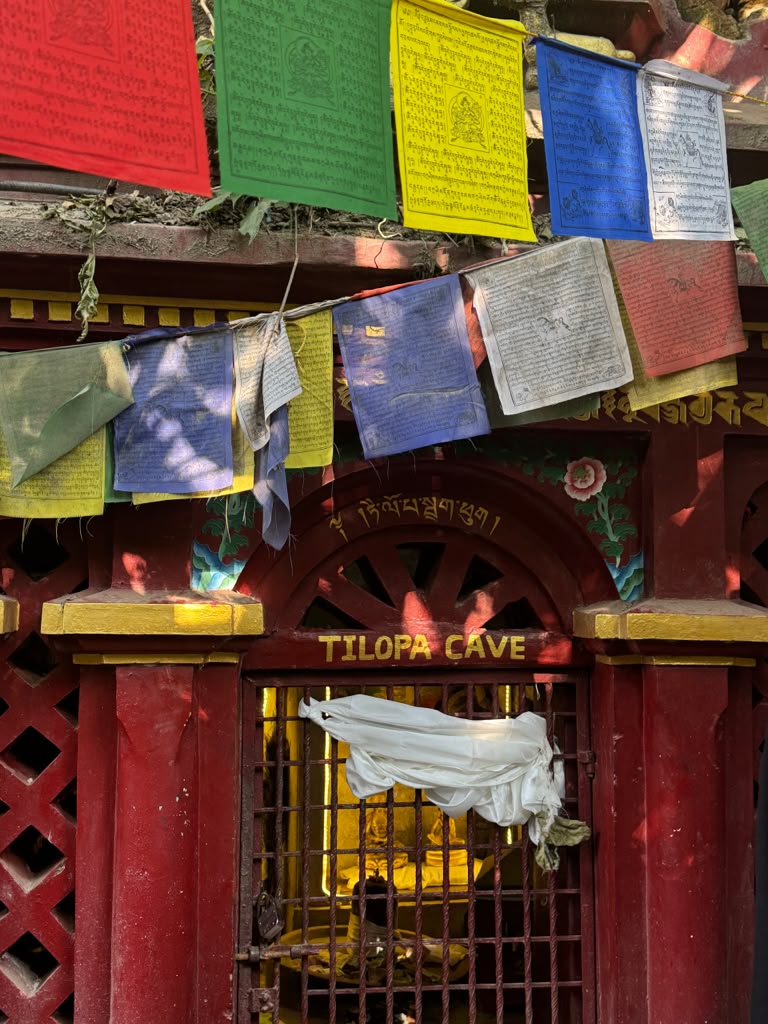
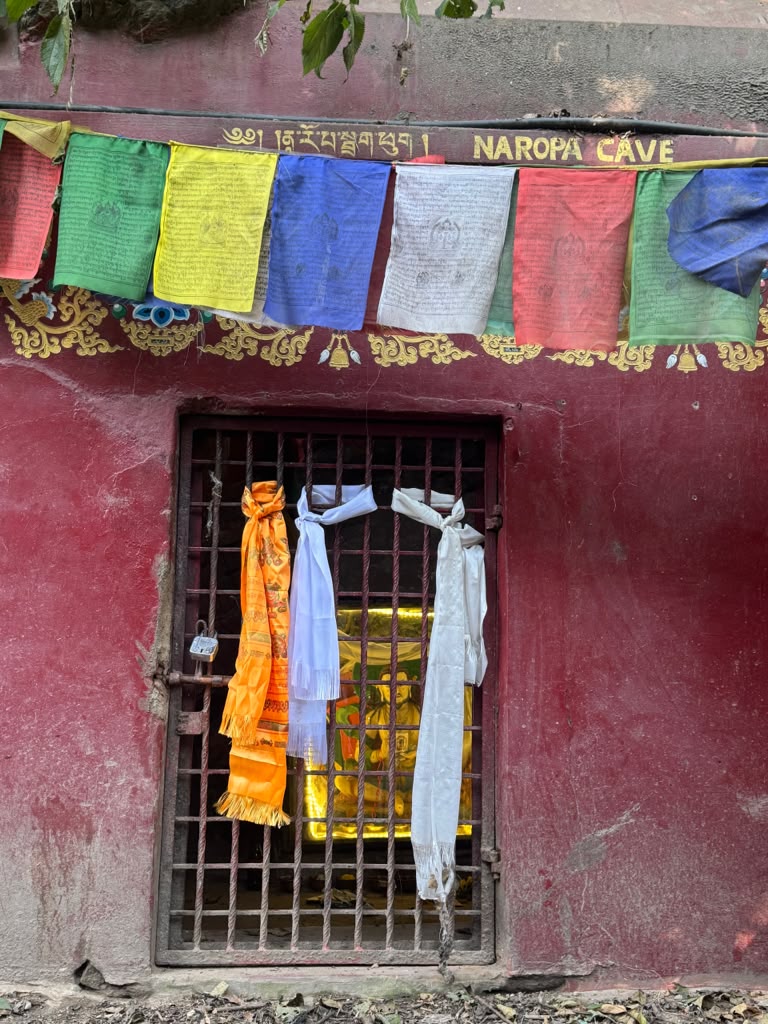
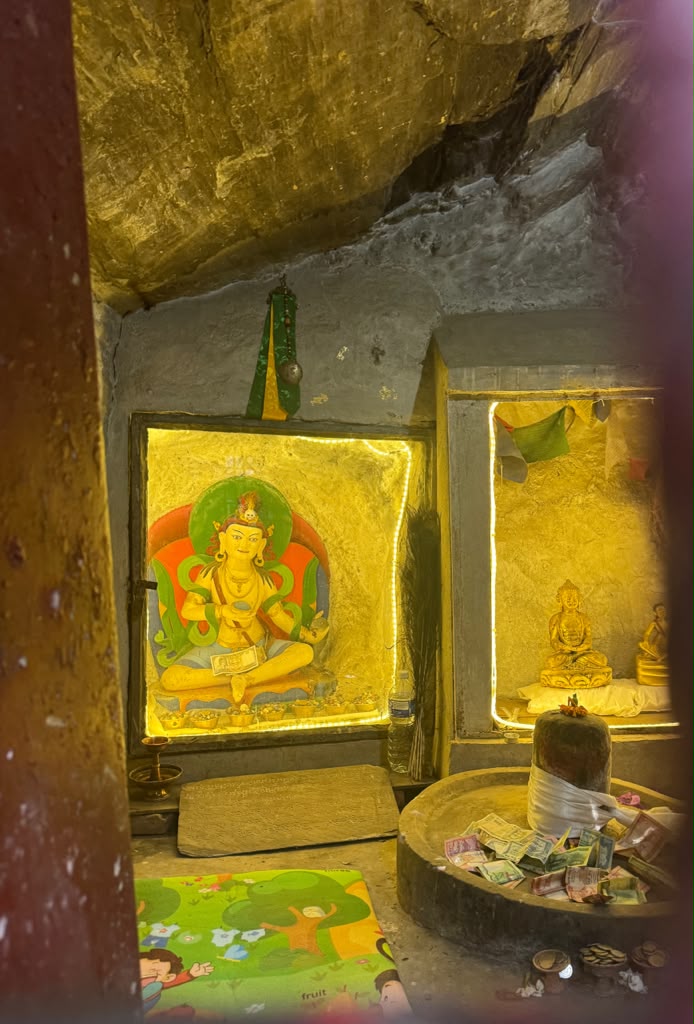
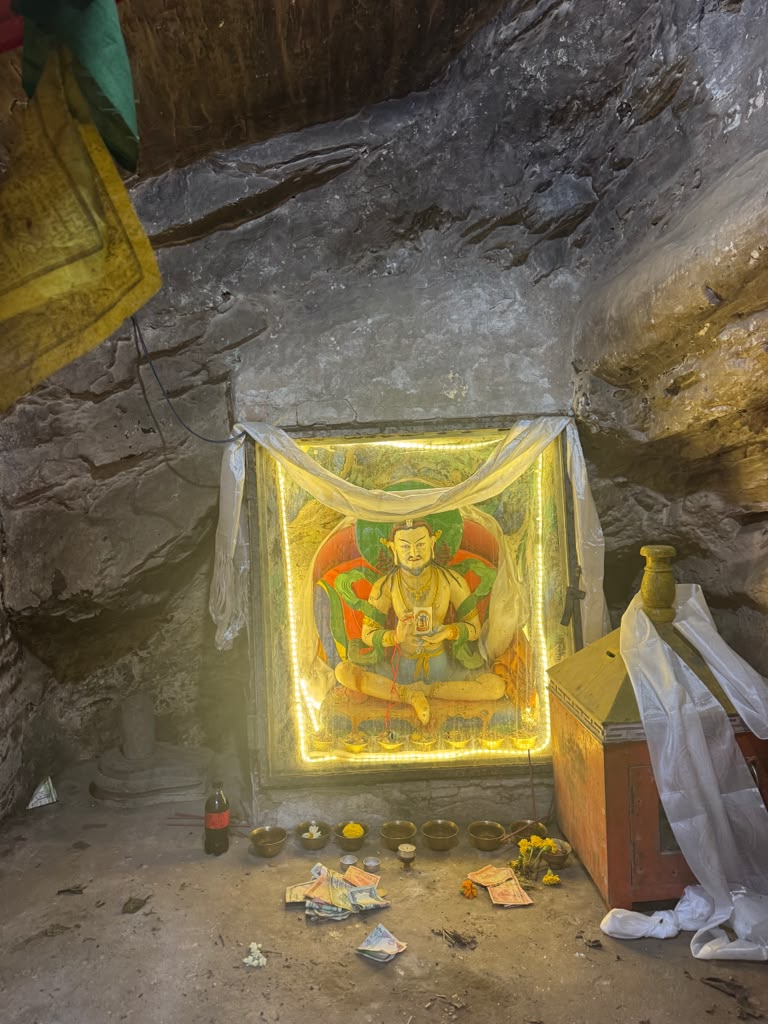
From I read online, they really could have been some of the caves where they meditated.
Online: Historical validation comes from the Tibetan translator Marpa. Marpa traveled from Tibet to the Kathmandu Valley and India three times during the 11th century to gather authentic tantric teachings. He studied under Naropa for over a decade and compiled the earliest written accounts of the lives of Tilopa and Naropa. These texts explicitly record the geographical milestones of their journeys, including their stays and initiations at the banks of the Bagmati River near the holy Pashupatinath shrine. In a particular kind of Buddhism, highly accomplished masters intentionally sought out terrifying cremation grounds – known as charnel grounds – to practice advanced meditation. This area has been a major Hindu cremation site since at least the 5th century. The lineage records describe Tilopa and Naropa mediating specifically in these cliffs to confront the illusions of death and ego. The exact location of these caves was preserved through an unbroken chain of transmission from Naropa to Marpa, then to Milarepa, Gampopa, and subsequent Tibetan masters. For nearly a thousand years, lama-led pilgrimages from Tibet to Kathmandu mapped out and maintained these sites. Tibetan practitioners tracking the steps of their root gurus recognized these specific rock cuts based on the detailed physical descriptions passed down in oral tradition.
So amazing. Wow. And I got to sit in them, or squat, or lean, depending on how best we could fit 8 people in these tiny caves. Tilopa’s was bigger than Naropa’s and that’s not saying much.
The keeper of the caves lives in a cave himself above where we were. I don’t know how. There are no services. I don’t know what his tradition is, he was very cool looking with black pants, kind of a vest and hair and wrapping – all seemed to indicate some kind of sect. He was young and stern and thought we were taking photos when inside the cave, but then realized, nope, we were pulling up songs. And yes, with Kristina, you sing songs of joy or learning or mahamudra wherever you go. And we did. And it was wonderful.
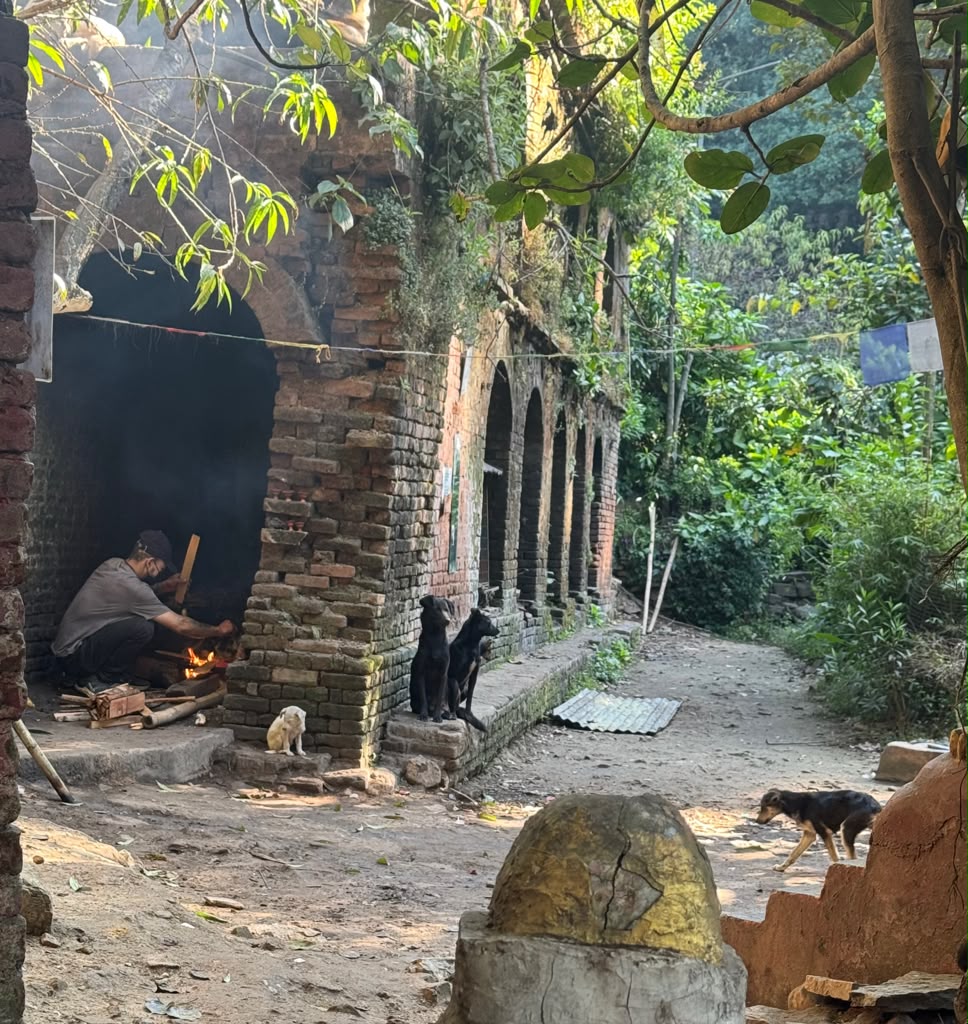
The two dark dogs never left each other’s side and we were probably there for 30 minutes between waiting to be let in and then taking time in the caves.
We then made our way back along the river and sat across from where they were preparing the bodies for cremation.
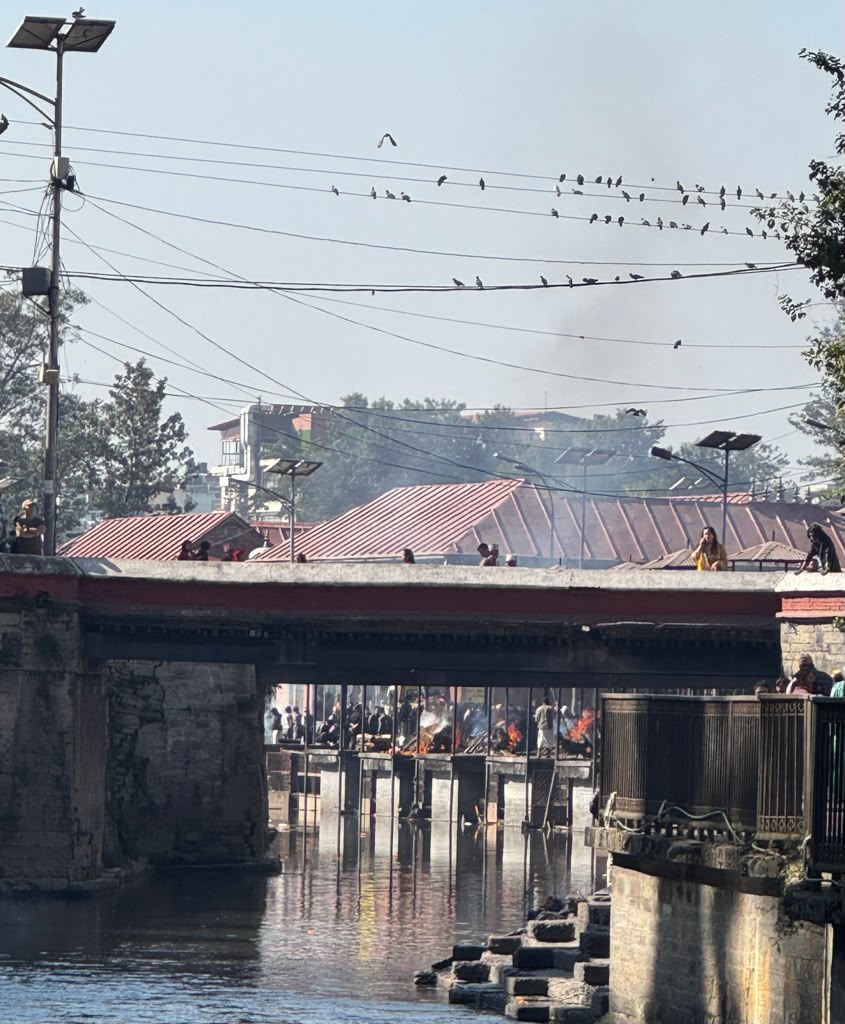
This photo was from far away, no one near, so thought it was ok, seeing at least 3 active fires. Even the monkeys watched.
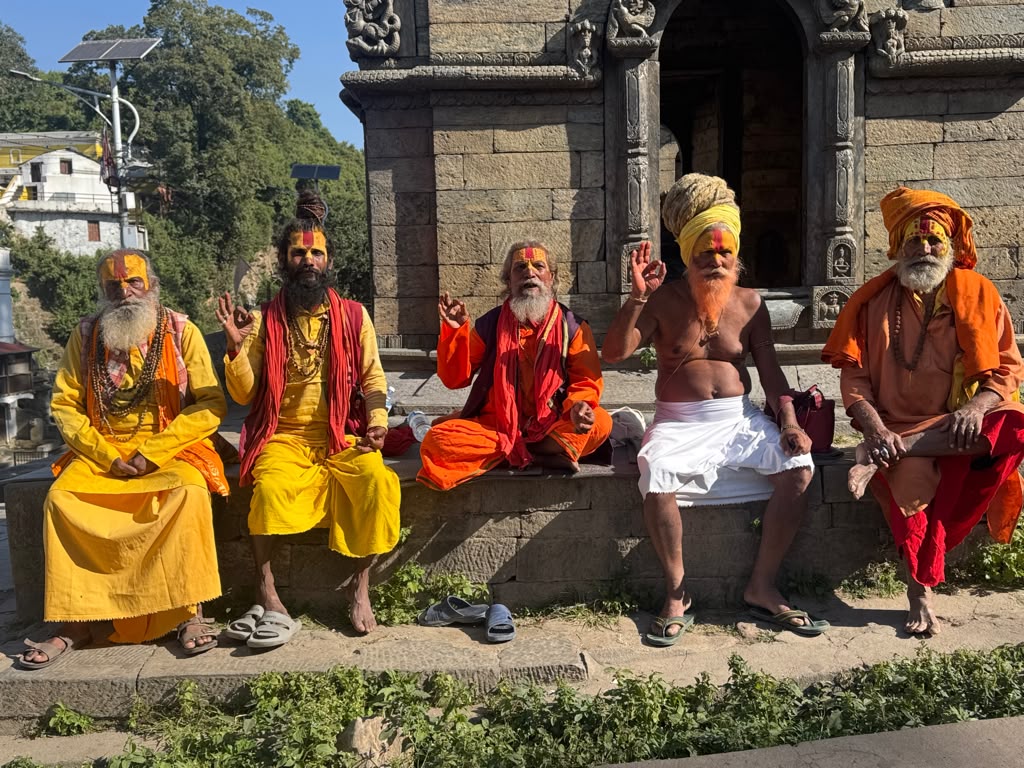
These men had incredible faces and robes and clearly knew it – inviting a photo, I gave them 100 rupees and they seemed pleased.
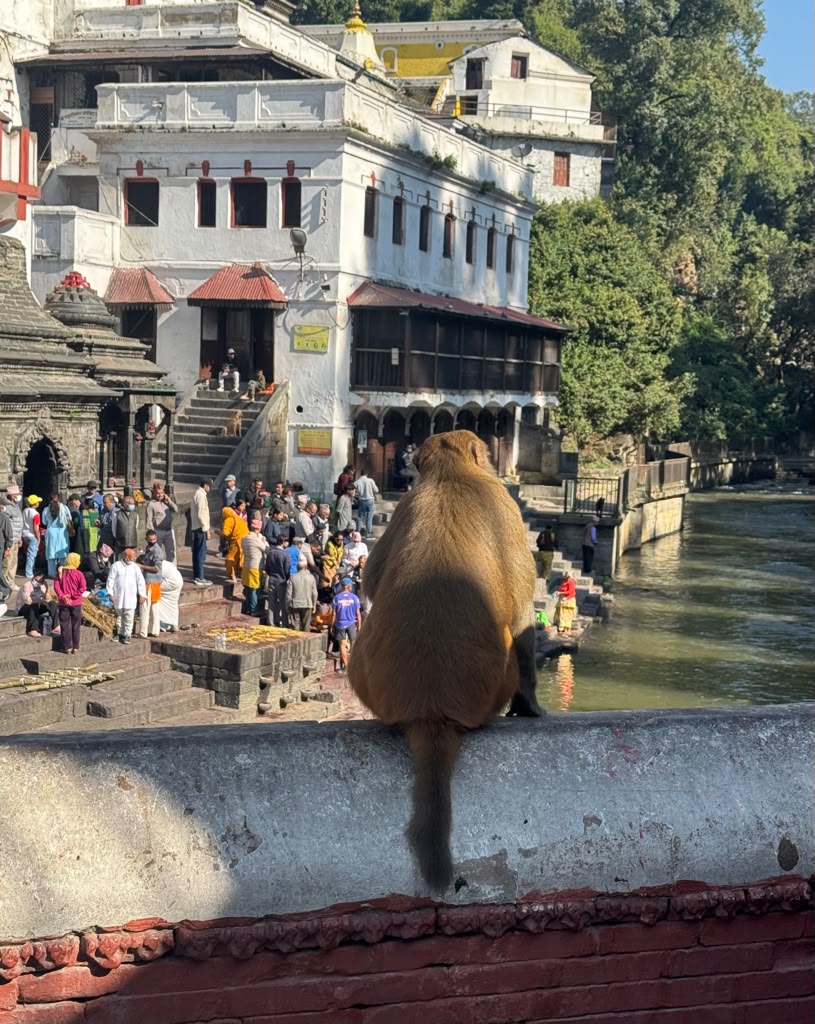
In this photo, there are two bodies, a third one came later. One waiting, one being decorated. In the small temple on top of river, people were continually singing and dancing and playing instruments.
There were two different (well, 3, but activity around 2) bodies. One was nearing the end of the ceremony, a tiny body, I’m guessing of an old woman because an old man guided the flowers and different ways of putting the flowers and wrapping the body with decorations. He then later was the last to circle it before the fire was lit. We saw the end of this and then they took the body off to be buried, the family following behind. Another body just stayed wrapped and on the side from the decorating area. The third body was brought down while we were watching and a woman was obviously grief stricken, the size looked like it might have been her husband. Her daughters (women) took her off to a waiting place while the men and one older woman (dead person’s sister?) directed some of the activity. They shifted the body and it lolled and one of the people in our group “Whoa, it’s fresh, no rigor mortis.” I guess they move quickly when they die.
This one had a very elaborate set up with pots of things (spices? Oils? Perfumes?) set around a space, then flowers, then sticks in the middle in a specific formation. Then the men in the family and the priest (?) guiding the placement of all the objects sat down around the area. It looked like then all of that would be burned, purifying (?) the area and then the body would be placed on that are and decorated. Time consuming, specific and evidently the order in which the bodies were placed indicated their wealth and/or importance. The higher up the river, the better.
We then left that scene and walked by where the bodies were burning with the small body we’d seen earlier laid out, wood below and above and then wet reeds covering that, thus giving off smoke and keeping it from going too quickly.
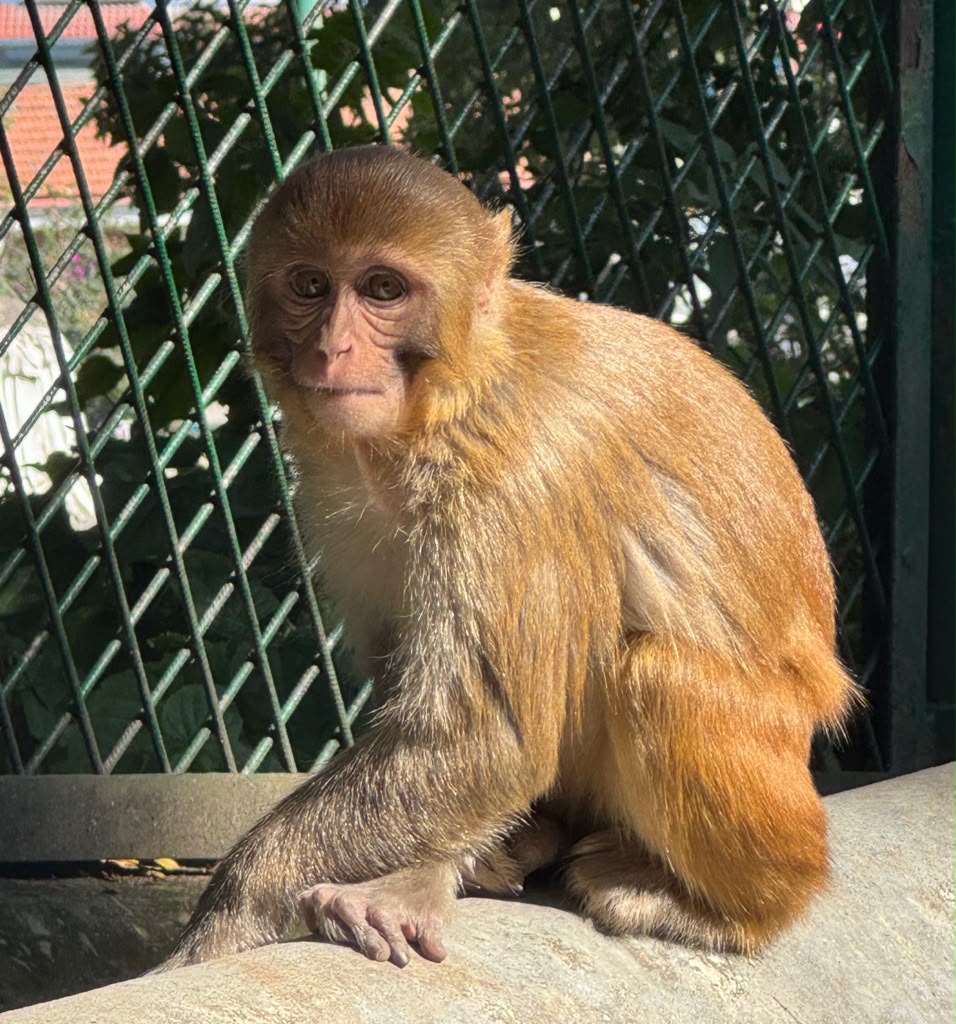
Then we walked out. And yes, there were a ton of monkeys, ton of babies and definitely aggressive if you looked like you might have food or just looked at them wrong! But man, so many cute babies, I tried to get photos without triggering anything. The face on the last photo – so good.
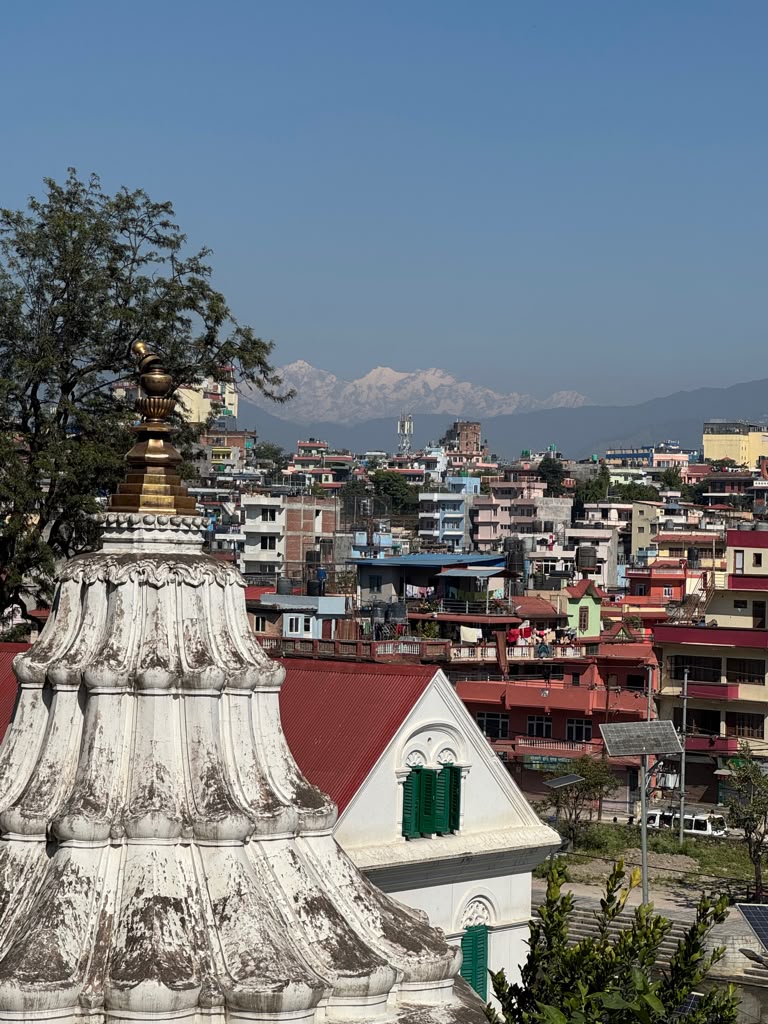
We were walking out the back of the shrine and as we came back into the city, you could see the Himalayas in the distance.
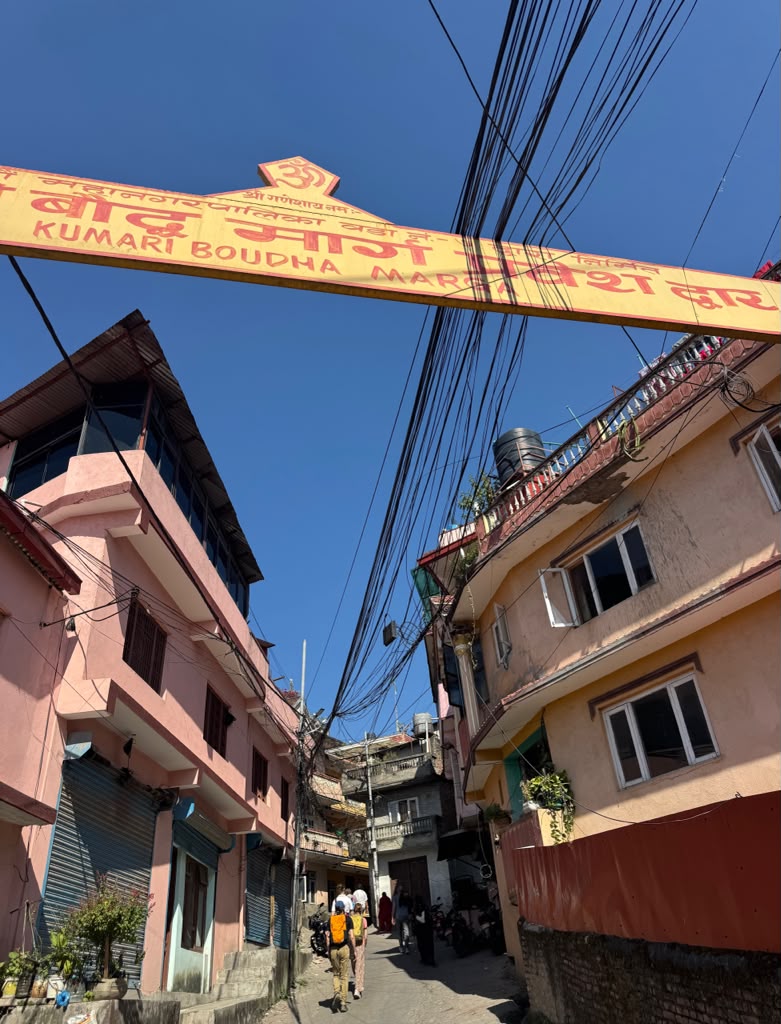
We then walked back to Boudha through neighborhoods. That was nice to see, quiet, residential. Very small shops along some of the lower levels. I took a photo as we entered the neighborhood and a woman stopped to greet me “namaste” and smiled. She seemed pleased that I was interested.
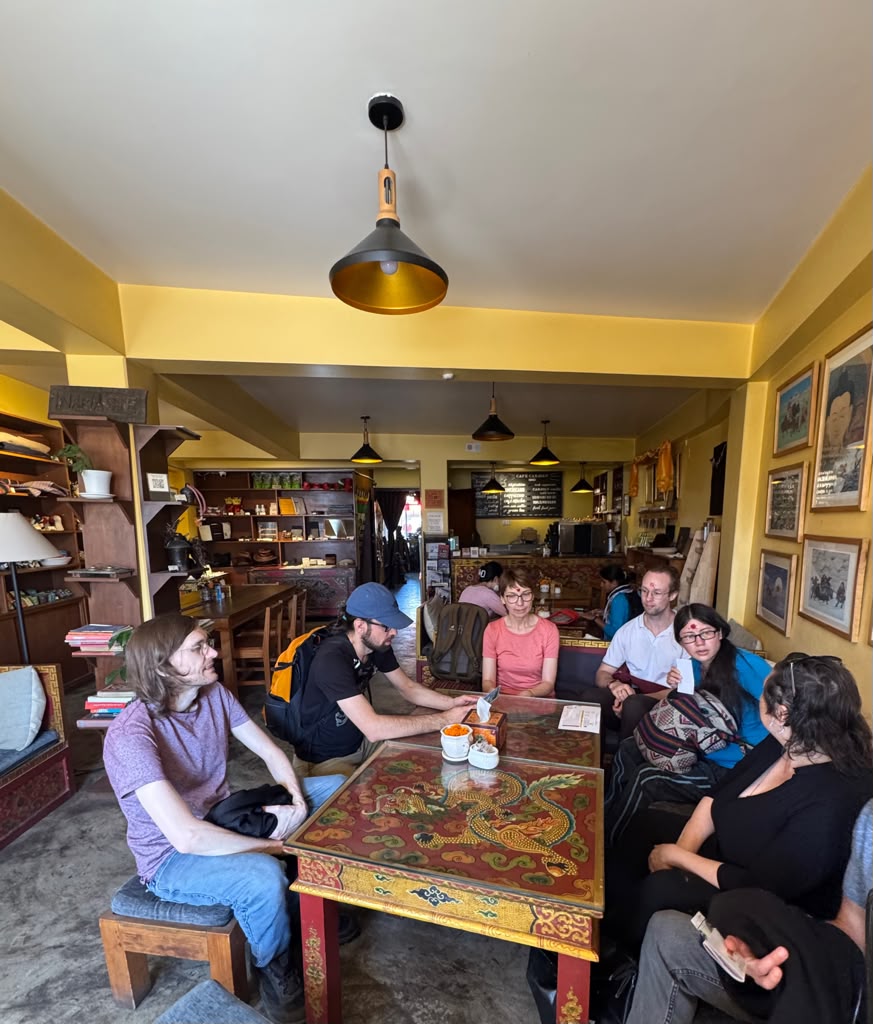
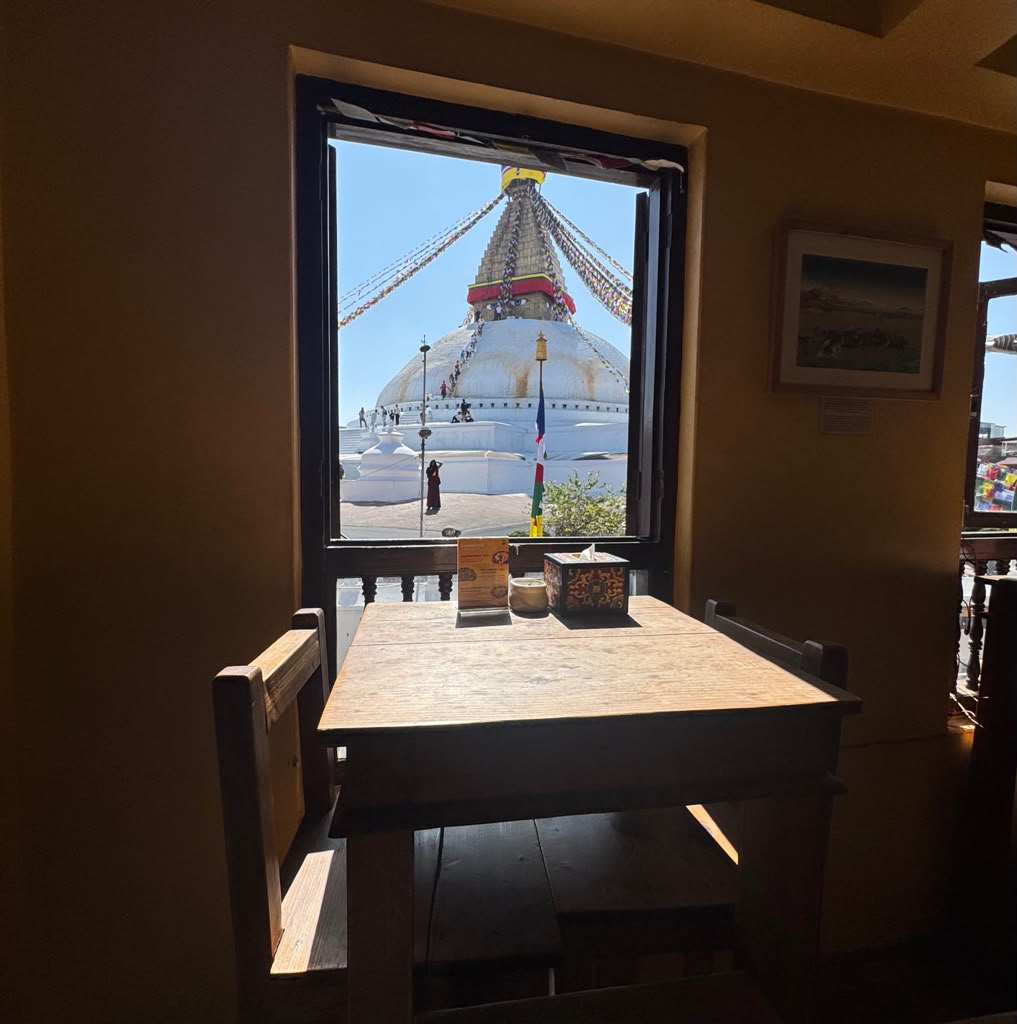
We then went to lunch in yet another place I never would have found. There are a lot of these upstairs or roof top restaurants with views of the stupa, but the entries aren’t at all obvious to me. I’ve had to go back and, as I did kora, look hard to see if I could even find where we were the day before.
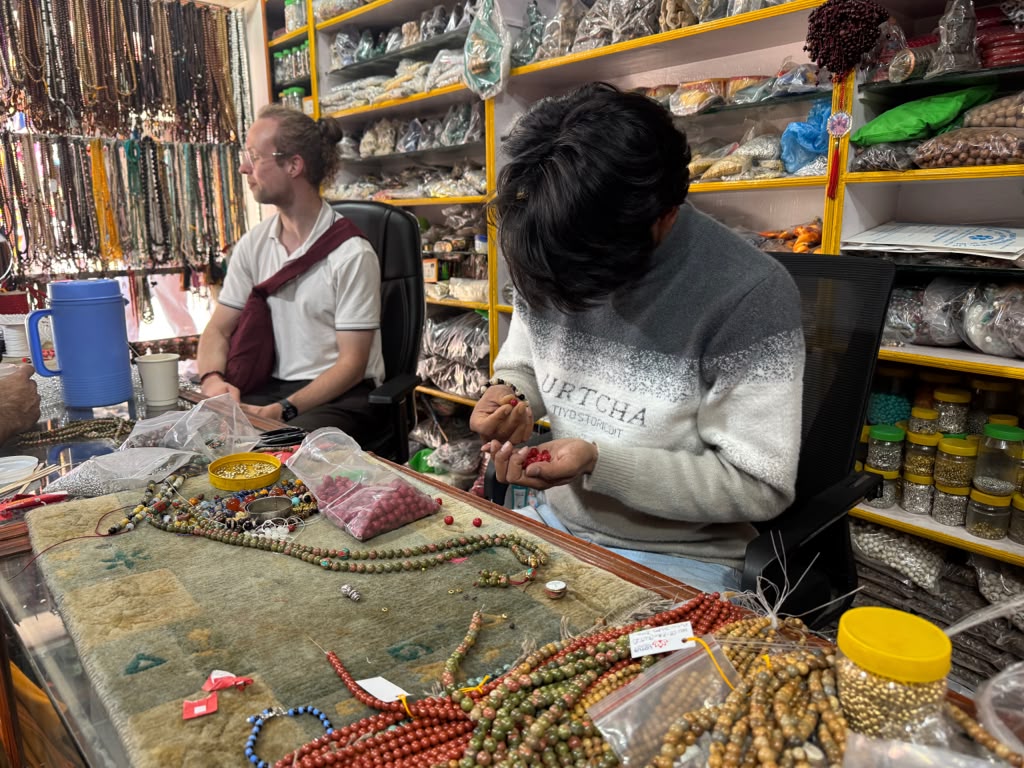
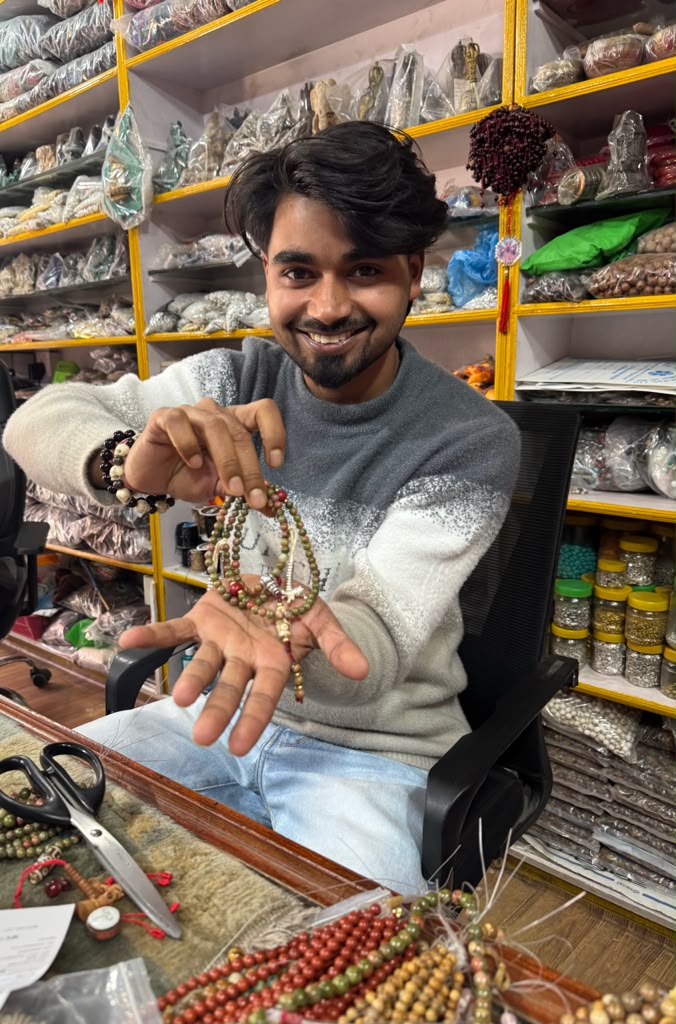
We then did some shopping, spending a lot of time in the mala store. A couple of people were buying malas, I ended up being in the store three times because the owners were great, it was fun to see and they liked the engagement and questions that we had. We’d walk in (first time 5 of us, another time 8) and they’d send out or go out and get masala chai tea for everyone and pull out stools and we’d all fit in this tiny store.
By the end, I was too tired to eat with the group, they were going for Indian. Rosa was tired too, as she said, “I don’t want to talk anymore.” So we ate dinner at the hotel, kept it simple and talked the whole time! The food was great and so was the conversation. The paths that people take to get to Buddhism and Ponlop Rinpoche are all over the place and every one is different.
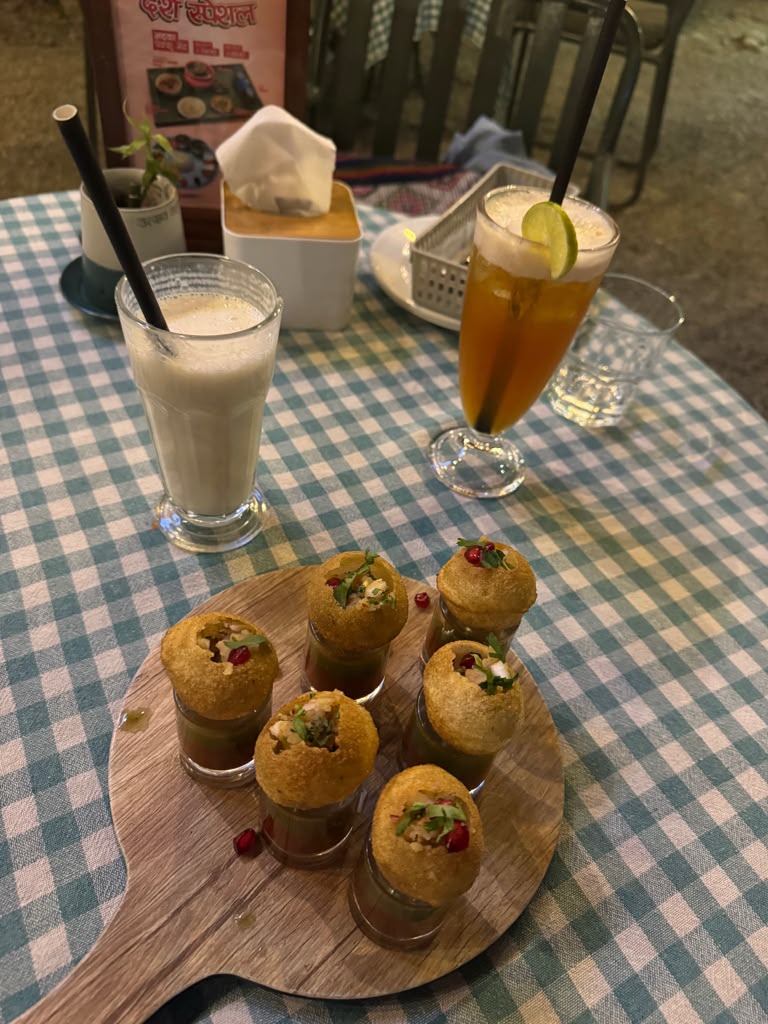
My favorite Nepali dish so far, an appetizer and a favorite street food (general consensus, no on the street food). Pani and puri – egg shaped chickpea flour shells, so thin, with potato and pomegranate seeds in, with mind and tamarind sauces below. You pick up the shell, hold over the plate incase there’s a hole, pour in the whole shot, and then eat the whole thing. SO good.
Then bed. Yay.

